
Global Skillcations Surge as Travelers Master Heritage Crafts Across Japan, Morocco, and Italy
Multi-day heritage craft apprenticeships rise globally as travelers study Wajima lacquer in Japan, Zellige in Fez, and Murano glass in Italy.

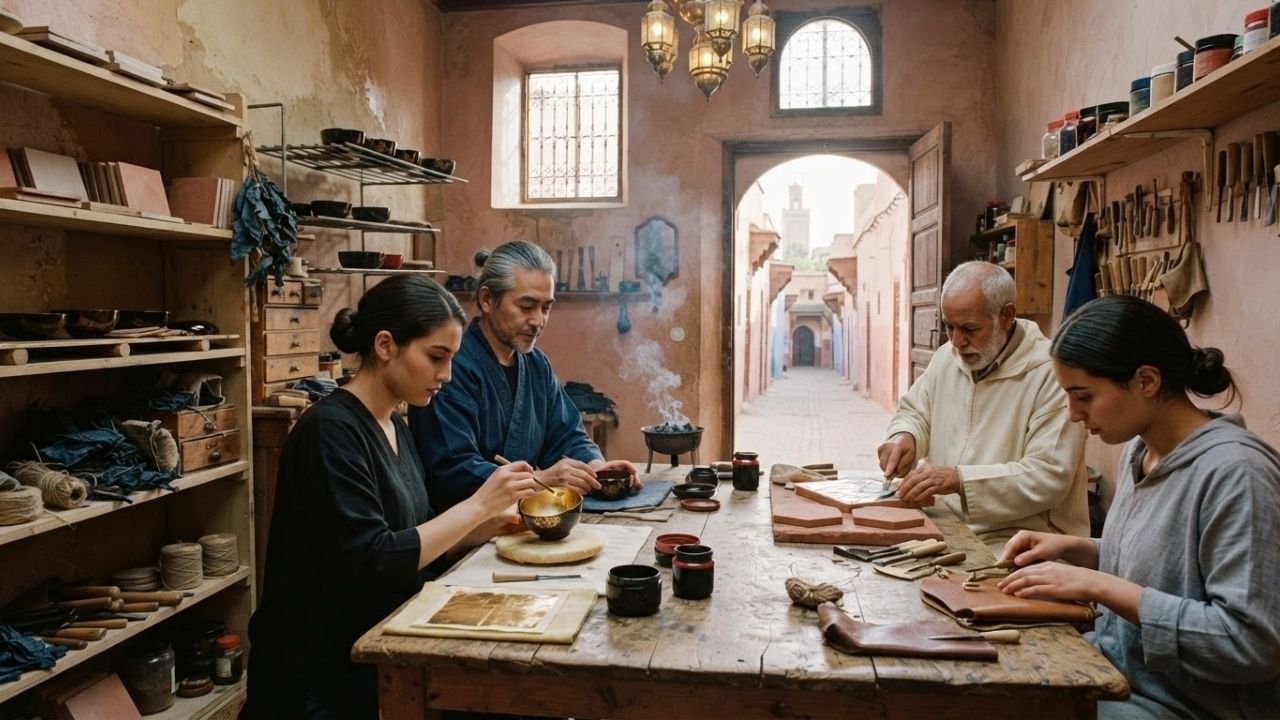
Image generated by AI
A major structural shift toward "skillcations" and multi-day artisanal apprenticeships is reshaping global tourism, as vacationers replace passive sightseeing with hands-on heritage craft training. Industry reports show international travelers joining master artisans to preserve traditional Wajima lacquerware in Japan, Zellige tile cutting in Fez, Murano glassblowing in Italy, and botanical handloom weaving in India.
[TOKYO, Japan, Sept. 2, 2026] — Global tourism research published by cultural heritage organizations and international travel registries confirms that experiential "skillcations" are replacing standard holiday sightseeing. Rather than booking short guided tours or resort stays, travelers are enrolling in multi-day micro-apprenticeships inside historic workshops across Asia, North Africa, and Europe.
This movement toward slow travel and intangible heritage preservation allows visitors to learn centuries-old techniques directly from generational master craftspeople. According to guidelines compiled by destination authorities—including the Agency for Cultural Affairs of Japan and the Ministry of Tourism of India—artisan residencies create new economic streams for endangered trades while offering travelers deep cultural engagement.
Wajima Lacquerware and Gold-Leaf Masterclasses in Ishikawa Prefecture
In Japan, international students are admitted into working studios across Ishikawa Prefecture to learn ancient lacquerware and gilding arts:
- Wajima-Nuri Lacquerware: Apprentices study under generational woodturners and lacquer masters to understand the multi-step refining of natural urushi tree sap applied over seasoned wooden structures.
- Kanazawa Gold-Leaf Application: Students practice precise leaf-gilding mechanics, applying micro-thin gold leaf onto lacquer surfaces using traditional bamboo tools.
Cultural preservationists note that opening studios to international apprentices safeguards delicate Japanese handcrafts against industrial mass production while providing immersive learning for global participants.
Fez Medina Leather Tanning and Zellige Tile Crafting in Morocco
The medieval medina of Fez, Morocco, functions as a living laboratory for centuries-old North African manufacturing traditions:
- Chouara Leather Tannery: Dedicated apprentices learn natural vegetable dyeing inside centuries-old stone vats, handling raw hides alongside master tanners.
- Zellige Mosaic Tile Assembly: Master maalems guide students through hand-chiseling terracotta tiles into intricate geometric tessellations used in historic Moorish architecture.
- Berber Pottery Residencies: Participants craft clay vessels using manual kick-wheels and traditional wood-fired kilns in regional artisan quarters.
Historic Glassblowing and Lampworking Guild Workshops in Murano and Venice
In Italy, historic glassmaking guilds on the Venetian island of Murano are opening family furnace studios to international students:
- Furnace Glassblowing: Apprentices handle blowpipes, manage extreme furnace heat, and shape molten silica alongside master glassblowers.
- Lampworking & Bead Threading: Micro-apprenticeships teach precision glass bead stitching, torch manipulation, and decorative glass sculpting techniques passed down through Venetian merchant families.
Direct participation in guild traditions allows visitors to support sustainable European craftsmanship while acquiring authentic artistic techniques.
Global Heritage Craft Apprenticeship Destinations & Specialized Skills
| Country / Region | Primary Heritage Craft | Apprenticeship Focus & Artisanal Mechanics | Cultural & Economic Impact |
|---|---|---|---|
| Japan (Ishikawa) | Wajima-Nuri Lacquerware & Gold Leaf | Multi-layer urushi tree sap application & bamboo leaf-gilding | Safeguards Japanese intangible heritage under UNESCO frameworks |
| Morocco (Fez Medina) | Zellige Mosaic & Leather Tanning | Hand-chiseled geometric tile cutting & vegetable vat dyeing | Sustains medieval artisan economies inside historic urban medinas |
| Italy (Murano & Venice) | Furnace Glassblowing & Lampworking | Molten silica shaping, blowpipe mechanics & glass bead stitching | Preserves historic Venetian glassmaking guild traditions |
| India (Rajasthan & Bengal) | Botanical Dyeing & Pit Loom Weaving | Plant-based mordant preparation & wooden block hand-printing | Provides direct economic lifelines to rural artisan weaving clusters |
Botanical Dyeing and Block-Printing Residencies Across Rural India
In India, rural artisan clusters across Rajasthan and West Bengal host multi-week textile residencies centered on sustainable handloom production:
- Natural Botanical Dyeing: Students prepare organic indigo, madder root, and botanical mordants free from industrial chemicals.
- Woodblock Printing: Apprentices carve wooden printing blocks and align intricate pattern stamps on unbleached cotton fabrics.
- Pit Loom Handloom Weaving: Travelers live with master weaving families, learning foot-treadle mechanics and shuttle control on traditional pit looms under guidance from UNESCO Intangible Cultural Heritage preservation frameworks.
Industry Impact Analysis: Slow Travel and Cultural Heritage Preservation
Tourism analysts highlight that the rise of skillcations represents a permanent transformation in consumer travel preferences. Modern vacationers prioritize personal enrichment, slow travel, and sustainability over superficial photo opportunities.
By spending extended periods in regional workshops, skillcation travelers generate direct economic revenue for local master craftspeople, helping sustain endangered trades that might otherwise fade due to automation.
Why This Matters: Essential Takeaways for Travelers Booking Craft Skillcations
For vacationers planning a heritage craft apprenticeship in 2026, key booking guidelines include:
- Book Apprenticeships Well in Advance: Studio capacities are strictly limited to 2–5 students per master artisan to ensure individual instruction.
- Prepare for Physical Workshop Demands: Craft apprenticeships involve physical labor, including handling hot furnace tools, manual loom operation, or stone vat dyeing.
- Select Certified Heritage Studios: Ensure workshops are registered with regional cultural ministries to support authentic local artisans.
- Allocate Sufficient Travel Time: Plan residencies lasting at least 5 to 14 days to master foundational craft mechanics.
Frequently Asked Questions
What is a travel "skillcation"?
A skillcation is an extended travel experience where vacationers enroll in multi-day hands-on workshops or micro-apprenticeships to learn traditional crafts, languages, or specialized skills directly from local experts.
Which heritage crafts can travelers learn in Japan and Morocco?
In Japan (Ishikawa), travelers learn Wajima lacquerware and Kanazawa gold-leaf gilding. In Morocco (Fez), apprentices study Zellige tile chiseling, leather tanning, and Berber pottery.
Are Murano glassblowing apprenticeships suitable for beginners?
Yes. Guild master artisans offer structured introductory residencies that teach safe blowpipe handling, temperature control, and glass bead sculpting for beginners.
How do textile skillcations in India support local communities?
Residencies in Rajasthan and West Bengal provide direct economic income to rural weaver families, helping preserve chemical-free natural dyeing and handloom weaving traditions.
Related Travel Guides
Disclaimer
This article is for informational and educational purposes only. It does not constitute legal, financial, or professional advice. While we strive to provide accurate and up-to-date information, travel policies, regulations, and conditions change rapidly. Always verify information with official sources before making travel decisions. Nomad Lawyer makes no representations about the accuracy, reliability, completeness, or suitability of the information provided. Readers should consult qualified professionals for advice specific to their circumstances. The views expressed in this article are those of the author and do not necessarily reflect the views of Nomad Lawyer.
Raushan Kumar
Founder & Lead Developer
Full-stack developer with 11+ years of experience and a passionate traveller. Raushan built Nomad Lawyer from the ground up with a vision to create the best travel and law experience on the web.
Learn more about our team →