
Outrageous Architecture: Weird Buildings Fuel Tourism Boom in the Americas
From Ohio's picnic basket to Bolivia's cholets, weird and outrageous buildings are driving a massive architectural tourism boom across the Americas.
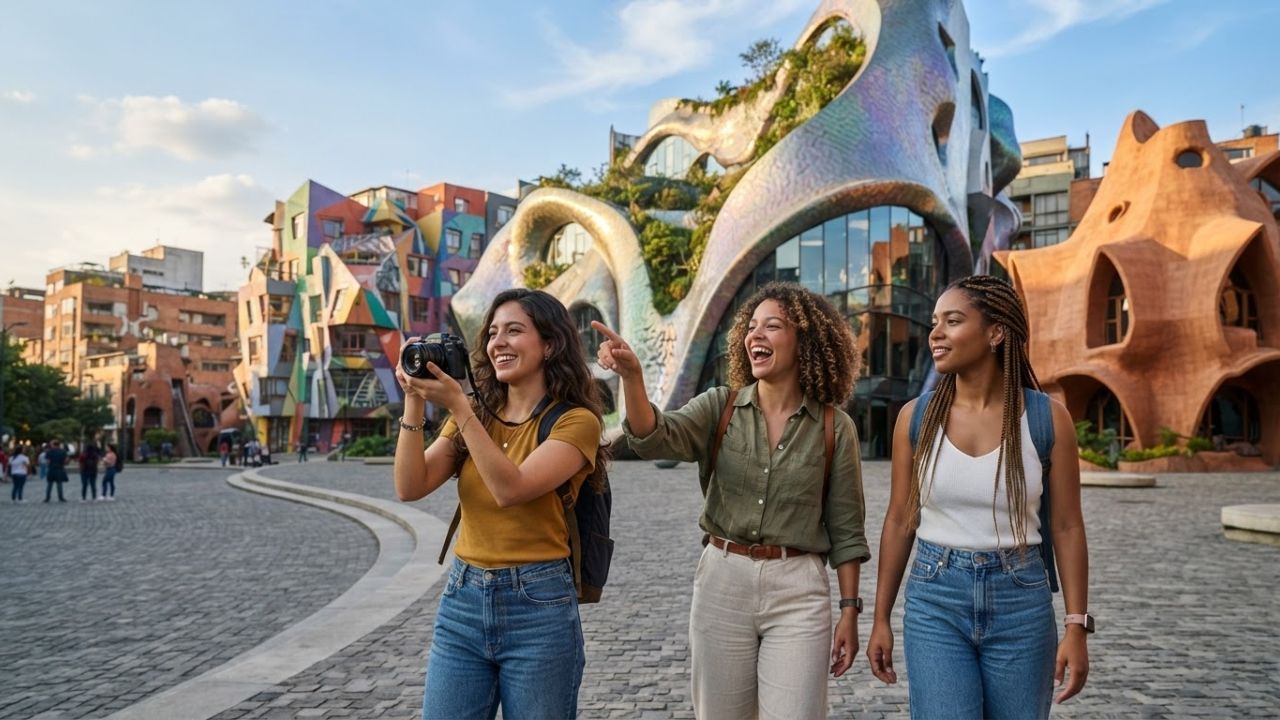
Image generated by AI
Architectural tourism is experiencing an unprecedented boom across the Americas, driven by a growing demand for unique, photogenic, and memorable travel experiences. From the United States to Chile, unusual and outrageous buildings are transforming ordinary streets into major travel attractions that highlight local history, creativity, and cultural identity.
The Local Trend Revealed
A new wave of travelers is looking beyond traditional monuments to seek out novelty and experimental design. This shift is supported by robust tourism indicators across the region:
- United States: Welcomes a projected 70.5 million international visitors in 2026. The country's architectural ecosystem is supported by 116,000 licensed architects and 205,000 architecture firm employees, enabling US$693 billion in construction value, according to the American Institute of Architects (AIA).
- Canada: Logged C$28.4 billion in tourism spending, 695,900 tourism jobs, and a 1.80 percent tourism share of the national GDP in the first quarter of 2026.
- Mexico: Welcomed 20.4 million international tourists between January and May of 2026, representing a 5.3 percent year-on-year growth and generating US$15.9 billion in foreign-exchange income.
Outrageous Architectural Icons Across the Americas
Ten standout structures demonstrate how experimental design can redefine a regional tourism market:
- Longaberger Basket Building (Newark, Ohio, USA): Completed in 1997, this seven-storey office building resembles a giant picnic wicker basket. It is classified by Architectural Digest as a classic example of "duck architecture."
- WonderWorks (Orlando, Florida, USA): Designed to look upside down, the building features a roof that sits on the ground and an entrance pointing toward the sky.
- Haines Shoe House (Hallam, Pennsylvania, USA): Built in 1948 by shoe businessman Mahlon Haines, this 25-foot-tall, five-floor structure features a living room in the toe and a kitchen in the heel.
- Community Bookshelf (Kansas City, Missouri, USA): The Kansas City Public Library features a façade designed to look like a giant row of books, placed at the top of unusual American buildings by Time Out.
- Half House (Toronto, Canada): A Victorian home that appears sliced down the middle, created when neighboring properties were demolished for redevelopment.
- Nido de Quetzalcóatl (Naucalpan, Mexico): A serpent-shaped housing complex designed in 2008 by architect Javier Senosiain and Kees Van Rooij, which winds organically through the natural caves of the site.
- Freddy Mamani’s Cholets (El Alto, Bolivia): Colorful, futuristic towers that mix Andean cultural symbols with glass, chrome, and bold geometric patterns.
- La Mundial (Córdoba, Argentina): Built in 1931 on Avenida Emilio Olmos, this five-floor neoclassical building is South America's narrowest structure, reaching just 3.70 meters at its deepest point.
- Casa Terracota (Villa de Leyva, Colombia): Described by Atlas Obscura as a whimsical home made entirely of clay, constructed like a giant piece of pottery.
- Church of Guayacán (Coquimbo, Chile): A prefabricated metal church associated with Alexandre Gustave Eiffel, presenting an industrial contrast to traditional stone architecture.
Cultural & Environmental Value
For the visitor, the real impact of architectural tourism is the direct support of local artisan communities and preservation efforts. In Bolivia, Mamani's cholets are commissioned by the Aymara middle class to express indigenous pride and economic confidence. Similarly, the serpent-shaped Nido de Quetzalcóatl has been designated a key heritage site by the National Institute of Anthropology and History (INAH) in Mexico to encourage conservation-minded tourism.
Choosing train transit like Amtrak for US architectural routes helps reduce the environmental footprint of travel. Passenger rail consumes up to 40 to 50 percent less energy per passenger-mile than highway travel. In South America, hiring local independent guides at sites like Casa Terracota directly supports regional crafts and family-run hospitality businesses.
Visitor Insider Tips
- Newark, Ohio (Longaberger Basket Building): The best off-peak window is from September to October, offering pleasant autumn weather and foliage. Sample local Buckeye candy (peanut butter fudge dipped in chocolate) at independent sweet shops. Note that the building is privately owned; respect boundaries and view it from public pathways.
- El Alto, Bolivia (Freddy Mamani's Cholets): Visit during the dry season from May to October. Try a Salteña (savory baked empanada with sweet-spicy broth) at local morning food stalls. Respect local privacy by asking for permission before photographing residents or home facades.
- Villa de Leyva, Colombia (Casa Terracota): Travel during the quiet months of January or February. Try local baked buñuelos at a family bakery. Explore the nearby El Infiernito, an ancient Muisca astronomical observatory with historic stone monoliths.
- Coquimbo, Chile (Church of Guayacán): Located in the historic port area, this metallic landmark is best visited during late spring (October to November). Respect the sacred nature of the building by wearing appropriate attire and supporting local preservation funds overseen by the Ministry of Cultures, Arts and Heritage of Chile.
Tourism Outlook
The long-term impact of this architectural boom is the revitalisation of secondary destinations. Unusual buildings give smaller cities and neighborhoods an immediate visual identity, dispersing visitors away from overcrowded national parks and capital cities. Social media interest in these structures will continue to drive independent travel, promoting sustainable development and regional pride across the Americas.
FAQ: Architectural Tourism
What is "duck architecture"? It is a term used to describe buildings that physically resemble the product or service they represent, such as the Longaberger Basket Building in Ohio.
Who designed the serpent-shaped Nido de Quetzalcóatl in Mexico? The complex was designed in 2008 by architect Javier Senosiain in collaboration with Kees Van Rooij.
How thin is the La Mundial building in Argentina? La Mundial in Córdoba is South America's narrowest building, reaching a maximum depth of only 3.70 meters.
Why is El Alto, Bolivia, famous in contemporary architecture? El Alto is famous for its "cholets," colorful multi-storey buildings designed by Freddy Mamani that blend futuristic architecture with traditional Andean textiles and motifs.
Related Travel Guides
Disclaimer
This article is for informational and educational purposes only. It does not constitute legal, financial, or professional advice. While we strive to provide accurate and up-to-date information, travel policies, regulations, and conditions change rapidly. Always verify information with official sources before making travel decisions. Nomad Lawyer makes no representations about the accuracy, reliability, completeness, or suitability of the information provided. Readers should consult qualified professionals for advice specific to their circumstances. The views expressed in this article are those of the author and do not necessarily reflect the views of Nomad Lawyer.