
Hugh Taylor Birch State Park Wildlife Guide: Navigating Fort Lauderdale's Rare Coastal Habitats in 2026
Explore the diverse wildlife of Hugh Taylor Birch State Park, from protected gopher tortoises to rare coastal dune lakes in the heart of Fort Lauderdale.

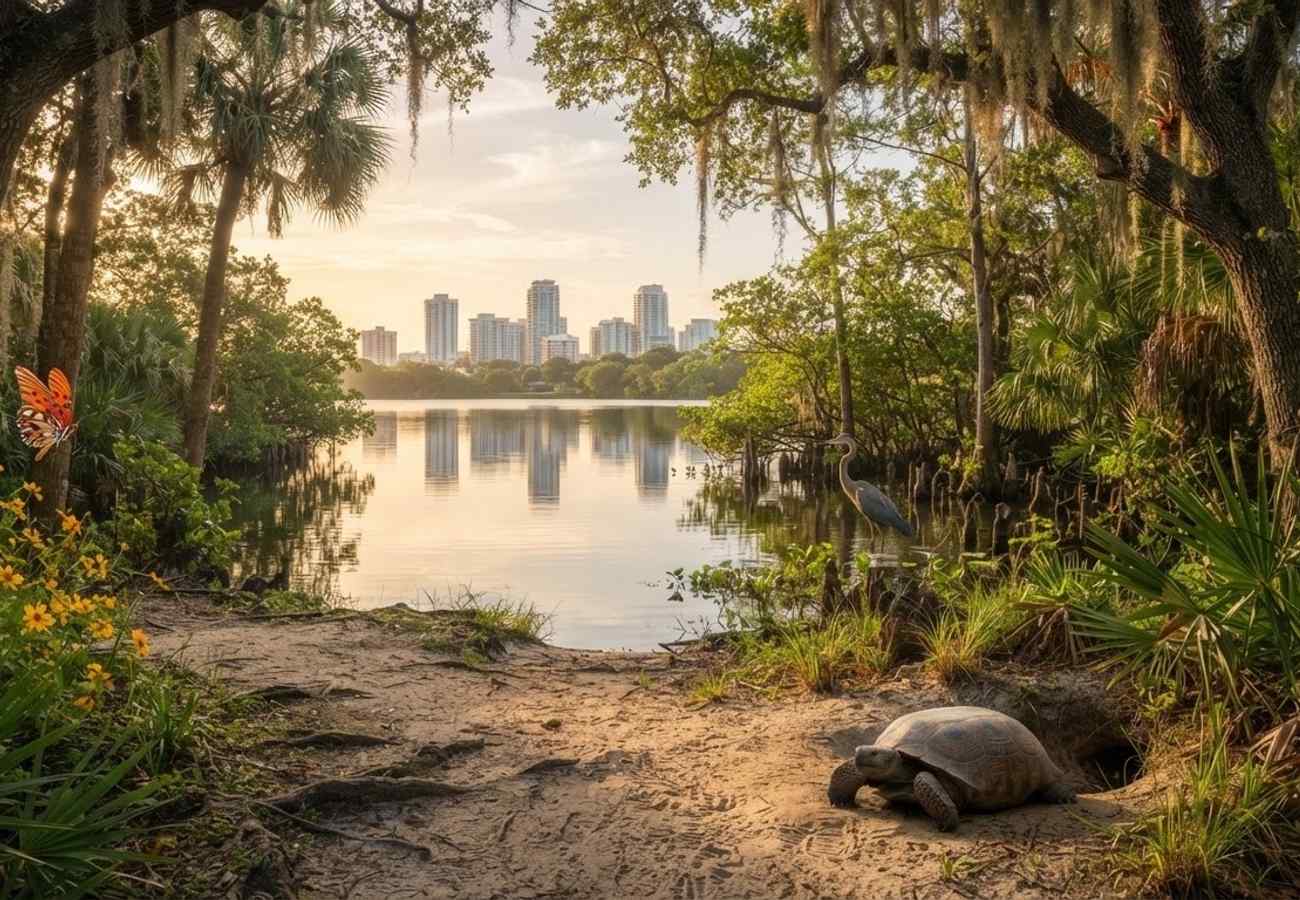
Image generated by AI
Located on a narrow barrier island between the Atlantic Ocean and the Intracoastal Waterway, Hugh Taylor Birch State Park serves as a critical subtropical wilderness sanctuary. Spanning 174 acres, this protected zone provides a stark contrast to the surrounding high-rise condos and resort districts of Fort Lauderdale.
The park functions as a biological island, preserving a mosaic of habitats that have largely vanished from urban South Florida. These include tropical maritime hammock forests, mangrove-lined estuaries, beach dunes, and a rare half-mile freshwater coastal dune lake known as Long Lake.
Primary Access and Exploration Routes
Visitors typically enter via State Road A1A, paying a per-vehicle fee at the ranger station. The park is structured around two primary navigation corridors:
- The Paved Loop Road: A high-traffic artery used by cyclists, joggers, and those transporting kayaks or stand-up paddleboards toward the lake launch.
- Nature Trail Network: A series of unpaved paths, including the Coastal Hammock Trail and the mangrove boardwalk, which offer the highest probability of wildlife encounters.
Signature Species: The Gopher Tortoise
The gopher tortoise is the primary symbol of the park's ecosystem. These sandy-brown reptiles dig extensive burrows in well-drained soils, creating subterranean shelters used by numerous other species to escape extreme heat and storms.
Observation Guidelines:
- Peak Activity: Late morning or afternoon, particularly during cooler, dry periods.
- Common Locations: Sandy firebreaks between hammock and dune habitats, and road shoulders.
- Legal Restrictions: It is illegal under Florida law to harass, handle, or relocate gopher tortoises without a permit.
- Behavioral Protocol: Maintain a distance where the tortoise continues grazing or resting without retreating into its shell. Do not provide human food, as this creates dependency and attracts predators.
Avian Diversity and Habitats
The intersection of saltwater, freshwater, and forest makes the park a premier birding location.
Wading Birds & Raptors: Along the edges of Long Lake and the western mangrove tidal zones, great blue herons, tricolored herons, snowy egrets, and white ibis are frequently sighted. Anhingas and cormorants are common on submerged logs. Above the Intracoastal, osprey are regularly seen hunting, while red-shouldered hawks occupy utility poles near the entrance.
Songbirds & Migrants: The mature hammock—characterized by live oaks and cabbage palms—supports cardinals, blue jays, and various warblers during migration seasons.
Expert Tip for Birders: Renting a kayak from the Long Lake concession allows for quieter approach to yellow-crowned night-herons and moorhens tucked into the mangrove roots.
Subtle Ecosystem Residents
Beyond the larger fauna, the park supports a complex network of smaller pollinators and reptiles.
- Butterflies: Gulf fritillaries, zebra longwings, and monarchs congregate around firebush and tropical sage.
- Aquatic Life: Freshwater turtles are common in Long Lake, typically viewed from kayaks or the shoreline.
- Small Reptiles: Skinks and anoles are prevalent within the leaf litter of the hammock forest.
Wildlife Protection and Site Regulations
Because the park is an enclosed green space surrounded by heavy urban development, the resident wildlife is highly vulnerable.
- Path Adherence: Visitors must stay on marked routes. Venturing into roped-off restoration areas is strictly prohibited to prevent the crushing of sensitive groundcover.
- Flora Preservation: Picking wildflowers or breaking branches is forbidden to maintain the habitat for pollinators.
- Vehicle Safety: Drivers on the loop road are advised to slow or stop for tortoises crossing the asphalt to prevent road mortality.
Habitat Distribution Summary
| Habitat Type | Key Wildlife | Primary Location |
|---|---|---|
| Maritime Hammock | Songbirds, Anoles, Skinks | Coastal Hammock Trail |
| Coastal Dune Lake | Freshwater Turtles, Moorhens, Coots | Long Lake |
| Mangrove Estuary | Great Blue Herons, Snowy Egrets | West Side / Boardwalk |
| Sandy Firebreaks | Gopher Tortoises | Interior Park Edges |
| Nectar Gardens | Monarchs, Zebra Longwings | Picnic Areas / Openings |
Why This Matters: Industry Analysis
From a conservation perspective, Hugh Taylor Birch State Park is not merely a recreational area; it is a "refugee" ecosystem. Our analysis of the surrounding urban density indicates that this 174-acre plot is one of the last remaining contiguous blocks of maritime hammock in the immediate Fort Lauderdale area.
For the traveler, the real impact is the "edge effect." Because the park is so small and surrounded by city noise, the wildlife is more concentrated than in larger state parks. This creates a high-density viewing experience but also places immense pressure on the animals. The survival of the gopher tortoise population here depends entirely on human compliance with trail markers. If visitors ignore "no-go" zones, the burrow systems—which serve as "hotels" for other displaced species—can collapse, leading to a localized loss of biodiversity.
Forward Outlook
As urban encroachment continues in South Florida, the role of "pocket parks" like Hugh Taylor Birch will shift from leisure destinations to critical genetic corridors for migratory birds and pollinators. Expect increased signage regarding "quiet zones" and potentially stricter limits on paddlecraft numbers during nesting seasons to mitigate human-wildlife conflict.
A fragile sanctuary where the city hum fades into the sound of the hammock.
Related Travel Guides
Disclaimer
This article is for informational and educational purposes only. It does not constitute legal, financial, or professional advice. While we strive to provide accurate and up-to-date information, travel policies, regulations, and conditions change rapidly. Always verify information with official sources before making travel decisions. Nomad Lawyer makes no representations about the accuracy, reliability, completeness, or suitability of the information provided. Readers should consult qualified professionals for advice specific to their circumstances. The views expressed in this article are those of the author and do not necessarily reflect the views of Nomad Lawyer.
Raushan Kumar
Founder & Lead Developer
Full-stack developer with 11+ years of experience and a passionate traveller. Raushan built Nomad Lawyer from the ground up with a vision to create the best travel and law experience on the web.
Learn more about our team →