
United States Travel Rules Explained: How the Expanded CBP Home App and $3,000 Departure Incentive Reshape Border Mobility
The US Department of Homeland Security has expanded its CBP Home app, offering travel assistance and a $3,000 exit incentive for voluntary departures.

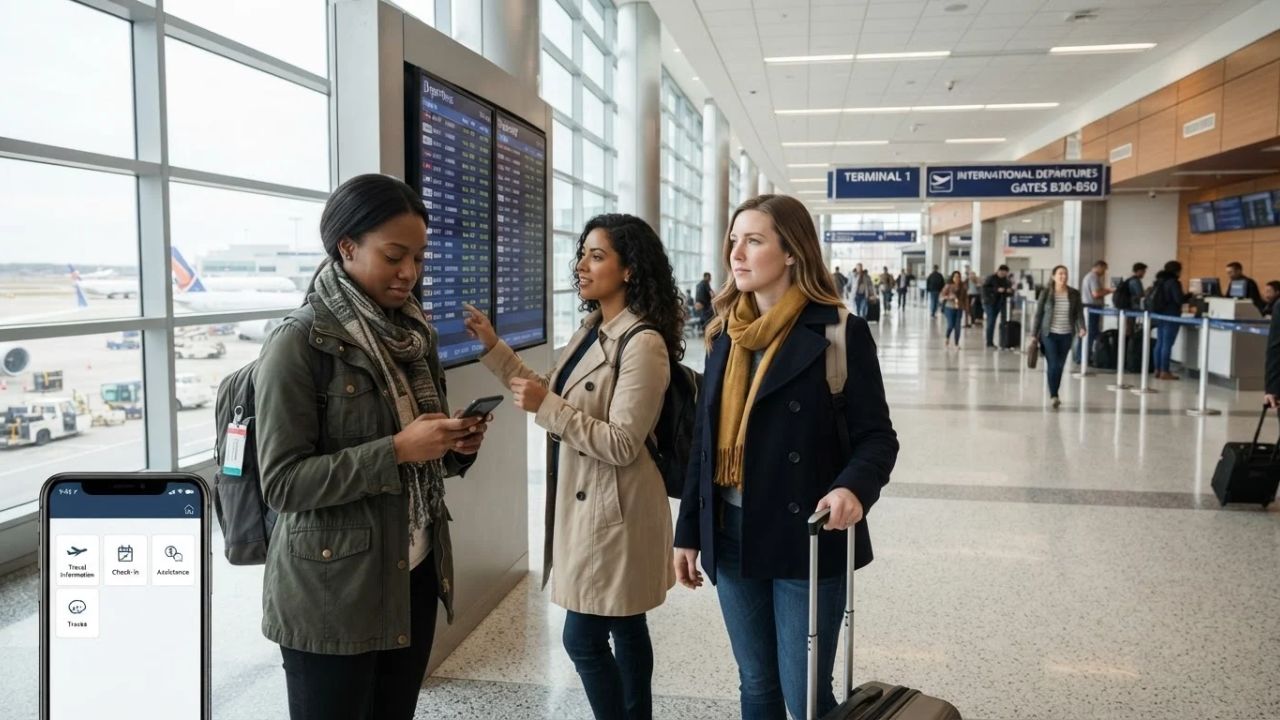
Image generated by AI
Eligible individuals without lawful status inside the United States can now receive government-funded commercial travel assistance alongside a $3,000 exit incentive simply by scheduling their departure through a smartphone screen. This programmatic shift, orchestrated under an expansion of the CBP Home mobile platform by the Department of Homeland Security, turns traditional enforcement mechanics on their head. Rather than relying solely on prolonged apprehension and formal deportation flights, federal authorities have launched a digital apparatus that allows approved participants to exit as regular international passengers without detention or physical restraints, often departing within approximately 21 days of clearance.
Digital Self-Departure and the Evolution of the CBP Home Platform
The operational foundation of this initiative rests upon an updated digital architecture built directly by U.S. Customs and Border Protection. Originally launched as the CBP One scheduling utility, the software ecosystem has evolved into CBP Home, introducing a dedicated "Intent to Depart" portal. The module enables non-citizens lacking legal authorization to register biographical data, submit personal identification documents, verify family travel units, and formally communicate their decision to leave sovereign American territory.
Once an applicant files an intent notice through the application, federal agencies trigger comprehensive security screening and background eligibility checks. Those cleared through the vetting process receive temporary operational relief: Immigration and Customs Enforcement (ICE) temporarily deprioritizes them for civil enforcement actions and detention while logistical coordination occurs. For travelers who cannot afford independent tickets, federal authorities organize flight logistics, help secure requisite consular documentation, and underwrite outbound travel.
The $3,000 departure incentive functions as a conditional reintegration allowance, payable only after verified confirmation that the individual has concluded their return journey in their destination country. Beneficiaries generally do not need an active American bank account to access the funds, as international disbursement relies on localized payment systems abroad. However, authorities make clear that using the application provides no immigration relief, confers no temporary legal status, and guarantees no future visa approvals. Individuals carrying unresolved asylum petitions or formal removal records face the permanent abandonment of active claims upon exit, underscoring the serious legal trade-offs embedded within the interface.
What Makes the United States Border and Mobility Framework Different
Navigating mobility across the United States reveals a jurisdictional contrast unlike anywhere else in the hemisphere. While the physical frontier stretches across 1,954 miles of southwestern desert and 5,525 miles along the Canadian borderline, the legal boundary extends deep into the interior. Federal statutes grant border patrol agents extraordinary search powers within 100 miles of any land or coastal border, meaning international travelers frequently encounter secondary highway checkpoints in Texas, New Mexico, Arizona, and Southern California hours away from an actual crossing.
At the same time, regional politics create distinct localized environments for international visitors and resident non-citizens alike. Major metropolitan gateways like New York City, Chicago, San Francisco, and Los Angeles maintain municipal sanctuary guidelines that restrict municipal police from cooperating with federal immigration authorities. Conversely, travelers moving through state corridors in Florida, Texas, or Tennessee encounter aggressive local legislation penalizing undocumented presence and authorizing regional law enforcement to scrutinize travel papers during standard traffic stops.
This geographic patchwork directly affects international aviation hubs. Major connection points such as Miami International Airport, Dallas/Fort Worth, and Houston George Bush Intercontinental operate with intense federal oversight, where biometric facial scans and exit tracking platforms have become routine. Stepping through an American airport concourse means moving through layers of jurisdiction, where civilian aviation screening managed by the Transportation Security Administration sits right beside customs zones and federal intelligence networks.
Visitor Insider Tips
Traveling across the United States requires navigating intricate administrative layers, whether entering on a tourist visa or transiting between regional airports. Staying clear of unexpected delays demands strict attention to local timing, documentation habits, and regional transport quirks:
- Always carry primary physical documentation when moving within the 100-mile border zone: If driving highway corridors like Interstate 10 in West Texas, Interstate 8 in Southern California, or State Route 90 near southern Arizona, federal inland checkpoints are fully operational. Keep your physical passport, valid I-94 arrival record, and printed visa or ESTA confirmation within immediate arm's reach rather than packed beneath luggage in the trunk.
- Avoid peak international transit windows at mega-hubs: Major border gateways like Miami (MIA), New York (JFK), and Los Angeles (LAX) experience severe customs congestion between 2:00 PM and 6:30 PM, when transatlantic and Latin American wide-body flights arrive simultaneously. If booking connecting domestic flights, schedule a minimum three-hour layover to clear customs, recheck baggage, and pass through domestic security checkpoints.
- Master the local transit etiquette in sanctuary cities: In cities like Chicago or San Francisco, regional metro operators like CTA or BART do not check immigration papers or require identification to purchase fare cards. Use contactless digital wallet payments directly at the turnstiles to navigate urban centers swiftly without standing in line at ticket vending kiosks.
- Sample regional specialties away from sterile transit zones: Instead of dining inside airport concourses, take regional commuter rail into historic neighborhoods. In San Antonio, step away from airport commercial strips to order handmade breakfast tacos along South Flores Street; in San Diego, take the blue line trolley to Barrio Logan for wood-fired carnitas tacos served on house-pressed heirloom corn tortillas.
- Never assume digital document screenshots will satisfy authorities: While commercial airlines accept digital boarding passes, federal agents at land crossings and inland transit checkpoints demand original physical passports and hard-copy travel waivers. Laminated cards or mobile phone screen captures are routinely rejected during secondary inspections.
Cultural and Environmental Context
The digital expansion of CBP Home highlights an ongoing debate across borderlands communities, where cultural solidarity often clashes with federal enforcement strategies. In historic cross-border twins like El Paso and Ciudad Juarez, or Nogales and Sonora, daily life has centered on fluid binational commerce, shared aquifer systems, and multi-generational family ties for centuries. Local residents regularly cross international bridges to patronize neighborhood bakeries, attend university classes, and celebrate community festivities, viewing the frontier as an arbitrary divide across a single cultural basin.
Federal attempts to manage movement via mobile algorithms also highlight deep technological divides within fragile desert ecosystems. Along the Sonoran Desert corridors, wildlife migration pathways for the Sonoran pronghorn and jaguars have suffered severe fragmentation due to continuous wall construction and stadium-style surveillance lighting. Community advocates and Indigenous tribal nations, including the Tohono O'odham, consistently advocate for policy frameworks that respect sacred burial grounds and ancestral migratory corridors over expanded physical barricades and digital surveillance towers.
Furthermore, introducing financial cash bonuses to encourage voluntary departures generates intense ethical debate across agricultural regions in California's Central Valley and Washington's Yakima Valley. These regional economies rely almost entirely on migrant farm labor to harvest fruit, vegetables, and wine grapes. As federal policy shifts toward encouraging departures, rural growers face tightening labor pools, prompting local municipalities to reconsider how federal mobility initiatives influence the human dignity and economic stability of communities that sustain American food supplies. For comprehensive guidance on responsible regional exploration, consult the national network at Visit The USA.
FAQ: Navigating United States Entry and Departure Rules in 2026
What is the CBP Home voluntary departure incentive?
Eligible individuals without legal status who voluntarily leave the United States through the CBP Home mobile platform may receive complete travel assistance and a $3,000 cash exit incentive once their completed return journey is confirmed abroad.
Can international tourists use the CBP Home departure program?
No. The voluntary departure module is exclusively designated for foreign nationals residing within the United States without lawful immigration status who wish to return permanently to their country of origin under federal administrative supervision.
How quickly do approved departures occur under the program?
Following submission, background review, and approval of the "Intent to Depart" notice, scheduled travel arrangements and airline departures typically take place within approximately 21 days, coordinated directly with federal travel assistance personnel.
Does taking voluntary departure protect future US visa eligibility?
No. Leaving through voluntary departure does not confer legal status or guarantee future entry waivers. In many instances, departures trigger statutory multi-year re-entry bars depending on prior unlawful presence or active immigration proceedings.
Navigating the evolving boundaries of American travel requires understanding the fine line between digital convenience and strict federal enforcement.
Related Travel Guides
US Border Security Overhaul 2026: 11 Major Travel Changes for Canada and Mexico Cross-Border Tourism
Bermuda’s 180-Day US Travel Privilege: The Complete Exemption and Transit Guide 2026
10 Essential US Entry Rules and Airport Transit Tips, According To Reddit
Disclaimer
This article is for informational and educational purposes only. It does not constitute legal, financial, or professional advice. While we strive to provide accurate and up-to-date information, travel policies, regulations, and conditions change rapidly. Always verify information with official sources before making travel decisions. Nomad Lawyer makes no representations about the accuracy, reliability, completeness, or suitability of the information provided. Readers should consult qualified professionals for advice specific to their circumstances. The views expressed in this article are those of the author and do not necessarily reflect the views of Nomad Lawyer.
Raushan Kumar
Founder & Lead Developer
Full-stack developer with 11+ years of experience and a passionate traveller. Raushan built Nomad Lawyer from the ground up with a vision to create the best travel and law experience on the web.
Learn more about our team →