
United States Flight Cancellations Weather Disruptions
Widespread flight disruptions across the United States cause 1,144 cancellations and 3,647 delays on July 17, 2026, amid storms and Middle East operational changes.

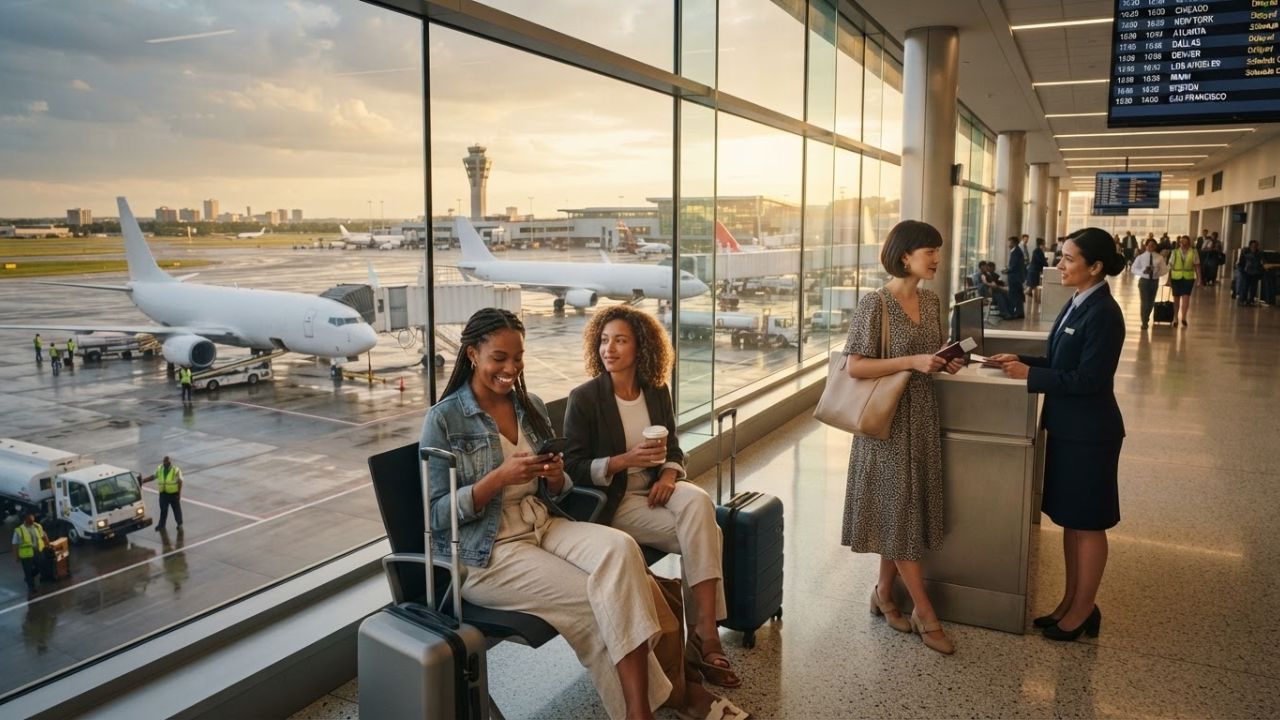
Image generated by AI
How the United States is Adapting to Widespread Airport Delays and Severe Weather Disruption to Protect Regional Tourism Flows in 2026
Widespread flight cancellations and severe storms are prompting the United States tourism sector to implement adaptive routing and community-focused travel strategies. As major transit hubs face delays, regional authorities are highlighting alternative overland transit and local destinations to minimize passenger disruptions.
The Local Trend Revealed
Commercial aviation across the United States is facing severe operational strain as a combination of intense weather fronts and international geopolitical adjustments triggers thousands of flight disruptions. According to real-time data aggregated via FlightAware on July 17, 2026, at 1:57 PM ET, airlines nationwide have registered 1,144 cancellations and 3,647 flight delays. These disruptions are leaving thousands of passengers stranded at major transit hubs while air carriers work to reposition aircraft and crews.
Geopolitical developments in the Middle East are also prompting airlines to modify their route planning and operational structures. Following recent military engagements and a Friday attack in Jordan that killed two United States service members, airlines are altering flight paths to bypass sensitive airspace. In response to these growing security concerns, Kuwait has activated its air defense networks after detecting missiles and drones. Additionally, Qatar Airways has adjusted its winter 2026/27 schedule, reducing flight frequencies between Doha and major gateways including Los Angeles, Boston, Atlanta, and Miami through March 2027.
Simultaneously, a multi-day severe weather system moving out of southern Canada is moving across the Upper Midwest, Great Lakes, Mid-Atlantic, and Northeast. Meteorologists predict this storm front will bring heavy thunderstorms, damaging wind gusts, large hail, and isolated tornadoes, starting Monday and continuing through midweek. This approaching weather pattern is expected to place additional pressure on already congested flight corridors.
The disruptions have placed immense strain on major hub operations, particularly at Newark Liberty and Boston Logan. In Newark, United Airlines is coordinating recovery efforts with partner carriers to manage a backlog of 234 delays and 167 cancellations. Meanwhile, Boston Logan is dealing with 243 delays and 105 cancellations, which has created cascading scheduling conflicts for regional flights across New England. In the Mid-Atlantic, Philadelphia is reporting 161 delays and 95 cancellations, directly impacting American Airlines' operations at one of its primary East Coast hubs. Even on the West Coast, Los Angeles has registered 193 delays and 25 cancellations, proving that the disruption is national in scope.
The key operational parameters for the flight disruptions are summarized in the table below:
| Hub Airport / Air Carrier | Delays Recorded | Cancellations Recorded | Primary Operating Impact |
|---|---|---|---|
| Hartsfield-Jackson Atlanta (ATL) | 480 | 197 | High delay volume nationwide |
| Chicago O’Hare (ORD) | 311 | 72 | Core hub for domestic connections |
| John F. Kennedy (JFK) | 231 | 233 | Highest cancellation count in the US |
| Boston Logan (BOS) | 243 | 105 | Coastal weather and route delays |
| Newark Liberty (EWR) | 234 | 167 | Heavy hub network pressure |
| LaGuardia (LGA) | 195 | 124 | Short-haul regional flight delays |
| Philadelphia (PHL) | 161 | 95 | East Coast traffic congestion |
| Los Angeles (LAX) | 193 | 25 | West Coast transit backlog |
| Delta Air Lines | 380 | 333 | Accounts for 29.1% of U.S. cancellations |
| American Airlines | 677 | 116 | Accounts for 10.1% of U.S. cancellations |
| JetBlue | 241 | 186 | Northeast corridor operations |
| Republic Airways | 158 | 179 | Regional partner network impacts |
| United Airlines | 333 | 122 | Chicago and Newark hub backlogs |
Cultural & Environmental Value (Information Gain)
The ongoing challenges in commercial aviation are driving a shift toward slower, more localized travel methods across the United States. Organizations like the U.S. Travel Association are encouraging travelers to discover regional destinations rather than relying solely on long-haul flights. This transition helps distribute tourism spending to regional economies, benefiting local communities, family-owned businesses, and state park systems. By choosing local destinations, travelers directly reduce their carbon footprint and ease the environmental burden on major metropolitan hubs.
Additionally, regional tourism offices are promoting community-based cultural heritage programs. Rather than transiting through congested coastal airports, visitors are exploring nearby historical trails, local museums, and state conservation zones. This shift in visitor patterns provides steady financial support to heritage preservation projects and rural hospitality providers who rely on domestic tourism. Ecotourism initiatives, such as state-managed wildlife reserves and regional rail trails, are seeing increased engagement as travelers opt for low-impact outdoor recreation.
Visitor Insider Tips
Managing travel during periods of high aviation disruption requires practical strategies to reduce stress and maintain a smooth journey.
- Opt for Early Morning Departures: Severe storm systems typically intensify during the afternoon and evening hours. Booking flights that depart before 9:00 AM reduces the likelihood of weather-related delays and allows more time to adjust plans if disruptions occur.
- Practice Ground Staff Etiquette: When dealing with flight cancellations, remember that airport gate agents and ground crews are working under intense pressure. A polite, respectful approach often results in better assistance.
- Explore Nearby Green Spaces: If you face a long delay at a major hub, consider leaving the terminal to visit under-the-radar local spots. Near Chicago O’Hare, the Catherine Chevalier Woods offers quiet walking trails. Travelers transiting through Atlanta Hartsfield-Jackson can access the nearby Delta Flight Museum or local parks.
- Sample Regional Airport Dining: Instead of choosing national fast-food chains during a delay, seek out airport dining spots that feature local specialties. In Philadelphia International Airport, try authentic Philly cheesesteaks from local heritage vendors.
- Confirm Alternate Rail Routing: When traveling along the busy Northeast corridor between Boston, New York, Philadelphia, and Washington, monitor regional train schedules. Rail services often operate normally during weather events that ground aircraft, offering a reliable, eco-friendly alternative.
- Leverage Regional Transit Hubs: In areas outside the Northeast, look for regional bus networks or car-sharing services that connect major airports to nearby cities. When flights are grounded, sharing a ride with other passengers to a nearby secondary city can save time and reduce the demand on airport facilities.
Tourism Outlook
The long-term outlook for United States travel points toward a more diversified and resilient domestic tourism network. Repeated flight delays and cancellations are prompting travelers to reconsider their reliance on commercial aviation for short-haul journeys. This shift is likely to accelerate investments in high-speed rail corridors, regional transit networks, and electric vehicle infrastructure. By decentralizing visitor traffic away from major aviation hubs, the travel industry can foster sustainable growth that supports both environmental conservation and local community economies for years to come.
FAQ: United States Flight Cancellations and Travel Disruption 2026
How many flights were cancelled and delayed in the United States today?
Nationwide, 1,144 flights were cancelled and 3,647 flights were delayed, according to FlightAware tracking data, driven by severe weather and geopolitical operational changes.
Which airline experienced the most cancellations during this disruption?
Delta Air Lines was the hardest hit carrier, accounting for 333 cancellations and 380 delays, which represents approximately 29.1% of all flight cancellations across the country.
What is the best way for passengers to avoid afternoon flight delays?
Booking flights that depart before 9:00 AM is recommended, as severe storm systems typically build up and intensify during the afternoon and evening hours.
Related Travel Guides
Taiwan Regional Tourism LCC Fleet Modernization
Airbus Planes Reveals 42,000 New Aircraft Demand Through 2045
Disclaimer
This article is for informational and educational purposes only. It does not constitute legal, financial, or professional advice. While we strive to provide accurate and up-to-date information, travel policies, regulations, and conditions change rapidly. Always verify information with official sources before making travel decisions. Nomad Lawyer makes no representations about the accuracy, reliability, completeness, or suitability of the information provided. Readers should consult qualified professionals for advice specific to their circumstances. The views expressed in this article are those of the author and do not necessarily reflect the views of Nomad Lawyer.
Kunal K Choudhary
Co-Founder & Contributor
A passionate traveller and tech enthusiast. Kunal contributes to the vision and growth of Nomad Lawyer, bringing fresh perspectives and driving the community forward.
Learn more about our team →