United Kingdom Flight Disruption Exposes Why European Travel Delays Can Spread So Fast

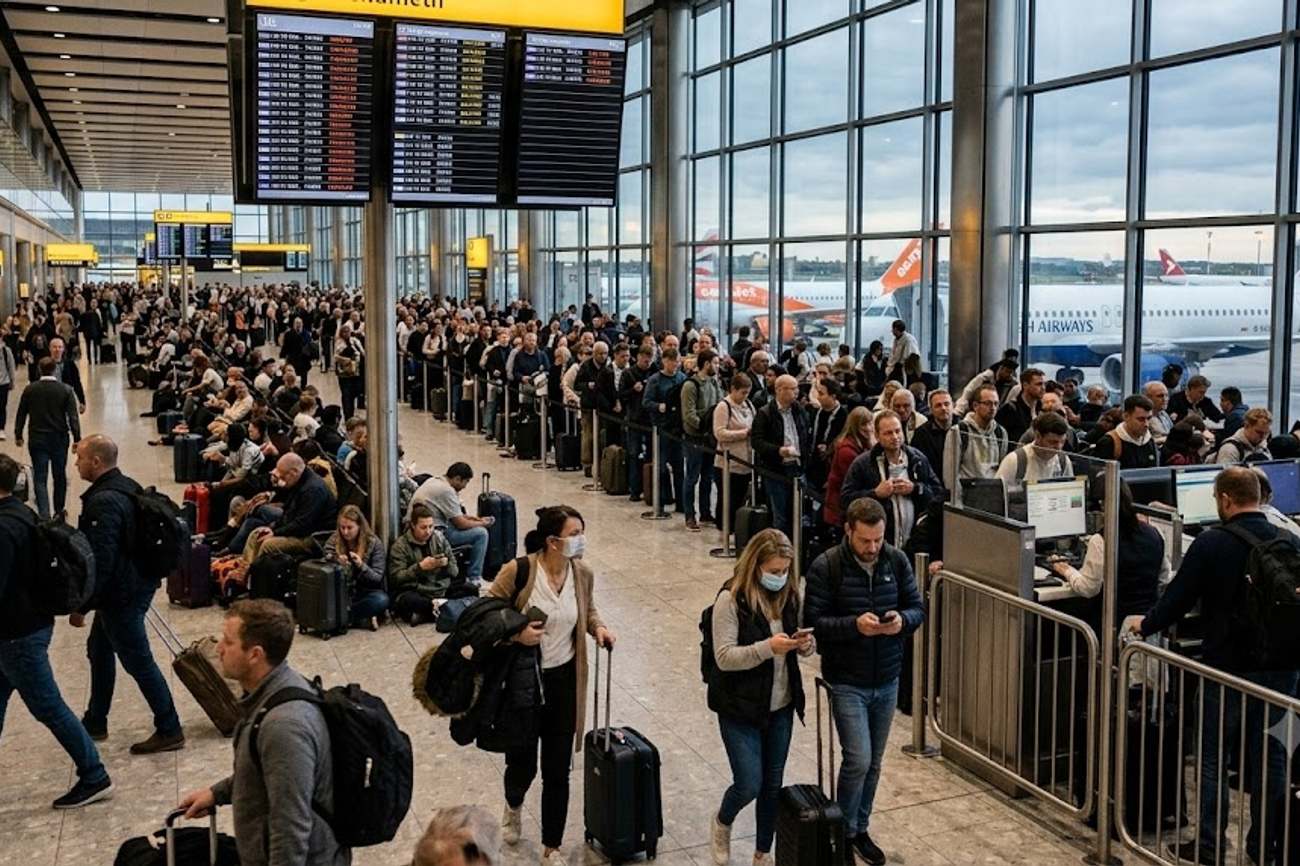
Image generated by AI
[Prestwick, September 2026] — Passengers facing flight disruptions following a major incident at Prestwick on September 21 are being urged to secure immediate duty-of-care assistance from airlines before initiating formal compensation claims. While "extraordinary circumstances" may legally exempt carriers from paying monetary damages, airlines remain contractually obligated to provide essential support to stranded travelers.
Under current aviation regulations, passengers impacted by the Prestwick disruptions are entitled to meals, refreshments, hotel accommodation, and communication facilities. Depending on the severity of the delay or cancellation, travelers must be offered a choice between a full refund, rerouting to their final destination via the earliest available flight, or rescheduling their journey for a later date.
The Prestwick Incident and Airspace Congestion
The immediate trigger for the current wave of instability is the September 21 event at Prestwick, but the broader crisis is fueled by systemic failures in European airspace management. Travelers often mistake clear skies at their departure gate for a guarantee of on-time takeoff, but aviation authorities warn that delays are frequently dictated by congestion in airspace hundreds of miles away.
To maintain safety, air traffic managers utilize "departure slots"—short-term operational instructions that dictate exactly when an aircraft can leave the ground. These slots are not permanent airport rights but are dynamic tools used to prevent dangerous traffic build-ups in the sky. Consequently, a flight departing from London may be held on the tarmac due to congestion over France, or a service from Greece may be delayed because of staffing shortages in a remote control center.
Affected Travelers, Airlines and Logistics: European Airspace Bottlenecks
Data from the European Aviation Overview covering September 7 to 13, 2026, reveals a network under extreme pressure. During this window, the network handled an average of 35,893 daily flights, representing a 2.6% increase over the same period in 2025.
The following table breaks down the primary causes and locations of these delays:
| Primary Cause | Percentage of En-Route Delays | Key Impact Factors |
|---|---|---|
| ATC Capacity & Staffing | 60% | Sector availability, controller shortages |
| Weather Conditions | 33% | Thunderstorms, low visibility, wind shifts |
| Other Factors | 7% | Technical issues, ground handling |
The burden of these delays is not evenly distributed. The report identifies specific national airspace zones that act as primary bottlenecks:
- France: Responsible for 23% of all en-route delays.
- Spain: Responsible for 18% of all en-route delays.
- Greece: Responsible for 12% of all en-route delays.
- Germany: Responsible for 10% of all en-route delays.
Specific Area Control Centres (ACCs) identified as high-pressure zones include Barcelona, Marseille, Makedonia, Athens, and Belgrade. In Marseille, staffing shortages reduced sector availability, which was further complicated by adverse weather. Barcelona faced daily capacity struggles, exacerbated by morning storm activity. Because these centers control vast swaths of sky, a staffing shortage in Athens can trigger a ripple effect that delays flights across the entire continent.
Practical Traveler Advisory and Strategic Insights
For the average passenger, the current aviation climate means that the route is now as critical as the destination. A short-haul flight within Europe is no longer a guarantee of a quick trip, as the aircraft must navigate some of the world's most crowded airspace.
Passenger Impact Assessment:
- The "Clear Sky" Fallacy: Do not assume a flight is on time just because the weather at your local airport is perfect. Your delay is likely happening in a different country's airspace.
- Duty of Care vs. Compensation: There is a legal distinction between "compensation" (money paid for the inconvenience) and "duty of care" (food and hotels). Even if an airline claims a "storm" or "ATC strike" is an extraordinary circumstance to avoid paying a cash settlement, they must still provide food and lodging.
The recent flight disruption in the United Kingdom has highlighted the complexities of European air travel, where a single delay can have a ripple effect across the entire network. According to the UK Civil Aviation Authority, passengers are entitled to certain rights and compensation in the event of flight disruptions, including delays and cancellations. This has led to an increased focus on passenger logistics and the need for clear communication from airlines. 3. The Reactionary Delay Loop: Travelers should be aware of "reactionary delays." If an aircraft arrives late due to a slot restriction, it will likely depart late for its next leg. This creates a domino effect where ground crews, flight crews, and gates are all out of sync.
Travelers are encouraged to monitor real-time updates via the European Union Aviation Safety Agency (EASA) or their specific airline's flight status portal. For those flying into major hubs, checking the status of the Airports Council International updates can provide insight into broader systemic delays.
The Domino Effect of Reactionary Delays
The aviation network is currently suffering from a phenomenon known as reactionary delay. According to the July 2026 all-causes delay report, flights departed an average of 18 minutes behind schedule. Of that time, 8.7 minutes—nearly half of the total delay—was attributed solely to reactionary factors.
When one aircraft is held by an air traffic management slot, it triggers a chain of failures:
- Crew Limits: Pilots and cabin crew have strict legal working hour limits. A delay in the first leg of a journey can push a crew over their legal limit, forcing the airline to find replacement crew or cancel subsequent flights.
- Ground Logistics: Late arrivals mean cleaning crews, baggage handlers, and catering services are delayed, pushing back the departure of the next flight.
- Connection Failures: A 20-minute delay in one hub can result in hundreds of missed connections across three different airlines.
The Role of Convective Weather
While staffing is the primary driver of current delays, "convective weather"—powerful, fast-developing thunderstorms—remains a volatile variable. Unlike steady rain, convective weather creates sudden turbulence, lightning, and heavy precipitation that forces air traffic controllers to instantly reroute aircraft.
When a storm cell blocks a primary air corridor, multiple flights are diverted into the remaining safe routes. This creates an artificial bottleneck, turning a localized weather event into a network-wide crisis. This volatility makes precise scheduling nearly impossible during the peak transition seasons of 2026.
FAQ: European Flight Disruptions 2026
What should I do if my flight is delayed at Prestwick? Immediately request "duty of care" provisions from your airline. This includes vouchers for food and drink, and hotel accommodation if the delay is overnight. Do not wait until you file a claim to get these essentials.
Why is my flight delayed when the weather looks fine? Your flight path likely crosses a "bottleneck" area (such as France or Spain) where air traffic control is understaffed or experiencing weather issues. The delay is implemented at your departure airport to prevent congestion in the sky.
Can I get money back for a delay caused by ATC staffing? Compensation depends on whether the airline deems the staffing shortage an "extraordinary circumstance." However, the airline is still required to provide meals and accommodation regardless of the cause of the delay.
What is a 'departure slot'? A departure slot is a specific time window assigned by air traffic controllers. It is a safety measure to ensure that the number of aircraft in the air does not exceed the capacity of the controllers to manage them safely.
The European sky is currently a game of musical chairs where the music is controlled by staffing levels and storm cells.
Related Travel Guides
- Virgin Australia Aligns With Qantas and QantasLink as Workforce Strains Threaten Australia Air Travel
- Vietjet Strengthens Vietnam Aviation Growth With Global Expansion New Fleet And Stronger Connectivity
- UK Joins France, Greece and More Countries as Alaska Airlines Expands Seattle Global Network with New Athens and Paris Flights: All You Need to Know
This article is for informational purposes. Flight routes, passenger regulations, visa rules, and transit advisories are subject to change by airlines and aviation authorities. Readers are advised to verify schedules and travel documentation with relevant carriers and border agencies before departure.
Related Stories

Jet Airways vs. Boeing NCLAT Battle: Why Manufacturer Litigation Offers No Quick Ticket Refunds for Indian Travel Agents
easyJet Launches Direct Liverpool to Reykjavik Flights: Inside the North West's New Winter Gateway to Iceland