
Virgin Australia Aligns With Qantas and QantasLink as Workforce Strains Threaten Australia Air Travel
Virgin Australia Aligns With Qantas and QantasLink as Workforce Strains Threaten Australia Air Travel

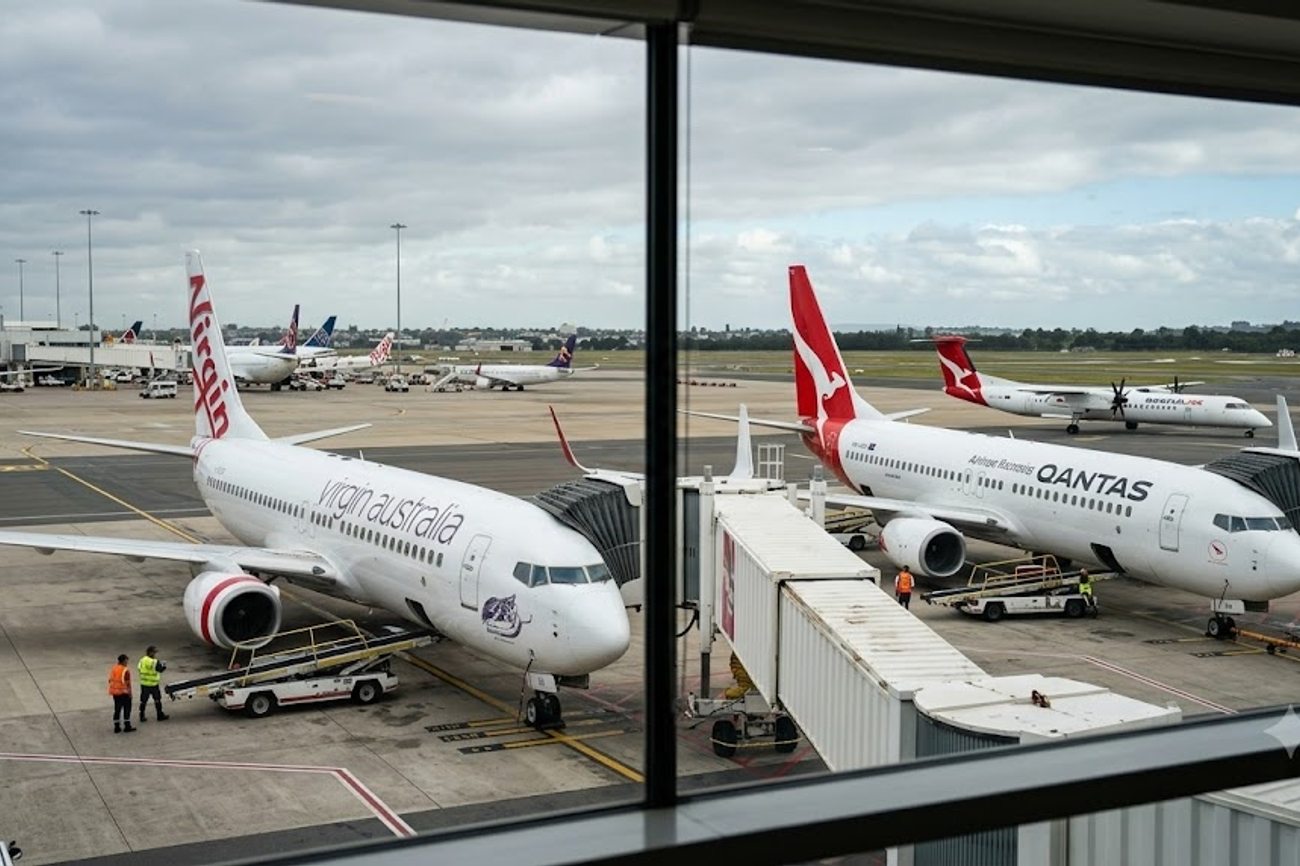
Image generated by AI
The fragility of the Australian aviation network is so extreme that a handful of sick calls and a refusal to work voluntary overtime can ground as many as 30 flights across an entire continent in a single weekend. During the peak travel window of September 18-19, 2026, Virgin Australia faced a systemic collapse of its schedule not because of weather or technical failure, but because of a critical shortage of cabin crew. This disruption rippled through major hubs like Sydney and Brisbane and stretched as far as Nadi and Queenstown, proving that the distance between a seamless journey and a stranded passenger is often just a few missing crew members.
The Fragility of the Australian Sky
Australia is currently grappling with a workforce crisis that exposes the precarious nature of its air corridors. The recent chaos involving Virgin Australia was not a formal strike, but a symptom of a depleted and exhausted workforce. When cabin crew began calling in sick or declining to work their rostered days off, the airline lacked the redundancy to cover the gaps. This resulted in the cancellation of approximately 30 services, including vital links such as Brisbane–Cairns, Sydney–Cairns, Perth–Brisbane, Queenstown–Melbourne, and Sydney–Nadi.
While Virgin Australia dealt with crew shortages, Qantas faced a different but equally volatile threat. Ground employees from Qantas Ground Services and Australian Air Express—the people who move the freight and support regional QantasLink services—planned 24-hour stoppages. In Victoria, these actions were slated for Wednesday, September 23, while the rest of the country faced disruptions on Thursday, September 24.
These are not isolated incidents but a broader pattern of labor tension. The aviation industry relies on a highly specialized chain of humans; you cannot simply hire a temporary worker to replace a flight attendant or a freight handler. Every role requires rigorous security clearance, operational certification, and specific training. When one link in that chain breaks, the entire flight is grounded, regardless of whether the aircraft is fueled and the pilots are ready.
What Makes Australian Aviation Travel Unique
Navigating the Australian sky is an exercise in managing vast distances. The geography dictates a hub-and-spoke model where regional centers rely entirely on a few key flights to connect to the world. This is where the current instability becomes most acute. For a traveler moving between Sydney and Melbourne, a cancellation is an inconvenience; there are dozens of other flights daily. However, for someone relying on QantasLink to get from a remote town to a major city, a single cancellation can mean being stranded for 24 hours or more.
The pressure on the crew is equally intense. The "long duty" is a reality of Australian flying. Crew members operating routes to Perth, Darwin, Cairns, Nadi, or Queenstown often face shifts exceeding ten hours. Currently, some multi-sector assignments reach ten hours, while certain two-sector duties can stretch to 12 hours. This is a significant increase from the pre-pandemic standard of 9 hours and 45 minutes.
Furthermore, the role of the flight attendant has shifted. There is growing friction over the requirement for cabin crew to perform aircraft-cleaning tasks during short turnarounds. In a high-pressure environment, these extra duties leave workers with almost no time to eat, rest, or use airport facilities before their next takeoff, contributing to the burnout that leads to the very "sick calls" that ground flights.
Visitor Insider Tips
If you are planning a trip to Australia during peak seasons—particularly during school holidays in Queensland, Victoria, and the Northern Territory—you must build significant buffers into your itinerary.
The Connection Buffer Never book a tight connection between a regional flight and an international departure. If you are flying from Cairns through Sydney to an overseas destination, allow at least 6-8 hours between flights. A regional delay of two hours can easily cascade into a missed international flight, and during peak periods, the next available seat may not be for several days.
Strategic Basing If your itinerary involves multiple cities, consider basing yourself in a major hub like Sydney or Melbourne for a few days before your final departure. This minimizes the risk of a regional disruption ruining your flight home.
Real-Time Monitoring Do not rely solely on email notifications. Download the airline apps and enable push notifications, but also check the official flight boards of the airports you are using. In times of workforce shortage, flights are often cancelled with very little notice.
Regional Alternatives When booking regional travel, research secondary transport options. While flying is fastest, knowing the coach or rail alternatives between regional hubs can save you from being completely stranded if a QantasLink service is cancelled.
Cultural and Environmental Context
The current tension in the skies reflects a larger cultural shift in the Australian workforce post-pandemic. There is a growing insistence on "work-life balance" and a refusal to accept the grueling schedules that were once standard in the aviation industry. The push to return duty limits to 9 hours and 45 minutes is not just about hours; it is about the mental health and safety of the crew who are responsible for passenger lives.
From an environmental and community perspective, the reliance on air travel in Australia is a necessity, not a luxury. For many remote communities, aviation is the only lifeline for medical supplies, fresh food, and emergency services. When freight workers at Australian Air Express strike, it isn't just passengers who suffer; it is the regional businesses and healthcare providers who rely on those cargo holds.
The interaction between tourism and local labor is currently at a tipping point. As Australia pushes to increase visitor numbers through Tourism Australia, the infrastructure—specifically the human infrastructure—is struggling to keep pace. The tension between the desire for economic growth via tourism and the capacity of the workforce to sustain that growth without burning out is the central conflict of the current aviation crisis. For those visiting UNESCO World Heritage sites in the Outback or the Great Barrier Reef, the journey is often the most precarious part of the adventure.
FAQ: Visiting Australia 2026
What is the best time to visit to avoid flight disruptions? Avoid the peak school holiday windows in Queensland, Victoria, and the Northern Territory. Traveling during the "shoulder seasons" (autumn and spring) typically sees lower passenger volumes and less pressure on airline staffing.
Do I need a visa for Australia? Yes, most international visitors require a visa or an Electronic Travel Authority (ETA). You should apply via the official government portal well in advance of your departure.
How do I get from regional areas to major hubs? The primary methods are QantasLink and regional charters. However, due to current workforce instability, it is wise to check for available coach or rail services as a backup plan.
Is it safe for solo travelers? Australia is exceptionally safe for solo travelers. The primary risk currently is logistical rather than safety-related; ensure you have travel insurance that covers flight cancellations and delays.
The beauty of the Australian wild is timeless, but the flights getting you there are currently operating on a razor's edge.
Related Travel Guides
- Vietjet Strengthens Vietnam Aviation Growth With Global Expansion New Fleet And Stronger Connectivity
- UK Joins France, Greece and More Countries as Alaska Airlines Expands Seattle Global Network with New Athens and Paris Flights: All You Need to Know
- Malaysia Warns Indian Travellers Visa-Free Entry Cannot Be Used to Find Jobs
Disclaimer
This article is for informational and educational purposes only. It does not constitute legal, financial, or professional advice. While we strive to provide accurate and up-to-date information, travel policies, regulations, and conditions change rapidly. Always verify information with official sources before making travel decisions. Nomad Lawyer makes no representations about the accuracy, reliability, completeness, or suitability of the information provided. Readers should consult qualified professionals for advice specific to their circumstances. The views expressed in this article are those of the author and do not necessarily reflect the views of Nomad Lawyer.
Raushan Kumar
Founder & Lead Developer
Full-stack developer with 11+ years of experience and a passionate traveller. Raushan built Nomad Lawyer from the ground up with a vision to create the best travel and law experience on the web.
Learn more about our team →