Malaysia Tourism Surges Past 32 Million Arrivals as Domestic Transit Shifts Under Scrutiny

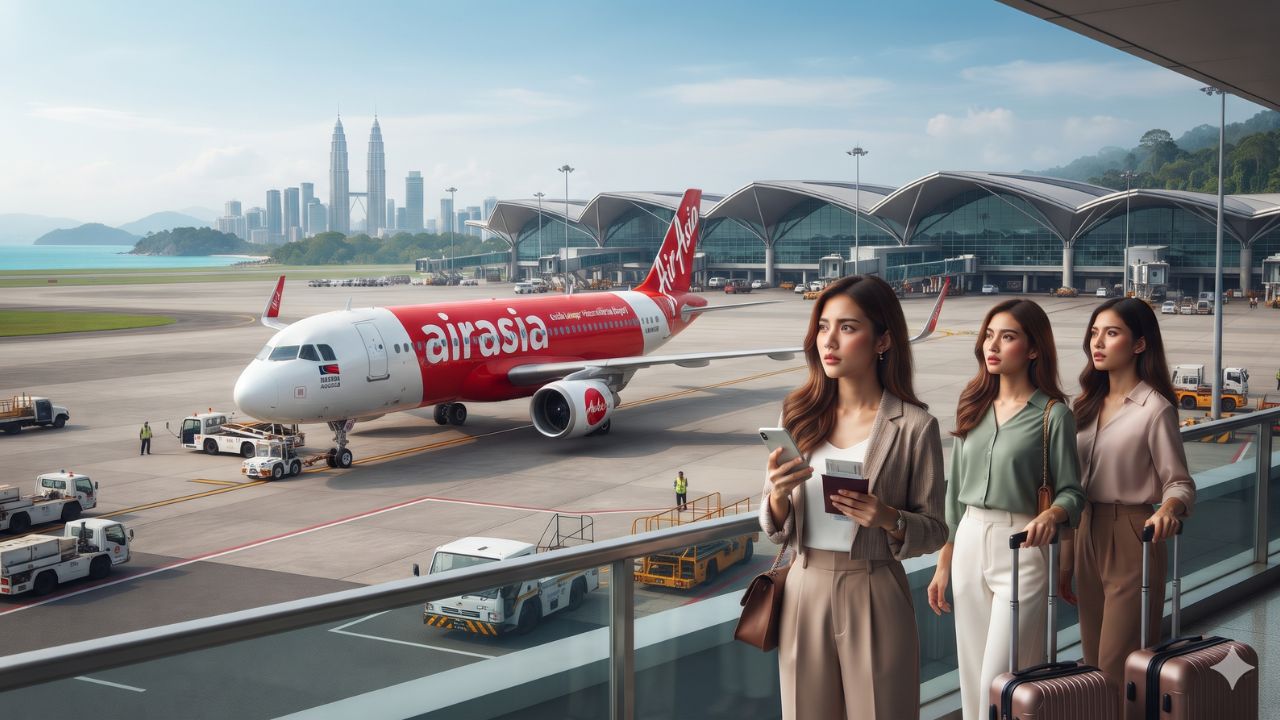
While Malaysia welcomed 32.26 million international arrivals between January and September 2026, overnight tourist stays actually contracted by 1.6% to 19.47 million. This quiet divergence between sheer border crossings and actual hotel stays highlights an evolving pattern across the country's travel sector. As national authorities push the multi-year Visit Malaysia campaign launched in January 2026, questions surrounding regional domestic flight networks and airport infrastructure liabilities have entered public discourse following parliamentary disclosures in October 2026 regarding an estimated RM500 million debt owed by AirAsia entities to airport operator Malaysia Airports Holdings Berhad.
Despite corporate financial discussions and negotiations over debt restructuring, flight schedules across peninsular hubs and regional gateways remain fully operational without service cancellations. For international visitors exploring the historic streetscapes of George Town, the duty-free archipelagos of Langkawi, or the ancient rainforest reserves of Sabah and Sarawak, understanding domestic flight dynamics, booking windows, and regional connectivity is key to traveling beyond standard Kuala Lumpur layovers.
Aviation Connectivity and the Visit Malaysia Economic Engine
Tourism serves as a cornerstone of the national economy, having generated RM323 billion in gross value added in 2025 and contributing 15.9% of Malaysia's gross domestic product. Under the Visit Malaysia 2026–2027 initiative, Tourism Malaysia has focused heavily on dispersing visitors from dense capital districts toward secondary heritage and eco-tourism corridors. In October 2026, state tourism officials deepened collaboration with digital booking application AirAsia MOVE, explicitly structuring promotions to stimulate interest in provincial cultural hubs and rural retreats.
Official aviation data from Malaysia Airports illustrates a shifting operating environment. Across the domestic airport system, total passenger movements reached 75.2 million during the first nine months of 2026, marking a 2.4% contraction year-on-year. While international transit expanded by 4.5% to reach 41.3 million passengers, domestic movements experienced sharp volatility, including a 21.8% drop in September 2026 compared to the same month in 2025. Still, regulatory oversight remains bullish: the Civil Aviation Authority of Malaysia projects full-year 2026 passenger traffic between 114 million and 118.9 million, representing an anticipated annual expansion of 5.5% to 10% driven by expanded bilateral visa waivers and route additions.
Evaluating Travel Volume and Aviation Benchmarks Across Malaysia
The following metrics contrast official passenger trends, visitor habits, and economic contributions across the Malaysian tourism and aviation landscape for 2025 and 2026:
| Indicator / Data Point | Jan–Sep 2025 Metric | Jan–Sep 2026 Performance | Shift / Variance | Strategic Implications for Travelers |
|---|---|---|---|---|
| International Arrivals | 31.50 million | 32.26 million | +2.4% | Increased regional day-trips and cross-border entries |
| Overnight Tourist Arrivals | 19.78 million | 19.47 million | -1.6% | Shorter average lengths of stay; more transit traffic |
| Network Airport Passenger Movements | 77.05 million | 75.20 million | -2.4% | Consolidation of domestic frequencies across provincial airports |
| International Airport Movements | 39.52 million | 41.30 million | +4.5% | Strong inbound long-haul and regional Asian airline routes |
| September Domestic Airport Traffic | Baseline index | -21.8% vs Sep 2025 | Sharp contraction | Mid-week off-peak aircraft seat supply optimization |
| Tourism Sector Economic Footprint | RM323 billion (2025) | 15.9% of National GDP | Foundational pillar | Strong government policy backing for travel infrastructure |
| CAAM Annual Air Traffic Forecast | 108.1M (2025 baseline) | 114.0M to 118.9M | +5.5% to +10.0% | Steady rebound supported by visa exemptions and new routes |
What Makes Regional Malaysia Different
Traveling through Malaysia reveals stark geographic and cultural variations that go far beyond standard urban high-rises. West Malaysia holds rich colonial and trade architecture preserved at UNESCO World Heritage Sites in George Town and Melaka, where centuries-old Peranakan shophouses, clan jetties, and spice warehouses sit adjacent to open-air hawker lanes serving Assam laksa and char kway teow.
Crossing the South China Sea into Malaysian Borneo introduces a completely distinct world. In Sabah and Sarawak, travel revolves around indigenous cultural longhouses, the granite spires of Mount Kinabalu, and the dense riverine rainforests of the Kinabatangan basin, which harbor wild orangutans, pygmy elephants, and hornbills. Reaching these conservation areas requires dependable domestic air links from Kuala Lumpur International Airport (KLIA) or Subang Airport into Kota Kinabalu and Kuching, followed by regional turboprop routes to interior strips like Mulu or Sandakan.
Because AirAsia serves as the primary low-cost carrier connecting these peninsular and Bornean nodes, maintaining reliable flight frequency is vital for local lodge owners, river safari guides, and heritage operators who rely on tourist revenue to sustain community-based conservation initiatives.
Visitor Insider Tips for Multi-City Malaysian Itineraries
Navigating peninsular rail, island ferries, and low-cost air links across Malaysia runs smoothest when adhering to local travel rhythms:
- Book Cross-Peninsular Flights Early: When linking Kuala Lumpur with Penang, Langkawi, or Kota Bharu, morning departures face fewer air traffic management hold-ups than late-afternoon flights during the inter-monsoon convective storm window.
- Leverage Subang Airport for Island Transfers: For flights to Langkawi or Penang, check schedules out of Sultan Abdul Aziz Shah Airport (Subang, SZB). Located closer to central Kuala Lumpur than KLIA, Subang's revived jet services save over an hour of highway transit.
- Balance Bornean Transfers with Buffer Days: When connecting from an international arrival at KLIA Terminal 1 to a regional Bornean flight departing Terminal 2, permit at least a three-hour connection window. Terminals are linked by the KLIA Transit train rather than an airside shuttle, requiring re-clearing security.
- Respect Local Community Customs: In Sarawak and Sabah, visiting indigenous Iban or Kadazan-Dusun longhouses requires asking permission before entering shared veranda galleries and presenting a modest host gift to the village head. In conservative coastal states like Kelantan and Terengganu, modest dress covering shoulders and knees is mandatory in town centers and public markets.
Cultural and Environmental Context
The friction between rising total border entries and shrinking overnight stays highlights an economic paradox facing local hospitality providers. When international travelers treat Peninsular Malaysia as a quick 24-to-48-hour transit stepping stone between Singapore, Thailand, or Indonesia, local businesses shoulder the environmental burdens of waste management and transport emissions without capturing sustained lodging expenditure.
In sensitive habitats like the Langkawi UNESCO Global Geopark and the Danum Valley Conservation Area in Sabah, sustainable community tourism relies on longer guest stays that generate park conservation fees and fund local naturalist rangers. Striking a balance between affordable budget airline seating and high-value cultural immersion remains essential to ensuring that Malaysia's rich bio-diverse reserves and living heritage traditions survive commercial pressures.
FAQ: Visiting Malaysia 2026
Are AirAsia flights in Malaysia operating normally despite reported debts?
Yes. Official disclosures confirm that flights continue operating normally. No debt-related cancellations, schedule terminations, or extra surcharges have been imposed on passengers.
What is the primary difference between international arrivals and overnight tourists?
Total arrivals include same-day border crossings from neighboring countries like Singapore and Thailand, whereas overnight tourists spend at least one night in registered accommodations.
How do travelers get from Kuala Lumpur to Malaysian Borneo?
Nonstop flights operate multiple times daily from Kuala Lumpur (KUL) to Kota Kinabalu (BKI) in Sabah and Kuching (KCH) in Sarawak, with flight times averaging two hours and thirty minutes.
What is the best season to explore both Peninsular Malaysia and Borneo?
March through October generally offers the driest conditions for trekking in Borneo and beach visits along the eastern peninsular islands like Redang and the Perhentians.
True exploration in Malaysia begins when travelers step past the transit gates of Kuala Lumpur and follow the quiet coastal roads and ancient riverways that define the nation's authentic soul.
Related Travel Guides
This article is for informational purposes. Flight routes, passenger regulations, visa rules, and transit advisories are subject to change by airlines and aviation authorities. Readers are advised to verify schedules and travel documentation with relevant carriers and border agencies before departure.
Related Stories
Malaysia Deepavali Travel Rush: AirAsia Issues Essential Airport Rules for Holiday Travelers 2026

American Airlines Boosts Miami to St. Thomas Flights: Two-Island USVI Winter Travel Guide