
United Airlines Expands World's Largest Pilot Training Hub in Denver to Support 2026 Growth
United Airlines has scaled its Denver flight training campus, the largest of its kind globally, to accelerate pilot hiring and recurrent training for its expanding fleet.

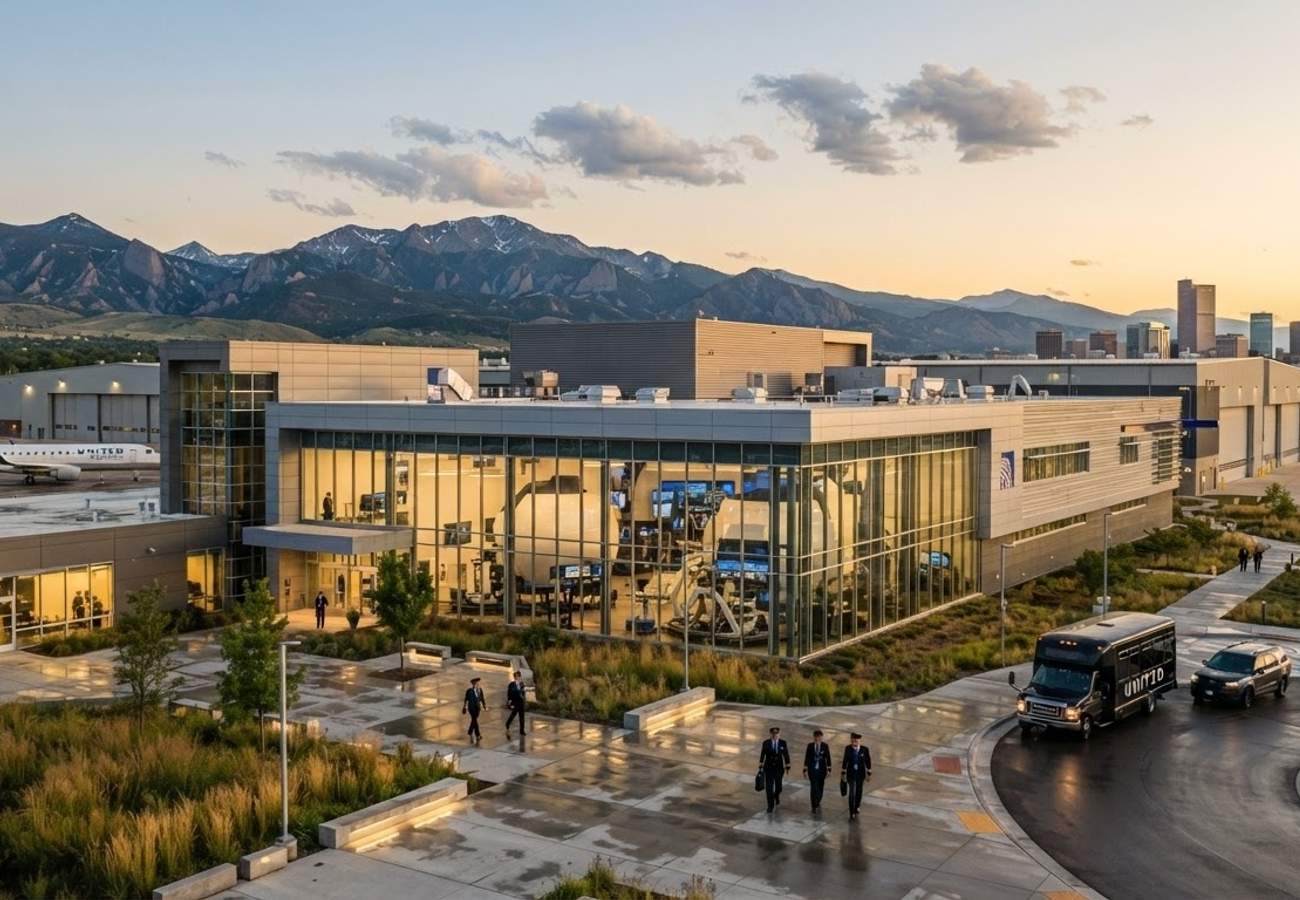
Image generated by AI
United Airlines has finalized a major expansion of its Denver Flight Training Center, solidifying Colorado's position as the primary engine for the carrier's pilot recruitment and operational readiness. This strategic move comes as the airline aggressively scales its workforce to meet long-term fleet growth targets.
The facility, located in Denver’s Central Park neighborhood, is recognized as the most expansive pilot training site on the planet. By increasing its capacity for both initial certifications and mandatory recurrent training, United is addressing the systemic pilot shortage while ensuring its cockpit crews are prepared for a multi-year expansion involving thousands of new aviators and hundreds of additional aircraft.
Scaling a Megacampus for Decade-Long Hiring Goals
The Denver campus has evolved into a massive operational hub spanning more than 20 acres. This complex is not merely a school but a specialized aviation city, housing a vast array of fixed-base and full-motion simulators that mirror every aircraft model currently operated by the airline.
In a strategic partnership with CAE, a global leader in simulation technology, United has integrated dozens of new training devices into its ecosystem. This expansion builds upon a 150,000 square foot facility that debuted in 2024, which was specifically engineered to accommodate 12 additional high-fidelity full-motion simulators and the necessary briefing infrastructure.
The logistical flow of the airline's workforce is centered here; every United pilot is required to return to the Denver center at scheduled intervals for mandatory simulator evaluations. For new recruits, the campus serves as the primary induction point where they undergo the rigorous initial training required to transition to airline operations.
Strategic Advantages of the Colorado Aviation Hub
The decision to concentrate such a massive investment in Denver is rooted in geography and logistics. Situated near the center of the continental United States, the facility allows United to rotate crews from all its domestic and international hubs through a single, standardized point of instruction.
Proximity to Denver International Airport—one of the world's highest-volume airports and a cornerstone of United's network—further streamlines the movement of personnel. Reports indicate that pilots must visit the center at least once every nine months for simulator checks, making the city's dense flight connectivity a vital asset for maintaining operational schedules.
Beyond the airline's internal benefits, the facility acts as a significant economic driver for the region. The constant influx of visiting crews fuels tens of millions of dollars in annual spending across local hotels, transport services, and hospitality businesses, transforming aviation training into a pillar of Colorado's economic development.
Technical Infrastructure of the Global Training Center
The interior of the campus is designed to replicate the high-stress environment of a cockpit without the risks of actual flight. The facility utilizes a tiered training approach:
- Full-Motion Simulators: These high-cost devices mimic the physical movements and visual cues of both narrowbody and widebody aircraft.
- Fixed-Base Devices: Used for procedural training, systems management, and emergency drills.
- Computer-Based Classrooms: Where pilots study updated flight manuals and operational protocols.
- Briefing Zones: Specialized areas for pre- and post-session analysis to refine pilot performance.
The most recent additions to the site were constructed with modularity in mind. As United takes delivery of next-generation aircraft models, the facility can integrate new simulator hardware without requiring total reconstruction. Current data suggests the center can process hundreds of pilots daily when operating at full capacity, removing a traditional bottleneck in the airline's growth trajectory.
Additionally, the airline has integrated sustainability measures into the campus, including solar power installations and energy-efficient building systems, as part of its broader corporate responsibility goals for ground operations.
Driving Global Network Expansion and Resilience
The scale of the Denver expansion is a direct response to United's aggressive fleet orders and the launch of new international routes. As the airline adds long-haul capacity, the demand for simulator hours increases exponentially.
By increasing the number of available devices, United can perform more "check rides" and training events per day. This prevents delays in getting new hires into the cockpit and ensures that existing crews remain current on their certifications.
From an operational standpoint, this capacity creates resilience. The ability to quickly retrain pilots transitioning between aircraft types or returning from leave allows the airline to pivot its resources more effectively in response to shifting market demands. Furthermore, the prestige and scale of the Denver center serve as a powerful recruitment tool, signaling to prospective pilots that the airline is invested in the highest standards of professional development.
Long-Term Implications for Denver’s Aviation Identity
The continued growth of the training hub cements Denver's role as a critical node in the global aviation network. This investment mirrors the broader development at Denver International Airport, which has seen significant gate expansions and a steady climb in global traffic rankings.
Industry observers suggest that the presence of the world's largest simulator campus may attract other aviation-related businesses and educational partnerships to the metro area, creating a specialized cluster of aerospace expertise. Planning documents indicate that United is keeping options open for further land acquisition near the current site, suggesting that the campus may continue to grow as the airline's ambitions evolve.
The scale of the Denver hub ensures that while the skies grow more crowded, the pilots navigating them are trained in the most advanced environment available.
Related Travel Guides
Disclaimer
This article is for informational and educational purposes only. It does not constitute legal, financial, or professional advice. While we strive to provide accurate and up-to-date information, travel policies, regulations, and conditions change rapidly. Always verify information with official sources before making travel decisions. Nomad Lawyer makes no representations about the accuracy, reliability, completeness, or suitability of the information provided. Readers should consult qualified professionals for advice specific to their circumstances. The views expressed in this article are those of the author and do not necessarily reflect the views of Nomad Lawyer.
Raushan Kumar
Founder & Lead Developer
Full-stack developer with 11+ years of experience and a passionate traveller. Raushan built Nomad Lawyer from the ground up with a vision to create the best travel and law experience on the web.
Learn more about our team →