
Lollapalooza 2026 Chicago Transit Guide: Navigating Grant Park Closures, CTA, and Metra Schedules from July 30 to August 2
Comprehensive transit and logistics guide for Lollapalooza 2026 in Chicago, covering CTA and Metra schedules, Grant Park access, and navigating 170 artists across eight stages from July 30 to August 2.

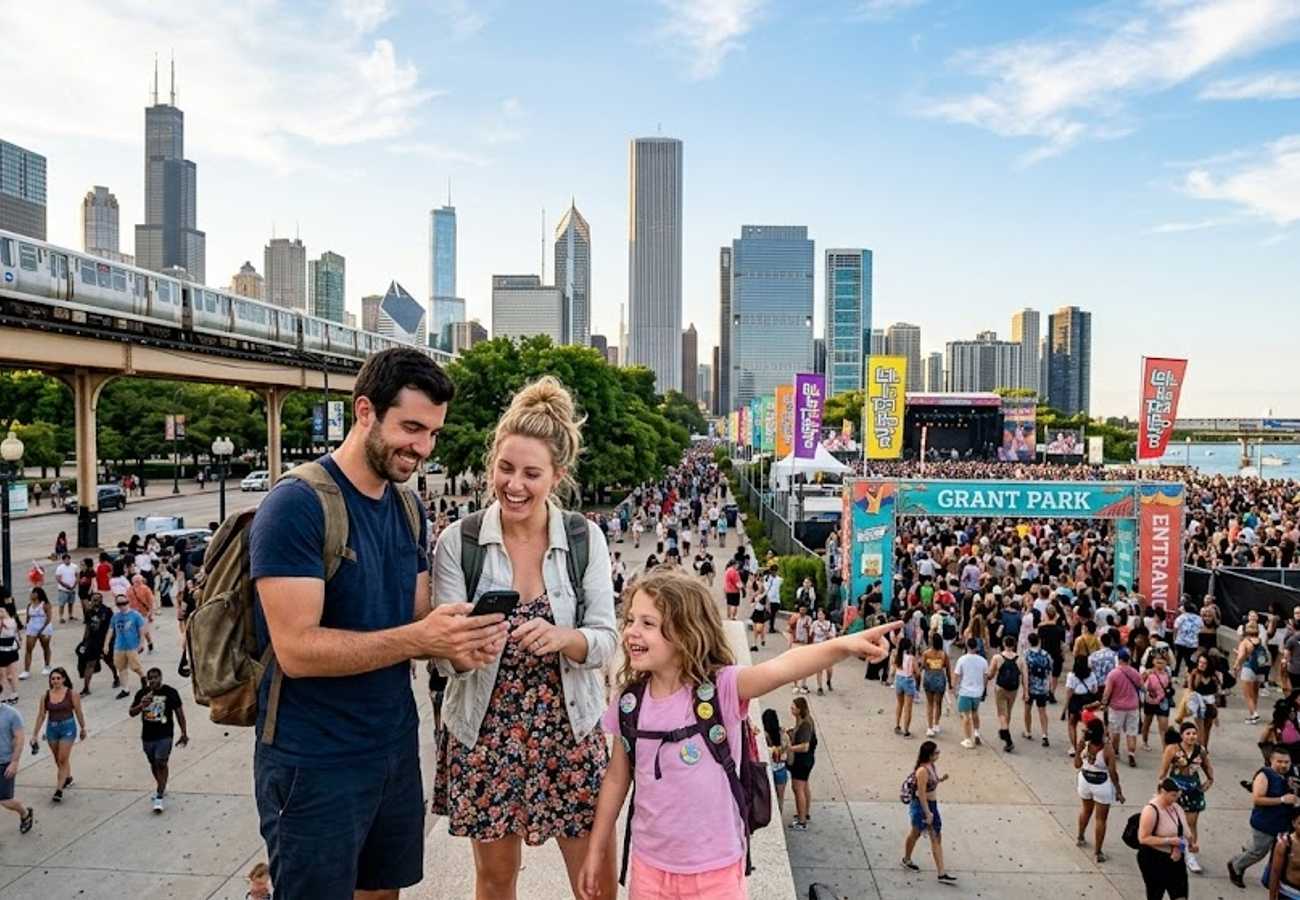
Image generated by AI
Chicago's Grant Park becomes an eight-stage mega-festival from July 30 to August 2, 2026, forcing major adjustments to CTA and Metra services. With over 170 artists performing simultaneously, navigating the city requires precise logistical planning.
The Core Transit Update
Lollapalooza 2026 takes over Grant Park in Chicago from Thursday, July 30 to Sunday, August 2. Gates open at 11 a.m. and close at 10 p.m. daily. More than 170 artists will perform across eight stages. The central location adjacent to the downtown Loop and Lake Michigan means several of Chicago's busiest roads and public transport corridors will experience heavy congestion, particularly between 9:30 p.m. and 11 p.m. when crowds exit the park.
To accommodate the surge, the Chicago Transit Authority (CTA) and Metra are increasing capacity. The CTA recommends the Red Line, Blue Line, and elevated Loop lines for reaching Grant Park. Jackson station on the Red Line and Jackson station on the Blue Line offer primary connections, while Adams/Wabash and Washington/Wabash stations also provide walking distance access. Yellow Line service will extend until 1 a.m. each night. Metra will operate additional trains and add railcars on 7 of its 11 lines during the event, with adjusted schedules on several routes to meet demand. Passengers should consult the official Metra Lollapalooza notice before travelling.
Transit Schedule & Route Specifications
The 2026 programme contains several clashes between leading performers. Travellers should identify their priority concerts before arriving and allow enough time to move between stages. All timings below use Chicago’s Central Time. The schedule may be amended, so guests should check the official Lollapalooza schedule on the day of attendance.
| Date | Selected Daytime Performers | Main Headline Performances |
|---|---|---|
| Thursday, 30 July | 5 Seconds of Summer (4:30–5:30 p.m.); Little Simz (5:45–6:30 p.m.); Sombr (6:30–7:30 p.m.); Empire of the Sun (6:30–7:30 p.m.); Wet Leg (7:30–8:30 p.m.); Kettama (7–8 p.m.) | Lorde (8:30–10 p.m.); John Summit (8:30–10 p.m.); Worship (8:30–9:45 p.m.) |
| Friday, 31 July | I-DLE (2:40–3:40 p.m.); Zara Larsson (4:40–5:40 p.m.); Suki Waterhouse (5:40–6:40 p.m.); Yungblud (6:30–7:30 p.m.); Lil Uzi Vert (6:40–7:40 p.m.); Mustard (7–8 p.m.) | The Smashing Pumpkins (8:30–10 p.m.); Charli XCX (8:40–10 p.m.); Major Lazer (8:30–9:45 p.m.) |
| Saturday, 1 August | Wolf Alice (3–4 p.m.); Leon Thomas (4:30–5:30 p.m.); Clipse (5–6 p.m.); The Neighbourhood (6:30–7:30 p.m.); Ethel Cain (7–8 p.m.); Alison Wonderland (7–8 p.m.) | Olivia Dean (8:30–10 p.m.); Jennie (8:55–10 p.m.); Disco Lines (8:30–9:45 p.m.) |
| Sunday, 2 August | Muna (4:45–5:45 p.m.); Yoasobi (5–6 p.m.); Duke Dumont (5:45–6:45 p.m.); Turnstile (7–8 p.m.); aespa (7:45–8:45 p.m.) | Tate McRae (8:45–10 p.m.); The xx (8:45–10 p.m.); The Chainsmokers (8:30–9:45 p.m.); Ado (9:15–10 p.m.) |
Traveler Logistics Guide
From a ground-level perspective, the best way to navigate this is to map out your stage priorities before arriving. Grant Park covers a massive area, and walking from one end to another during peak hours can take considerable time due to dense crowds. First-time visitors should arrive before the late-afternoon rush to locate essential amenities like water points, medical stations, toilets, and emergency exits.
The timetable presents unavoidable clashes. Thursday night forces a direct choice between Lorde and John Summit at 8:30 p.m. Friday splits audiences between The Smashing Pumpkins and Charli XCX. Saturday places Olivia Dean against Jennie, and Sunday requires choosing between Tate McRae and The xx. Attempting to catch portions of two overlapping headline sets is rarely worth the effort; you will likely spend the duration fighting through pedestrian bottlenecks.
For transit, digital ticket users should purchase CTA and Metra passes before arriving at busy stations to avoid massive queues. Ensure your phone is fully charged, as a dead battery can prevent access to digital tickets and transit apps. The heaviest travel demand occurs between 9:30 p.m. and 11 p.m. when thousands exit the park simultaneously. For Sunday night attendees, avoid scheduling tight airport, coach, or railway connections immediately after 10 p.m. The mass exit from Grant Park will heavily delay transit boarding. Anyone flying early on Monday should confirm their route to O'Hare or Midway via the Blue Line or Orange Line, respectively, and allow for late-night congestion.
Infrastructure Impact Assessment
The influx of domestic and international travelers for Lollapalooza 2026 places immense pressure on Chicago's transit infrastructure. Extending the Yellow Line until 1 a.m. and adding capacity to 7 of Metra's 11 lines demonstrates a proactive approach to managing the post-festival exodus. The Chicago Transit Authority's recommendation to use the Red Line, Blue Line, and elevated Loop lines leverages the city's dense downtown rail network to mitigate road closures around Grant Park. Stations like Jackson (Red and Blue lines), Adams/Wabash, and Washington/Wabash act as primary arteries for pedestrian flow.
This event reinforces Chicago's capability to handle mega-events, utilizing its extensive rail network to keep the downtown Loop functional despite the massive influx of festival-goers. The festival's draw of global acts like South Korean star Jennie and Japanese singer Yoasobi highlights the city's role as a primary hub for international music tourism, driving demand not just on local transit but on regional rail networks connecting Chicago to neighboring states.
Plan your transit early, charge your devices, and choose your headliners wisely to survive the Lollapalooza 2026 crowds.
Related Travel Guides
Disclaimer
This article is for informational and educational purposes only. It does not constitute legal, financial, or professional advice. While we strive to provide accurate and up-to-date information, travel policies, regulations, and conditions change rapidly. Always verify information with official sources before making travel decisions. Nomad Lawyer makes no representations about the accuracy, reliability, completeness, or suitability of the information provided. Readers should consult qualified professionals for advice specific to their circumstances. The views expressed in this article are those of the author and do not necessarily reflect the views of Nomad Lawyer.
Preeti Gunjan
Contributor & Community Manager
A passionate traveller and community builder. Preeti helps grow the Nomad Lawyer community, fostering engagement and bringing the reader experience to life.
Learn more about our team →