
United Airlines Flight UAL400 Diverts to Colorado Springs Due to Denver Hub Congestion in 2026
United Airlines Flight UAL400 from Richmond to Denver diverted to Colorado Springs on August 8, highlighting severe weather-driven operational strain at Denver International Airport.

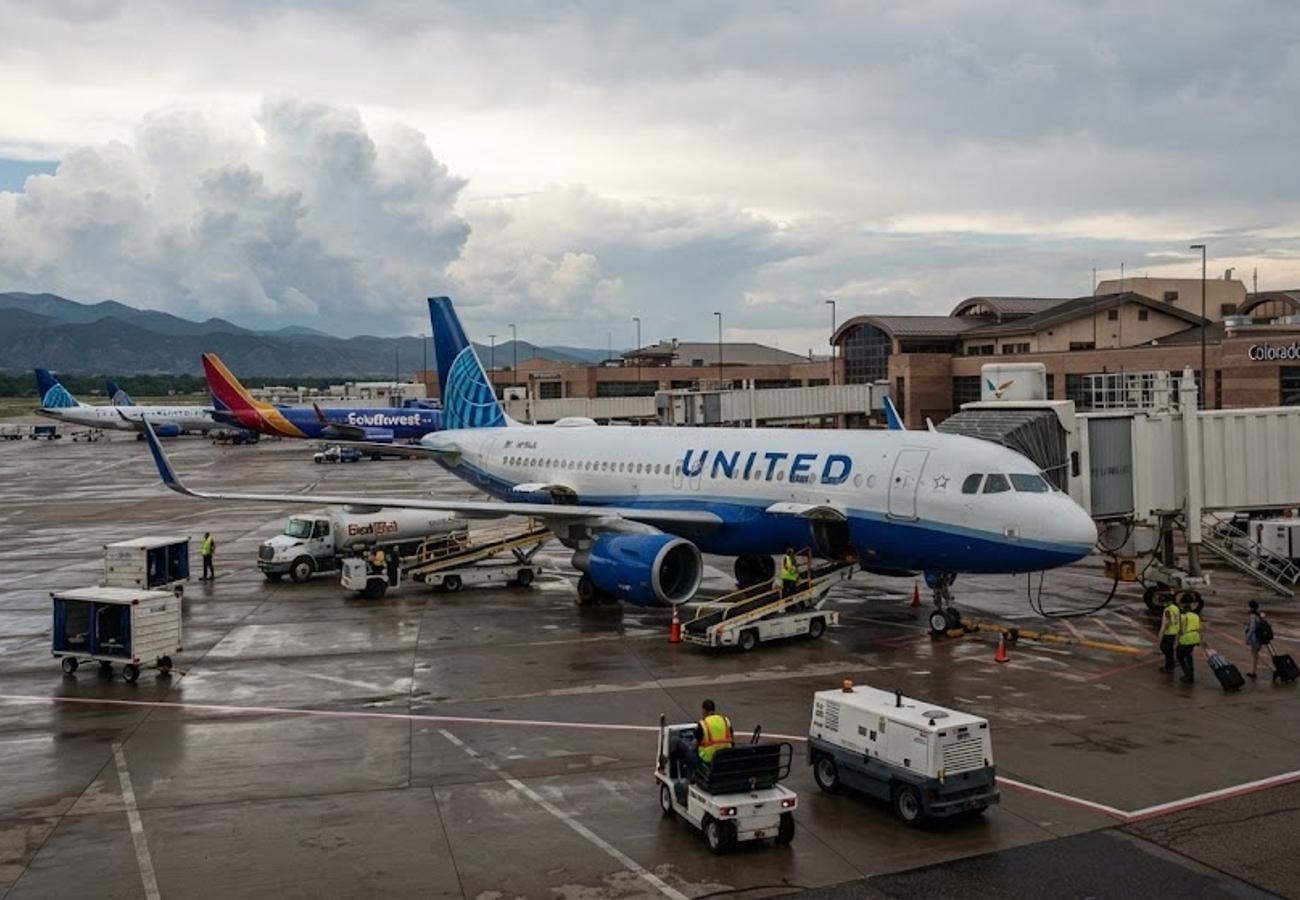
Image generated by AI
Flight tracking data confirms a United Airlines Airbus A320 diverted to Colorado Springs on August 8, adding to a surge of weather-related disruptions at the Denver hub.
Diversion Incident Analysis: Flight UAL400
On August 8, 2026, United Airlines Flight UAL400, operating from Richmond International Airport to Denver International Airport, was forced to deviate from its scheduled flight path. Flight tracking systems indicate that the Airbus A320 touched down at Colorado Springs Airport, located approximately 70 miles south of its intended destination.
The diversion was not triggered by an onboard emergency or mechanical failure. Our analysis of local air traffic data suggests the move was a strategic response to severe congestion and adverse weather conditions affecting the Front Range region, which limited arrival capacity at Denver.
Flight and Airport Impact Breakdown
The disruption centered on the Denver hub, where convective summer weather patterns created a bottleneck for incoming traffic.
- Affected Flight: UAL400 (Richmond to Denver).
- Aircraft Model: Airbus A320.
- Diversion Point: Colorado Springs Airport.
- Primary Cause: Weather-related air traffic congestion and reduced arrival slots at Denver International Airport.
- Operational Status: Multiple flights were diverted to Colorado Springs on the same date, utilizing the airport as a primary relief valve.
Passenger Rights & Advisory
For the affected passenger, a diversion to an alternate airport introduces significant legal and logistical complexities. Depending on the jurisdiction and the specific terms of the contract of carriage, passengers may be entitled to various forms of assistance.
Rebooking and Onward Travel Our analysis of aviation policy suggests that when a flight is diverted, the carrier is responsible for transporting passengers to their final destination. For UAL400 passengers, this typically involves:
- Ground Transportation: Providing shuttle services from Colorado Springs to Denver.
- Flight Re-accommodation: Rebooking on the next available flight once Denver operations stabilize.
- Duty of Care: If the diversion results in an overnight stay, airlines generally provide hotel vouchers and meal stipends, though this varies by the "controllability" of the weather event.
Compensation Frameworks Because this flight operated within the U.S., DOT guidelines apply rather than EU261. Under current U.S. Department of Transportation policies:
- Weather-Related Delays: Airlines are generally not required to provide monetary compensation for delays caused by "Acts of God" or weather.
- Refund Rights: If a passenger chooses not to travel due to a significant delay or diversion, they are entitled to a full refund of the unused portion of the ticket, regardless of whether the ticket was non-refundable.
Proactive Steps for Diverted Passengers Passengers should immediately document all out-of-pocket expenses (meals, transport, lodging) and request a written statement from the airline regarding the reason for the diversion to support potential travel insurance claims.
Industry Analyst View
The diversion of UAL400 is symptomatic of a broader systemic vulnerability in the U.S. hub-and-spoke model during peak summer months. Denver International Airport is particularly susceptible to rapid-onset thunderstorms and mountain weather, which can paralyze arrival flows in minutes.
The reliance on Colorado Springs Airport as a strategic backup demonstrates the necessity of alternate field planning. However, when multiple flights divert simultaneously, it places immense pressure on the smaller airport's ramp services and gate capacity, often leading to secondary delays for passengers on the ground.
As air traffic volumes increase in 2026, the "knock-on" effect of these diversions—impacting crew legal hours and aircraft positioning—continues to be a primary driver of network instability.
Safety remains the priority, but operational resilience at major hubs requires urgent attention.
Related Travel Guides
Disclaimer
This article is for informational and educational purposes only. It does not constitute legal, financial, or professional advice. While we strive to provide accurate and up-to-date information, travel policies, regulations, and conditions change rapidly. Always verify information with official sources before making travel decisions. Nomad Lawyer makes no representations about the accuracy, reliability, completeness, or suitability of the information provided. Readers should consult qualified professionals for advice specific to their circumstances. The views expressed in this article are those of the author and do not necessarily reflect the views of Nomad Lawyer.
Preeti Gunjan
Contributor & Community Manager
A passionate traveller and community builder. Preeti helps grow the Nomad Lawyer community, fostering engagement and bringing the reader experience to life.
Learn more about our team →