
United Airlines Flight UAL1942 Diverts to Salt Lake City Due to Severe Rocky Mountain Storms Disrupting Eugene-Denver Corridor
United Airlines flight UAL1942, operating an Airbus A320-232 from Eugene to Denver, diverted to Salt Lake City due to severe mountain thunderstorms.

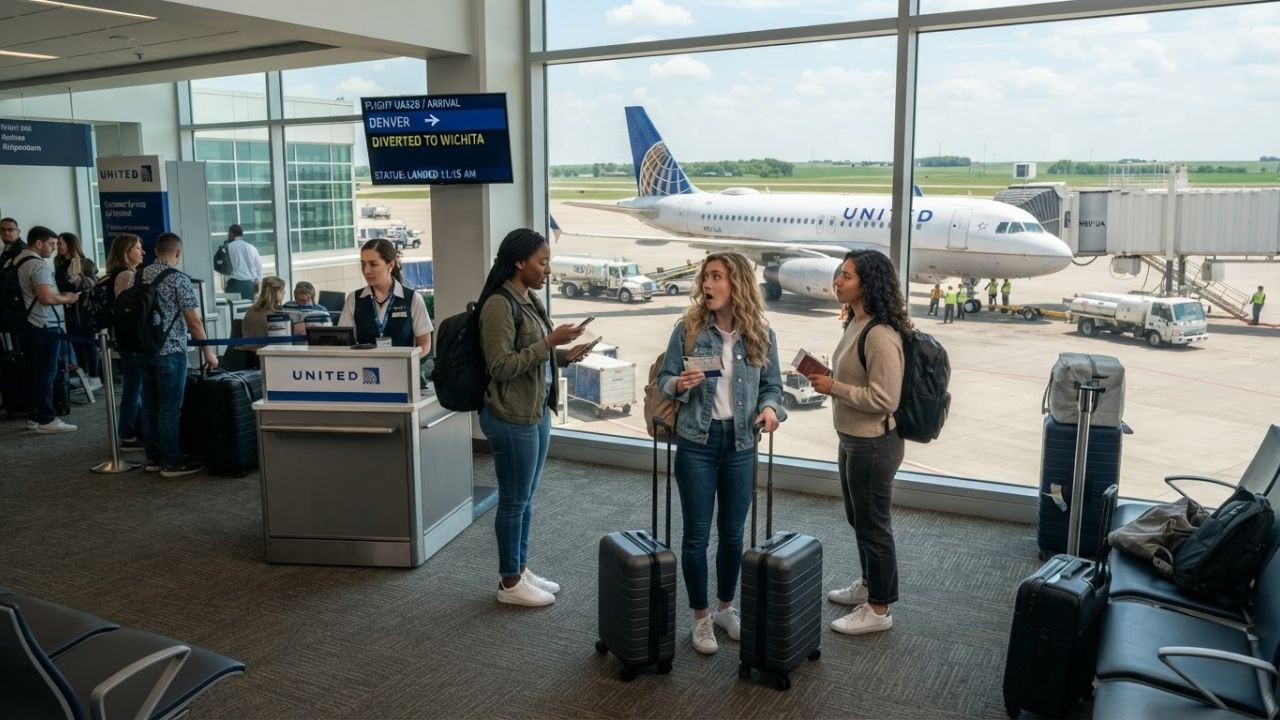
Image generated by AI
[Salt Lake City, July 9, 2026] — United Airlines flight UAL1942, operating an Airbus A320-232 from Eugene Airport in Oregon to Denver International Airport, executed an unscheduled landing in Utah. The aircraft was redirected to Salt Lake City International Airport.
The flight encountered severe convective turbulence cells building over the Rocky Mountain region. Flight dispatch crews determined that penetrating the high-altitude weather systems presented unnecessary risks.
With terminal holding slots in Colorado filling rapidly, the flight deck initiated a standard route adjustment. The crew coordinated with air traffic control to direct the twin-engine jet toward an alternate airfield.
Operational Performance of the Airbus A320-232
The route adjustment was executed using an Airbus A320-232 aircraft, carrying the tail registration N446UA. Flight tracking data indicated that the aircraft systems responded normally to the flight path modifications.
Aviation observers report that the A320 series maintains stable flight profiles during unexpected turbulence encounters. The flight deck closely monitored fuel consumption rates as the jet headed toward Utah.
The aircraft maintained its cruise configuration before starting a controlled descent toward Salt Lake City. Automated flight systems calculated the adjusted routing parameters to ensure safe fuel margins upon arrival.
Logistical Advantages of Salt Lake City Hub
Salt Lake City International Airport serves as a major alternate airfield for flights traversing the Western United States. The hub features extensive runway lengths and advanced ground handling capabilities.
Selecting a major hub like Salt Lake City rather than a regional airstrip simplifies recovery logistics. Major airports offer the passenger gate capacity and ground support crews necessary to handle unexpected mainline arrivals.
Station personnel at Salt Lake City immediately coordinated to process the incoming passengers. The aircraft taxied directly to a passenger terminal gate to facilitate deplaning and status updates.
Recovery Procedures and Passenger Accommodations
Following the safe landing in Utah, ground teams conducted safety checks on the airframe to verify its airworthiness. Dispatchers coordinated with crew scheduling teams to monitor flight duty limitations.
United Airlines customer service representatives assisted passengers with terminal transfers and rebooking options. Ground operations prepared to refuel the aircraft for its remaining flight segment to Denver.
Checked baggage remained stowed within the aircraft cargo compartments to expedite the restart process. The carrier provided local updates to travelers waiting at Denver International Airport.
Impacts of Rocky Mountain Summer Storms
Convective storm cells frequently disrupt domestic flight paths across Colorado and Utah during the summer season. These storm systems produce severe microbursts and wind shear zones near mountain airports.
Pilots utilize real-time satellite radar and dispatch alerts to steer clear of active storm cores. Standard safety protocols mandate early diversions when holding patterns threaten emergency fuel reserves.
Airlines coordinate closely with regional traffic controllers to adjust flight plans before weather fronts block entry points. Passengers should expect scheduling adjustments when flying through mountain corridors during peak storm hours.
Flight Parameters (UAL1942)
| Parameter | Details |
|---|---|
| Flight Number | UAL1942 |
| Aircraft Model | Airbus A320-232 |
| Aircraft Registration | N446UA |
| Departure Airport | Eugene Airport (EUG) |
| Original Destination | Denver International Airport (DEN) |
| Diversion Airport | Salt Lake City International Airport (SLC) |
| Primary Reason | Severe convective weather & wind shear |
Aircraft Specifications
| Specification | Airbus A320-232 |
|---|---|
| Manufacturer | Airbus |
| Engine Type | Dual Turbofan Engines |
| Seating Configuration | Standard Mainline Cabin |
| Fuel Reserve Policy | FAA Mandated Alternate Contingency |
| Diversion Priority | Pre-emptive detour over prolonged holding |
Why This Matters
This diversion highlights the operational constraints of flying narrow-body mainline aircraft like the Airbus A320-232 through convective Rocky Mountain corridors. Since these aircraft carry localized passenger loads, dispatcher calculations must prioritize rapid rerouting rather than entering long, fuel-depleting holding patterns.
Our analysis of the flight routing indicates that Salt Lake City's capacity as a major hub is critical to preventing Western US aviation gridlock during Denver weather delays. Landing at smaller airports often strands passengers for days due to lack of ground infrastructure and crew rest limitations.
Additionally, this event demonstrates the importance of pre-emptive safety maneuvers in maintaining fleet scheduling stability. Making early decisions to divert protects the airframe from structural stress and ensures the aircraft can return to service quickly once the storm fronts pass.
Industry Outlook
Market trends suggest that climate volatility will increase the frequency of convective summer storms over the Rocky Mountains. Airlines must continue to invest in predictive flight deck planning software to identify alternate paths before departure.
Furthermore, airport authorities in the mountain west must coordinate slot allocations to prevent alternate hubs from becoming congested during major storms. Ensuring that airports like Salt Lake City remain open to diversions is essential to maintaining national network safety.
Related Aviation News Guides
- United Airlines Flight 498 Diverts to Wichita Following Mechanical Issue on Boeing 737-900ER
- United Airlines Flight UAL2027 Diverts to Salt Lake City Due to Severe Storms and Wind Shear in Denver Airspace
- SkyWest-Operated United Express Flight SKW5911 Diverts to Casper Due to Severe Convective Storms Blocking Denver Airspace
Disclaimer
This article is for informational and educational purposes only. It does not constitute legal, financial, or professional advice. While we strive to provide accurate and up-to-date information, travel policies, regulations, and conditions change rapidly. Always verify information with official sources before making travel decisions. Nomad Lawyer makes no representations about the accuracy, reliability, completeness, or suitability of the information provided. Readers should consult qualified professionals for advice specific to their circumstances. The views expressed in this article are those of the author and do not necessarily reflect the views of Nomad Lawyer.
Preeti Gunjan
Contributor & Community Manager
A passionate traveller and community builder. Preeti helps grow the Nomad Lawyer community, fostering engagement and bringing the reader experience to life.
Learn more about our team →