
United Airlines Emergency Landing: Flight UA920 from Chicago to London Heathrow Diverted to Halifax, Canada After Mid-Flight Technical Failure: What Every Traveller Must Know
United Airlines Flight UA920 from Chicago to London Heathrow made a dramatic emergency landing in Halifax, Canada after a technical failure mid-flight.

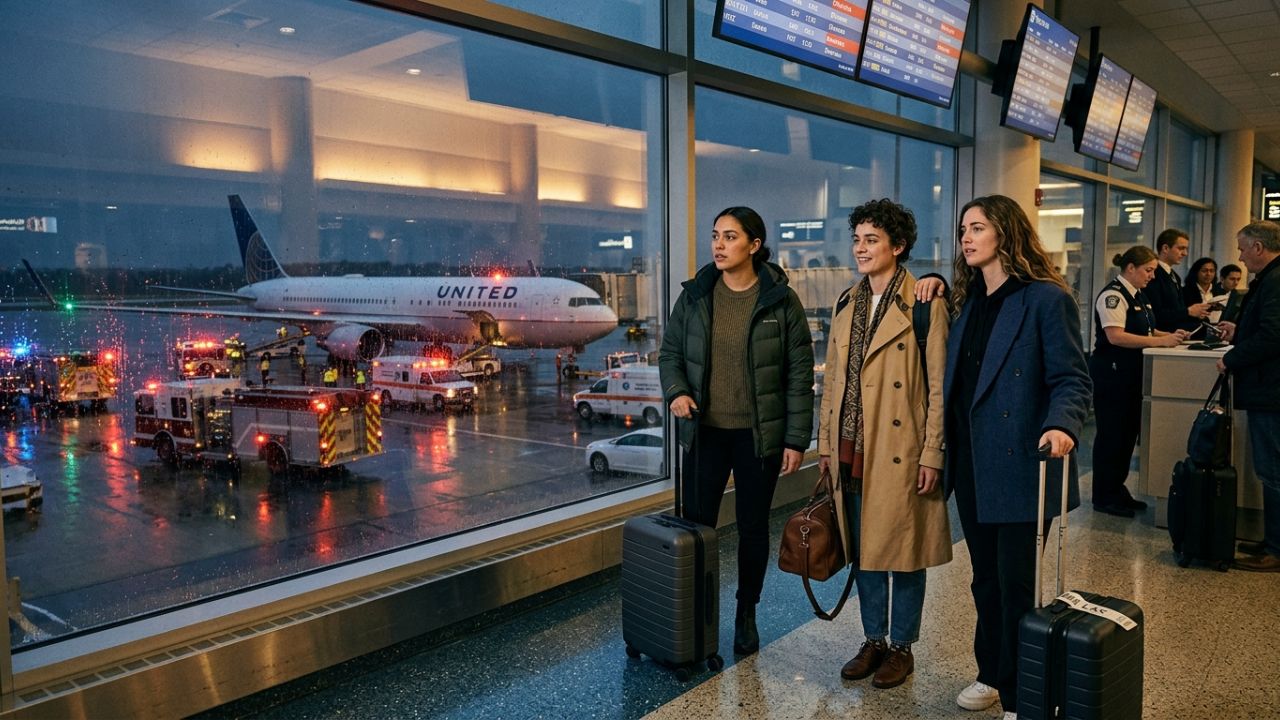
Image generated by AI
A dramatic United Airlines emergency landing took place in eastern Canada last night, as a widebody transatlantic flight bound for London was forced to abort its oceanic crossing. United Airlines Flight UA920, carrying passengers from Chicago O’Hare (ORD) to London Heathrow (LHR), declared a mid-air emergency while cruising at 35,000 feet due to an unexpected technical failure. Operating a three-decade-old Boeing 767-322ER, the flight crew issued a critical Squawk 7700 distress signal, executing a rapid unscheduled diversion to Halifax Stanfield International Airport (YHZ) where emergency teams were standing by.
Quick Summary
- Emergency Diversion: United Airlines Flight UA920 experienced a critical mid-flight technical failure, forcing an immediate abort of its transatlantic route.
- Distress Call: The flight crew issued a Squawk 7700 emergency signal while cruising at 35,000 feet over eastern Canada.
- Safe Touchdown: The Boeing 767-322ER (tail number N652UA) landed safely on Runway 23 at Halifax Stanfield Airport at 11:59 PM ADT on May 16, 2026.
- No Injuries: All passengers and crew members evacuated the aircraft safely without injuries, and were provided with overnight hotel accommodation in Halifax.
- Journey Resumed: The continuation flight departed Halifax on May 17 at 10:35 PM ADT, arriving safely at London Heathrow on May 18 at 10:36 AM BST.
Context: Transatlantic Aviation Safety and Diversion Logistics
The occurrence of this dramatic United Airlines emergency landing on May 16, 2026, highlights the absolute necessity of robust emergency planning and strategic diversion hubs along high-traffic North Atlantic air corridors. Cruising over remote oceanic regions requires two-engine aircraft to adhere to strict ETOPS regulations, ensuring that in the event of a mechanical or electrical failure, a certified airfield remains within a safe flying distance.
As UA920 crossed into Canadian airspace, the sudden technical complication made continuing the flight over the open Atlantic extremely unsafe. By immediately declaring a distress state, the crew allowed air traffic control (ATC) to clear a rapid descent path into Halifax, demonstrating that modern aviation's safety layers function seamlessly even under intense operational pressure.
Crucial Details of the United Airlines Emergency Landing
The precise timeline and mechanical details of the diversion paint a picture of highly coordinated emergency procedures:
- The Departure: Flight UA920 departed Chicago O'Hare International Airport at 8:05 PM CDT on May 16, following a standard northeast trajectory over the Great Lakes.
- The Emergency: Approximately two hours into the flight, while cruising at 35,000 feet, the crew encountered an unresolvable technical failure. The cockpit crew immediately squawked 7700, notifying Canadian ATC of their distress.
- The Safe Landing: Halifax Stanfield, operated under the Canadian National Airports System and managed by the Halifax International Airport Authority on behalf of Transport Canada, prepared its emergency response. The aircraft landed safely on Runway 23 at 11:59 PM ADT.
- The Aircraft Profile: The aircraft involved, registered as N652UA, is an extended-range twin-aisle Boeing 767-322ER. Having served United Airlines for over thirty years, the aircraft is configured with 214 seats across business, premium, and economy classes.
Severe Operational Risks and Passenger Disruption
Unscheduled widebody diversions introduce a complex range of operational risks and passenger challenges:
- Transatlantic Corridor Gridlock: High-altitude diversions require air traffic controllers to rapidly reroute neighboring international flights, temporarily compressing regional airspace.
- Logistical Accommodations Squeeze: Dropping 214 passengers into a medium-sized hub late at night severely strains local hospitality resources, requiring airlines to coordinate hotel bookings, transport, and catering on short notice.
- Aging Fleet Vulnerabilities: Long-haul international flights operated by older widebody aircraft, such as the Boeing 767 series, require intensive maintenance inspections to prevent technical failures.
- Passenger Connection Failures: Missed connections at major hubs like London Heathrow cause significant disruption, forcing travelers to rearrange onward rail, air, and business arrangements.
What Regulatory Authorities and Flight Crews Are Saying
Aviation regulators and safety boards have launched standard reviews following the United Airlines emergency landing in Canada. The Transportation Safety Board of Canada (TSB) is working alongside Transport Canada and the U.S. Federal Aviation Administration (FAA) to analyze flight data recorder metrics and determine the root cause of the technical failure.
Official airline representatives confirmed that:
- Safety First: Standard operating protocols were executed perfectly by the flight crew, prioritizing passenger safety over schedule integrity.
- Fleet Status: The Boeing 767-322ER will undergo a comprehensive maintenance audit in Halifax before being cleared to return to commercial service or ferried to a primary U.S. maintenance base.
- Consular Care: Ground handling staff worked diligently to coordinate passenger care, minimizing terminal discomfort during the unscheduled international arrival.
Practical Traveler Advice: How to Navigate Unscheduled Diversions
If your flight experiences a mid-air emergency or unscheduled diversion, follow these prioritized steps:
- Follow Crew Instructions Implicitly: During a Squawk 7700 emergency, remain calm, secure your seatbelt, and follow all safety announcements from the flight deck and cabin crew.
- Keep Essential Items in Your Carry-on: Always pack essential medications, phone chargers, toiletries, and key travel documents in your cabin bag rather than checked luggage.
- Leverage Airline Mobile Applications: Keep your mobile data active upon landing to receive automated notifications regarding hotel vouchers, re-accommodation flights, and baggage status.
- Understand Your Passenger Rights: Transatlantic flights departing from or arriving in the UK/EU are subject to passenger care regulations. While technical emergencies can limit cash compensation, carriers remain legally responsible for providing food, drinks, and hotel accommodation.
- Maintain Communication with Onward Bookings: Immediately contact your destination hotel, transfer services, or connecting airlines to adjust your itinerary, protecting your travel funds.
Broader Context: ETOPS Protocols and Atlantic Air Corridor Resilience
The successful resolution of UA920's flight emergency is a powerful endorsement of Extended-range Twin-engine Operational Performance Standards (ETOPS). ETOPS regulations dictate that twin-engine passenger jets must always fly along flight paths that keep them within a specified single-engine flying distance of a certified diversion airport.
Halifax Stanfield Airport's long runways, heavy rescue capabilities, and strategic position make it a vital ETOPS safety net for the thousands of flights crossing the North Atlantic each day. Without these highly prepared diversion hubs, international carriers could not safely operate twin-engine widebody aircraft on lucrative transcontinental routes, highlighting the invisible safety systems that protect global travelers.
What to Expect Next: Fleet Maintenance Inspections and TSB Review
Looking ahead, the Boeing 767-322ER will remain on the ground in Halifax while specialized maintenance teams conduct non-destructive testing of the aircraft's primary systems. The TSB will compile a formal incident report to identify any systemic component failures that could affect other Boeing 767 operators.
Travelers should expect United Airlines to temporarily adjust widebody capacity on its Chicago–London route while N652UA is out of service. Continuation schedules will return to standard rotations within the next 48 hours, and passengers who experienced the diversion can expect automated communication from United's customer care teams regarding frequent flyer points or travel vouchers.
Conclusion
The safe resolution of United Airlines Flight UA920's emergency diversion to Halifax Stanfield Airport on May 16, 2026, serves as a reassuring demonstration of modern aviation safety systems in action. From the perfect execution of emergency descent protocols by the flight crew to the rapid mobilization of Halifax's ground response teams, every layer of the ETOPS safety net worked flawlessly. While mid-air technical failures remain an operational challenge, the global aviation industry's coordinated readiness ensures that passenger safety remains completely uncompromised.
Frequently Asked Questions (FAQ)
1. What caused the United Airlines emergency landing in Halifax?
United Airlines Flight UA920 was forced to divert due to an unexpected technical failure encountered mid-flight while cruising at 35,000 feet over eastern Canada.
2. What is a Squawk 7700 emergency signal?
A Squawk 7700 code is a standard international transponder signal that immediately notifies air traffic control that an aircraft is experiencing a serious flight emergency, giving it landing priority over all other traffic.
3. Were there any injuries reported during the UA920 diversion?
No, there were no injuries reported among the 214 passengers or flight crew members. The aircraft landed safely on Runway 23 at Halifax Stanfield Airport.
4. When did the delayed passengers arrive in London?
The continuation flight departed Halifax on May 17 at 10:35 PM ADT and arrived safely at London Heathrow Airport (LHR) on May 18 at 10:36 AM BST.
5. How did ETOPS rules help ensure the safety of Flight UA920?
ETOPS regulations ensure that twin-engine passenger aircraft are always routed within a safe flying distance of fully prepared diversion airports like Halifax, guaranteeing a secure landing site in the event of an engine or technical failure over remote regions.
Disclaimer
This article is for informational and educational purposes only. It does not constitute legal, financial, or professional advice. While we strive to provide accurate and up-to-date information, travel policies, regulations, and conditions change rapidly. Always verify information with official sources before making travel decisions. Nomad Lawyer makes no representations about the accuracy, reliability, completeness, or suitability of the information provided. Readers should consult qualified professionals for advice specific to their circumstances. The views expressed in this article are those of the author and do not necessarily reflect the views of Nomad Lawyer.
Kunal K Choudhary
Co-Founder & Contributor
A passionate traveller and tech enthusiast. Kunal contributes to the vision and growth of Nomad Lawyer, bringing fresh perspectives and driving the community forward.
Learn more about our team →