
United Airlines Boeing 767 Makes Dramatic Emergency Landing in Halifax, Canada After Mid-Flight Technical Failure on Chicago-London Flight: Latest Update
United Airlines Flight UA920 squawks emergency at 35,000 feet, executing a safe diversion to Halifax after a critical mid-flight technical malfunction.

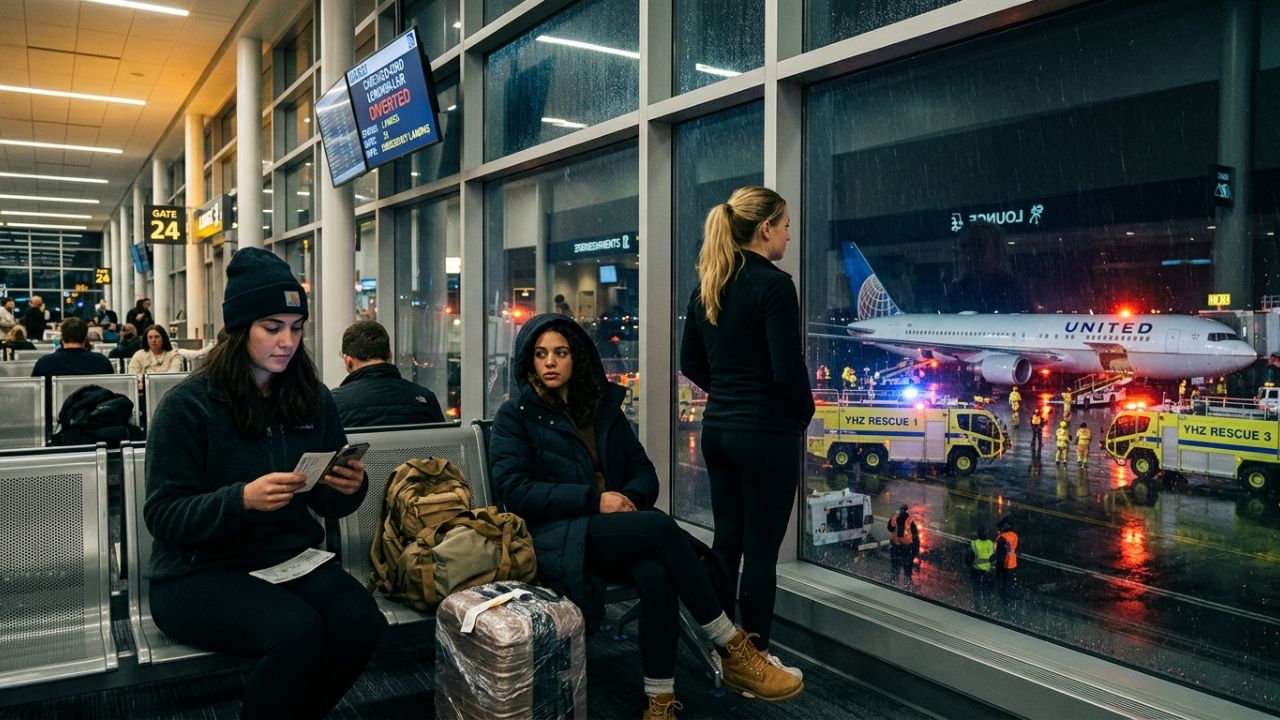
Image generated by AI
A major transatlantic flight safety investigation is underway today, after a United Airlines flight was forced to execute a dramatic emergency landing in Halifax, Canada. The Boeing 767, flying from Chicago O'Hare to London Heathrow, issued a high-priority distress signal at 35,000 feet after experiencing a serious mid-flight technical failure. The diversion went smoothly, with air traffic control and ground crews guiding the wide-body jet to a safe landing on a Canadian runway, ensuring passenger safety.
Quick Summary
- Distress Call at Altitude: United Airlines Flight UA920 issued a Squawk 7700 emergency signal while cruising at 35,000 feet over eastern Canada.
- Halifax Diversion: The Boeing 767-322ER diverted to Halifax Stanfield International Airport (YHZ), executing a safe landing on Runway 23.
- No Injuries Reported: All passengers and crew on board the 214-seat aircraft were evacuated safely without any reported injuries.
- Aging Fleet Oversight: The aircraft involved, registered as N652UA, is an extended-range wide-body airliner in service for over three decades.
- Transatlantic Flight Resumed: Following re-accommodation and maintenance checks, passengers completed their trip to London with a 22-hour delay.
Context: Transatlantic Aviation Safety and Diversion Logistics
The emergency diversion on May 16, 2026, highlights the vital role that backup airports play in securing transatlantic flight corridors. Flying over the North Atlantic requires careful planning, with twin-engine aircraft relying on strict safety standards to remain within range of emergency runways.
By utilizing Halifax Stanfield International Airport, the flight crew avoided the risk of flying a compromised aircraft across the Atlantic. Managed by the Halifax International Airport Authority on behalf of Transport Canada, the airport's infrastructure proved essential in handling the unexpected international arrival.
Specific Details of the United Airlines Emergency Landing
The official aviation safety reports detail the timeline and logistics of the diversion:
- Flight and Route Information: United Airlines Flight UA920 departed Chicago O’Hare (ORD) at 8:05 PM CDT on May 16, bound for London Heathrow (LHR).
- Mid-Flight Technical Failure: Approximately two hours into the flight, the crew encountered a technical failure over eastern Canadian airspace that made continuing across the ocean unsafe.
- Squawk 7700 Distress Call: The pilots declared an emergency and sent a Squawk 7700 distress code to air traffic control while cruising at 35,000 feet.
- Safe Runway Landing: The Boeing 767-322ER landed safely on Runway 23 at Halifax Stanfield International Airport at 11:59 PM ADT on May 16.
- Continuation and Arrival: The flight resumed its journey to London on May 17 at 10:35 PM ADT, arriving at Heathrow on May 18 at 10:36 AM BST.
Severe Technical Malfunction and Squawk 7700 Risks
The sudden technical failure over Canada highlights several key risks in long-haul transatlantic operations:
- Critical Flight Phase Failure: Encountering a technical malfunction just prior to oceanic entry leaves crews with a narrow window to execute a safe diversion.
- Mid-Ocean Vulnerabilities: Continuing across the ocean with a known issue is unsafe, as there are no landing options between eastern Canada and western Europe.
- Aging Fleet Stress: The aircraft involved (N652UA) has been in service with United Airlines for over thirty years, highlighting the need for continuous maintenance.
- Emergency Infrastructure Needs: Wide-body aircraft require extended runways and specialized ground handling services to manage international emergency landings safely.
What Regulatory Authorities and Transport Canada Are Directing
Both U.S. and Canadian regulatory bodies are launching thorough reviews of the incident:
- TSB Safety Monitoring: The Transportation Safety Board of Canada (TSB) is monitoring the event to ensure compliance with aviation safety protocols.
- FAA Maintenance Reviews: The U.S. Federal Aviation Administration (FAA) is cataloging the diversion to evaluate fleet performance and operational risks.
- ETOPS Planning Validation: Regulators are reviewing the flight’s ETOPS (Extended-range Twin-engine Operational Performance Standards) compliance to confirm safety margins.
- Ground Support Audits: Transport Canada is reviewing emergency response procedures at Halifax to ensure peak readiness for future wide-body diversions.
Practical Traveler Advice: Transatlantic Passenger Safety and ETOPS Protocols
For passengers planning long-haul transatlantic travel, aviation specialists recommend the following safety advice:
- Monitor Live Flight Status: Track your flight's operational history and status updates using live tracking applications before departure.
- Understand ETOPS Safety Standards: Rest assured that ETOPS guidelines require aircraft to remain within safe flying distance of diversion airports like Halifax.
- Confirm Carrier Re-Accommodation Policies: Familiarize yourself with your airline’s policies for hotel stays and meal vouchers during international flight diversions.
- Keep Essential Travel Documents Handy: Always carry your passport, visa documentation, and prescription medications in your carry-on luggage in case of an unscheduled landing.
- Maintain Flexible Travel Plans: When booking long-haul connections, allow adequate buffer times to account for technical delays or diversions.
Broader Context: Transatlantic Corridors and Boeing 767 Aging Fleet Oversight
The North Atlantic flight corridor is one of the busiest and most highly monitored routes in the world. Twin-engine aircraft flying this path are subject to strict regulatory oversight, ensuring they are always within reach of a safe diversion airport.
While the Boeing 767 series has a strong reliability record, older aircraft require detailed maintenance to prevent technical failures. Diversions like UA920's help monitor the performance of aging wide-body fleets, providing data that helps improve safety across the industry.
What to Expect Next: Comprehensive Maintenance Audit and Airworthiness Investigations
Looking ahead, United Airlines maintenance teams will conduct a detailed audit of the Boeing 767 involved to identify the root cause of the failure. The aircraft will undergo extensive safety checks before being cleared to return to passenger service.
Aviation regulators will continue to analyze data from this event to refine transatlantic safety standards and ETOPS planning. By prioritizing passenger safety, airlines and regulators ensure that long-haul travel remains one of the safest ways to explore the world.
Conclusion
The safe emergency landing of United Airlines Flight UA920 in Halifax is a clear demonstration of aviation safety systems in action. While the unpredicted technical issue on the Boeing 767 caused significant travel delays, the coordinated response of the crew, air traffic control, and Halifax airport staff ensured a safe outcome. Through strict regulatory standards like ETOPS and well-prepared diversion airports, the aviation industry continues to ensure the highest standards of safety for long-haul travel.
Frequently Asked Questions (FAQ)
1. What caused United Airlines Flight UA920 to make an emergency landing?
Flight UA920 was forced to make an emergency landing at Halifax Stanfield International Airport after experiencing a mid-flight technical failure over Canada.
2. What is a Squawk 7700 distress code, and when was it used?
A Squawk 7700 code is an international aviation signal used to declare an emergency. The flight crew issued this signal while cruising at 35,000 feet over eastern Canada.
3. Were any passenger injuries reported during the emergency diversion?
No. There were no injuries reported among the passengers or crew on board the 214-seat Boeing 767-322ER aircraft.
4. What is the operational history of the Boeing 767-322ER involved in the incident?
The aircraft, registered as N652UA, has been in active service with United Airlines for over three decades, forming a key part of their transatlantic fleet.
5. How long was the travel delay, and when did passengers arrive in London?
Following re-accommodation and overnight hotel stays in Halifax, the flight resumed on May 17 and arrived at London Heathrow on May 18, resulting in a 22-hour delay.
Disclaimer
This article is for informational and educational purposes only. It does not constitute legal, financial, or professional advice. While we strive to provide accurate and up-to-date information, travel policies, regulations, and conditions change rapidly. Always verify information with official sources before making travel decisions. Nomad Lawyer makes no representations about the accuracy, reliability, completeness, or suitability of the information provided. Readers should consult qualified professionals for advice specific to their circumstances. The views expressed in this article are those of the author and do not necessarily reflect the views of Nomad Lawyer.
Kunal K Choudhary
Co-Founder & Contributor
A passionate traveller and tech enthusiast. Kunal contributes to the vision and growth of Nomad Lawyer, bringing fresh perspectives and driving the community forward.
Learn more about our team →