
Ukraine Warns ICAO of Rising Civil Aviation Safety Risks in Russian Airspace 2026
Ukraine has filed a formal safety notification with the ICAO warning of increased risks to civil aviation in Russian airspace due to drone activity and air defense responses.
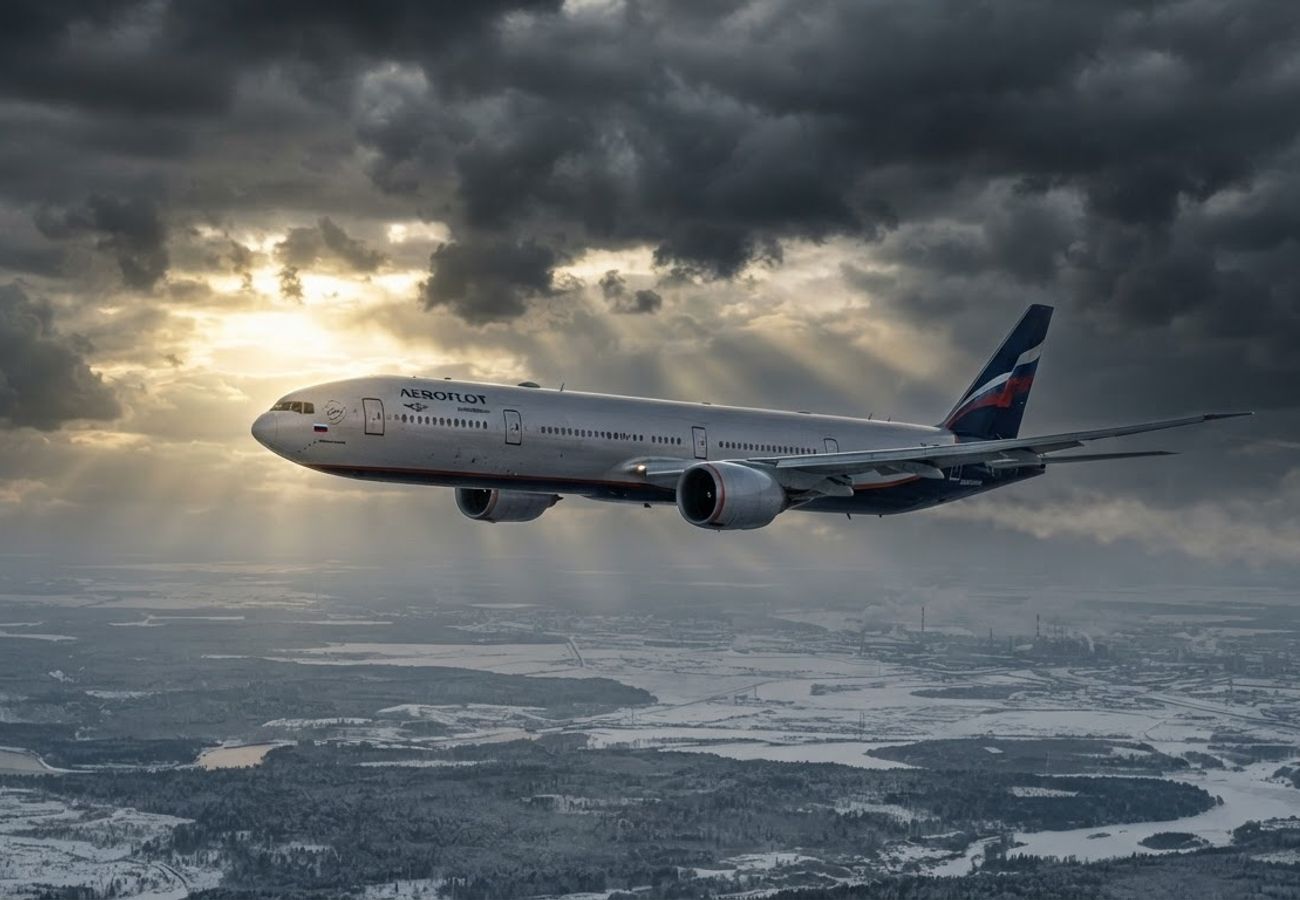
Image generated by AI
Ukraine has formally notified the International Civil Aviation Organization (ICAO) that intensified drone activity and subsequent air defense responses are creating unpredictable hazards for civil aircraft within Russian airspace.
The filing follows a series of operational disruptions at Moscow’s primary aviation hubs, signaling a shift in the risk profile for carriers still utilizing Russian corridors.
Escalating Disruptions at Moscow Hubs
The formal safety notification was triggered by drone activity in early September 2026, which forced temporary suspensions of arrivals and departures at Sheremetyevo and Vnukovo airports. During these episodes, air traffic controllers were forced to reroute inbound flights and place aircraft in holding patterns. Dozens of departures were delayed as Russian air defense systems attempted to track and neutralize unmanned aerial vehicles (UAVs) within the capital's air corridors.
Kyiv has framed this communication as a technical safety notice rather than a political statement. The core of the warning centers on the volatile interaction between long-range drones, surface-to-air missile systems, and civilian traffic. This combination creates a high-risk environment for both domestic and international routes operating near busy Russian hubs.
Current Regulatory Landscape and Risk Classifications
Ukraine's alert supplements existing warnings from global aviation bodies that already categorize Russian airspace as high-risk.
- EASA (European Union Aviation Safety Agency): Has issued conflict zone information bulletins warning that civil aircraft could be unintentionally targeted by Russian air defenses responding to Ukrainian launches.
- FAA (United States Federal Aviation Administration): Maintains prohibitions for U.S. operators in broad sections of Russian airspace, specifically naming the Moscow, Samara, and Rostov regions.
- Regional Risk Zones: The Moscow and Rostov flight information regions, along with areas bordering Ukraine, are currently flagged as exposed to heightened risks from long-range drones.
Operational Impact on Global Carriers
The aviation industry is currently split into two distinct operational strategies regarding Russian airspace:
- Avoidance Strategy: Most North American and European carriers have maintained the detour established in 2022, opting for longer flight paths between Europe and Asia to bypass Russia entirely.
- Active Utilization: Airlines based in Asia, Türkiye, and the Middle East continue to use Siberian corridors and fly into Russian cities, weighing shorter flight durations against escalating security risks.
Recent data indicates that some carriers are now making tactical schedule adjustments, including overnight cancellations and temporary routing changes, citing "operational considerations" to mask the impact of drone-related airspace closures.
Drone Warfare and the New Aviation Map
The conflict has fundamentally altered the perception of "safe skies." Aviation risk consultancies report a near-daily pattern of long-range drone launches targeting deep-territory Russian sites. Because these UAVs operate at varying altitudes and follow unpredictable trajectories, areas previously considered distant from the front lines—such as Saint Petersburg and Moscow—now experience recurring ground stops.
Our analysis suggests a structural gap in global aviation: there is currently no real-time mechanism to integrate military threat assessments directly into civilian routing and scheduling. The industry relies on delayed notices to air missions (NOTAMs) and bulletins, which may not keep pace with the rapid activation of surface-based weapons.
Summary of Safety Risks in Russian Airspace
| Risk Factor | Impact on Civil Aviation | Primary Affected Areas |
|---|---|---|
| UAV Incursions | Temporary airport closures, holding patterns | Sheremetyevo, Vnukovo, St. Petersburg |
| Air Defense Response | Risk of misidentification and accidental targeting | Moscow, Rostov, Border Regions |
| Regulatory Bans | Increased flight times, fuel costs, route diversions | Samara, Rostov, Moscow (for US/EU carriers) |
| Insurance Gaps | Exclusions for military-related delays/cancellations | All Russian Airspace |
Why This Matters: Industry Implications
For aviation insurers and corporate travel planners, this ICAO filing is a critical data point. It transforms "anecdotal" airport closures into a formally documented safety risk.
From a logistical perspective, the real impact is the unpredictability of the "last mile" of flight. While the Siberian corridors may remain open, the approach and climb-out procedures at major hubs are now subject to sudden, short-notice military intervention. This increases the likelihood of diversions, which in turn complicates crew duty-time management and increases operational costs.
For travelers, the most immediate concern is insurance. Most standard travel policies exclude delays or cancellations linked to military activity or government security measures. Passengers booking itineraries through Russian airspace are essentially self-insuring against these disruptions.
Forward Outlook
While the ICAO notification does not mandate the closure of Russian airspace, it provides the legal and technical basis for regulators to tighten restrictions. If the tempo of drone operations increases or airport closures become more prolonged, we expect to see:
- Further Route Diversification: More Middle Eastern and Asian carriers may begin adopting "safe-distance" routings.
- Insurance Premium Hikes: Aviation insurers are likely to increase premiums for hulls and passengers operating in the Moscow and Rostov flight information regions.
- Revised Guidance: EASA and the FAA may expand their prohibited zones to include a wider array of Russian regional hubs.
The intersection of drone warfare and civil aviation is creating a volatile map where traditional safety buffers no longer apply.
Related Travel Guides
Disclaimer
This article is for informational and educational purposes only. It does not constitute legal, financial, or professional advice. While we strive to provide accurate and up-to-date information, travel policies, regulations, and conditions change rapidly. Always verify information with official sources before making travel decisions. Nomad Lawyer makes no representations about the accuracy, reliability, completeness, or suitability of the information provided. Readers should consult qualified professionals for advice specific to their circumstances. The views expressed in this article are those of the author and do not necessarily reflect the views of Nomad Lawyer.