
Australian Government Issues Urgent Travel Advisory Following Deadly Nepal Floods in Rasuwa District 2026
Australian travellers are urged to reconsider trips to Nepal after catastrophic flash floods in the Rasuwa District left hundreds dead and dozens of Australian nationals missing.

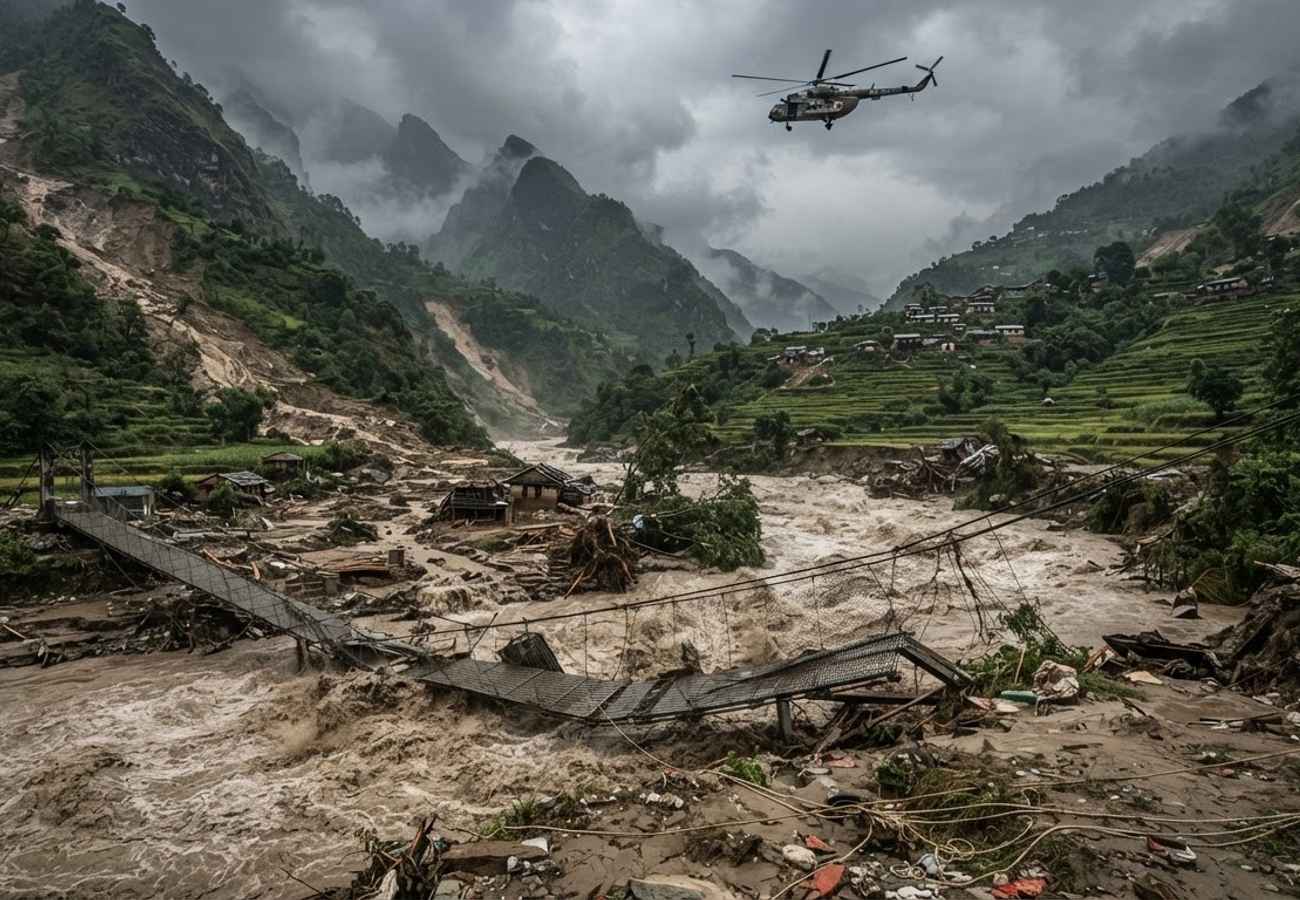
Image generated by AI
Australian authorities have issued an urgent warning to travellers following catastrophic flash floods near the Nepal-China border that have left hundreds dead and dozens of Australian nationals missing.
Regional Crisis in Rasuwa District
On 26 August 2026, severe flash floods and mudslides struck Nepal’s Rasuwa District. The disaster has triggered a humanitarian crisis in one of the country's primary tourism hubs, specifically impacting the Langtang and Rasuwa regions.
Reports from Nepal’s disaster authorities confirm that hundreds of individuals have perished, with thousands more missing. Search operations are currently focused downstream along the Bhote Koshi river systems. The scale of the destruction includes the total loss of entire settlements, bridges, and primary road networks, effectively isolating remote mountain communities.
Impact on Flight, Trekking, and Infrastructure
The disruption extends beyond immediate casualties, creating a logistical collapse for international tourism in the northern autumn season.
- Affected Regions: Langtang Valley, Rasuwa District, and the Nepal-China border zone.
- Infrastructure Loss: Multiple bridges swept away; primary access roads to trailheads severed.
- Transport Constraints: Access to highland communities is currently restricted to helicopter evacuations or high-risk alternative footpaths.
- Essential Services: Widespread outages of electricity, mobile coverage, and internet access across affected valleys.
- Trekking Routes: Several high-altitude commercial routes are non-viable and likely closed for several months.
Passenger Rights & Emergency Advisory
For the affected passenger or traveller, this disaster shifts the legal and financial burden toward insurance and consular support. Our analysis of current travel frameworks suggests the following immediate actions:
Insurance and Evacuation Rights Most standard travel insurance policies exclude "acts of God" or "natural disasters" unless specific riders are purchased. For those currently in Nepal, this means:
- Evacuation Coverage: Check if your policy specifically covers helicopter evacuation from remote Himalayan regions.
- Adventure Clauses: Verify if your cover extends to "mountaineering" or "trekking" above certain altitudes, as these are often separate add-ons.
- Force Majeure: Airlines may invoke force majeure for flight cancellations into Kathmandu, potentially limiting their liability for hotel costs or meals.
Consular and Legal Steps for Australians The Australian Department of Foreign Affairs and Trade (DFAT) and Smartraveller have updated their guidance. Affected parties should:
- Register Presence: Use official government channels to register your current location in Nepal.
- Consular Emergency Lines: Use the 24-hour emergency lines to report missing persons or seek repatriation assistance.
- Document Security: Maintain digital and hard copies of passports and insurance policies, as physical infrastructure for document recovery is destroyed in Rasuwa.
This event underscores a growing volatility in Himalayan tourism. Climate data indicates that warming temperatures are increasing the instability of glacial lakes, leading to more frequent Glacial Lake Outburst Floods (GLOFs).
From an industry perspective, the reliance on a few key trekking corridors creates a single point of failure for regional tourism. We expect a significant shift in 2026-2027 toward more diversified itineraries and a mandatory increase in the requirement for high-altitude evacuation insurance for all foreign nationals entering the Rasuwa and Langtang zones.
Travelers are advised to maintain flexible itineraries and avoid non-essential travel to flood-impacted districts until official clearance is granted.
Related Travel Guides
Disclaimer
This article is for informational and educational purposes only. It does not constitute legal, financial, or professional advice. While we strive to provide accurate and up-to-date information, travel policies, regulations, and conditions change rapidly. Always verify information with official sources before making travel decisions. Nomad Lawyer makes no representations about the accuracy, reliability, completeness, or suitability of the information provided. Readers should consult qualified professionals for advice specific to their circumstances. The views expressed in this article are those of the author and do not necessarily reflect the views of Nomad Lawyer.
Preeti Gunjan
Contributor & Community Manager
A passionate traveller and community builder. Preeti helps grow the Nomad Lawyer community, fostering engagement and bringing the reader experience to life.
Learn more about our team →