
Birmingham Launches New Hotel Investment Model To Attract More Visitors And Events

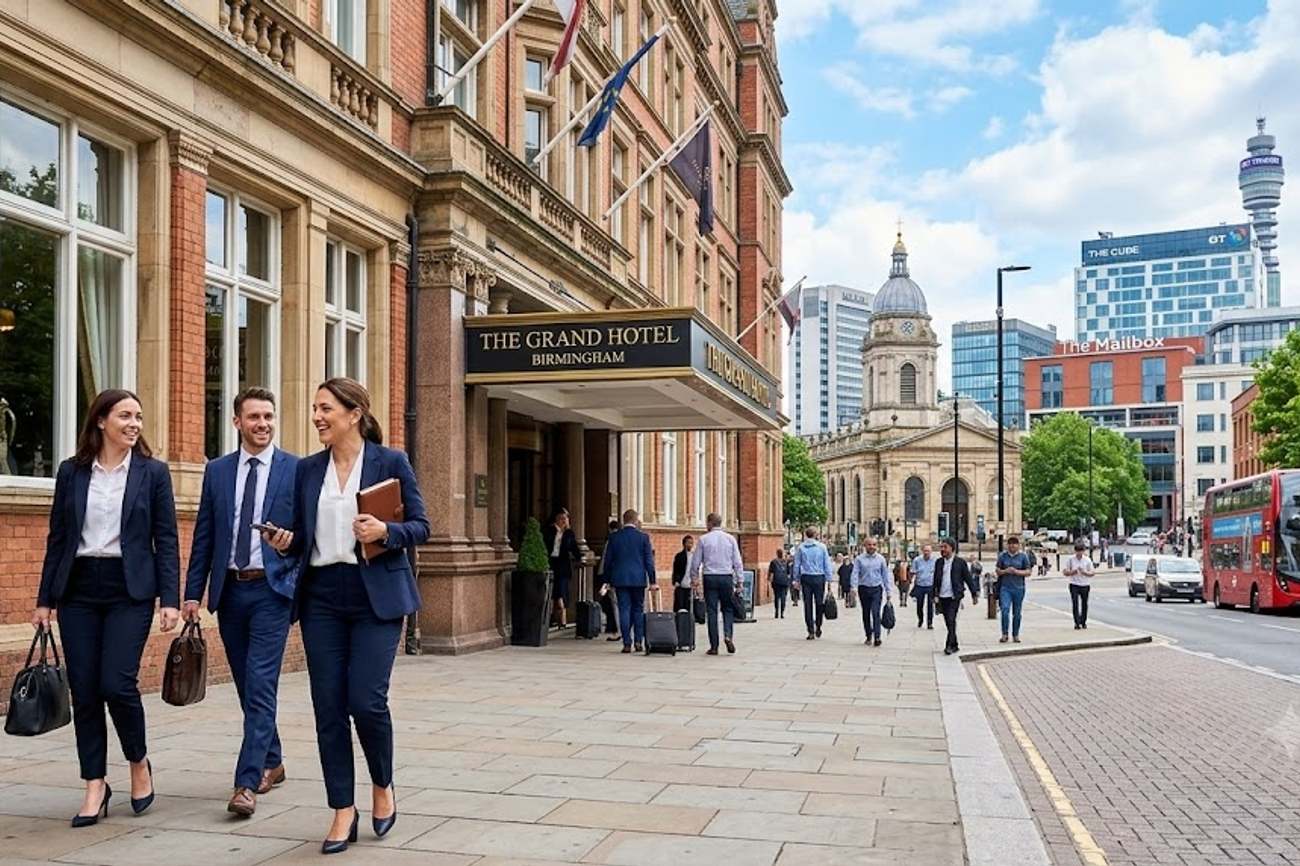
Image generated by AI
[Birmingham, October 2024] — Birmingham has officially established its first Accommodation Business Improvement District (ABID), marking a fundamental shift in how the city funds and manages its visitor economy.
The new collective investment scheme follows a successful ballot where 64% of participating accommodation providers voted in favor of the proposal. The initiative, which secured backing from 59% of the total rateable value represented in the vote, establishes a dedicated funding mechanism for the 2027–2032 Business Plan. With a voter turnout of 54%, the city now joins the ranks of other major UK hubs, including Manchester and Liverpool, in utilizing a coordinated investment model to drive overnight stays and leisure tourism.
The Catalyst for Collective Investment
The creation of the ABID stems from a strategic need to unify Birmingham's fragmented accommodation sector. Led by the Birmingham Hospitality Association and supported by Birmingham Colmore, the initiative transitions the city from individual business marketing to a synchronized, city-wide growth strategy. The primary driver is the desire to increase the volume of visitors and the duration of their stays, ensuring the city remains competitive against other European destination hubs.
By establishing this BID, the city creates a formal structure to raise funds specifically for the enhancement of the visitor experience. This moves the responsibility of destination growth away from purely government-led initiatives and places it directly in the hands of the stakeholders who profit from the influx of guests. The model is designed to create a "virtuous circle" where collective investment leads to higher occupancy rates, which in turn generates more revenue to be reinvested into the city's appeal.
Scope of Sector Impact
The ABID affects a wide array of stakeholders within the West Midlands, ranging from luxury hotel chains to boutique guest houses. The implementation will focus on several key pillars of the visitor economy:
- Major Event Acquisition: The BID will provide subvention support—essentially financial incentives—to attract large-scale international conferences, festivals, and exhibitions that require high-volume room blocks.
- Destination Marketing: Funds will be allocated to strengthen the city's brand globally, working in tandem with the West Midlands Growth Company to target high-spending business and leisure demographics.
- Business Advocacy: The sector now possesses a unified voice to lobby for infrastructure improvements and policy changes that favor the hospitality industry.
- Occupancy Optimization: By coordinating calendars and promotional efforts, the BID aims to smooth out seasonal dips in hotel occupancy and increase overall visitor spending.
The collaborative framework involves a partnership between the Birmingham City Council, the Birmingham Hospitality Association, and private sector accommodation providers. This ensures that the investment is not just spent on marketing, but on tangible projects that improve the physical and digital infrastructure of the city's tourism offerings.
Practical Traveler Advisory and Strategic Insights
For the average traveler or business professional booking a trip to Birmingham, the ABID will not result in immediate changes to room rates or booking processes, but it will fundamentally alter the quality and variety of the stay.
Increased Event Availability Because the ABID provides financial support to bring in major events, travelers can expect a more robust calendar of international conferences and festivals. This means more reasons to visit the city and a higher likelihood of finding world-class events hosted in the region.
Enhanced Destination Experience The shift toward "destination development" means that the city will likely invest more in the "last mile" of the traveler's journey. This includes better signage, improved connectivity between hotels and attractions, and a more cohesive tourism narrative that makes navigating the city easier for first-time visitors.
Stability in Quality With a unified body overseeing the visitor economy, there is a stronger push for consistent standards across the city's accommodation offerings. The collaborative platform allows hotels to share best practices and invest in city-wide improvements that benefit all guests, regardless of the price point of their chosen hotel.
Birmingham's new hotel investment model is expected to attract more visitors and events to the city, with a focus on providing high-quality accommodations and amenities. According to the Visit Birmingham website, the city is investing heavily in its tourism infrastructure, including new hotels, restaurants, and entertainment venues. This investment is expected to boost the local economy and establish Birmingham as a major destination for business and leisure travelers.
Implementation Timeline and Next Steps
The transition to this new model is not instantaneous. While the ballot has been decided and the mandate secured, the operational phase begins in 2027.
The period between now and April 1, 2027, serves as a preparatory window. During this time, the Birmingham Hospitality Association and its partners will refine the 2027–2032 Business Plan, identifying the specific projects and subvention funds that will be prioritized. This phase is critical for aligning the interests of various hotel operators and ensuring that the funding mechanism is transparent and efficient.
Once the plan goes live on April 1, 2027, the ABID will begin executing its growth objectives. This includes the rollout of new marketing campaigns and the active bidding for major international events. The success of the initiative will be measured by key performance indicators (KPIs) such as the increase in total overnight stays, the growth in average daily rate (ADR) across the city, and the total economic impact of attracted events.
The long-term goal is to transform Birmingham into a premier destination that does not rely solely on its status as a transport hub, but as a primary destination for both global business and leisure tourism. By mimicking the successful models of Liverpool and Manchester, Birmingham is betting that a unified financial commitment from its hotels will lead to sustainable, long-term economic growth.
FAQ: Birmingham Accommodation BID 2027
Will hotel prices increase because of the ABID? The ABID is funded through a levy on the rateable value of the businesses, not as a direct tax on guests. While individual hotels set their own pricing, the goal of the BID is to increase overall demand and occupancy, which generally stabilizes pricing across the market.
When will travelers see the effects of this initiative? While planning is happening now, the formal business plan and its associated investments will be implemented starting April 1, 2027. Improvements in event availability and destination marketing will become more apparent as the 2027–2032 cycle progresses.
What is "subvention support" and how does it help visitors? Subvention support is financial assistance used to attract major events that might otherwise go to other cities. For travelers, this means Birmingham will host more high-profile conferences and festivals, providing more opportunities for professional networking and leisure travel.
How does this differ from standard city tourism boards? Unlike a general tourism board, an ABID is funded and governed directly by the accommodation providers themselves. This ensures that the money is spent on initiatives that specifically drive overnight stays and direct revenue into the hospitality sector.
Birmingham is betting on collective investment to turn its hotel sector into a powerhouse of urban growth.
Related Travel Guides
This article is for informational purposes. Flight routes, passenger regulations, visa rules, and transit advisories are subject to change by airlines and aviation authorities. Readers are advised to verify schedules and travel documentation with relevant carriers and border agencies before departure.
Related Stories
A Guide to the 10 Best Places to Live in Alabama: Where Southern Charm Meets Booming Opportunity
Alabama Tourism Surge: 29.22 Million Visitors Drive $24.87 Billion in State Spending for 2026
