
UK Rail Passengers Can Switch Train Operators Free After Cancellations Under Major 2026 Travel Reform
UK Rail Passengers Can Switch Train Operators Free After Cancellations Under Major 2026 Travel Reform

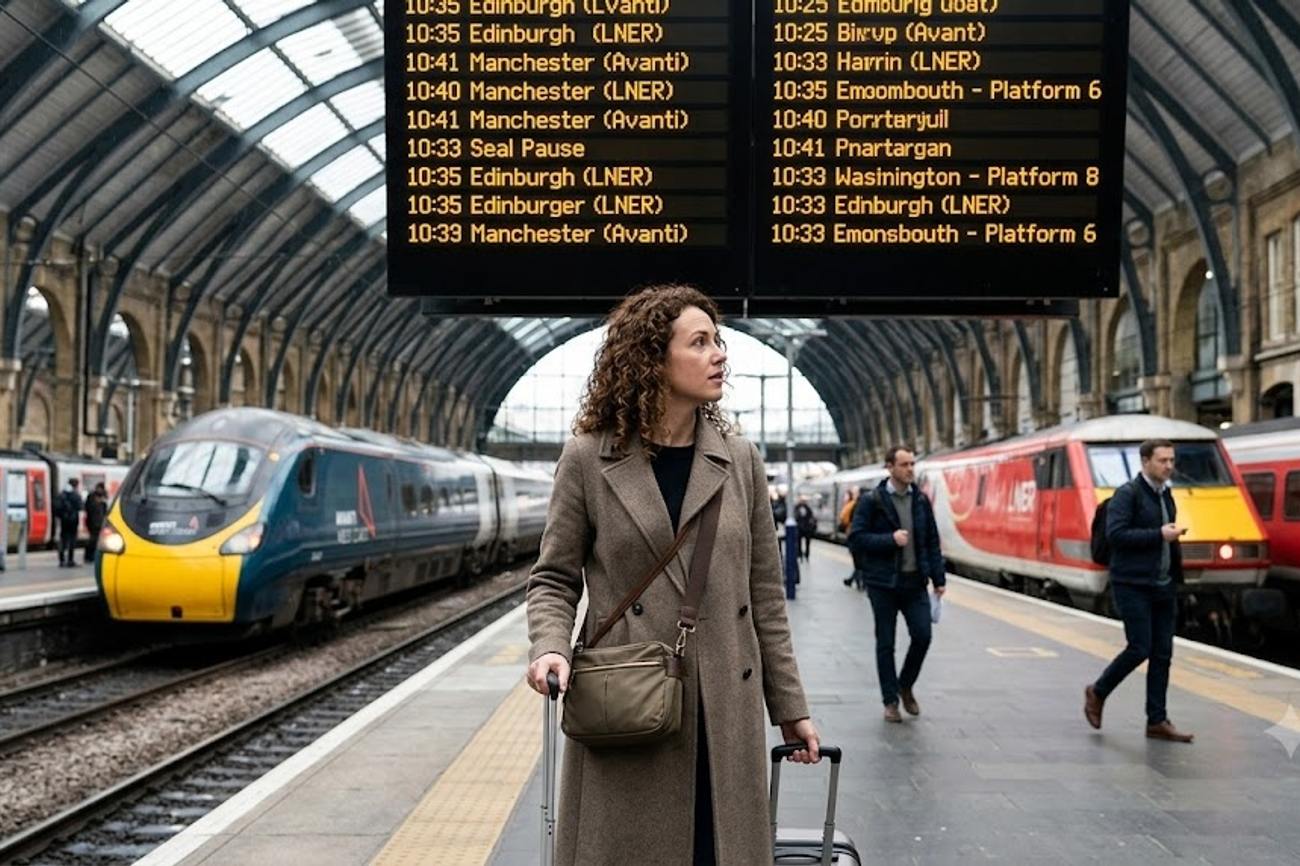
Image generated by AI
UK rail disruption protocols are shifting from a fragmented, operator-led approval system to a standardized passenger right on September 20, 2026, marking the first time a unified "inter-operator" ticket acceptance rule will apply across nearly all major intercity corridors. This regulatory pivot addresses a systemic failure in the UK's segmented rail network where, historically, a cancellation by one carrier did not guarantee passage on another, often leaving passengers stranded despite the availability of alternative seats.
The Inter-Operator Pivot in Numbers
The core of this regulatory shift is the removal of the "approval lag"—the period where passengers waited for two separate corporate entities to agree on ticket acceptance during a service failure. Starting September 20, 2026, the mandate establishes a strict temporal window for alternative travel: passengers may board any participating operator's service departing within 2 hours before or 2 hours after their original scheduled departure.
This window is designed to eliminate the financial friction of disruption. Currently, passengers facing cancellations often face a binary choice: wait for an official "ticket acceptance" announcement from the Department for Transport or the operators, or purchase a secondary ticket at current market rates to reach their destination. The new rule mandates zero additional fare for these transitions, provided the traveler utilizes a direct or reasonable indirect route.
The scale of this implementation is significant. While some publicly controlled operators already shared acceptance agreements, the 2026 mandate forces the integration of the heavy-hitters of the intercity market. The expansion includes four critical high-capacity operators: Avanti West Coast, Chiltern Railways, CrossCountry, and Great Western Railway. These carriers manage the highest volume of long-distance traffic, meaning the percentage of the total UK passenger base protected by this rule will increase substantially.
Comparative Analysis: Fragmented vs. Unified Rail Access
To understand the impact, one must look at the current operational friction. In the existing model, ticket acceptance is an ad-hoc arrangement. If a train is cancelled, the operator must negotiate with competitors to allow their passengers on board. This creates a "regional lottery" where a traveler in the North might have different protections than one in the South.
The transition toward Great British Railways (GBR) signals a shift from a franchise-based competitive model to a coordinated national utility. According to data from the International Union of Railways (UIC), integrated ticketing and disruption management are primary drivers for increasing rail modal share over short-haul aviation. By removing the "operator wall," the UK is aligning its passenger rights with more integrated European networks.
The following table outlines the operational shift occurring on September 20, 2026:
| Metric | Pre-September 20, 2026 Protocol | Post-September 20, 2026 Mandate |
|---|---|---|
| Ticket Validation | Subject to operator-to-operator approval | Automatic right for participating carriers |
| Additional Cost | Potential for new ticket purchase during lag | Zero additional fare required |
| Temporal Window | Undefined/Operator dependent | 2 hours before or after original departure |
| Route Flexibility | Restricted to approved alternatives | Direct or reasonable indirect routes |
| Intercity Coverage | Limited shared acceptance | Full integration of Avanti, GWR, CrossCountry, Chiltern |
What This Means for Travelers
For the individual traveler, this data suggests a significant reduction in "disruption anxiety," particularly for those utilizing the UK as a hub for multi-city tourism. If you are planning travel for Q3 2026 and beyond, the risk profile of a cancelled train changes from a potential financial and logistical crisis to a manageable scheduling delay.
Actionable Advice for the 2026 Transition:
- Audit Your Route: If your journey involves Avanti West Coast or Great Western Railway, you will have significantly more flexibility after September 20. You no longer need to wait for a station announcement to know if your ticket is valid on a competitor's train.
- Documentation: Maintain a digital or physical copy of your original ticket. The mandate requires you to present the original valid ticket to support staff to trigger the free transfer right.
- Timing Strategy: The 4-hour total window (2 hours before/after) is the critical data point. If a cancellation occurs, immediately check the schedules of the other participating operators listed in the mandate to identify the fastest alternative within that window.
For international visitors who typically find the UK's fragmented rail system opaque, this change removes the need to understand the corporate boundaries between "LNER" and "Avanti" during a crisis. The system moves toward a "single-ticket" philosophy, regardless of which company owns the rolling stock.
The Trajectory Toward Great British Railways (GBR)
This disruption reform is not an isolated policy change but a precursor to the full implementation of Great British Railways. The government's investment of £156 million into new ticketing systems indicates a move toward total digitization. The goal is to replace the current patchwork of operator apps with a unified GBR interface.
The exclusion of East Midlands Railway from the immediate rollout is a telling data point. It highlights that "operational challenges" and "capacity pressures" can still override national mandates. For travelers using East Midlands services, the old, fragmented rules will still apply, creating a two-tier system of passenger rights across the UK network until further notice.
Looking at broader industry trends via Statista, there is a clear global movement toward "Mobility as a Service" (MaaS). The UK's shift toward pay-as-you-go ticketing at over 100 additional stations and the unification of disruption rights are the infrastructure requirements for a MaaS ecosystem. We are seeing a transition from "buying a ticket for a train" to "buying access to a destination."
FAQ: UK Rail Disruption Rights 2026
Will my ticket be accepted on any train if mine is cancelled? Only on "participating operators." While the list is extensive (including GWR and Avanti), some operators, like East Midlands Railway, are not currently part of the scheme. Always verify the operator status before boarding.
Do I need to pay extra if I take a faster or more expensive alternative? No. The regulation specifies that passengers can use another participating operator's service free of charge if their booked train is cancelled, provided it falls within the 2-hour window.
What happens if I miss my connection due to a cancellation? If the cancellation occurs and you find an alternative participating service within 2 hours of your original time, you are protected. However, the rule specifically triggers upon "cancellation," not necessarily minor delays.
When exactly do these rules go into effect? The new passenger rights become legally enforceable on September 20, 2026.
The era of the "operator silo" is ending, replaced by a data-driven mandate that prioritizes passenger throughput over corporate boundaries.
Tags: UK-Rail-Reform-2026, Great-British-Railways-Integration, Passenger-Rights-Data, Intercity-Operator-Acceptance, DfT-Rail-Investment-2026
Related Travel Guides
- Jammu Railway Division Starts First Cement Freight Rail Link to Anantnag Boosting Kashmir Valley Supply Network
- Indian Railways Adds 100+ Festival Special Trains for Durga Puja Diwali and Chhath 2026 to Ease Passenger Rush
- Russian Railways Network Operates Twelve Longest Passenger Rail Journeys Worldwide Led by 10,214-Kilometer Moscow to Pyongyang Express Route in 2026
Disclaimer
This article is for informational and educational purposes only. It does not constitute legal, financial, or professional advice. While we strive to provide accurate and up-to-date information, travel policies, regulations, and conditions change rapidly. Always verify information with official sources before making travel decisions. Nomad Lawyer makes no representations about the accuracy, reliability, completeness, or suitability of the information provided. Readers should consult qualified professionals for advice specific to their circumstances. The views expressed in this article are those of the author and do not necessarily reflect the views of Nomad Lawyer.
Naina Thakur
Contributor & Travel Specialist
Travel enthusiast and legal writer covering visa regulations, responsible tourism, and cultural journeys across global destinations.
Learn more about our team →