UK Overtakes Germany and More as Spain Records 12.3 Million International Air Passengers Driving Tourism Growth in August

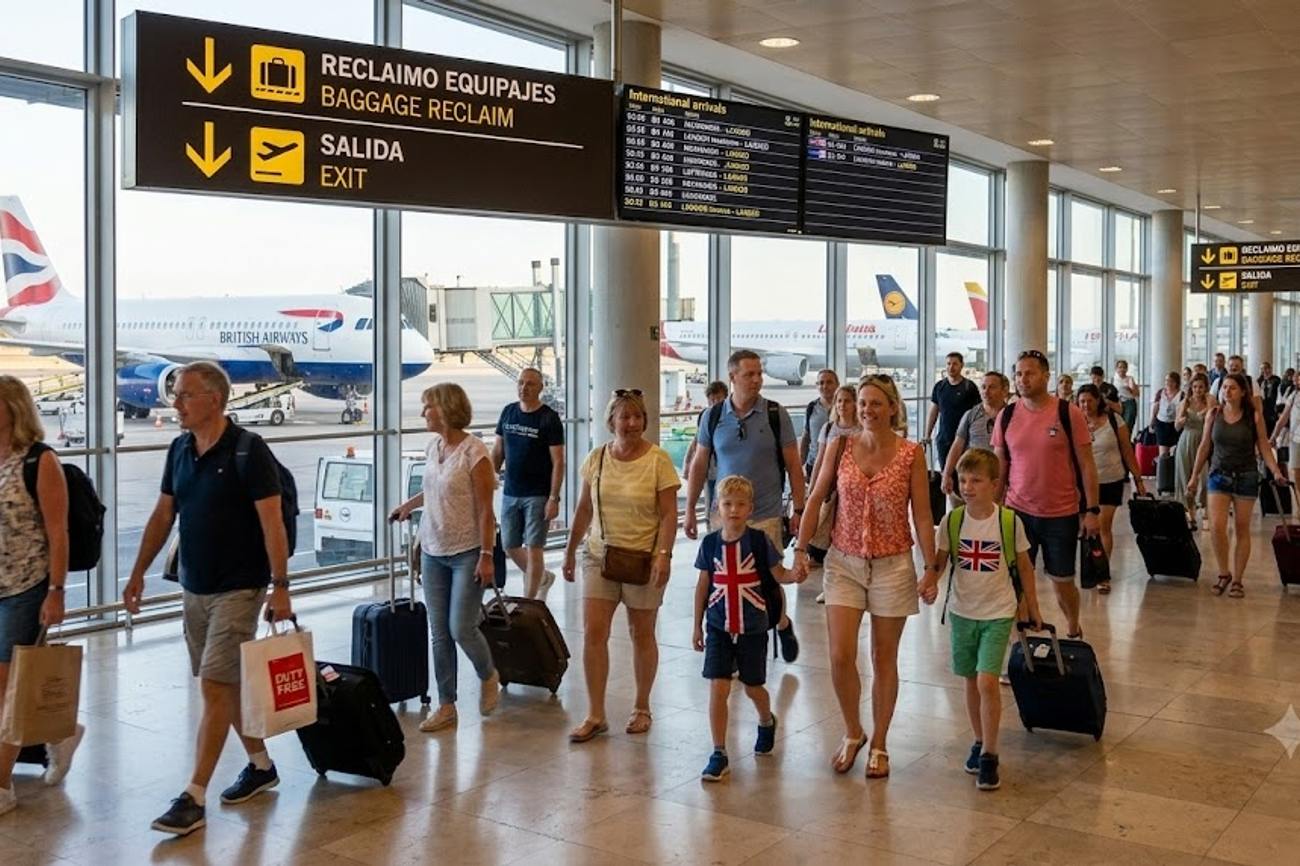
Image generated by AI
12.3 million international air passengers descended upon Spain in August 2026, marking a 5.5% year-on-year surge that underscores the country's dominance in the European leisure market. This peak-summer volume is part of a broader upward trajectory; between January and August 2026, Spain recorded 79.3 million international arrivals, a 5.2% increase over the same period in 2025. This represents an absolute growth of approximately 3.9 million additional passengers, signaling a robust recovery and expansion of the Spanish aviation sector.
The Shift in European Source Market Dominance
The traditional hierarchy of Spain's tourism source markets is undergoing a visible realignment. While Germany has historically been a cornerstone of Spanish tourism, August 2026 saw the United Kingdom firmly establish itself as the primary engine of growth. The UK now provides the largest volume of overseas passengers, effectively overtaking Germany and other core European markets in total contribution.
This shift is not merely a matter of volume but of geographic distribution. The British market is heavily skewed toward island destinations, whereas other European markets are beginning to pivot toward the mainland. This diversification is essential for Spain's long-term stability, as it reduces the reliance on any single nationality and spreads economic benefits across more provinces. The European market as a whole remains the primary driver, accounting for 85.7% of all international arrivals in August, though growth is also being registered in the Americas (+3.9%) and Asia (+2.8%).
Passenger Volume and Growth Metrics
The distribution of these arrivals reveals a concentrated reliance on a few primary gateways, though secondary airports are showing surprising resilience and growth. The following data breaks down the performance of key hubs and source nations during the August 2026 window.
| Metric/Market | August 2026 Volume | Market Share | Year-on-Year Growth |
|---|---|---|---|
| Total Int'l Passengers | 12.3 Million | 100% | +5.5% |
| United Kingdom | 2.9 Million | 23.7% | +7.5% |
| Germany | 1.5 Million | 12.5% | -1.4% |
| Italy | 1.3 Million | 10.6% | +7.7% |
| France | 820,748 | 6.7% | -1.0% |
| Madrid-Barajas | 2.4 Million | N/A | +4.6% |
| Barcelona Airport | 2.2 Million | N/A | +5.9% |
| Valencia Airport | Not Specified | N/A | +13.4% |
The growth at Valencia Airport (+13.4%) is particularly noteworthy, as it outpaces the primary hubs of Madrid and Barcelona. This suggests a decentralization of tourism, where travelers are bypassing the major metropolitan centers in favor of regional destinations.
Expert Analysis: The Divergence of the UK and German Markets
For the seasoned traveler or aviation analyst, the most critical data point is the divergence between the UK and German passenger trends. The UK market grew by 7.5%, while the German market contracted by 1.4%. This is not a random fluctuation; it reflects a shift in consumer behavior and perhaps a change in airline capacity allocations.
The British market remains deeply tethered to the islands. The Balearic Islands captured 26% of all UK arrivals (a 3.1% increase), and the Canary Islands claimed 20%. For travelers booking these routes, the direct consequence is a high-density, high-competition environment where low-cost carriers likely dictate pricing. However, the weakness in the UK market for Galicia and Asturias indicates that British tourists are still primarily "sun-and-beach" seekers rather than cultural or urban explorers.
Spain's aviation sector saw a significant surge in August, with 12.3 million international air passengers fueling a broader tourism boom. Data from Aena indicates that the UK has overtaken Germany as the primary source market for travelers entering the country.
Conversely, the German market is experiencing a "mainland pivot." While German arrivals to the Balearic and Canary Islands dropped by approximately 10,000 passengers each, demand surged in the Valencian Community and the Basque Country. This suggests that the German traveler is moving away from all-inclusive island resorts toward experiential, mainland tourism.
The rise of Italy (+7.7%) is the third critical pillar. With 1.3 million arrivals, Italy is becoming a powerhouse of growth, specifically benefiting the Valencian Community (which saw 30,000 additional Italian passengers) and Andalusia. This indicates a strengthening of Mediterranean intra-regional travel, likely supported by increased connectivity from International Air Transport Association (IATA) member airlines expanding short-haul European routes.
The pricing pressure created by this shift means that mainland destinations—previously secondary to the islands—can now command higher premiums during the summer peak. As the Ministry of Industry and Tourism continues to pioneer new markets in China, Japan, Canada, and Brazil, the reliance on the volatile European economy may decrease, but for now, the UK-Italy-Spain triangle is the dominant force.
Key Takeaways
- UK Dominance: The United Kingdom is now Spain's largest source of air passengers, contributing 2.9 million travelers (23.7% of the total) in August 2026.
- Mainland Pivot: German travelers are abandoning traditional island resorts in favor of the Basque Country and the Valencian Community, despite an overall 1.4% dip in German arrivals.
- Italian Surge: Italy has emerged as a high-growth market (+7.7%), with significant double-digit growth seen in Andalusia and the Basque Country.
- Regional Hub Growth: While Madrid and Barcelona remain the primary gateways, Valencia Airport is the fastest-growing hub with a 13.4% increase in traffic.
- Global Diversification: Spain is successfully expanding its reach beyond Europe, with modest but steady growth from Asian (+2.8%) and American (+3.9%) markets.
FAQ: Spain Air Travel 2026
Which Spanish region is most popular for UK tourists? The Balearic Islands are the top choice, receiving 26% of all British passengers in August 2026, followed by the Canary Islands at 20%.
Is German tourism in Spain declining? Overall German arrivals fell by 1.4% in August 2026, but this is a shift in preference rather than a total decline, as mainland destinations like the Basque Country saw increased demand.
Which Spanish airport is growing the fastest? Valencia Airport recorded the strongest growth among major hubs, with a 13.4% increase in international passengers during August 2026.
Are non-European markets growing? Yes, although Europe dominates (85.7%), there is steady growth from the Americas (+3.9%) and Asia (+2.8%), specifically from China, Japan, Canada, and Brazil.
As the center of gravity for European tourism shifts toward the UK and Italy, Spain's ability to decentralize its traffic away from the islands will determine its long-term economic resilience.
Tags: SpainTourism2026, MadridBarajas, BarcelonaAirport, UKSpainAirRoute, ValenciaAirportGrowth, EuropeanAviationTrends
Related Travel Guides
This article is for informational purposes. Flight routes, passenger regulations, visa rules, and transit advisories are subject to change by airlines and aviation authorities. Readers are advised to verify schedules and travel documentation with relevant carriers and border agencies before departure.
Related Stories

Jet Airways vs. Boeing NCLAT Battle: Why Manufacturer Litigation Offers No Quick Ticket Refunds for Indian Travel Agents

easyJet Launches Direct Liverpool to Reykjavik Flights: Inside the North West's New Winter Gateway to Iceland