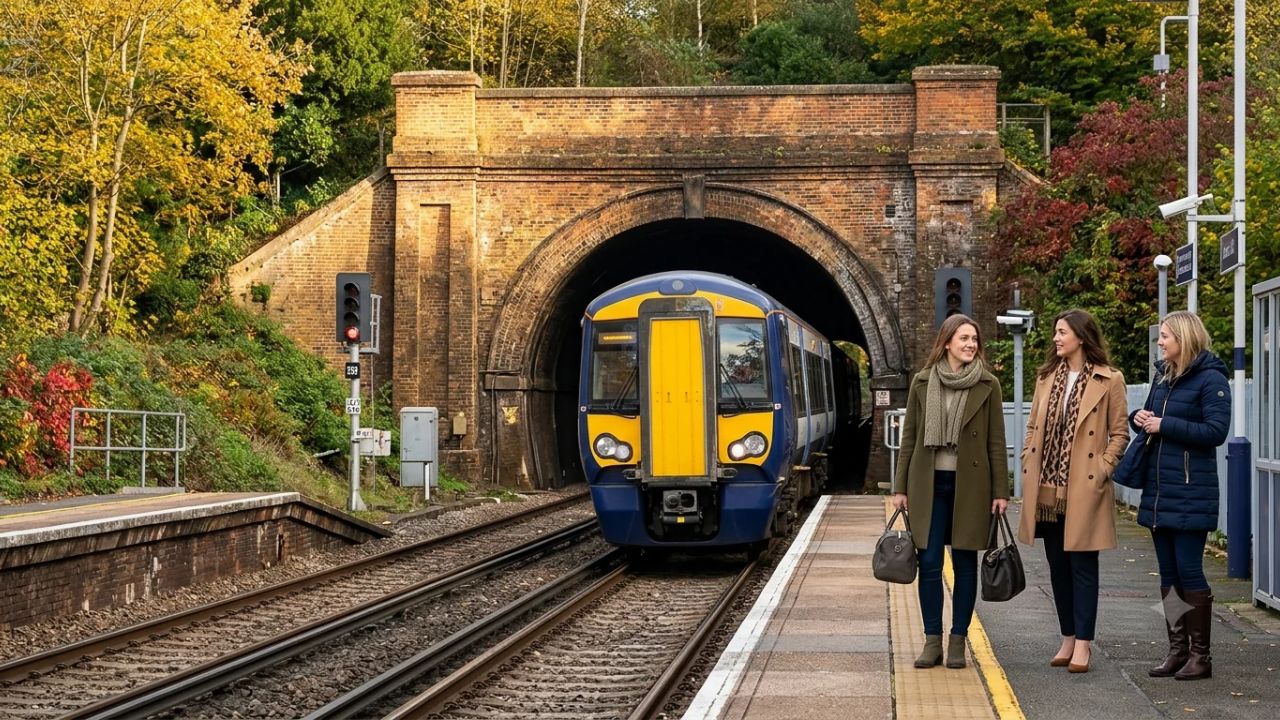
UK Restores Hastings Railway Services After Nine-Day Tunnel Overhaul: Grove Hill Engineering Reconnects Kent and East Sussex

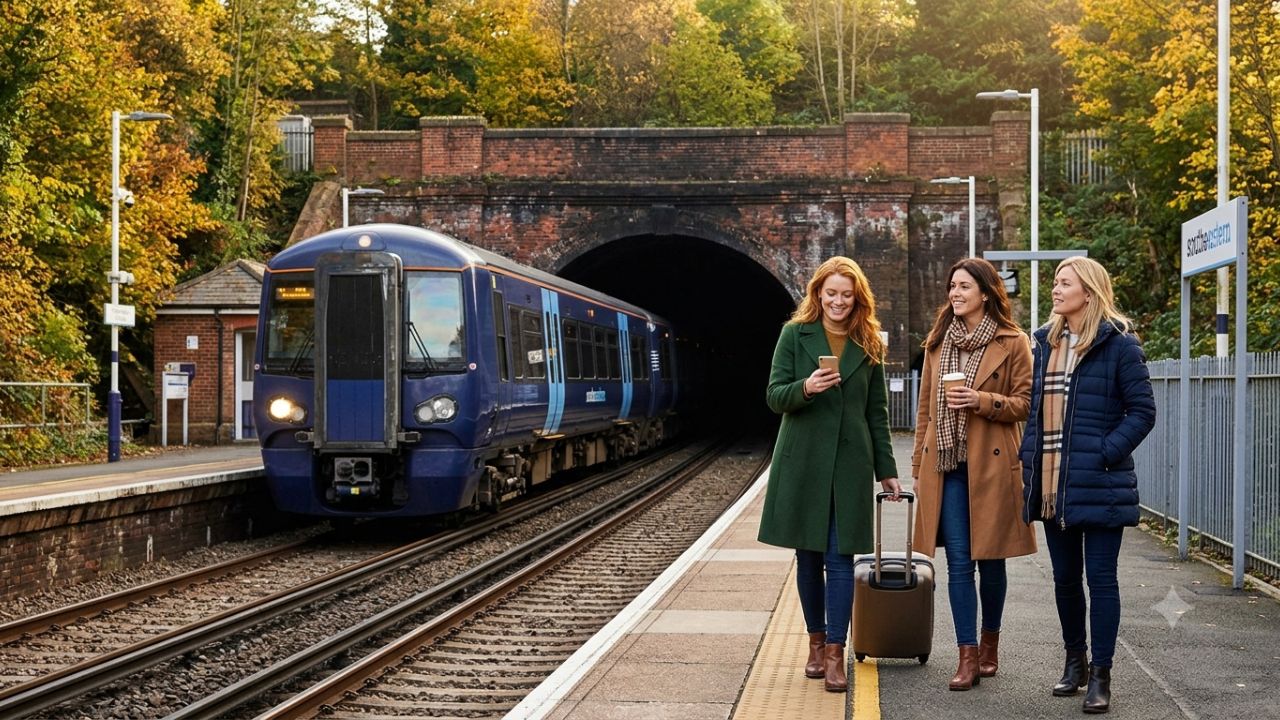
TUNBRIDGE WELLS, England — Passenger rail services connecting London with the coastal towns of Kent and East Sussex returned to normal operating schedules on Monday, November 2, 2026, following the successful completion of an intensive nine-day engineering blockade centered on the historic Grove Hill Tunnel. The coordinated infrastructure project, executed during the autumn school half-term break, restored direct train travel between Tonbridge and Wadhurst while enabling heavy maintenance crews to complete vital track renewal, subterranean civil works, and geotechnical stabilization across the High Weald corridor. Delivered through a joint operating partnership between Network Rail and passenger train operator Southeastern under the integrated South Eastern Railway management banner, the multi-million-pound investment eliminated three long-standing temporary speed restrictions and established the physical baseline required for accelerated timetable schedules scheduled to debut in mid-December 2026.
+----------------------------------------------------------------------------------------------------+ | KEY TAKEAWAYS: HASTINGS LINE REOPENING & GROVE HILL OVERHAUL | +----------------------------------------------------------------------------------------------------+ | • Specialized Slab Renewal: Replacement of life-expired concrete slab track within Grove Hill | | Tunnel gives the subterranean alignment a 50-year structural lifespan without track degradation. | | • Elimination of Speed Traps: Three restrictive Temporary Speed Restrictions (TSRs) between | | Crowhurst, Battle, and Robertsbridge lifted following embankment restabilization and alignment. | | • Comprehensive Corridor Blitz: Ancillary works delivered drainage re-profiling at Stonegate, | | tunnel inspections at Mountfield and Wadhurst, and power supply modernizations at Etchingham. | | • Direct December Dividends: Engineering achievements unlock a pilot morning peak express saving | | 14 minutes between Hastings and London Bridge starting Monday, December 14, 2026. | | • Unified Governance Success: South Eastern Railway joint management framework minimized commuter | | friction via targeted autumn half-term bus shuttles and reciprocal multi-operator ticket relief. | +----------------------------------------------------------------------------------------------------+
====================================================================================================
                        HASTINGS LINE INFRASTRUCTURE INTERVENTION CORRIDOR
====================================================================================================

 London Charing Cross / Cannon Street / London Bridge
         |
    Sevenoaks
         |
    Tonbridge   <=================== NORTHERN BLOCKADE BOUNDARY (Oct 24 - Nov 1)
         |
  Tunbridge Wells
         |
 [Grove Hill Tunnel]   <--- Specialized Slab Track Re-Casting & Trackbed Re-Engineering
         |
     Frant
         |
    Wadhurst    <=================== INTERMEDIATE BLOCKADE BOUNDARY (Reopened Nov 2)
         |
   Stonegate    <--- Cuttings Soil Drainage Overhaul & Regraded Earthworks
         |
  Etchingham    <--- UPS Power Modernization & Station Canopy Restoration
         |
 Robertsbridge  <--- Mechanical Component Renewals & TSR Removal
         |
     Battle     <=================== EXTENDED SOUTHERN CUTOFF (Sunday, Nov 1 only)
         |
   Crowhurst    <--- Double Track Realignment & Embankment Remediation (2 TSRs Removed)
         |
  West St Leonards
         |
    St Leonards Warrior Square
         |
     Hastings   <--- Coastal Terminus for London Commuter & High Weald Regional Traffic

====================================================================================================
Strategic Arteries: Connecting the High Weald to the Capital
The railway connecting Tonbridge to Hastings represents one of the most distinctive, technically complex, and historically constrained transport corridors in the United Kingdom. Carved through the undulating, heavily wooded sandstone ridges and dense Wealden clay of the High Weald Area of Outstanding Natural Beauty, the 33-mile route serves as an economic lifeline for communities across west Kent and East Sussex. Every weekday, tens of thousands of professionals, secondary school students, local tradespeople, and international tourists depend on the line to travel between the southern coastal resort of Hastings, historic market towns such as Battle and Wadhurst, the major retail and commercial center of Tunbridge Wells, and central London terminals including London Bridge, Waterloo East, Charing Cross, and Cannon Street.
When services ground to a halt across the northern half of the line at the close of service on Friday, October 23, 2026, the intervention represented an absolute engineering necessity rather than routine track maintenance. For decades, the corridor has presented civil engineers with acute operating challenges rooted in nineteenth-century construction history. When the South Eastern Railway originally constructed the branch between 1845 and 1852 under the direction of engineer Peter Barlow, fraudulent practices by local brickwork contractors led to severe structural substandardness. Contractors systematically omitted concentric brick rings from tunnel linings to skim building budgets, leaving tunnels dangerously narrow and structurally compromised. To keep the tunnels stable, nineteenth-century engineers added heavy inner brick sleeves, which severely restricted internal horizontal clearances.
This historical quirk dictated the operational destiny of the line for more than a century. Standard British passenger carriages could not navigate the tightly constrained tunnels of Strawberry Hill, Grove Hill, Wadhurst, and Mountfield without scraping the brickwork sidewalls. For decades, the line required unique, custom-built narrow-bodied passenger rolling stock, immortalized by the bespoke Class 201 through 207 diesel-electric multiple units that operated until electrification in 1986. Electrification was achieved not by expensive broad-scale tunnel re-boring, but by taking the radical step of singling the track through several key tunnels, or by installing highly specialized, non-ballasted track systems designed to maximize every millimeter of lateral and vertical clearance.
Grove Hill Tunnel, situated immediately south of Tunbridge Wells station, occupies the operational pinch-point of this entire network. Measuring approximately 287 yards in length, the tunnel handles continuous bidirectional traffic operating under intense service frequencies. Any structural deterioration within this subterranean bottleneck immediately cascades across the entire passenger network, threatening commuter stability from the English Channel to the heart of London. The October 2026 nine-day closure was deliberately designed as an all-encompassing engineering surge to address accumulated subterranean wear, eliminate structural degradation before the severe winter freeze, and ensure the line maintains absolute mechanical reliability for decades to come.
====================================================================================================
              HISTORIC HASTINGS LINE TUNNEL PROFILE: CONVENTIONAL VS SLAB TRACK
====================================================================================================

     CONVENTIONAL BALLASTED PROFILE                   SPECIALIZED CONCRETE SLAB PROFILE
    (Constrained Lateral Clearances)                 (Optimized Vertical & Lateral Clearance)

           /-----------------\                              /-----------------\
          /   Narrow Victorian\                            /   Narrow Victorian\
         /     Tunnel Arch     \                          /     Tunnel Arch     \
        |                       |                        |                       |
        |   +---------------+   |                        |   +---------------+   |
        |   | Modern Rolling|   |                        |   | Modern Rolling|   |
        |   | Stock Profile |   |                        |   | Stock Profile |   |
        |   +---------------+   |                        |   +---------------+   |
        |           |           |                        |           |           |
        |       [TIGHT]         |                        |      [CALIBRATED]     |
        |           v           |                        |           v           |
        |=====O===========O=====|                        |=====O===========O=====|  <- Rails
        |  ###################  | <- Crushed Stone       |  ===================  |  <- Concrete Slab
        |  ### BALLAST BED ###  |    Ballast (prone      |  | STRUCTURAL SLAB  |     Direct-Fastened
        |  ###################  |    to shifting & void) |  ===================  |     Zero Dynamic Shift
        \-----------------------/                        \-----------------------/

====================================================================================================
Subterranean Precision: Replacing the Slab Track in Grove Hill Tunnel
The technical center of the nine-day possession was the complete renewal of the permanent way infrastructure inside Grove Hill Tunnel. Unlike the vast majority of the British railway network, where steel rails sit atop wooden or concrete sleepers laid over a deep foundation of loose, crushed granite ballast, Grove Hill relies on slab track technology. In a slab track configuration, the rails are anchored directly onto an engineered, reinforced concrete slab foundation. This specialized design was originally introduced inside the tunnel during the 1980s electrification program because loose ballast stones require substantial vertical depth and tend to shift under dynamic train loads, which risks dynamic carriage sway that could bring train bodies into contact with the tunnel walls.
After nearly four decades of relentless operational pounding under heavy commuter fleets—most recently the eight- and twelve-car formations of Class 375 and Class 377 Electrostar trains—the original concrete slab structure, fastening clips, and drainage conduits had reached the end of their design life. Micro-fractures within the aged concrete bed, aggravated by natural groundwater ingress seeping through the High Weald sandstone strata above, threatened the geometric integrity of the tracks. Left unaddressed, these structural faults would have necessitated emergency speed restrictions inside the tunnel, strangling line capacity and triggering severe commuter delays across south-east England.
Executing a full slab track replacement inside an active, narrow rail tunnel represents one of the most demanding disciplines in modern civil engineering. Working in continuous 24-hour rotating shifts within the cramped confines of Grove Hill Tunnel, specialized railway engineering teams deployed heavy demolition excavators fitted with hydraulic breakers to systematically break up and remove hundreds of tons of life-expired reinforced concrete. Every metric ton of pulverized concrete, decayed baseplate steel, and contaminated foundation silt had to be hauled out through the narrow tunnel portal on engineering trains and highway-rail vehicles, with zero margin for mechanical failure or operational error.
Once the Victorian brick foundation was excavated down to solid bedrock and surveyed using 3D laser-scanning lidar systems, engineers installed high-capacity subsurface drainage culverts designed to channel ground seepage away from the running lines into dedicated sumps. Crews then constructed precision steel reinforcement frameworks and poured rapid-curing, high-performance structural concrete engineered to resist extreme compressive forces and water permeability. The new rail sections were subsequently secured using modern resilient direct-fastening assemblies, which isolate vibration, reduce acoustic resonance for neighboring properties in Tunbridge Wells, and guarantee microscopic gauge tolerance. According to Network Rail engineering leads, the newly installed slab track delivers an anticipated operational service lifespan of 50 years, ensuring that future generations of commuters will enjoy uninterrupted transit through Grove Hill without requiring disruptive subterranean track renewals.
Geotechnical Tensions: Clay Desiccation, Seasonal Rain, and Speed Restriction Removals
While the engineering blitz inside Grove Hill Tunnel grabbed headline attention, the removal of three debilitating Temporary Speed Restrictions (TSRs) across the southern reaches of the corridor represented an equally vital victory for line reliability. Railway embankments throughout Kent and East Sussex are notoriously vulnerable to geotechnical instability due to the unique behavior of Wealden clay. This geological subsoil expands dramatically when saturated with winter rain and contracts with violent volumetric shrinkage during prolonged periods of summer heat and drought.
The summer of 2026 brought exceptionally dry, hot weather across southern England, subjecting railway earthworks to extreme moisture deficits. As the clay embankments dried out, the soil shrank and formed internal voids, causing the overlying ballast and trackbed to settle unevenly. This phenomenon, known in railway geotechnics as cyclic desiccation settlement, distorted track geometry between Crowhurst and Battle, as well as along the exposed rural embankment separating Etchingham and Robertsbridge. To protect passenger safety from derailment risks caused by track twist faults, Network Rail safety inspectors were forced to impose emergency speed restrictions of 20 and 30 miles per hour over sections normally cleared for 60 to 75 mile-per-hour running.
These speed restrictions acted as severe operational drags on the Hastings Line timetable. Because train paths on the single-track sections and high-frequency junctions south of Tonbridge are tightly timed, losing three to five minutes while crawling across rough embankments routinely caused trains to miss their scheduled crossing slots. The resulting reactionary delays rippled northward, causing trains to arrive late at Tonbridge and missing allocated paths onto the four-track South Eastern Main Line into London, compounding platform congestion at London Bridge and Cannon Street.
Taking advantage of the autumn half-term closure, geotechnical engineering teams mobilized specialized heavy rail plant, including dynamic track stabilizers, multi-purpose tamper units, and ballast regulators, across the affected sections. The arrival of seasonal autumn precipitation throughout late October helped rehydrate the desiccated clay structures, allowing engineers to carry out comprehensive top-and-line tamping, deep ballast injection, and laser-guided alignment correction. Soil nails and geotextile retaining membranes were installed along unstable embankment shoulders near Crowhurst to prevent lateral soil creep. Following rigorous dynamic test runs conducted with instrumented measurement locomotives, safety inspectors officially rescinded all three speed restrictions ahead of the Monday morning reopening, restoring full line-speed capability and eliminating the primary source of chronic autumn delays.
====================================================================================================
                        AUTUMN ENGINEERING POSSESSION RESOURCE ALLOCATION
====================================================================================================

      CIVIL & PERMANENT WAY                                  GEOTECHNICAL & TRACK
        (Grove Hill Tunnel)                                   (Southern Corridor)
                 |                                                     |
                 +--> 287 Yards Slab Track Demolished                  +--> 3 Temporary Speed
                 |    and Re-cast in High-Strength Concrete            |    Restrictions Lifted
                 |                                                     |
                 +--> 400+ Metric Tons Concrete & Spoils               +--> 4.2 Miles Precision
                 |    Excavated and Removed via Rail                   |    Track Geometry Re-Aligned
                 |                                                     |
                 +--> New High-Flow Sump Drainage Culverts             +--> Embankment Soil Nailing
                 |    Installed Against Subsurface Seepage             |    and Geotextile Membrane Anchors
                 |                                                     |
                 +--> Direct Resilient Rail Fastenings                 +--> Full Line Speed (70-75 mph)
                      Giving 50-Year Structural Lifespan                    Restored Through Crowhurst & Battle

====================================================================================================
Ancillary Line Renewal: Drainage, Power Resilience, and Station Upgrades
Rather than treating the nine-day blockade solely as a track replacement exercise, South Eastern Railway adopted an integrated "whole-corridor" renewal methodology. By taking complete possession of the route between Tonbridge and Wadhurst—and extending the operational closure south to Battle on Sunday, November 1—project managers consolidated dozens of disparate maintenance tasks into a single, tightly orchestrated operational window. This approach saved taxpayer funding, maximized engineering plant utilization, and eliminated the need for dozens of piecemeal weekend closures spread across the upcoming winter and spring.
At Stonegate station, situated in a steep, heavily wooded cutting prone to groundwater runoff and leaf-fall contamination, contractors cleared hundreds of yards of trackside drainage ditches. Silt-clogged Victorian stoneware pipes were excavated and replaced with heavy-duty perforated polyethylene carrier pipes surrounded by geogrid filter stone. The upgraded drainage infrastructure prevents water from pooling at the toe of the railway cuttings, mitigating the risk of landslips during intense winter downpours. Concurrently, specialized tree-clearing teams felled diseased ash trees suffering from ash dieback and trimmed encroaching canopy branches along the lineside, dramatically decreasing the incidence of autumn leaf-mulch adhesion that frequently causes wheel-slip and traction failure.
Further south at Etchingham, engineers focused on electrical resilience and passenger amenity. Teams installed an advanced Uninterruptible Power Supply (UPS) system to safeguard signaling and communications infrastructure against external power grid fluctuations. The rural power supply through the High Weald has historically suffered transient voltage drops during severe winter storms; the new battery-buffered UPS guarantees seamless continuous power to local signaling interlockings, ensuring trains do not face red signals caused by commercial grid blackouts. Simultaneously, heritage conservation workers completed structural repairs and repainting on Etchingham’s historic platform canopies, restoring weather protection for passengers while preserving the unique architectural heritage of the Grade II-listed station.
Subterranean structural examinations were also carried out inside Wadhurst Tunnel and Mountfield Tunnel. Specialized structural examination teams suspended from mobile elevated work platforms carried out ultrasonic sounding and tactile hammer surveys across thousands of square meters of Victorian brickwork lining. Minor mortar leaching and localized spalling were cleaned and pointed using fiber-reinforced structural mortar, while groundwater weep-holes were mechanically cored out to relieve hydrostatic pressure behind the tunnel walls. These proactive inspections confirmed that the structural envelopes of both tunnels remain robust, averting emergency masonry interventions during the busy festive travel period.
The Unified Railway Model: How South Eastern Railway Managed the Half-Term Blockade
The operational execution of the October 2026 blockade highlights the growing maturity of South Eastern Railway’s integrated governance structure. Formed on June 18, 2025, through the institutional merging of passenger train operating company Southeastern and Network Rail’s Kent Route organization under a single unified leadership team, South Eastern Railway was created as a pioneering trailblazer for the national transition toward Great British Railways (GBR). The nine-day Hastings Line closure served as a high-stakes operational demonstration of how unified management eliminates traditional industry friction between track and train operations.
Under the historically fragmented rail franchising model, blockades of this magnitude were often fraught with contractual disputes, adversarial delay attribution claims, and disjointed customer communication. Train operators frequently fought track engineers over access charges and possession timings, resulting in compromised engineering hours and disjointed passenger replacement schemes. During the 2026 Grove Hill project, by contrast, operational decisions were directed by a unified executive directorate focused exclusively on passenger outcomes and infrastructure longevity.
====================================================================================================
               CONVENTIONAL FRANCHISED MODEL VS UNIFIED RAILWAY GOVERNANCE
====================================================================================================

  FEATURE                   CONVENTIONAL SYSTEM                  SOUTH EASTERN RAILWAY (GBR MODEL)
----------------------------------------------------------------------------------------------------
  Management Hierarchy      Split TOC vs Network Rail            Unified Joint Executive Directorate
  Blockade Scheduling       Adversarial Access Negotiations      Integrated Whole-Corridor Planning
  Delay Attribution         Complex Financial Blame Disputes     Single Shared Operational Performance
  Replacement Transport     Lowest-Bid Independent Bus Shuttles  Dedicated High-Frequency Express Hubs
  Ticketing Flexibility     Restricted Operator Boundaries       Universal Cross-Corridor Acceptance
  Engineering Delivery      Piecemeal Weekend Closures           Concentrated Multi-Discipline Surges
====================================================================================================
To soften the blow for regional communities, planners deliberately timed the closure to coincide with the autumn school half-term holiday, when passenger demand across the commuter belt declines by an estimated 25 to 30 percent. For passengers who still needed to travel, South Eastern Railway assembled an extensive road replacement transport armada. Dedicated bus hubs were established at Tonbridge, Tunbridge Wells, Frant, and Wadhurst, operating two distinct service tiers: high-frequency direct express coaches connecting Wadhurst and Tunbridge Wells directly with Tonbridge station, alongside all-stations minibus shuttles serving rural intermediate halts.
Recognizing that replacement road coaches inherently lengthen journey times—a typical rail sprint of 10 minutes between Tunbridge Wells and Tonbridge stretched to 30 minutes in peak highway traffic, while Wadhurst to Tonbridge required 55 minutes—management implemented expansive ticket easement policies. Commuters across Kent and Sussex were permitted to use their standard tickets on alternative rail corridors without paying additional fares. Passengers holding Hastings Line tickets could travel via Ashford International aboard Southeastern Highspeed services into London St Pancras International, or divert westward via Southern services operating along the Uckfield branch into London Bridge. These cross-operator acceptance measures disbursed passenger volumes across the regional network, preventing severe highway bus bottlenecks and preserving commuter goodwill throughout the nine-day intervention.
December 2026 Timetable Horizons: The Return of the Fast Peak Express
The successful completion of the Grove Hill Tunnel slab renewal and the elimination of the three speed restrictions deliver immediate operational dividends, but their most profound benefit will be realized on Monday, December 14, 2026, when national rail operators introduce their comprehensive winter timetable change. For years, Hastings Line commuters have voiced intense frustration over lengthened journey times, with express services gradually decelerated by track degradation, padding for pathing conflicts, and temporary speed restrictions. The newly stabilized infrastructure finally unlocks the capacity needed to introduce aggressive, accelerated train schedules.
Headlining the December 2026 timetable enhancements is a brand-new morning peak pilot express service tailored specifically for coastal and Wealden commuters heading into the capital. Under the new schedule, an eight-car Electrostar formation will depart Hastings station at 8:05 AM, calling only at principal stations before making a non-stop sprint from Tunbridge Wells directly into London Bridge. The train will arrive at London Bridge in just one hour and 18 minutes, continuing onward to terminate at London Charing Cross at 9:33 AM—a total journey time of one hour and 28 minutes. This represents an immediate 14-minute reduction compared to existing schedules, providing the fastest transit time between Hastings and London seen in over a decade.
====================================================================================================
                     DECEMBER 14, 2026 TIMETABLE ACCELERATION (MORNING PEAK)
====================================================================================================

  STATION STOP              PRE-RENEWAL SCHEDULE (Nov 2026)      NEW EXPRESS PILOT (Dec 14, 2026)
----------------------------------------------------------------------------------------------------
  Hastings                  Dep: 08:01                           Dep: 08:05
  St Leonards Warrior Sq    Dep: 08:06                           Dep: 08:09
  Battle                    Dep: 08:21                           Dep: 08:23
  Wadhurst                  Dep: 08:44                           Dep: 08:46
  Tunbridge Wells           Dep: 08:58                           Dep: 08:59 (Fast Run Commences)
  Tonbridge                 Dep: 09:12                           PASS (Non-stop via fast lines)
  London Bridge             Arr: 09:47                           Arr: 09:23  <-- [SAVING: 14 MINS]
  London Waterloo East      Arr: 09:54                           Arr: 09:29
  London Charing Cross      Arr: 10:01                           Arr: 09:33  <-- [SAVING: 14 MINS]
----------------------------------------------------------------------------------------------------
  TOTAL TRANSIT TIME:       2 Hours 00 Minutes                   1 Hour 28 Minutes (-14 Mins Net)
====================================================================================================
In the evening peak, an identical reciprocal express will depart London Charing Cross at 4:11 PM and London Bridge at 4:20 PM, arriving in Hastings at 5:42 PM to deliver an equivalent rapid journey home for South Coast workers. In addition to the headline express services, South Eastern Railway will restore half-hourly off-peak semi-fast services between Tunbridge Wells and London Charing Cross throughout the middle of the day. This expansion restores vital retail and leisure capacity for Tunbridge Wells, supporting local economic footfall in the historic Pantiles commercial district while offering dependable connections for visitors heading south into the 1066 Country heritage landscape.
Railway planners emphasize that these accelerated timings would have been mathematically impossible without the October engineering work. Without the renewed slab track in Grove Hill Tunnel, dynamic train oscillations at high speeds could have caused clearance breaches. Similarly, without the removal of the 20 mph speed restrictions at Crowhurst and Robertsbridge, trains would have accumulated minor delays that inevitably destroyed their tightly timed non-stop pathing slots across the congested railway junctions of south London. The physical engineering completed during the half-term blockade directly purchased the reliability required for the December speed upgrades.
Technical Comparison: Hastings Line Engineering Interventions Against Regional Corridors
To contextualize the scale and engineering complexity of the Grove Hill Tunnel overhaul, it is helpful to examine how the Hastings Line intervention compares to other major railway modernization projects across the south-east of England. The geological, spatial, and mechanical characteristics of the High Weald corridor impose unique technical parameters that differ significantly from urban mainline quadrupling or open-air rural renewals.
| Corridor & Project Scope | Primary Engineering Challenge | Permanent Way Solution | Operational Blockade Method | Long-Term Strategic Outcome |
|---|---|---|---|---|
| Hastings Line (Grove Hill) Tonbridge to Hastings |
Extreme Victorian tunnel gauge constraints; Wealden clay shrinkage | Continuous reinforced concrete slab track replacement; soil nailing | 9-Day autumn half-term full closure; dedicated replacement buses | 50-year subterranean track life; removal of 3 TSRs; 14-min faster express |
| Chatham Main Line Swanley to Rochester |
High-density 750V DC third-rail commuter operations; chalk cuttings | Deep ballasted track renewal; digital signaling interlocking | Weekend possessions; overnight 8-hour access windows | Enhanced lineside power stability; European Train Control System readiness |
| Medway Valley Line Paddock Wood to Maidstone |
River Medway alluvial floodplain; recurrent embankment waterlogging | Sheet-pile slope stabilization; permeable gravel sub-base re-laying | 5-Day continuous flood defense blockade; single-line working | Resilience against 1-in-50-year flood events; freight gauge clearance |
| Tonbridge to Redhill Line Surrey / Kent Cross-Country |
Aging Victorian overbridges; clay cutting rotational slip failures | Geotechnical soil anchors; timber sleeper replacement with concrete | Extended weekend possessions; reciprocal Southern ticket routing | Elimination of freight speed traps; improved east-west diversionary capacity |
| Brighton Main Line Balcombe & Clayton Tunnels |
Massive subterranean chalk water ingress; high train frequencies | Pre-cast modular slab track sections; high-volume tunnel pumps | 9-Day winter blockade; alternative routing via Arun Valley | Mitigated catastrophic water ingress; stabilized 90 mph mainline line speeds |
As the comparative data indicates, the Hastings Line project required an exceptionally high concentration of specialized civil engineering within a very compact geographical footprint. While open-air corridors such as the Chatham Main Line or the Medway Valley Line permit the staging of heavy diesel road-rail vehicles along wide cess verges, Grove Hill Tunnel’s extreme clearance restrictions forced engineers to stage all demolition, concrete pouring, and rail fastening operations sequentially within a microscopic spatial corridor. The successful delivery of the project within the designated nine-day schedule demonstrates that intensive, concentrated possessions often yield far superior engineering outcomes compared to dragging out renewals across multiple disruptive weekend possessions.
Passenger and Tourism Realities: Navigating East Sussex and Kent Services
With regular passenger train services fully restored from Monday, November 2, travelers, daily commuters, and international tourists can once again traverse the scenic High Weald corridor without highway disruptions. The return of seamless rail transit arrives at an opportune moment for regional tourism, providing sustainable transport access to some of England’s most celebrated historical and cultural attractions.
Passengers traveling south from London can once again explore the architectural splendors of Tunbridge Wells, where the Georgian colonnades of The Pantiles, vibrant independent boutiques, and thriving culinary establishments depend heavily on day-tripper rail traffic from London Bridge and Charing Cross. Continuing south into East Sussex, the line provides direct platform access to the historic town of Battle, where travelers step off the train within walking distance of Battle Abbey and the 1066 battlefield where William the Conqueror’s Norman forces altered the trajectory of English history. At the coastal terminus of Hastings, visitors find an intriguing blend of maritime heritage in the medieval Old Town, thriving contemporary art at the Hastings Contemporary gallery, and sweeping coastal vistas along the Sussex cliffs.
For regular season ticket holders and daily commuters, the restoration of rail operations brings immediate relief from the physical fatigue of replacement bus travel. Commuters are advised to note several key operational details as the network transitions toward the new December timetable:
- Full Line Speeds Restored: Trains between Tunbridge Wells, Wadhurst, Battle, and Hastings are operating at normal line speeds following the lifting of the temporary restrictions at Crowhurst, Battle, and Robertsbridge. Commuters should expect consistent on-time performance during morning and evening rush hours.
- Upcoming December Timetable Launch: Passengers planning weekday morning travel to London should review the upcoming South Eastern Railway winter timetable, which takes effect on Sunday, December 13, 2026. The new 8:05 AM peak express from Hastings and its reciprocal 4:11 PM evening departure from Charing Cross will appear on digital booking systems and National Rail Enquiries starting in late November.
- Off-Peak Capacity Expansion: Travelers utilizing off-peak services between Tunbridge Wells and central London will benefit from restored half-hourly semi-fast services beginning in mid-December, providing regular 45-minute journey times to London Bridge throughout the day.
- Winter Weather Preparedness: While the Grove Hill slab renewal and Stonegate drainage upgrades dramatically improve structural resilience, passengers are reminded that the High Weald’s heavily forested geography remains vulnerable to autumn storms. Southeastern operates specialized multi-purpose de-icing and railhead-treatment trains (RHTTs) fitted with high-pressure water jets and adhesion-modifying sandite across the corridor to maintain wheel grip during severe frost and leaf-fall conditions.
The successful reopening of the Hastings Line marks a decisive milestone in the renewal of Britain's regional rail infrastructure. By marrying Victorian civil engineering heritage with twenty-first-century slab track technology, geotechnical soil stabilization, and unified railway operations, South Eastern Railway and Network Rail have revitalized an indispensable commuter link. As the corridor prepares for the introduction of accelerated express services in December, passengers across Kent and East Sussex can look forward to a faster, smoother, and far more dependable railway journey through the heart of the High Weald.
Related Travel Guides
- UK Rail Trips Beyond London: 25th Anniversary Guide to Harry Potter Film Locations
- Five Magical Train Journeys Across the United Kingdom for Rail and Film Enthusiasts
- Southern France Rail Disruption: Marseille and Regional Network Recovery
- Amtrak Thanksgiving 2026 Travel Surge: High-Speed Upgrades on the Northeast Corridor
This article is for informational purposes. Flight routes, passenger regulations, visa rules, and transit advisories are subject to change by airlines and aviation authorities. Readers are advised to verify schedules and travel documentation with relevant carriers and border agencies before departure.
Related Stories
UK Restores Hastings Railway Services After 9-Day Closure for Grove Hill Tunnel Repairs 2026