
UK Air Traffic Control Failure: Nats CEO Faces Pressure After 2,000+ Flights Cancelled in 2026
UK flight schedules stabilize after a National Air Traffic Services (Nats) technical failure grounded over 2,000 flights, triggering government probes and calls for leadership changes.

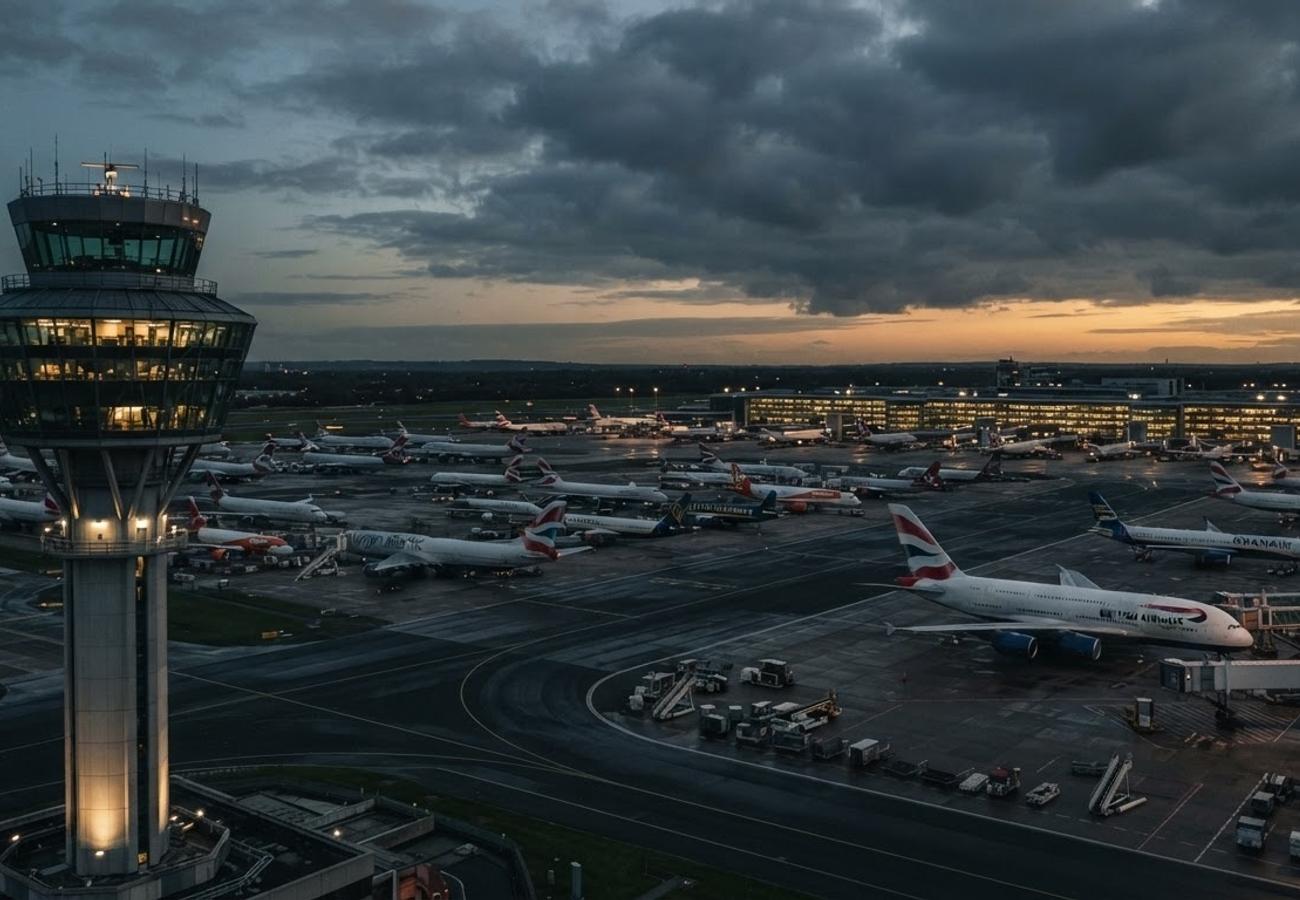
Image generated by AI
UK aviation is gradually returning to operational stability following a systemic failure at National Air Traffic Services (Nats) that grounded or delayed thousands of journeys. The outage has sparked a political crisis, with the UK government demanding a full investigation and industry leaders calling for the resignation of Nats CEO Martin Rolfe.
Systemic Failure and Operational Recovery
A critical technical malfunction within the automated flight-plan processing systems of National Air Traffic Services (Nats) triggered widespread disruption across the UK's airspace. The failure forced air traffic controllers to revert to manual data handling, which drastically reduced the volume of aircraft that could be safely managed.
According to data from aviation analytics firm Cirium, more than 2,000 flights arriving at or departing from the UK were cancelled over a two-day period starting Tuesday. The disruption heavily impacted the UK's primary hubs, including Heathrow, Gatwick, Manchester, and Stansted.
While Nats confirmed the underlying technical issue was resolved by Tuesday evening, the aviation sector faced a prolonged recovery period. The "knock-on" effect—where aircraft and crew are displaced from their scheduled positions—meant that disruptions continued well into Thursday. Carriers including British Airways, Ryanair, and Wizz Air were forced to utilize rescue flights and upgauge aircraft to larger models to clear the backlog of stranded passengers.
Disruption Summary and Impact Data
The following table outlines the scale of the disruption and the immediate response measures taken by the aviation sector.
| Metric | Detail |
|---|---|
| Total Cancellations | 2,000+ flights (over 48 hours) |
| Primary Cause | Nats automated flight-plan processing failure |
| Affected Hubs | Heathrow, Gatwick, Manchester, Stansted |
| Estimated Economic Loss | Up to £70 million (compensation, hotels, rebooking) |
| Recovery Timeline | Systems resolved Tuesday; schedules stabilized by Thursday |
| Government Action | One-week deadline for Nats investigation; CAA independent review |
Leadership Crisis and Government Intervention
The outage has placed Nats CEO Martin Rolfe under intense scrutiny. Ryanair Group CEO Michael O’Leary has publicly stated that Rolfe’s position is untenable, citing a pattern of instability that includes a previous high-profile failure during the August Bank Holiday last year.
Transport Secretary Heidi Alexander summoned Rolfe to an urgent meeting in London, subsequently ordering a detailed investigation into the cause of the failure and the adequacy of existing safeguards. The Civil Aviation Authority (CAA) has been tasked with conducting an independent review to identify systemic weaknesses in the UK's air traffic control resilience.
Martin Rolfe has officially ruled out a cyber attack, attributing the malfunction to an "anomalous flight-plan input" that the system failed to process as designed.
Traveler Logistics Guide: Navigating UK Airspace Disruptions
From a ground-level perspective, navigating a systemic ATC failure requires a different strategy than dealing with a standard airline delay. Because the fault lies with the infrastructure provider (Nats) rather than the airline, the legal and logistical landscape changes.
1. Understanding "Duty of Care" vs. Compensation Under UK and EU air passenger rights, airlines are legally obligated to provide "duty of care" regardless of the cause of the delay. This includes:
- Meals and Refreshments: Provided after a specific wait time.
- Accommodation: Provided if an overnight stay becomes necessary.
- Communications: Access to emails or phone calls.
- Crucial Distinction: While duty of care is mandatory, cash compensation for delays is often denied when the cause is "extraordinary circumstances," such as an ATC failure.
2. Managing Connections If you are transiting through a UK hub to a long-haul destination in North America or Asia, be aware that long-haul rotations take days to realign. The best way to navigate this is to proactively monitor your aircraft's inbound status via flight tracking apps rather than relying solely on airport screens.
3. Digital Transit Policies Ensure all travel documents are digitized. During mass disruptions, airport queues for customer service desks can exceed several hours. Utilizing airline apps for self-service rebooking is significantly faster than waiting for ground staff during a systemic outage.
Infrastructure Impact Assessment
This incident underscores the fragility of the UK's aviation infrastructure. The estimated £70 million loss to the sector highlights how a single software vulnerability can trigger a massive economic ripple effect. For the broader tourism industry, repeated failures at Nats damage the UK's reputation as a reliable global transit gateway.
The shift toward highly integrated digital systems has increased efficiency but created "single points of failure." The current government-mandated review will likely determine if Nats requires an accelerated investment in redundant legacy systems or a complete overhaul of its flight-plan processing architecture to prevent future anomalous inputs from paralyzing national airspace.
The recovery of UK airspace serves as a stark reminder that in modern aviation, software resilience is as critical as mechanical safety.
Related Travel Guides
Disclaimer
This article is for informational and educational purposes only. It does not constitute legal, financial, or professional advice. While we strive to provide accurate and up-to-date information, travel policies, regulations, and conditions change rapidly. Always verify information with official sources before making travel decisions. Nomad Lawyer makes no representations about the accuracy, reliability, completeness, or suitability of the information provided. Readers should consult qualified professionals for advice specific to their circumstances. The views expressed in this article are those of the author and do not necessarily reflect the views of Nomad Lawyer.
Raushan Kumar
Founder & Lead Developer
Full-stack developer with 11+ years of experience and a passionate traveller. Raushan built Nomad Lawyer from the ground up with a vision to create the best travel and law experience on the web.
Learn more about our team →