UK Air Traffic Control System Failure Triggers 2,000 Flight Cancellations Across Major Hubs in 2026

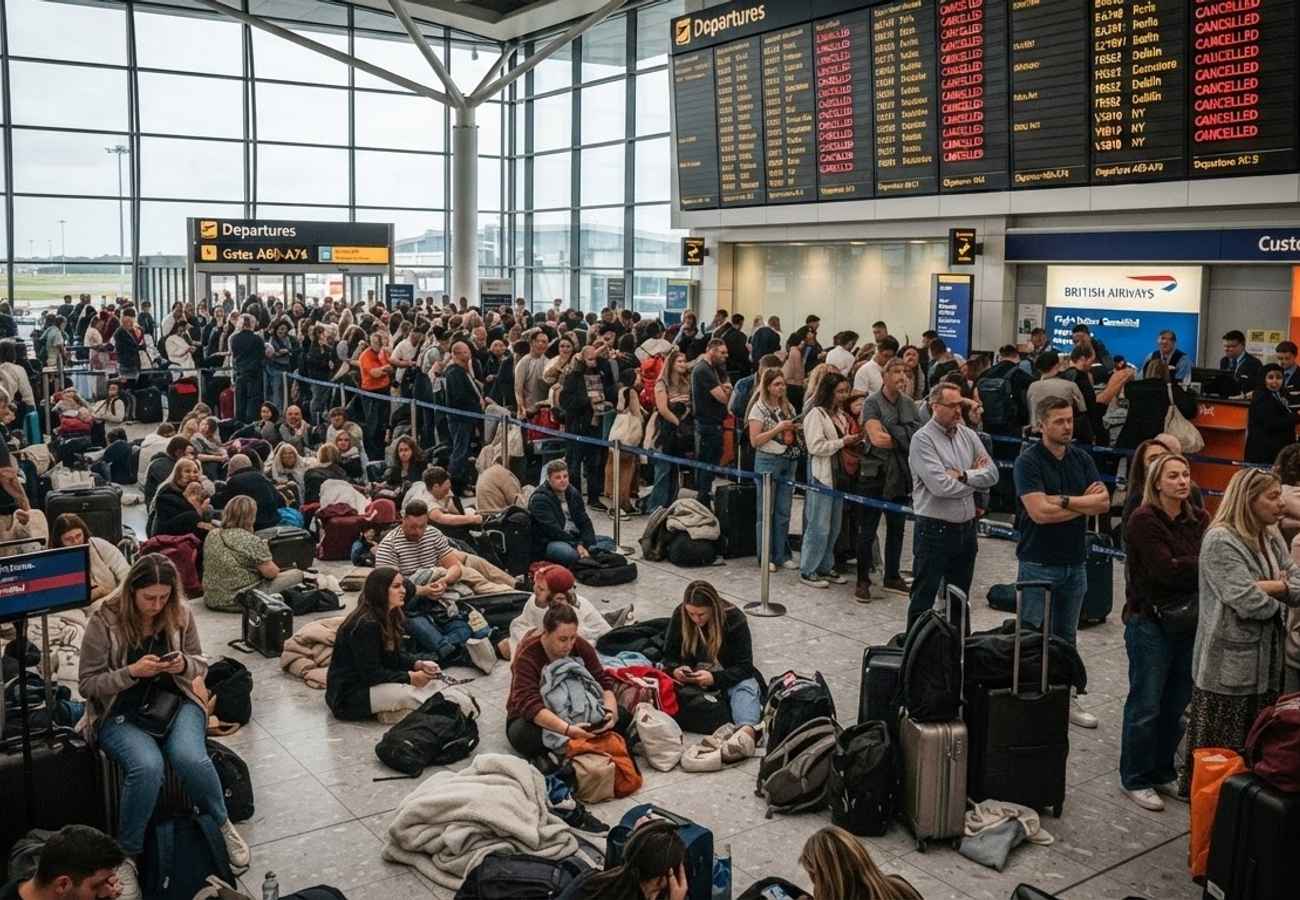
Image generated by AI
A catastrophic technical failure within the United Kingdom's air traffic management infrastructure has resulted in the cancellation of approximately 2,000 flights, leaving hundreds of thousands of travelers stranded across the country's primary aviation hubs.
The crisis began on Tuesday, 8 September 2026, when a fault in the flight-processing systems managed by National Air Traffic Services (NATS) crippled the ability of controllers to manage airspace efficiently. While the core technical issue has since been addressed, the ripple effects continue to destabilize flight schedules across the UK and Ireland, with recovery efforts expected to take several days.
Systemic Failure During Peak Travel Window
The disruption materialized rapidly on 8 September 2026, as NATS reported a significant malfunction in the software used to process flight plans. This failure forced air traffic controllers to abandon automated tools and revert to manual procedures to ensure the safety of aircraft in the sky. Because manual processing is significantly slower and more labor-intensive, the overall capacity of UK airspace was slashed, leading to immediate restrictions on both arrivals and departures.
Flight tracking data reveals that the initial impact was severe, with over 1,000 flights cancelled on the first day alone. By the middle of the week, industry reports indicated the total number of cancelled flights had climbed to 2,000. This outage occurred during a high-volume travel period, creating a logistical nightmare for airlines that found their aircraft and flight crews displaced across different cities, making it impossible to resume normal operations immediately after the system was restored.
Chaos at Heathrow and Gatwick Hubs
London’s aviation infrastructure bore the heaviest burden of the glitch. Heathrow, the UK's largest airport, was forced to implement emergency measures, which included the temporary suspension of numerous arriving flights to prioritize critical departures and emergency diversions. Even after NATS cleared the airspace restrictions, Heathrow struggled with congested terminals and disrupted aircraft rotations.
Gatwick Airport, the nation's second-busiest hub, saw similar turmoil. Reports from the ground described packed departure halls and overwhelming queues at information desks. Low-cost carriers and leisure airlines, which maintain a heavy operational footprint at Gatwick, were forced to scrap large portions of their schedules, leaving thousands of vacationers stranded.
The crisis extended far beyond the capital. Major regional airports including Manchester, Birmingham, and Edinburgh reported significant rolling delays and cancellations. The disruption even crossed borders, with Dublin Airport in Ireland reporting a surge in cancelled services and delays for flights entering or exiting British airspace.
Technical Root Cause and Government Response
Initial briefings from government officials and NATS indicate that the failure was localized within the flight-planning and processing systems. These critical tools are responsible for interpreting route data and flight plans; without them, controllers cannot safely maintain the necessary separation between aircraft. To prevent corrupted data from entering the live control environment, NATS opted to shut down certain automated functions, which effectively throttled the flow of traffic.
Importantly, NATS has explicitly ruled out a cyberattack as the cause of the outage, attributing the event to a software-related technical malfunction. This incident has reignited concerns regarding the resilience of the UK's aviation infrastructure, especially following previous technical lapses in recent years.
In response, the UK government has mandated that NATS provide a comprehensive initial report on the failure within one week. Simultaneously, the Civil Aviation Authority (CAA) has initiated a formal review to evaluate the robustness of the current system and the adequacy of existing contingency plans.
Passenger Hardship and Legal Implications
The human cost of the glitch has been significant. Travelers reported being trapped on tarmacs for hours awaiting departure slots, while others faced the collapse of entire itineraries. As digital booking platforms and call centers became overwhelmed by the volume of requests, many passengers were left without clear information regarding their flights.
The surge in stranded passengers led to a rapid depletion of hotel availability around major airport hubs, forcing many to seek overnight accommodation in distant areas.
From a legal standpoint, the situation is complex. Under UK and European air passenger rights, airlines are typically required to provide "duty of care," which includes meals, communication, and hotel accommodation for delayed or cancelled passengers. However, the CAA has indicated that this specific NATS failure will likely be classified as an "extraordinary circumstance." If this classification holds, airlines may be exempt from paying monetary compensation for the inconvenience, although they remain legally obligated to provide the basic care and rerouting services.
Recovery Strategies for Impacted Travelers
While the air traffic control systems are now operational, the aviation network remains in a state of recovery. Airlines are currently working to reposition aircraft and crews to their correct bases, a process that necessitates further "thinning" of schedules. This means that even those who were not initially affected may see short-notice changes to their flight times.
Industry observers and the CAA advise passengers to strictly verify their flight status via official airline apps or websites before departing for the airport. Traveling to the terminal without a confirmed "operating" status is strongly discouraged to avoid further congestion.
For those seeking reimbursement, consumer advocacy groups suggest maintaining a meticulous record of all expenses, including food, transport, and lodging. These receipts are essential for claiming "duty of care" expenses from the airline, regardless of whether the event is deemed an extraordinary circumstance.
The fragility of the UK's airspace management has once again been exposed, leaving the industry questioning if the current infrastructure can handle the demands of modern aviation.
Related Travel Guides
This article is for informational purposes. Flight routes, passenger regulations, visa rules, and transit advisories are subject to change by airlines and aviation authorities. Readers are advised to verify schedules and travel documentation with relevant carriers and border agencies before departure.
Related Stories

Mount Fuji First Sunrise Flights 2027: Japan Airlines New Year Aerial Guide

Cambodia Beyond Angkor Wat: Etihad Airways and Tourism Board Travel Guide 2026