
UAE Flight Disruption Update: Emirates, Etihad, flydubai and Air Arabia Adjust 2026 Schedules
Emirates, Etihad, flydubai, and Air Arabia are implementing selective reroutings and cancellations due to regional tensions and airspace restrictions affecting UAE departures in August 2026.

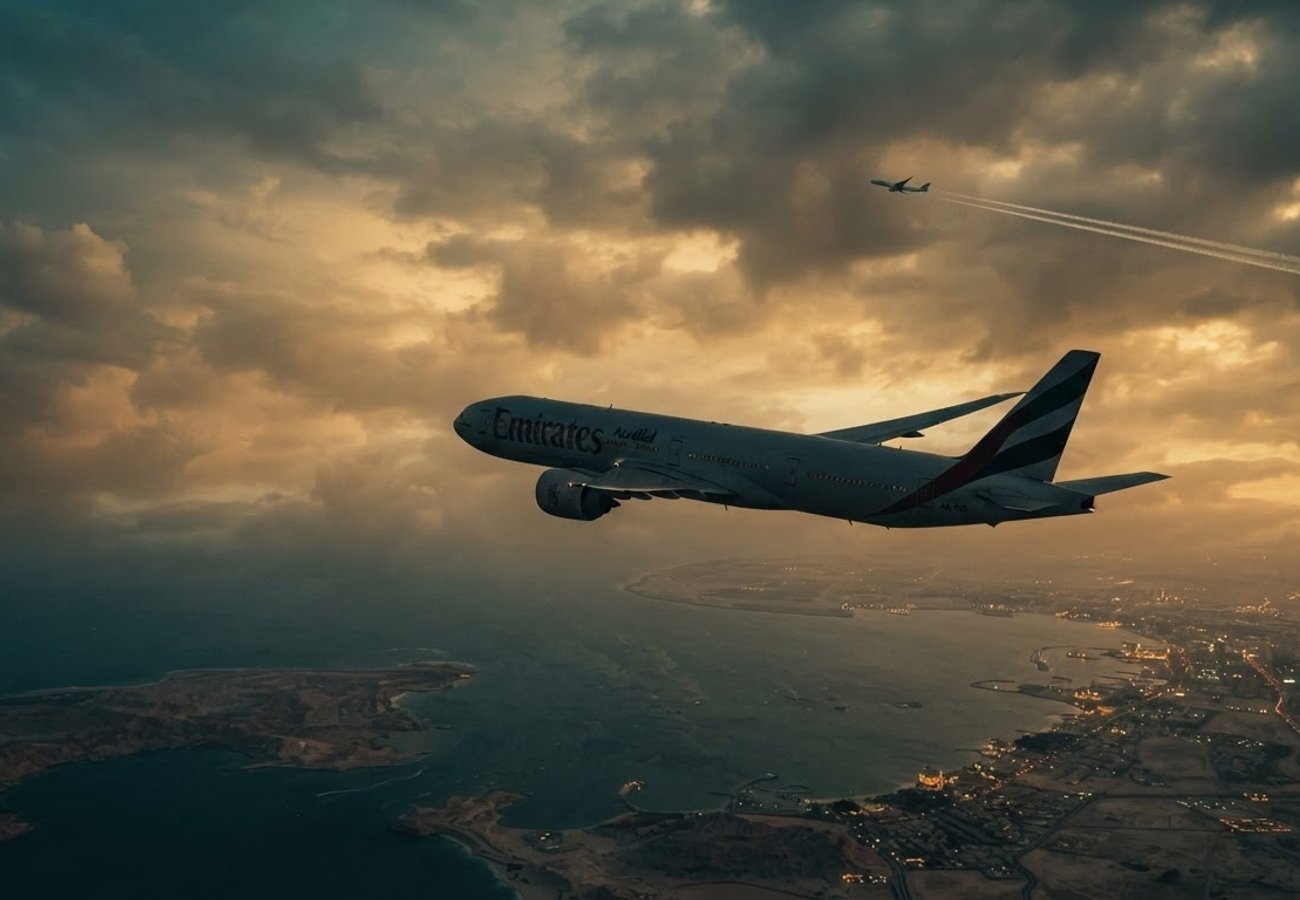
Image generated by AI
Regional tensions and airspace restrictions continue to impact UAE departures and connections, forcing Emirates, Etihad, flydubai, and Air Arabia to adjust selected schedules.
Airlines operating out of the United Arab Emirates are currently managing a volatile operational environment. While the primary hubs at Dubai, Abu Dhabi, and Sharjah remain fully open, heightened tensions in the Gulf and over Iran have necessitated selective reroutings, temporary suspensions of specific corridors, and targeted cancellations.
Our analysis of current operations indicates that while the majority of scheduled services are maintained, the instability is not uniform. The impact is most pronounced on eastbound and European services, where carriers have added extra flying time to bypass sensitive airspace.
Operational Status by Carrier
Emirates and flydubai (Dubai International) Dubai International continues to handle high traffic volumes, though second-quarter data shows a softening in passenger flows as some travelers avoid conflict-adjacent routings.
- Emirates: Flight-status data indicates that schedules have not fully returned to previously published timings. Passengers are seeing frequent changes to departure times and flight paths.
- flydubai: Operations from Terminal 2 remain broad across Central Asia and Europe, but services into conflict-adjacent markets have been reduced.
- Codeshare Impact: For passengers on Emirates-coded flights operated by flydubai, there is a noted risk of discrepancies in schedule adjustments between the two carriers.
Etihad Airways (Zayed International) Abu Dhabi’s hub remains largely stable. Etihad continues its 2026 network expansion, launching or resuming services to several European and Central Asian cities in August. However, isolated disruptions persist:
- Diversion Example: A recent flight between Abu Dhabi and Sochi was diverted due to a temporary closure at the Russian airport, triggering a delay for the return leg.
- Status: Most long-haul and regional operations are routine, with disruptions limited to destination-specific issues rather than systemic hub failure.
Air Arabia (Sharjah International) Despite ongoing growth and the August 2026 launch of new routes into Poland and Germany, Air Arabia is experiencing localized instability.
- Cancellations: Independent flight trackers identified a cancelled Sharjah to Colombo service in late August.
- Operational Trends: Delays are more frequent on late-evening services to South Asia, likely stemming from aircraft rotation and crew availability issues rather than airspace restrictions.
Summary of Current Disruptions
| Airline | Hub | Primary Impact | Status of 2026 Expansion |
|---|---|---|---|
| Emirates | Dubai (DXB) | Reroutings & timing shifts | Active, but volatile |
| flydubai | Dubai (DXB) | Reductions in conflict-adjacent markets | Active |
| Etihad | Abu Dhabi (AUH) | Isolated diversions | Expanding in Europe/Central Asia |
| Air Arabia | Sharjah (SHJ) | Selective cancellations (e.g., Colombo) | Expanding into Poland/Germany |
Why This Matters: Industry Implication
From a logistical perspective, the current situation demonstrates the fragility of the "super-hub" model when regional geopolitics shift. For travelers, the real impact is not the total cancellation of flights, but the "invisible" disruption: longer flight durations and tightened connection windows.
Our analysis of the route maps suggests that carriers are prioritizing safety over fuel efficiency by opting for longer corridors. This increases operational costs for the airlines and creates a ripple effect of delays for passengers. For those on separate tickets, the risk of a missed connection is currently elevated, as a 30-minute rerouting delay in Dubai can invalidate a tight transfer in another city.
Forward Outlook
Expect the UAE aviation sector to maintain a "flexible schedule" posture through the remainder of 2026. While the expansion into Europe and Central Asia indicates long-term confidence, the short-term reality is a reliance on real-time adjustments.
Travelers should anticipate:
- Dynamic Routing: Flight paths may change mid-journey based on short-notice airspace closures.
- Communication Lags: A potential gap between the operating carrier's status and the ticketing carrier's notifications (especially on codeshares).
- Increased Buffers: A necessary shift toward longer layovers to mitigate the risk of "knock-on" delays.
Monitor your digital boarding pass and airline app in real-time to avoid airport congestion during schedule shifts.
Related Travel Guides
Disclaimer
This article is for informational and educational purposes only. It does not constitute legal, financial, or professional advice. While we strive to provide accurate and up-to-date information, travel policies, regulations, and conditions change rapidly. Always verify information with official sources before making travel decisions. Nomad Lawyer makes no representations about the accuracy, reliability, completeness, or suitability of the information provided. Readers should consult qualified professionals for advice specific to their circumstances. The views expressed in this article are those of the author and do not necessarily reflect the views of Nomad Lawyer.
Preeti Gunjan
Contributor & Community Manager
A passionate traveller and community builder. Preeti helps grow the Nomad Lawyer community, fostering engagement and bringing the reader experience to life.
Learn more about our team →