
Typhoon Dolphin Triggers 744 Flight Cancellations and 3,793 Delays Across Asia
Typhoon Dolphin's approach to southern Japan on August 6, 2026, led to 744 flight cancellations and 3,793 delays across key Asian transit hubs.

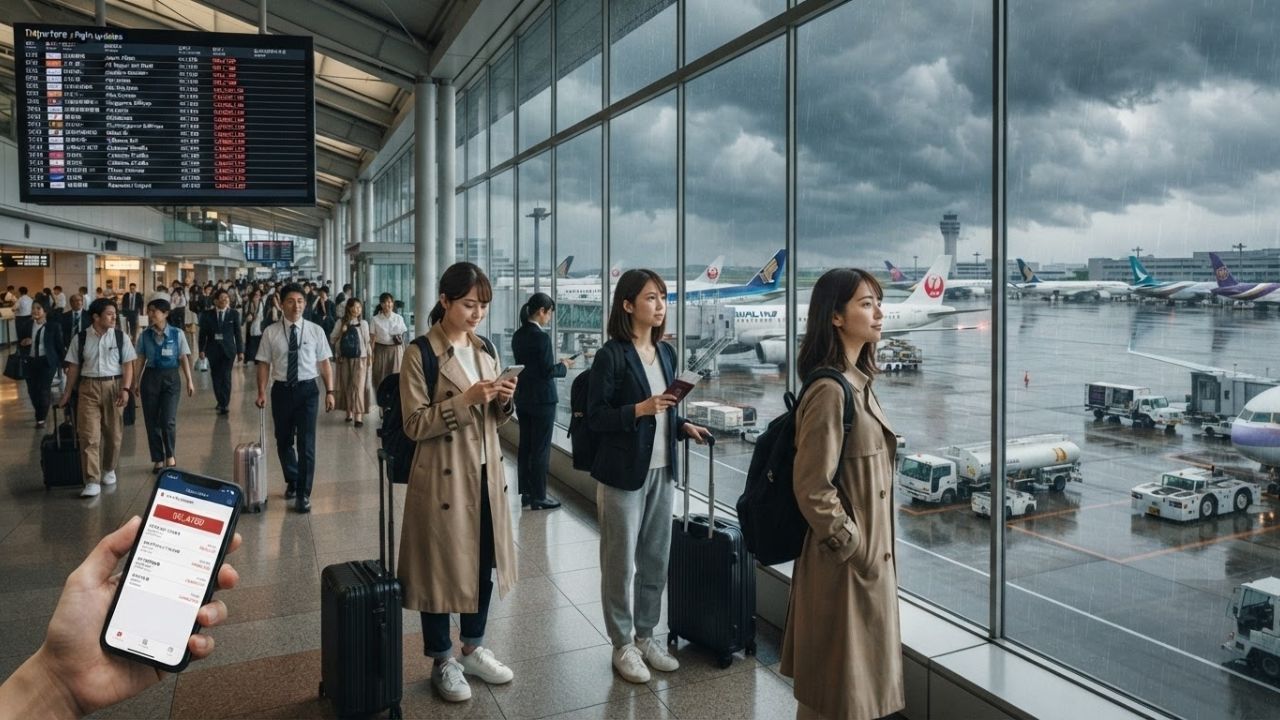
Image generated by AI
Typhoon Dolphin's advance toward southern Japan on August 6, 2026, disrupted travel plans across East Asia, triggering 744 flight cancellations and 3,793 delays across major regional gateways.
On August 6, 2026, the Japan Meteorological Agency monitored Typhoon Dolphin as it strengthened over the Pacific and moved toward the Ryukyu Islands. The severe weather system prompted regional carriers to make major operational schedule adjustments, impacting airports in Japan, China, Singapore, Thailand, South Korea, Indonesia, and Saudi Arabia.
Climate Resilience and the Ryukyu Island Transit Shift
Aviation hubs responded with contrasting strategies to manage the storm. Southern Japan airports, closest to the storm's path, chose schedule reductions. Naha Airport (OKA) in Okinawa recorded the highest cancellation count at 226 flights, while regional runways in Kagoshima, Yakushima, Tokunoshima, and Amami experienced high cancellation rates due to their reliance on turboprops and narrow-body aircraft vulnerable to high winds.
In contrast, central hubs like Tokyo Haneda Airport (HND) focused on schedule preservation, recording 409 delays but minimal cancellations. China's airports took a similar approach, accumulating 1,398 delays and only 47 cancellations across Beijing Capital, Shanghai Hongqiao, and Hong Kong, choosing to stretch arrivals throughout the day rather than removing flights.
Meanwhile, Southeast Asian transit hubs demonstrated operational resilience. Singapore Changi Airport (SIN) processed hundreds of delayed arrivals while recording only a single cancellation, while Bangkok's Suvarnabhumi Airport (BKK) and Jakarta's Soekarno-Hatta Airport (CGK) maintained network continuity despite the regional airspace congestion.
Preservation Amid Storms: Safeguarding Ryukyu Heritage
For the traveler, these disruptions highlight the growing trend of weather-resilient travel planning in East Asia. The Ryukyu Islands, encompassing Okinawa, are renowned for their delicate coastal ecosystems and historical cultural sites. When typhoons restrict outdoor movement, visitors are shifting toward indoor heritage activities that support the local economy directly.
By participating in traditional Sanshin music workshops, exploring Ryukyu pottery classes in Naha's Tsuboya district, or purchasing locally made Shisa figures, travelers help preserve island traditions. This slow tourism approach reduces physical pressure on fragile beaches and coral reefs during storm events, guided by the sustainability frameworks of the Okinawa Convention & Visitors Bureau.
Ryukyu Islands and Southern Japan Visitor Guide
To navigate the summer typhoon season in East Asia safely, travelers should follow these local guidelines:
- Weather Monitoring: Check regular advisories from the Japan Meteorological Agency and confirm flight status updates through carrier apps before departing for the airport.
- Indoor Cultural Activities: If outdoor activities are suspended, spend time visiting local craft centers or historical museums in central cities to learn about Ryukyu heritage.
- Emergency Supplies: Keep small amounts of emergency cash, bottled water, and battery packs, as island communities can experience temporary power interruptions during high winds.
- Flight Rebooking: Prioritize morning flight schedules when rebooking, as airline rotations from mainland Japan tend to build delays throughout the day.
Future Projections for East Asian Weather Resilient Travel
Typhoon Dolphin follows recent regional weather systems, including Typhoon Bavi and Typhoon Noul, indicating an active storm season. As these storm patterns continue, aviation networks must invest in weather-resistant airport infrastructure and slot coordination systems. For the global traveler, adopting flexible itineraries and supporting local community networks is essential to practicing responsible, low-impact stewardship in vulnerable island destinations.
Regional Airport Operational Status on August 6, 2026
| Region / Airport | Flight Delays | Flight Cancellations | Primary Operational Strategy |
|---|---|---|---|
| Tokyo Haneda (HND), Japan | 409 | Minimal | Congestion absorption via delay management |
| Naha Airport (OKA), Okinawa | Recorded | 226 | Precautionary schedule reductions |
| Chinese Airports (SHA, PEK, CAN, etc.) | 1,398 | 47 | Network continuity preservation |
| Singapore Changi (SIN) | Recorded | 1 | High-capacity infrastructure resilience |
| Suvarnabhumi Airport (BKK), Bangkok | Recorded | Minimal | Regional connection point continuity |
| Total Asian Airspace Impact | 3,793 | 744 | Weather-responsive safety protocols |
Related Travel Guides
- Aspen Flight Diversions Drive Regional Tourism Shift to Grand Junction
- Accidental Tourism: How Flight Diversions Direct Travelers to New England Heritage
- US-Canada Mountain Tourism Sparks Regional Airport Congestion and Flight Delays
Disclaimer: Flight details and technical specifications are compiled from public flight tracking platforms, including FlightAware, as of August 7, 2026. Travelers are advised to check real-time schedule adjustments with respective airlines and airport authorities before departure.
Disclaimer
This article is for informational and educational purposes only. It does not constitute legal, financial, or professional advice. While we strive to provide accurate and up-to-date information, travel policies, regulations, and conditions change rapidly. Always verify information with official sources before making travel decisions. Nomad Lawyer makes no representations about the accuracy, reliability, completeness, or suitability of the information provided. Readers should consult qualified professionals for advice specific to their circumstances. The views expressed in this article are those of the author and do not necessarily reflect the views of Nomad Lawyer.
Kunal K Choudhary
Co-Founder & Contributor
A passionate traveller and tech enthusiast. Kunal contributes to the vision and growth of Nomad Lawyer, bringing fresh perspectives and driving the community forward.
Learn more about our team →