
Typhoon Dolphin Disrupts Asian Aviation with Flight Cancellations
Typhoon Dolphin has caused severe travel disruptions across Asia, leading to 874 cancellations and 5,677 flight delays at major airports in Japan and China.
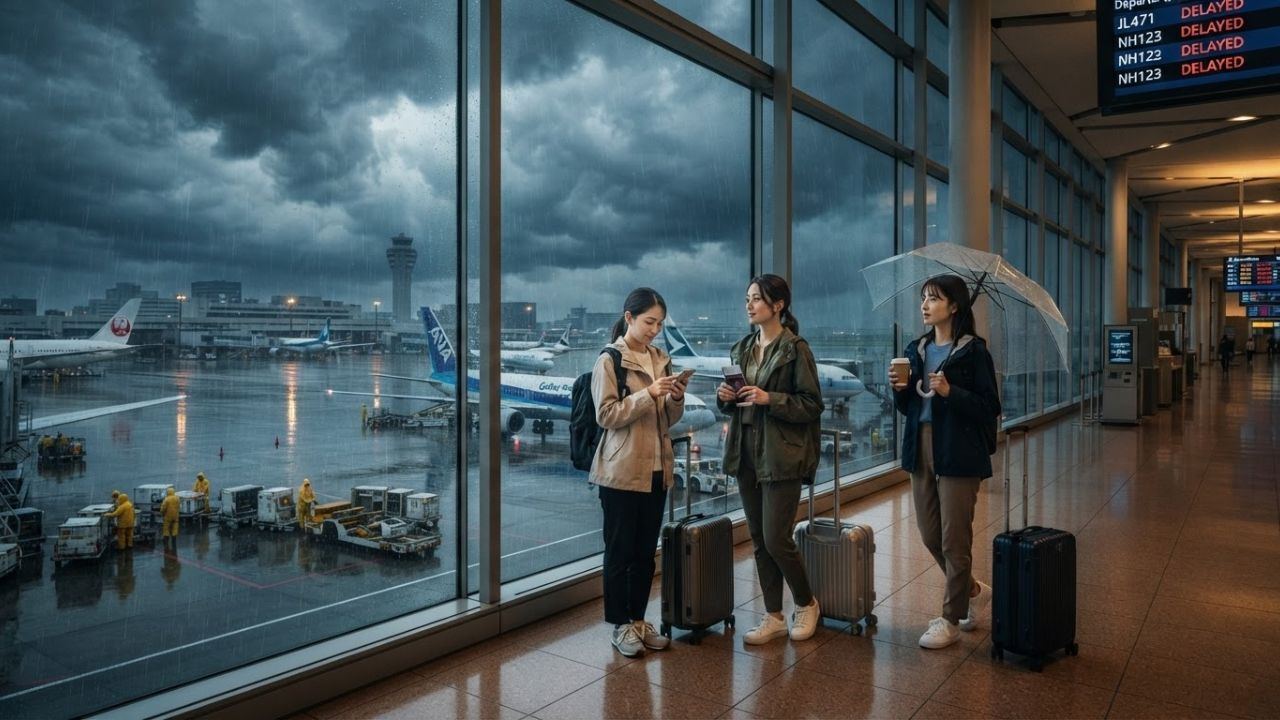
Image generated by AI
Typhoon Dolphin has caused severe travel disruptions across Asia, triggering 874 flight cancellations and 5,677 delays at major hubs including Tokyo, Beijing, and Delhi.
Air travel across Asia is facing severe operational pressure as Typhoon Dolphin continues to disrupt regional aviation networks, causing 874 cancellations and 5,677 delays at major airports. The weather system has forced multiple carriers to suspend flights and adjust routing corridors, affecting hubs in Japan, China, and India, with secondary delays cascading into Southeast Asia and the Middle East.
In Japan, the storm's path has brought high winds, torrential rainfall, and flooding warnings to southwestern islands, forcing evacuation alerts and suspending local transport routes in Okinawa and Kagoshima.
Airport Weather Disruption and Delay Specifications
Extreme weather events require airlines to implement safety holdings and reduce hourly landing rates at key regional hubs. The following table provides the operational impact metrics, delay totals, and cancellations for six heavily affected airports on August 7, 2026.
| Airport / Facility Name | City / Region | Total Delays | Total Cancellations | Primary Weather / Cause |
|---|---|---|---|---|
| Beijing Capital (PEK) | Beijing, China | 661 delays | 14 cancellations | Heavy rain & storm prep |
| Indira Gandhi (DEL) | Delhi, India | 522 delays | 17 cancellations | Secondary network congestion |
| Tokyo Haneda (HND) | Tokyo, Japan | 307 delays | 59 cancellations | Typhoon Dolphin winds & rain |
| Shanghai Hongqiao (SHA) | Shanghai, China | 303 delays | 4 cancellations | Heavy rain & coastal safety |
| Nanjing Lukou (NKG) | Nanjing, China | 276 delays | 4 cancellations | Severe storm warnings |
| Naha Airport (OKA) | Okinawa, Japan | — | 250 cancellations | Typhoon Dolphin direct path |
Disruption metrics and airspace logs verified in coordination with FlightAware and regional civil aviation administrations.
Traveler Logistics and Storm Rebooking Guide
From a ground-level perspective, the best way to navigate this is to check the live status of your incoming aircraft via digital flight tracking applications before departing for the airport, ensuring a layover of at least four hours if transiting through regional hubs like Tokyo Haneda (HND) during typhoon season. Winding airport lines and busy customer support lines can extend wait times significantly.
To manage your travel itinerary during storm alerts:
- Pre-Flight Status Auditing: Do not travel to the terminal if your flight status is shown as cancelled. Monitor notifications directly on your airline's app or web portal for automated rebooking slots.
- Visit Japan Web Updates: If traveling to Japan, ensure your digital custom entries are validated online, and prepare for delays on regional rail links like the Keisei Skyliner or Narita Express (N'EX).
- Baggage and Connecting Tickets: If you hold split-ticket bookings across different airlines, check if your luggage is checked through to the final destination, as storm delays can cause missed connections and require manual baggage retrieval.
- Airport Congestion Accommodations: In the event of overnight delays at hubs like Beijing Capital (PEK) or Delhi (DEL), identify airport hotels or airline customer desks immediately to request meal and lodging vouchers.
Airspace Pressures and Regional Carrier Strategies
Typhoon Dolphin has severely impacted regional carrier schedules. Japanese operators, including ANA Wings, Japan Transocean Air, and Japan Air Commuter, have suspended local feeder flights to southwestern islands, while major carriers like Japan Airlines (51 cancellations, 161 delays) and All Nippon Airways (40 cancellations, 124 delays) are managing arrival holds at Haneda.
In China, despite lower cancellation rates, heavy delays affected major operators, with China Eastern recording 830 delays and China Southern reporting 745 delays. In India, IndiGo managed 390 delays, indicating that weather-related congestion is creating cascading operational bottlenecks across the wider Asian aviation corridor.
Related Travel Guides
Delta Air Lines Launches Nonstop Seattle to Tokyo Narita Flights
South Korea Extreme Heat Wave Triggers Canada Travel Warning
Disclaimer
This article is for informational and educational purposes only. It does not constitute legal, financial, or professional advice. While we strive to provide accurate and up-to-date information, travel policies, regulations, and conditions change rapidly. Always verify information with official sources before making travel decisions. Nomad Lawyer makes no representations about the accuracy, reliability, completeness, or suitability of the information provided. Readers should consult qualified professionals for advice specific to their circumstances. The views expressed in this article are those of the author and do not necessarily reflect the views of Nomad Lawyer.