
Ministry of Transport of Türkiye Advances $70 Billion Master Plan to Double National Railway Network to 28,590 Kilometers
Türkiye accelerates a $70 billion rail investment under its 2053 Master Plan, expanding high-speed lines to 6,000 km and strengthening Middle Corridor freight links.

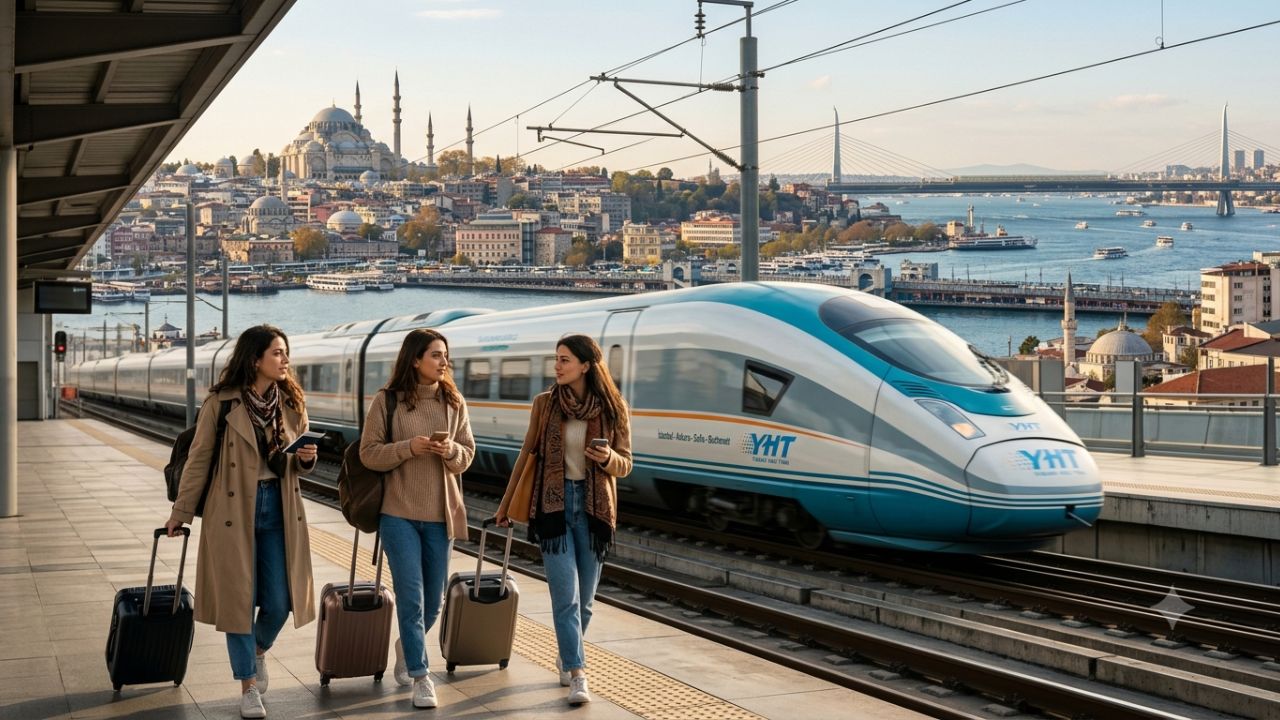
Image generated by AI
The Ministry of Transport and Infrastructure of Türkiye is executing a $70 billion long-term rail master plan to double the country's railway network to 28,590 kilometers by 2053, positioning Istanbul as a transcontinental logistics hub.
ISTANBUL, Türkiye — Strategic investments managed by the Ministry of Transport and Infrastructure of Türkiye and state operator Turkish State Railways (TCDD) are accelerating nationwide railway expansion. Under the 2053 Transport and Logistics Master Plan, the government is committing an estimated $70 billion in infrastructure funding to expand the national rail grid from approximately 13,919 kilometers to 28,590 kilometers, while expanding high-speed rail lines from 2,251 kilometers to 6,000 kilometers by 2035.
The mega-investment strategy targets a structural shift in national transit, projecting rail freight share to increase from 5% to 22% and passenger rail modal share to grow from 0.96% to 6.2%. The infrastructure campaign also establishes decarbonization benchmarks, aiming for 35% of railway energy demand to be supplied by renewable sources while supporting Türkiye's target of a 41% reduction in greenhouse gas emissions by 2030 and Net Zero by 2053.
Project Framework: 2053 Transport and Logistics Master Plan Targets
The scale of Türkiye’s railway transformation reflects its strategic location connecting Europe, Central Asia, and East Asian manufacturing supply chains via the transcontinental Middle Corridor.
| Strategic Parameter | Current Baseline | 2035 Intermediate Target | 2053 Final Target |
|---|---|---|---|
| Total Railway Network | ~13,919 km | ~20,000 km | 28,590 km |
| High-Speed Rail Network | 2,251 km | ~6,000 km | ~8,500 km |
| Rail Freight Modal Share | ~5% | 13% | 22% |
| Rail Passenger Modal Share | ~0.96% | 3.8% | 6.2% |
| Renewable Energy Share | Growing | 35% of energy demand | 100% electrified grid |
| Capital Investment Vision | — | — | $70 Billion total allocation |
Major High-Speed Rail Corridors and Engineering Projects
The construction program focuses on primary high-speed rail (YHT – Yüksek Hızlı Tren) corridors designed to link industrial zones, Aegean ports, and European border crossings.
| Railway Corridor Project | Scope & Strategic Target | Funding & Execution Detail |
|---|---|---|
| Ankara–Izmir High-Speed Railway | Connects capital Ankara with Aegean port city Izmir | Supported by €2.1 billion package backed by UK Export Finance |
| Halkalı–Kapıkule Railway | Upgrades European gateway route to Bulgarian border | High-speed freight/passenger link to EU rail networks |
| Mersin–Adana–Osmaniye–Gaziantep | Establishes high-speed passenger/freight link in South | Connects Mediterranean ports to southern industrial hubs |
| Ankara–Sivas High-Speed Line | Extends high-speed passenger operations eastward | Reduces rail journey time between Ankara and Sivas |
| Marmaray Subsea Tunnel | Undersea rail tunnel crossing the Bosphorus Strait | Operational link connecting European and Asian rail grids |
Comparative Global Analysis: Türkiye’s Position in Eurasian Transit
As international logistics firms look for resilient supply routes between Asia and Europe, Türkiye's Middle Corridor rail network provides an alternative to traditional ocean shipping and northern transit routes.
| Transit Corridor / Market | Strategic Advantage | Operational Focus |
|---|---|---|
| Türkiye (Middle Corridor) | Direct land bridge connecting Europe, Central Asia, & China | Multi-continental freight & high-speed passenger integration |
| China National Rail Network | World's largest high-speed rail system (>45,000 km) | Massive domestic capacity & industrial manufacturing links |
| Spain (ADIF Network) | Europe's largest high-speed passenger network | High-speed tourism connectivity between major urban hubs |
| Northern Corridor (Trans-Siberian) | Established overland trans-Eurasian route | Subject to geopolitical risk and border sanctions |
Traveler Logistics Guide: Riding Türkiye’s High-Speed YHT Trains
For international visitors, business travelers, and transit tourists navigating Türkiye’s expanding rail network, TCDD Taşımacılık offers modernized high-speed services connecting major urban centers.
1. Booking High-Speed YHT Tickets via TCDD Digital Platforms
- Advance Reservation Window: High-speed YHT tickets (Ankara–Istanbul, Istanbul–Konya, Ankara–Sivas) open for booking 15 to 30 days prior to departure. Popular weekend services sell out quickly; book early via the official TCDD Eybis web portal or TCDD Taşımacılık mobile app.
- Class Configuration & Amenities: YHT trains offer Business and Economy class seating. Business class includes wider seat pitch, power outlets, and complimentary meal service on select long-distance routes.
2. Navigating Istanbul Rail Hubs and Airport Transfers
- Marmaray Integration: Passengers arriving in Istanbul can board the subsea Marmaray line to cross between European stations (Halkalı, Bakırköy, Yenikapı) and Asian stations (Söğütlüçeşme, Bostancı, Gebze).
- Airport Connections: Istanbul Airport (IST) connects to the central M11 metro line leading to Gayrettepe for easy urban transfer, while Sabiha Gökçen Airport (SAW) on the Asian side links to the M4 metro line, connecting directly to the Marmaray at Ayrılık Çeşmesi.
3. Luggage Rules, Security Checks, and e-Visa Policies
- Station Security Screening: All major TCDD high-speed stations enforce baggage X-ray screening prior to platform access. Arrive at stations at least 30 to 45 minutes before departure.
- e-Visa and Border Entry: International travelers entering Türkiye must hold a valid e-Visa or passport visa exemption. Standard TCDD luggage allowance permits two carry-on items per passenger (up to 30 kg total) without additional fees.
Infrastructure Impact Assessment: Multi-City Tourism and Air-to-Rail Shift
Expanding high-speed rail connections reshapes regional tourism flows across Central Anatolia, the Aegean coast, and the Marmara region.
- Modal Shift from Domestic Air Travel: High-speed rail travel times between Istanbul and Ankara (approx. 4 hours city-center to city-center) offer a competitive alternative to domestic flights when accounting for airport check-in and transfer times.
- Unlocking Regional Tourism Hubs: Direct YHT lines allow international tourists arriving in Istanbul to build multi-stop rail itineraries incorporating historic sites in Konya, Eskişehir, and Sivas without relying on domestic rental cars or short-haul flights.
- Decarbonizing Regional Transit: Transitioning domestic passenger journeys to electrified YHT rail lines directly lowers transport carbon footprints, supporting sustainable tourism goals across Türkiye's primary travel corridors.
FAQ: Türkiye Railway Master Plan 2026
What is Türkiye's 2053 Transport and Logistics Master Plan?
It is a $70 billion infrastructure strategy managed by the Ministry of Transport and Infrastructure to double Türkiye's railway network from 13,919 km to 28,590 km by 2053.
How fast is Türkiye expanding its high-speed rail network?
Türkiye currently operates 2,251 km of high-speed rail and plans to expand the network to 6,000 km by 2035 and approximately 8,500 km by 2053.
What is the Middle Corridor rail route?
The Middle Corridor is a transcontinental trade route linking China, Central Asia, the Caspian region, Türkiye, and Europe via rail and maritime links.
Can international tourists travel by high-speed rail between Istanbul and Ankara?
Yes. TCDD operates daily YHT high-speed passenger services connecting Istanbul (Söğütlüçeşme/Halkalı) directly with Ankara Central Station.
Related Travel Guides
10 Best Scenic High-Speed Train Routes in Europe and Asia, According to Reddit
Disclaimer
This article is for informational and educational purposes only. It does not constitute legal, financial, or professional advice. While we strive to provide accurate and up-to-date information, travel policies, regulations, and conditions change rapidly. Always verify information with official sources before making travel decisions. Nomad Lawyer makes no representations about the accuracy, reliability, completeness, or suitability of the information provided. Readers should consult qualified professionals for advice specific to their circumstances. The views expressed in this article are those of the author and do not necessarily reflect the views of Nomad Lawyer.
Raushan Kumar
Founder & Lead Developer
Full-stack developer with 11+ years of experience and a passionate traveller. Raushan built Nomad Lawyer from the ground up with a vision to create the best travel and law experience on the web.
Learn more about our team →