
EU Invests €12 Billion in Trans-Caspian Middle Corridor to Transform Eurasian Rail and Road Travel 2026
The European Union is deploying a €12 billion Global Gateway strategy to modernize the Trans-Caspian Transport Corridor, shifting Eurasian transit away from northern routes toward a multi-modal axis for passengers and freight.

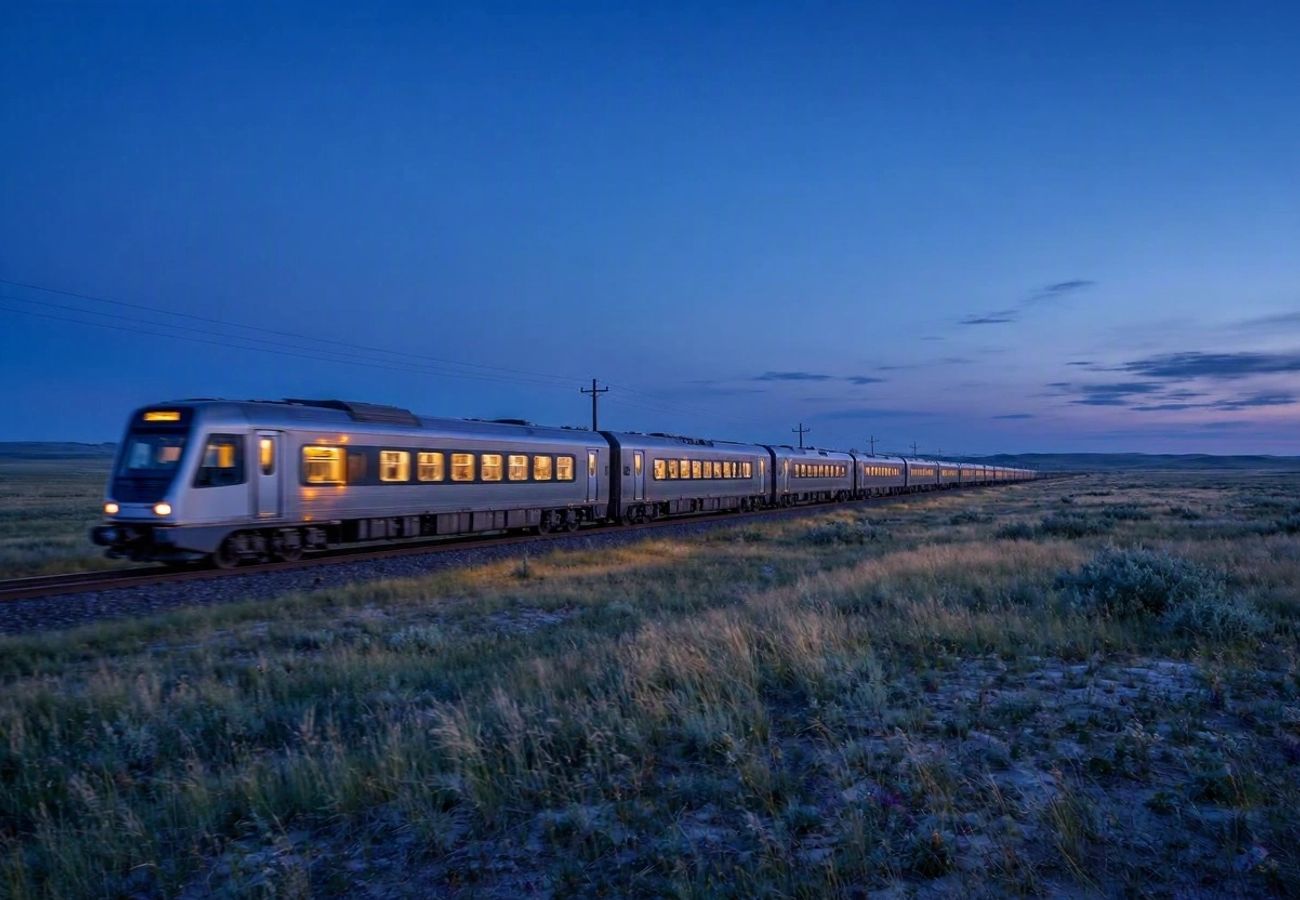
Image generated by AI
[Astana, October 14, 2026] — The European Union is executing a massive structural realignment of Eurasian connectivity, deploying a €12 billion Global Gateway investment strategy to establish the Trans-Caspian Transport Corridor—known as the Middle Corridor—as the primary overland axis between Europe and East Asia.
This strategic pivot moves passenger and freight transit away from traditional northern routes through the Russian Federation. The initiative, backed by the European Investment Bank (EIB), integrates high-speed broadband, modernized customs terminals, and rehabilitated road and rail networks to support a new era of "slow tourism," corporate transit, and digital nomadism across Central Asia.
The Catalyst for the Middle Corridor Shift
The acceleration of the Middle Corridor is driven by a geopolitical necessity for economic resilience and a desire to diversify trade arteries. What began as the TRACECA programme in the 1990s has evolved into a multi-billion-euro infrastructure project. At a recent EU-Central Asia Investors Forum in Brussels, international financial institutions mobilized over €10 billion specifically to eliminate "soft" infrastructure gaps—such as bureaucratic border delays—and "hard" physical gaps in the rail and road networks.
The funding is not merely for container shipping. The EIB is treating this as a human mobility project, converting industrial logistics paths into viable passenger corridors. This network links major economic hubs in Germany and Austria to the interior plains of Kazakhstan, Uzbekistan, Kyrgyzstan, and Tajikistan.
Infrastructure Investment Breakdown
The financial deployment is targeted at specific bottlenecks across the Eurasian landmass. A primary focus is the rehabilitation of the Kazakh highway system to ensure passenger vehicles and buses can traverse the steppe regardless of extreme continental weather.
Key Financial Commitments and Project Scopes
| Project/Entity | Funding Amount | Scope of Work | Impact/Outcome |
|---|---|---|---|
| JSC NC QazAvtoZhol (Kazakhstan) | €150 Million (Loan) | Rehabilitation of 1,370 km of strategic highways | 5,900 person-years of direct employment |
| EFSD+ Guarantee (EU) | €300 Million (Total CapEx) | Co-financing for Kazakh road structural upgrades | Improved road safety and regional connectivity |
| Development Bank of Kazakhstan | €200 Million | Sustainable transport and renewable power | Green energy integration in transit hubs |
| Nukus Highway (Uzbekistan) | €100 Million | Modernization of regional highway networks | Reduction of cross-border transport friction |
| Global Gateway Strategy | €12 Billion | Total Central Asia investment envelope | Comprehensive digital and physical infrastructure |
What This Means for Travelers
For the average traveler, this transition marks the end of the "adventure-only" era of Central Asian travel. Previously, overland journeys required luxury charters or high-risk expeditions due to crumbling roads and unpredictable border closures.
Passenger Impact Assessment:
- New Itineraries: Travelers can now plan multi-week journeys starting in Vienna or Budapest, moving through the Black Sea ports of Constanța (Romania) and Varna (Bulgaria), and continuing via the Baku-Tbilisi-Kars (BTK) rail axis.
- Connectivity: The installation of low-latency telecommunications and broadband in rural satellites means digital nomads can now work remotely while traversing the Kazakh steppe.
- Reduced Friction: Modernized customs terminals and digital border procedures are designed to slash the waiting times that historically plagued the Caspian crossings.
- Alternative to Aviation: There is a clear shift toward carbon-reduced, immersive travel, replacing short-haul flights with electrified rail and modernized road transit.
The Future of Eurasian Slow Tourism
The European Union is positioning this corridor as a hub for "high-yield slow tourism." By linking ancient Silk Road capitals with new industrial cities, the EU aims to increase the average length of stay for international visitors.
Data from the Ministry of Tourism and Sports of the Republic of Kazakhstan shows that in 2024, the country saw 15.3 million foreign arrivals, with 10.4 million overnight tourists contributing over $2.6 billion in receipts. The current infrastructure upgrades are designed to push these numbers higher by making the interior of the continent accessible to a broader demographic of travelers.
To manage this expansion, the EIB has established a regional office in Tashkent and is finalizing a permanent representation in Astana to oversee ESG (Environmental, Social, and Governance) compliance and procurement.
FAQ: Trans-Caspian Travel 2026
Can I travel from Europe to Central Asia by land now? Yes. The Middle Corridor allows travel from EU hubs through the Black Sea, Georgia, and Azerbaijan, crossing the Caspian Sea into Kazakhstan and Uzbekistan via modernized rail and road links.
What is the "Middle Corridor"? It is the Trans-Caspian Transport Corridor, a strategic trade and travel route that bypasses Russia, linking Europe to Asia via the South Caucasus and Central Asia.
How does this affect digital nomads? The Global Gateway initiative includes the rollout of broadband networks in rural areas and the modernization of transit hubs, making remote work viable during long-haul overland journeys.
Is this project focused only on cargo? No. While freight is a priority, the €12 billion investment specifically targets passenger mobility, road safety, and the development of sustainable tourism infrastructure.
The Silk Road is no longer just a historical relic; it is becoming a high-tech transit reality.
Related Travel Guides
Disclaimer
This article is for informational and educational purposes only. It does not constitute legal, financial, or professional advice. While we strive to provide accurate and up-to-date information, travel policies, regulations, and conditions change rapidly. Always verify information with official sources before making travel decisions. Nomad Lawyer makes no representations about the accuracy, reliability, completeness, or suitability of the information provided. Readers should consult qualified professionals for advice specific to their circumstances. The views expressed in this article are those of the author and do not necessarily reflect the views of Nomad Lawyer.
Raushan Kumar
Founder & Lead Developer
Full-stack developer with 11+ years of experience and a passionate traveller. Raushan built Nomad Lawyer from the ground up with a vision to create the best travel and law experience on the web.
Learn more about our team →