
Türkiye Ranks Among Top Non-EU Escapes as 8% of European Travellers Venture Beyond the Bloc
Recent Eurostat data reveals that 8% of European travellers journey outside the EU, with Türkiye, the UK, and Switzerland leading the outbound shift across coastlines and historic cities.

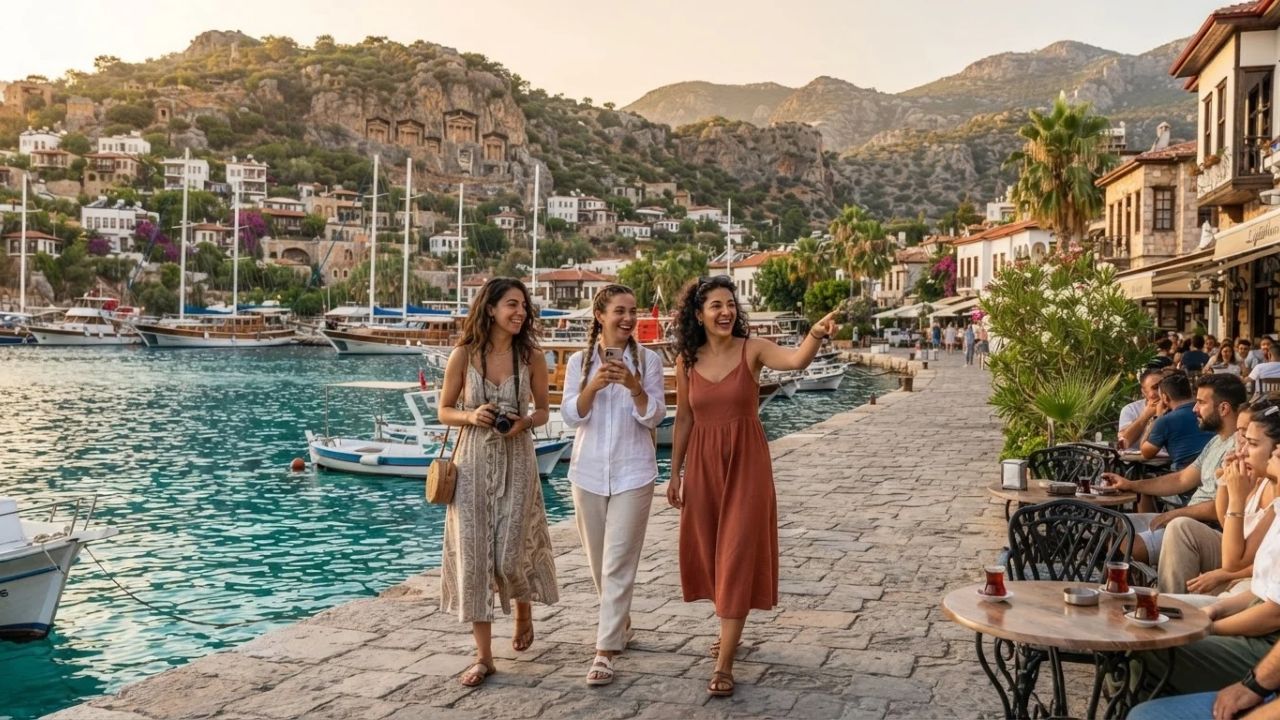
Image generated by AI
While over nine out of ten European holidaymakers remain within the familiar borders of the European Union, the eight per cent who cross external frontiers choose three dominant nations: the United Kingdom, Türkiye, and Switzerland. Based on official Eurostat data analyzing travel patterns across 2024 and continuing into the current travel cycle, this eight per cent international outflow represents one of the most commercially significant shifts in global leisure mobility. Travelers departing the bloc are looking past conventional borders to secure richer cultural immersion, superior value, and diverse year-round climates. Standing alongside established internal European powerhouses like France, Spain, Italy, Greece, Portugal, Croatia, Austria, and the Netherlands, Türkiye has firmly established itself as a premier transcontinental magnet for travelers seeking historical depth paired with Mediterranean hospitality.
The Transcontinental Appeal: How Türkiye Captures the European Outbound Shift
The momentum carrying European travelers beyond the Schengen perimeter is driven by a desire for contrast and value without enduring exhausting long-haul flights. Within three to four hours from major European capitals, travelers can transition from central European rail terminals to the ancient bazaars of Istanbul, the Mediterranean waters of Antalya, or the wind-sculpted stone valleys of Central Anatolia.
What distinguishes Türkiye in this competitive arena is its capacity to deliver multi-layered itineraries that bridge continents. While coastal resort destinations in Antalya and along the Aegean rim—spanning Bodrum, İzmir, and Marmaris—rival the sun-drenched shores of Spain's Costa del Sol, the Balearic Islands, and the Canary Islands, they do so with exceptional culinary traditions and archaeological treasures right on their doorstep. At the same time, regional diversification into medical tourism, thermal wellness, and gastronomy has eliminated the traditional off-season, keeping travel numbers resilient straight through autumn and winter.
What Makes Türkiye Different: Anatolian Crossroads and Living Antiquity
Few destinations offer the geographic and civilizational intensity found where Europe meets Asia. In Istanbul, centuries of imperial history are etched into every street corner. Strolling through the Sultanahmet district brings you face to face with Byzantine domes and Ottoman minarets recognized by the UNESCO World Heritage Centre. Yet the true soul of the city thrives across the Bosphorus on the Asian shore in Kadıköy, where fishermen haul fresh mackerel while neighborhood cafes roast robust Turkish coffee over hot sand.
Venture inland toward Cappadocia, and the earth shifts into a surreal volcanic moonscape of tuff rock, subterranean cities, and cave suites carved into natural spires. Taking to the morning skies aboard a hot-air balloon above Göreme National Park offers a perspective unmatched anywhere on the European continent.
Further south along the turquoise coastline, Antalya pairs sprawling sandy beaches with Greco-Roman ruins perched on seaside cliffs. From the ancient harbor of Kaleiçi to the preserved amphitheater of Aspendos, history is not walled off in glass display cases; it serves as the living backdrop to daily life. Travelers looking for slower coastal rhythms head to İzmir and the Aegean peninsulas of Bodrum and Marmaris, where olive groves slope down into secluded coves and wooden gulets sail between quiet fishing villages.
This balance between outdoor exploration and deep cultural heritage mirrors the diverse appeal of other top European favorites. France continues to win travelers through the romantic streets of Paris, the lavender hills of Provence, and Alpine ski resorts. Italy captures hearts with Rome's ancient forums, Venice's winding canals, and Florence's Renaissance art. Greece draws summer crowds across Santorini, Mykonos, and Crete. Portugal appeals through historic Lisbon and the surf-swept cliffs of the Algarve. Switzerland provides pristine Alpine mountain passes and world-class ski trails, while the United Kingdom captivates visitors with London's museums and the untamed moors of Scotland and Wales. In this vibrant environment, Türkiye stands apart by delivering equivalent cultural grandeur with distinct Eurasian traditions.
Visitor Insider Tips: Navigating Istanbul, Cappadocia, and the Coast
To experience Türkiye like a seasoned resident rather than an all-inclusive package tourist, keep these practical strategies in mind:
- Optimal Timing and Crowd Windows: Visit Cappadocia and Istanbul during the shoulder months of April to May or late September through October. You will avoid the intense summer heat of Central Anatolia while wandering ancient sites without the tour bus crowds. For coastal getaways in Antalya and Bodrum, September offers sea temperatures that remain pleasantly warm while hotel rates drop considerably.
- Local Etiquette and Cultural Respect: When visiting mosques like the Blue Mosque or Hagia Sophia, dress modestly with shoulders and knees covered, and remove footwear before stepping onto prayer carpets; women must cover their heads with a scarf. In traditional bazaars, polite bargaining is expected on textiles and leather, but avoid aggressive haggling over food, spices, or small handicrafts.
- Authentic Regional Flavors: Beyond standard street kebabs, seek out regional specialties like mantı (tiny spiced lamb dumplings smothered in garlic yogurt and paprika butter), freshly baked lahmacun, and regional Aegean meze featuring wild mountain greens tossed in cold-pressed olive oil. In seaside towns, order grilled sea bass paired with meze and a glass of anise-flavored rakı.
- Where to Base Yourself: In Istanbul, bypass tourist-heavy Sultanahmet for your lodging and stay in vibrant neighborhoods like Karaköy, Galata, or Moda in Kadıköy to enjoy authentic neighborhood bakeries and ferries. In Cappadocia, choose a family-run heritage cave hotel in Uçhisar or Ortahisar rather than the busy center of Göreme.
- Transport Hacks: For long-distance domestic journeys between Istanbul, Ankara, and Konya, book high-speed trains operated by Turkish State Railways, which provide quiet, punctual travel across Anatolia. Within Istanbul, pick up an Istanbulkart at any transit station; it covers ferries, trams, and metro lines, offering the scenic sea crossing between Europe and Asia for just a few liras. Check travel entry policies and destination updates directly on Go Türkiye.
Cultural and Environmental Context: Preserving Heritage Amid Growing Footfall
Managing record visitor numbers while protecting historical integrity and natural reserves is an ongoing challenge across the Mediterranean and Anatolian basins. In historic centers like Istanbul's peninsula and the fragile volcanic rock formations of Cappadocia, rapid tourism growth places intense strain on ancient masonry, subterranean hydrology, and local infrastructure.
Turkish conservation authorities and municipal bodies have responded by instituting stricter preservation protocols. In Cappadocia, hot-air balloon flights are tightly regulated by civil aviation authorities with daily flight caps to safeguard air corridors and minimize ground disruption. Across coastal provinces like Antalya and Muğla, municipal programs protect sea turtle nesting beaches on protected shores like Çıralı and İztuzu, barring night-time beach access and artificial lighting during hatching seasons.
Supporting local craft communities is equally vital for sustainable travel. Choosing locally owned family pansiyons, dining at neighborhood esnaf lokantası (tradesmen eateries), and buying pottery directly from master artisans in Avanos ensures that tourism income directly supports regional families, keeping ancient Anatolian crafts alive for future generations.
FAQ: Visiting Türkiye and Europe's Top Outbound Hubs 2026
What is the best season to explore both Istanbul and the Mediterranean coast?
May through June and September through October provide ideal weather, featuring warm coastal waters for swimming in Antalya and comfortable temperatures for walking Istanbul's historic districts.
Do European travelers require a visa to enter Türkiye?
Citizens of the European Union, the United Kingdom, and Switzerland can enter Türkiye visa-free for tourism stays of up to 90 days within any 180-day period with a valid passport.
How do I travel between Istanbul and Cappadocia?
The fastest option is a 75-minute domestic flight from Istanbul (IST or SAW) to Kayseri or Nevşehir airports. Alternatively, scenic overnight sleeper trains or high-speed rail to Ankara connect with regional transit.
Is Türkiye safe for independent and solo travelers?
Yes. Major tourist corridors, coastal resort towns, and cultural cities maintain a strong safety record. Standard travel awareness applies in crowded bazaars and public transit hubs.
Between the ancient minarets of the Bosphorus and the sunlit coves of the turquoise coast, Türkiye reveals that the greatest travel adventures begin where familiar borders end.
Related Travel Guides
Disclaimer
This article is for informational and educational purposes only. It does not constitute legal, financial, or professional advice. While we strive to provide accurate and up-to-date information, travel policies, regulations, and conditions change rapidly. Always verify information with official sources before making travel decisions. Nomad Lawyer makes no representations about the accuracy, reliability, completeness, or suitability of the information provided. Readers should consult qualified professionals for advice specific to their circumstances. The views expressed in this article are those of the author and do not necessarily reflect the views of Nomad Lawyer.
Raushan Kumar
Founder & Lead Developer
Full-stack developer with 11+ years of experience and a passionate traveller. Raushan built Nomad Lawyer from the ground up with a vision to create the best travel and law experience on the web.
Learn more about our team →