Türkiye Teams Up With Vietnam As New Partnership Opens Fresh Travel Opportunities Between Southeast Asia And Europe

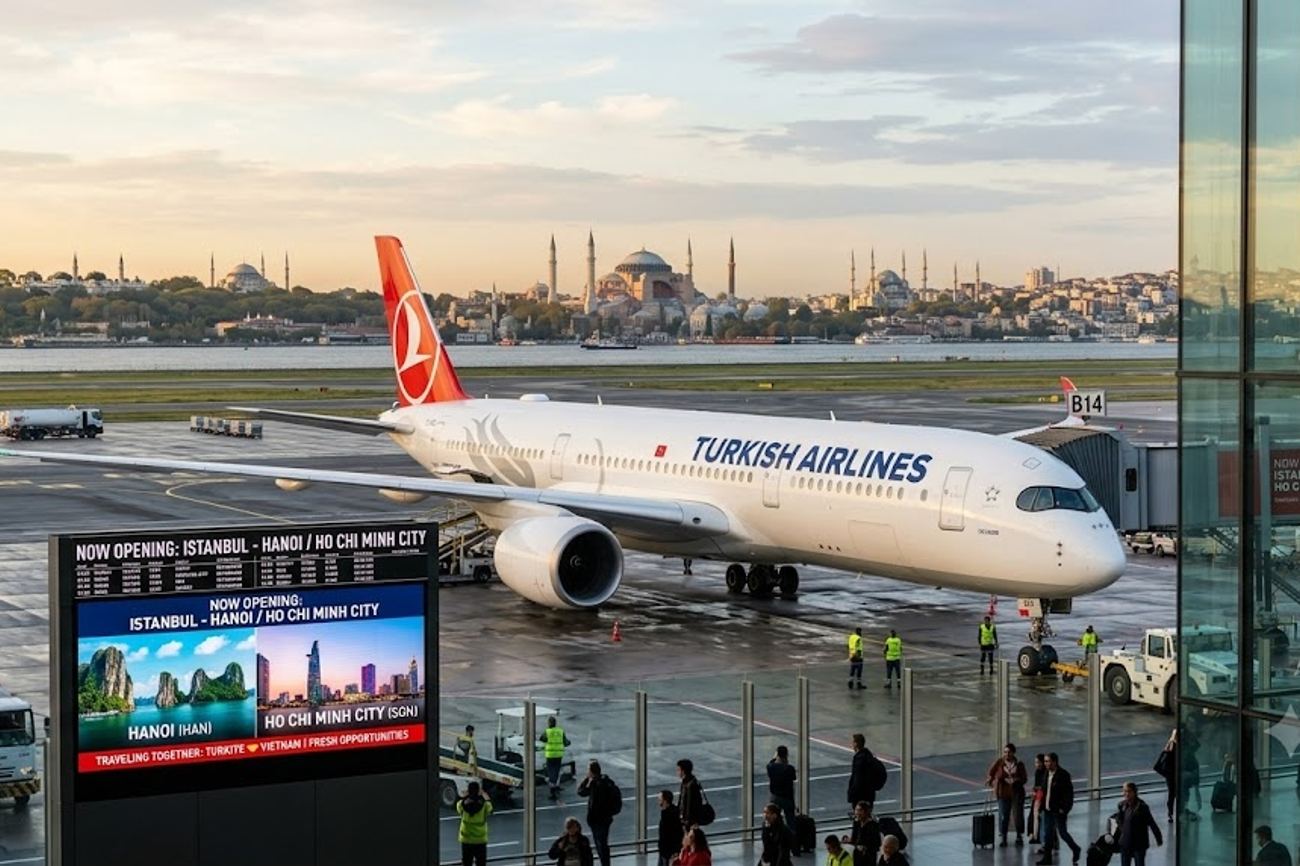
Image generated by AI
Strategic Pivot: The Türkiye-Vietnam Connectivity Corridor
The target for bilateral trade between Türkiye and Vietnam has been set at US$4 billion, a figure that signals a massive shift in corporate mobility and high-yield business travel between the two nations. This economic objective, established during the high-level meeting between Turkish President Recep Tayyip Erdoğan and Vietnamese General Secretary and President Tô Lâm at the 81st United Nations General Assembly, transforms a diplomatic agreement into a quantifiable driver for the aviation and hospitality sectors. When trade targets reach the multi-billion dollar threshold, the ripple effect typically manifests as a surge in "bleisure" travel—where corporate itineraries are extended for leisure—and a heightened demand for premium hospitality infrastructure.
The Connectivity Catalyst in Numbers
The current trajectory of the Türkiye-Vietnam relationship is not merely about diplomatic goodwill; it is a calculated move to bridge the gap between the Mediterranean hub and the Southeast Asian growth engine. The decision to upgrade relations to a new partnership framework creates a structural foundation for increased passenger volumes.
The most critical data point is the US$4 billion trade target. Historically, in emerging market corridors, a rise in trade volume correlates directly with an increase in corporate travel frequency. This growth is expected to be concentrated in five specific high-growth sectors:
- Logistics and supply chain management.
- Science and technology transfers.
- Defense industry cooperation.
- Security infrastructure.
- The Halal food industry.
From a data perspective, the integration of Türkiye as a full Dialogue Partner of ASEAN is the primary multiplier. By moving from a peripheral observer to a strategic partner, Türkiye gains institutional access to the ASEAN market, which comprises over 660 million people. Vietnam, acting as a primary gateway, is positioned to capture the first wave of this redirected traffic.
Comparative Context: Regional Hubs and Market Shifts
To understand the scale of this development, one must compare the current strategic alignment against historical travel patterns between the Middle East/West Asia and Southeast Asia. For years, travel between these regions was dominated by transit hubs in the Gulf. The new Türkiye-Vietnam axis suggests a shift toward a more direct "Silk Road" style of connectivity.
The following table illustrates the strategic shift in focus areas that will drive passenger numbers over the next 24-36 months:
| Driver of Growth | Previous State (Passive Relations) | New Strategic Framework (Active Partnership) | Expected Impact on Travel |
|---|---|---|---|
| Trade Volume | Fragmented, low-scale exchanges | US$4 Billion Target | Surge in corporate/investment travel |
| Diplomatic Status | Standard bilateral relations | New Partnership Framework | Streamlined visa and tourism protocols |
| ASEAN Integration | Limited engagement | Full Dialogue Partner Status | Multi-destination ASEAN-Türkiye packages |
| Niche Markets | General tourism | Halal-certified tourism focus | Growth in faith-based/specialized travel |
| Logistics | Independent supply chains | Integrated logistics cooperation | Improved flight connectivity and transit |
According to IATA data, the recovery of long-haul international travel has been uneven, but corridors that align trade goals with tourism promotion—such as this new agreement—tend to see faster growth in load factors. Türkiye's role as a bridge between Europe and Asia, combined with Vietnam's status as a manufacturing powerhouse, creates a symbiotic relationship where business necessity drives the initial volume, and cultural curiosity sustains the long-term growth.
Practical Traveler Advisory and Strategic Insights
The data suggests that the window for "early adopter" travel between these two regions is opening. For the individual traveler, the institutional shift from "standard relations" to a "strategic partnership" usually precedes a decrease in friction for international movement.
For the Business Traveler: If you operate in the logistics, tech, or defense sectors, expect a surge in industry exhibitions and corporate conferences in Hanoi and Istanbul. The US$4 billion trade goal means that corporate budgets for travel between these two capitals will likely increase. Booking corporate housing or long-stay apartments in these hubs should be prioritized now, as professional travel often precedes general tourism.
For the Leisure Traveler: The mention of "multi-destination holiday packages" indicates that tour operators will soon bundle Turkish and Vietnamese itineraries. For those planning trips in 2025 and 2026, look for "Cross-Continental" packages. The emphasis on Halal food cooperation is a specific signal for Muslim travelers: Vietnam is actively upgrading its infrastructure to include more Halal-certified restaurants and Muslim-friendly hotels to accommodate the influx of Turkish visitors.
Booking Strategy: Current data suggests that connectivity is still in the "growth phase." To avoid price spikes as new routes or increased frequencies are announced, travelers should monitor flight capacity between Istanbul (IST) and major Vietnamese hubs like Hanoi (HAN) and Ho Chi Minh City (SGN). As logistics cooperation improves, we expect to see more competitive pricing on transit routes.
The new partnership between Türkiye and Vietnam is expected to boost tourism and trade between the two countries, with Turkish Airlines planning to increase its flight frequency to major Vietnamese cities. For the latest flight schedules and bookings, travelers can visit the Turkish Airlines official website for more information. This move is anticipated to strengthen economic ties and facilitate people-to-people exchanges between Southeast Asia and Europe.
Forward Projection: The Halal and Logistics Horizon
Based on the current trajectory, the most significant growth will not be in general sightseeing, but in specialized tourism. The focus on Halal food is a strategic move to tap into a high-spending demographic. Türkiye is a global leader in the Halal economy; by exporting this expertise to Vietnam, Vietnam is not just attracting Turkish tourists, but positioning itself as a friendly destination for the entire OIC (Organization of Islamic Cooperation) region.
Furthermore, the focus on logistics suggests that the "infrastructure gap" is being addressed. When governments prioritize logistics, it typically leads to improved airport efficiency and potential new direct flight paths. We can project that within the next three years, the frequency of flights between these regions will increase to support the US$4 billion trade target.
The synergy between Türkiye's geographical advantage (connecting Europe, Asia, and the Middle East) and Vietnam's economic ascent suggests that the "bridge" mentioned by the leaders will manifest as a tangible increase in seat capacity and hotel room inventory tailored to the specific needs of the other's population.
FAQ: Türkiye-Vietnam Tourism 2025
Will flight prices between Türkiye and Vietnam decrease? In the short term, prices may remain stable, but as logistics cooperation increases and new partnership frameworks lead to more flight frequencies, competition should drive prices down for the average traveler.
Is this a good time to invest in Vietnamese hospitality? Yes, particularly in Halal-friendly infrastructure. The government's explicit focus on Halal food and tourism indicates a strategic push to attract higher-spending visitors from Türkiye and the wider Muslim world.
Which cities will see the most growth? Istanbul and Ankara in Türkiye, and Hanoi, Ho Chi Minh City, and Da Nang in Vietnam. These cities are the primary hubs for the trade and diplomatic activities mentioned in the partnership.
What are the best "combined" destinations to visit? The data points toward a combination of Istanbul (cultural hub) and Hanoi (heritage center), or Antalya (coastal) and Phu Quoc (island), as these mirror the strengths of both nations.
The transition from diplomatic dialogue to a US$4 billion trade target marks the beginning of a new era in Eurasia-ASEAN mobility.
Tags: Türkiye-Vietnam-Trade-2025, ASEAN-Dialogue-Partner-Growth, Halal-Tourism-Vietnam, Corporate-Travel-Trends-Eurasia, IST-HAN-Connectivity
Related Travel Guides
- Vietnam’s Lao Cai Tourism Boom Grows With Record 9.8 Million Visitors During The First Nine Months Of 2026
- Kuwait Expands Coastal Tourism With New Sea Taxi Services Floating Attractions and Marine Experiences
- Spain Shares the Spotlight With Italy and Türkiye as British Travellers Broaden Their European Holiday Choices Beyond Traditional Favourites
This article is for informational purposes. Flight routes, passenger regulations, visa rules, and transit advisories are subject to change by airlines and aviation authorities. Readers are advised to verify schedules and travel documentation with relevant carriers and border agencies before departure.
Related Stories

European Mass Protests Disrupt Travel Across France, Italy, Belgium, and Turkey in 2026
The Best Things to Do in Vero Beach with Family: A Local Parent & Traveler's Guide