
Breaking Airline News: Severe Travel Chaos Strikes Toronto Pearson as Air Canada Rouge, Jazz Aviation, and Major Carriers Face 93 Massive Flight Delays
Breaking airline news: Terrifying travel chaos hits Toronto Pearson International Airport as massive flight delays and sudden cancellations shatter Canadian and international flight itineraries.

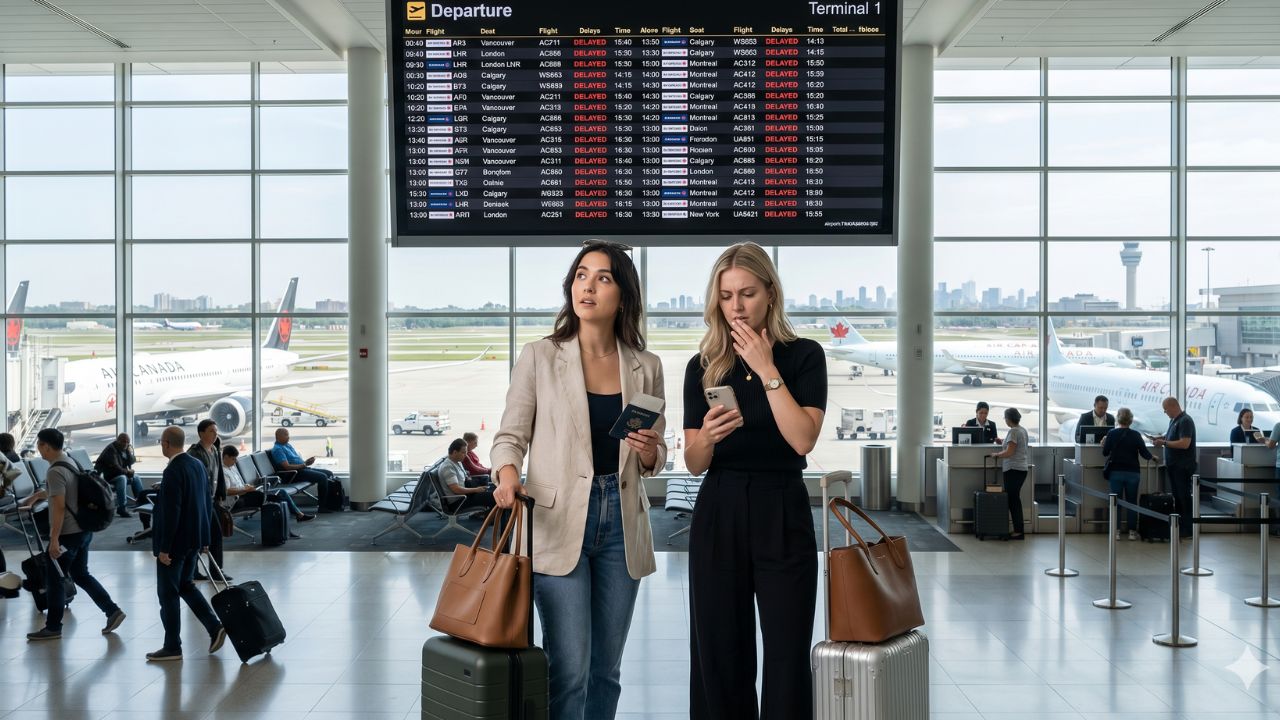
Image representing the severe flight disruptions at Toronto Pearson.
Breaking Airline News: Severe Travel Chaos Strikes Toronto Pearson as Air Canada Rouge, Jazz Aviation, and Major Carriers Face 93 Massive Flight Delays
A sudden operational meltdown violently interrupted Canada's busiest transit hub, plunging thousands of domestic and international travelers into incredibly frustrating delays across 22 critical global airlines.
In an extremely frustrating and highly disruptive display of peak-hour vulnerability, sudden travel interference violently shattered the routine operational schedules at Toronto Pearson International Airport on June 4, 2026. Delivering highly urgent, breaking airline news, verified flight monitoring systems confirmed that Canada's absolute busiest aviation hub suffered a severe wave of travel chaos, actively reporting an incredibly disruptive total of 93 severe flight delays and 3 direct flight cancellations. This sudden logistical nightmare violently targeted massive domestic operators, heavily impacting critical carriers like Air Canada Rouge, Jazz Aviation, and Air Transat, alongside numerous high-profile international airlines. Passengers actively attempting to travel within Canada or connecting to massive global destinations—specifically including Nashville, Edmonton, Halifax, Quebec City, and Windsor—were forcefully plunged into unpredictable terminal gridlock and extreme itinerary uncertainty.
Expanded Overview: The Massive Scale of the Toronto Pearson Disruptions
The highly publicized execution of these sudden flight disruptions acts as an undeniable example of how rapidly an incredibly busy transit corridor can completely buckle under peak operational strain. Toronto Pearson International Airport functions as the absolute critical gateway for the Canadian aviation economy. When massive logistical pressure mounts, the mathematical contagion instantly cascades across multiple terminals. The specific travel disruptions recorded yesterday were heavily concentrated during the absolute busiest peak travel hours, forcefully shattering operational schedules and violently severing passenger connections. While the strict numerical total of 3 complete cancellations might mathematically appear moderate, the violent cascading effect of 93 distinct flight delays aggressively generated massive logistical hemorrhaging. Terminal management proactively scrambled to implement immediate crisis protocols, rapidly executing updated gate assignments and priority boarding procedures to aggressively combat the terrifying passenger bottleneck actively forming inside the departure lounges.
Section-Wise Breakdown of the Canadian Aviation Hub
Toronto Pearson International (YYZ): The Epicenter of Delay
Situated in the heart of Ontario, Canada, Toronto Pearson actively accommodated an incredibly high volume of early summer passengers before unexpected operational bottlenecks violently shattered the daily flight sequence. The massive logistical pressure severely compromised domestic continuity. The airport's incredibly dedicated operations teams were forcefully required to coordinate an aggressive mitigation strategy, prioritizing rapid passenger communication and complex flight rescheduling to forcefully prevent a total, catastrophic network meltdown across the terminal floors.
Domestic Route Disruptions: The Canadian Network Impact
The violent delays actively devastated highly critical domestic corridors connecting Toronto to the rest of the vast Canadian landscape. Stranded passengers violently missed essential connections on highly profitable, high-frequency routes bound for Edmonton, Halifax, Quebec City, Windsor, Moncton, Saint John, Montreal, Vancouver, Winnipeg, Calgary, and Victoria. These incredibly severe delays severely disrupted both high-tier corporate business travelers and eager summer tourists attempting to navigate the heavily congested domestic airspace.
International and Transborder Meltdown
The terrifying travel chaos was incredibly merciless, aggressively expanding far beyond Canada’s borders to actively sever massive international connectivity. Frantic travelers experienced severe, agonizing delays on incredibly crucial routes heading to major American transit hubs, directly impacting Nashville, Washington, D.C., Newark, Chicago, and San Francisco. Furthermore, high-capacity long-haul and vacation routes were heavily affected, violently disrupting passenger flows to Cairo, Madrid, Zurich, Guatemala City, Guadalajara, and Bridgetown.
Verified Flight Details: Total Disruption Data
To completely comprehend the incredible scale of this severe aviation crisis, the following data table accurately reflects the absolute mandatory disruption statistics directly from FlightAware, detailing the exact performance of the 22 affected carriers:
| Airline | Cancelled | Cancelled (%) | Delayed | Delayed (%) |
|---|---|---|---|---|
| Air Canada Rouge (ACA) | 2 | 2% | 1 | 1% |
| Jazz (ACA) | 1 | 0% | 9 | 7% |
| Air France | 0 | 0% | 1 | 25% |
| British Airways | 0 | 0% | 2 | 50% |
| Bangladesh Biman | 0 | 0% | 1 | 50% |
| Aer Lingus | 0 | 0% | 1 | 50% |
| EVA Air | 0 | 0% | 1 | 50% |
| Flair Airlines | 0 | 0% | 7 | 17% |
| PSA Airlines (AAL) | 0 | 0% | 2 | 20% |
| Egypt Air | 0 | 0% | 1 | 50% |
| Piedmont (AAL) | 0 | 0% | 1 | 16% |
| Porter Airlines | 0 | 0% | 4 | 4% |
| Republic | 0 | 0% | 1 | 2% |
| SAS | 0 | 0% | 1 | 50% |
| Swiss | 0 | 0% | 1 | 50% |
| TAP Air Portugal | 0 | 0% | 2 | 50% |
| Air Transat | 0 | 0% | 7 | 26% |
| United | 0 | 0% | 2 | 10% |
| Virgin Atlantic | 0 | 0% | 1 | 50% |
| WestJet | 0 | 0% | 5 | 4% |
| American Airlines | 0 | 0% | 2 | 14% |
| Air Canada | 0 | 0% | 40 | 12% |
(Among the primary affected airlines, Air Canada brutally absorbed 40 delayed flights, while Jazz Aviation suffered 9, Flair Airlines took 7, and Air Transat encountered 7. International carriers including British Airways, EVA Air, and TAP Air Portugal also experienced massive percentage-based delays relative to their daily frequencies.)
Passenger Impact: Navigating the Frustrating Terminal Gridlock
For the desperate global commuter actively navigating this incredibly hostile environment, the passenger impact of enduring a sudden 93-flight delay wave is absolutely devastating. The massive logistical hemorrhaging caused by this interference mathematically guarantees significantly missed connections for long-haul international passengers, violently forcing thousands of weary tourists to endure excruciating waits inside crowded Toronto terminal lounges. These highly frustrating delays inevitably trigger severe, unexpected financial burdens, as passengers are forcefully compelled to aggressively secure emergency airport dining, navigate rapidly shifting boarding zones, and desperately contact customer service centers to proactively salvage completely ruined vacation itineraries.
Industry Analysis: What Triggered the Aviation Disruption?
While official authorities aggressively investigate the highly specific catalysts for this peak-hour crisis, travel interference of this exact magnitude at major Canadian gateways is frequently triggered by a terrifying combination of highly congested airspace, sudden localized meteorological variables, and complex logistical bottlenecks at the gate. According to the strict frameworks overseen by the Canadian Transportation Agency (CTA), airlines are highly dependent on strict, perfectly choreographed turnaround times. When high passenger volumes aggressively collide with even a minor operational hiccup—such as a slightly delayed catering truck, a sudden technical reset, or mandatory runway inspections—the subsequent delay violently ripples outward, aggressively trapping aircraft like Air Canada's massive fleet in an incredibly frustrating holding pattern.
Conclusion: A Highly Disruptive Industrial Evolution
The severe, highly publicized peak-hour delays actively recorded at Toronto Pearson International Airport act as an incredibly important reminder regarding the absolute fragility of the global commercial aviation sector. Although the massive airport infrastructure successfully demonstrated incredible resilience by aggressively limiting the absolute total to just 3 complete cancellations, the 93 subsequent delays aggressively highlight the extreme vulnerability of major tourist cities relying heavily on seamless air connectivity. By actively addressing these terrifying operational bottlenecks, Canadian authorities are desperately attempting to rapidly preserve the absolute reliability of summer air travel to aggressively sustain visitor inflow and massive business commerce.
What Guests Get: Immediate Passenger Ramifications
- Massive Network Delays: A staggering 93 separate flights were violently delayed, plunging the entire Toronto Pearson hub into severe logistical gridlock.
- Widespread Route Disruptions: Passengers forcefully endured agonizing delays bound for massive cities like Nashville, Edmonton, Chicago, and San Francisco.
- Critical Carrier Impacts: Air Canada overwhelmingly absorbed the massive brunt of the chaos with 40 distinct delays, while Air Transat and Jazz Aviation suffered heavily.
- Successful Crisis Mitigation: Terminal authorities aggressively executed priority boarding and rapid gate reassignments, violently limiting total outright cancellations to just 3 flights.
What This Means for Travelers: Surviving the Meltdown
If you are currently booked to navigate through Toronto Pearson International Airport, you must aggressively prepare for severe, residual operational disaster. Arrive incredibly early to completely bypass massive, terrifying security checkpoints. Proactively utilize your airline's dedicated mobile application to aggressively confirm your specific flight status, and instantly access digital customer service portals to demand immediate rebooking options rather than violently waiting in massive, hours-long terminal queues.
FAQ: Toronto Pearson Disruptions 2026
Why did Toronto Pearson experience 93 flight delays? The severe travel chaos was aggressively triggered by massive peak-hour logistical pressure violently colliding with highly congested airport operations, severely straining the turnaround times of major carriers.
Which airlines were the most affected by this crisis? Air Canada overwhelmingly suffered the most severe impact with 40 recorded delays, aggressively followed by Jazz Aviation, Flair Airlines, and Air Transat.
Am I entitled to compensation for my delayed Canadian flight? Under Canada’s incredibly strict Air Passenger Protection Regulations, travelers violently affected by specific delays may be legally entitled to substantial refunds or compensation; aggressively check your operating carrier's policy immediately.
Related Travel Guides
- Mexico Airport Chaos: 124 Delays and 14 Cancellations Strand Travelers at Cancun, Guadalajara and Santa Lucia
- Vancouver Travel Chaos: 6 Critical Flight Cancellations by Air Canada and WestJet Paralyze Routes to Calgary, Edmonton, and Victoria
- 1,927 Flights Delayed and 70 Cancelled Across Europe: France, Norway, Switzerland Hit Hard as Major Airlines Scramble
Disclaimer
This article is for informational and educational purposes only. It does not constitute legal, financial, or professional advice. While we strive to provide accurate and up-to-date information, travel policies, regulations, and conditions change rapidly. Always verify information with official sources before making travel decisions. Nomad Lawyer makes no representations about the accuracy, reliability, completeness, or suitability of the information provided. Readers should consult qualified professionals for advice specific to their circumstances. The views expressed in this article are those of the author and do not necessarily reflect the views of Nomad Lawyer.
Kunal K Choudhary
Co-Founder & Contributor
A passionate traveller and tech enthusiast. Kunal contributes to the vision and growth of Nomad Lawyer, bringing fresh perspectives and driving the community forward.
Learn more about our team →