
Widespread Disruptions at Toronto Pearson Ground 32 Flights and Delay Over 120 Services Across North America and Europe
A coordinated operational slowdown at Toronto Pearson International Airport has forced major carriers to suspend 32 serv

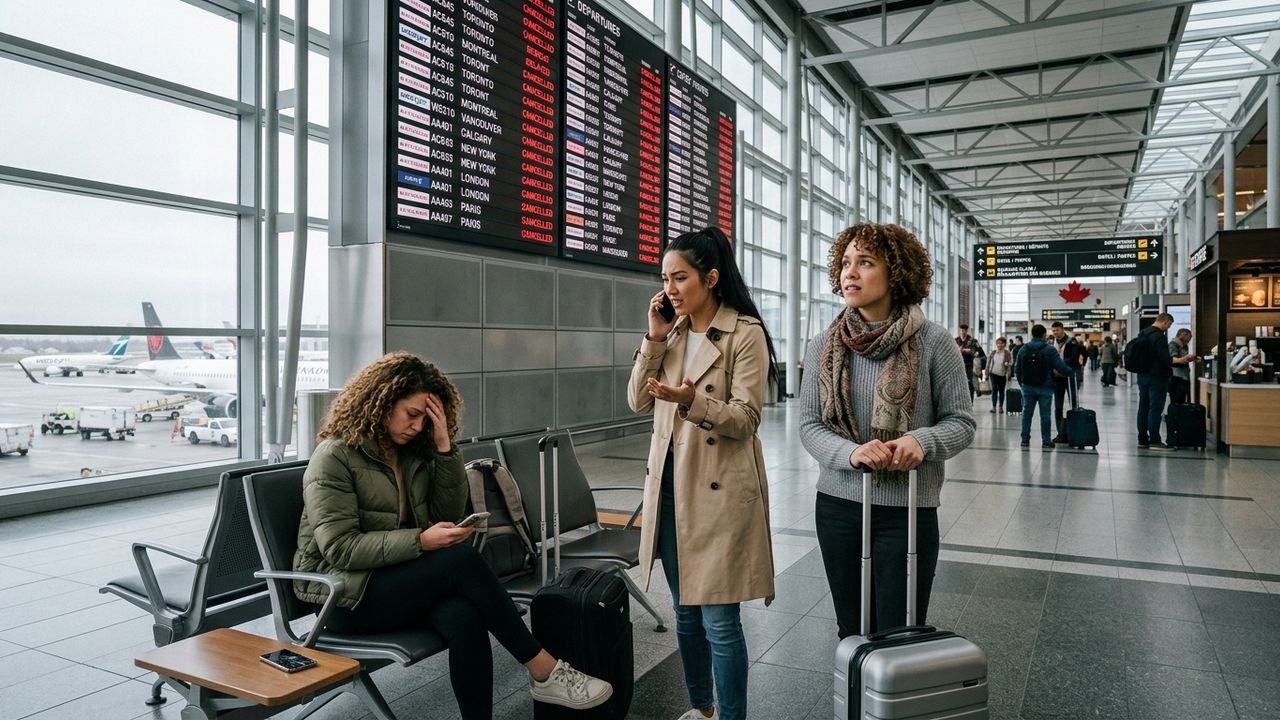
Image generated by AI
Passengers traveling through Toronto Pearson International Airport (YYZ) are navigating a significant operational slowdown that has grounded 32 flights and delayed more than 120 additional services. The disruptions, driven by simultaneous schedule adjustments across Air Canada, Jazz, Air Canada Rouge, Porter Airlines, and Air Transat, have created cascading delays across domestic Canadian corridors, U.S. gateways, and transatlantic leisure routes. Travelers should expect extended terminal wait times, automated rebooking queues, and modified departure windows as airline operations teams work to stabilize the network.
Route Disruptions Span North America, Europe, and the Caribbean
The operational strain extends well beyond Toronto, impacting a broad spectrum of domestic, regional, and intercontinental destinations. Affected markets include Toronto, Newark, Montreal, St. John’s, Orlando, Edmonton, Minneapolis, Vancouver, Chicago, Ottawa, Cincinnati, Nashville, Windsor, Charlottetown, Detroit, Moncton, Sudbury, Saint John, Winnipeg, Saskatoon, Calgary, Berlin, Munich, London, Edinburgh, Amsterdam, Warsaw, Stockholm, Boston, Cleveland, Columbus, Washington, Denver, Dallas, Fort Lauderdale, Houston, Indianapolis, Jacksonville, Las Vegas, Los Angeles, Philadelphia, Pittsburgh, Raleigh-Durham, San Francisco, St. Louis, Zagreb, Barcelona, Paris, Athens, Prague, Istanbul, Punta Cana, Montego Bay, Liberia, San Salvador, Taipei, Tokyo, Incheon, Manila, Bogotá, Bridgetown, Port of Spain, Hong Kong, Reykjavik, Deer Lake, Longueuil, Halifax, Kelowna, Quebec City, Regina, Victoria, Cairo, Atlanta, Lisbon, Cancun, San Juan, and Thunder Bay.
Certain destinations recorded disproportionately high cancellation rates relative to their scheduled volumes. Venice reported a 100% cancellation rate, while Windsor and Cincinnati each saw 50% of their flights suspended. Nashville experienced a 33% cancellation rate, and Regina recorded 25%. These figures underscore how localized operational constraints at major hubs can rapidly amplify across secondary airports and international gateways, affecting both business-heavy transcontinental corridors and high-volume leisure routes to Europe and the Caribbean.
Carrier-Specific Cancellation and Delay Figures
Toronto Pearson served as the primary focal point of the disruption, accounting for the majority of suspended services. Initial operational reports tracked 15 cancellations at YYZ, followed by an additional 17 in subsequent updates. Other locations, including Newark and Montreal, also registered multiple grounded flights, while airports in St. John’s, Orlando, Edmonton, Minneapolis, Vancouver, Chicago, Ottawa, Windsor, Charlottetown, Detroit, Nashville, Regina, Punta Cana, and Venice suspended services entirely.
The breakdown by carrier reveals where the heaviest scheduling adjustments occurred:
| Airline | Cancelled | Delayed |
|---|---|---|
| Air Canada | 11 | 62 |
| Jazz (ACA) | 10 | 26 |
| Air Canada Rouge (ACA) | 9 | 16 |
| Porter Airlines | 1 | 14 |
| Air Transat | 1 | 6 |
| Total | 32 | 124 |
Air Canada and its regional partner, Jazz, collectively managed 21 cancellations and 88 delays, reflecting the carrier's extensive domestic and U.S. network footprint. Air Canada Rouge handled 9 cancellations and 16 delays, primarily impacting leisure-focused transcontinental and Caribbean routes. Porter Airlines and Air Transat each recorded one cancellation, though both faced notable delay volumes across their regional and European schedules.
Passenger Navigation and Rebooking Protocols
When flights are suspended, structured navigation through airline systems significantly reduces rebooking friction. Travelers should prioritize the following steps:
- Verify Status Before Departure: Check flight status through the airline’s official mobile app, website, or automated SMS alerts. Airport terminal screens and baggage claim areas often update several minutes behind live network data.
- Initiate Rebooking Early: Use the airline’s digital self-service portal to secure alternative seating. On-site customer service desks experience the highest congestion during widespread disruptions, making app-based rebooking the most efficient option.
- Review Compensation and Rebooking Policies: Familiarize yourself with the operating carrier’s cancellation terms. European Union regulations may apply to certain international itineraries, while domestic carriers typically offer complimentary rebooking or travel credits for schedule changes within their control.
- Evaluate Alternative Routing: If direct alternatives are unavailable, request connection options through partner airlines or adjacent hubs. Ground transportation or multi-modal routing may be viable for regional destinations.
Real-Time Monitoring and Schedule Flexibility
Airlines continuously adjust crew assignments, aircraft rotations, and maintenance windows to restore normal flow. Schedule modifications remain fluid, and additional service suspensions or recovery flights may be announced as operational conditions evolve. Travelers should maintain flexible departure windows, keep digital boarding passes accessible, and monitor official carrier channels for recovery updates. Operating carriers and airport authorities are prioritizing safe crew rest compliance and aircraft turnaround efficiency to minimize further network strain.
| Airline | Cancelled | Delayed |
|---|---|---|
| Air Canada | 11 | 62 |
| Jazz (ACA) | 10 | 26 |
| Air Canada Rouge (ACA) | 9 | 16 |
| Porter Airlines | 1 | 14 |
| Air Transat | 1 | 6 |
| Total | 32 | 124 |
Key Takeaways
- 32 flights cancelled and 124 delayed across major carriers operating through Toronto Pearson and connecting hubs.
- Toronto Pearson (YYZ) remains the primary disruption hotspot, accounting for over half of all suspended services reported.
- Secondary airports show disproportionate impact, with Venice (100%), Windsor (50%), Cincinnati (50%), Nashville (33%), and Regina (25%) recording high cancellation rates relative to scheduled volume.
- Air Canada and Jazz handle the majority of adjustments, reflecting their dominant domestic and U.S. network presence.
- Passengers should use digital rebooking tools first, monitor official carrier channels for real-time updates, and maintain flexible travel windows as schedules continue to adjust.
FAQ
Which airlines are most affected by the current Toronto Pearson disruptions? Air Canada, Jazz, Air Canada Rouge, Porter Airlines, and Air Transat are reporting cancellations and delays, with Air Canada and Jazz collectively accounting for 21 cancellations and 88 delays.
Are business or leisure routes experiencing more impact? Both segments are affected, but leisure-focused corridors to Europe, the Caribbean, and Mexico show notable suspension rates, while transcontinental domestic and U.S. gateway routes face heavy delay volumes due to crew rotation and aircraft positioning constraints.
What is the most efficient way to rebook a cancelled flight? Use the operating airline’s official mobile app or website to access real-time alternative routing. Digital rebooking typically processes faster than airport counter queues during widespread operational slowdowns.
Will passengers receive compensation for these cancellations? Compensation eligibility depends on the operating carrier’s policy, the reason for the disruption, and applicable jurisdictional regulations. EU passengers on qualifying international itineraries may be entitled to compensation under specific conditions, while domestic travelers typically receive complimentary rebooking or travel credits.
How long are these disruptions expected to last? Schedule adjustments remain fluid as airlines balance crew rest requirements, aircraft maintenance, and slot availability. Travelers should monitor official carrier updates and prepare for potential additional delays or recovery flights over the next 24–48 hours.
Related Travel Guides
Disclaimer
This article is for informational and educational purposes only. It does not constitute legal, financial, or professional advice. While we strive to provide accurate and up-to-date information, travel policies, regulations, and conditions change rapidly. Always verify information with official sources before making travel decisions. Nomad Lawyer makes no representations about the accuracy, reliability, completeness, or suitability of the information provided. Readers should consult qualified professionals for advice specific to their circumstances. The views expressed in this article are those of the author and do not necessarily reflect the views of Nomad Lawyer.
Raushan Kumar
Founder & Lead Developer
Full-stack developer with 11+ years of experience and a passionate traveller. Raushan built Nomad Lawyer from the ground up with a vision to create the best travel and law experience on the web.
Learn more about our team →