Qatar Airways' Award-Winning Business Class Defies Industry Myth: Width Isn't Everything in Luxury Aviation


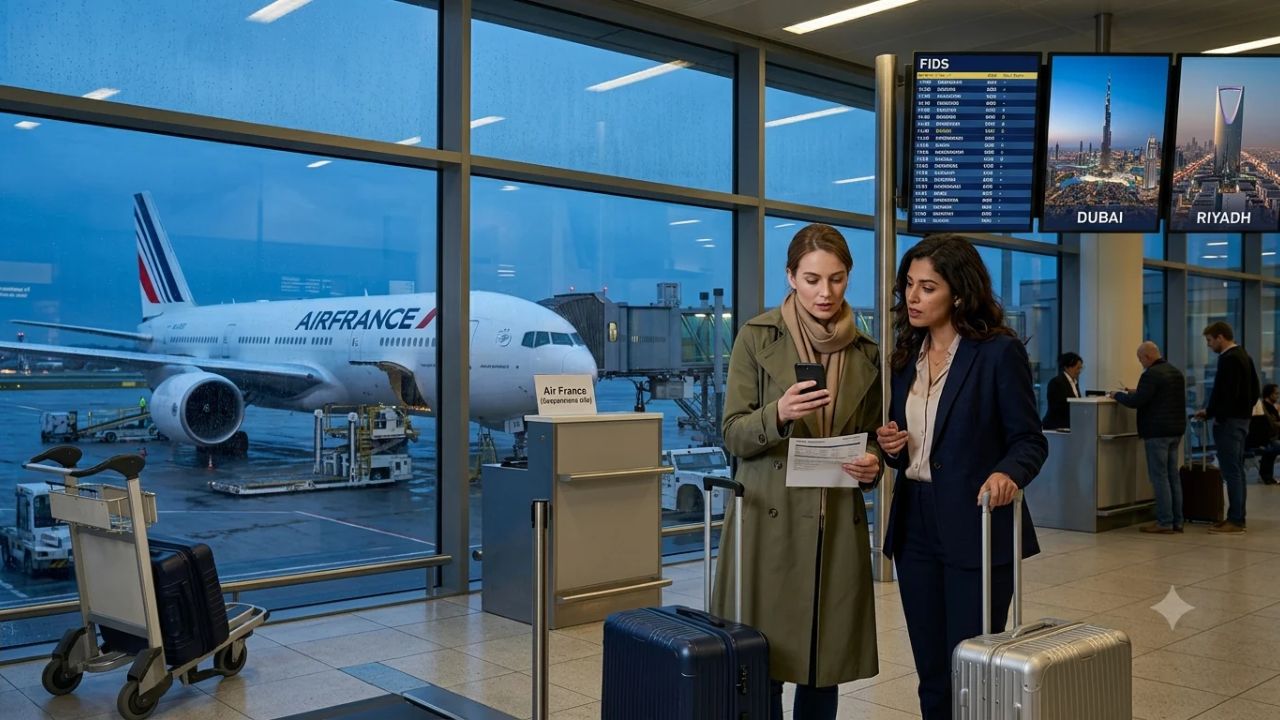
Image generated by AI
The carrier's celebrated Qsuite cabin proves that passenger experience trumps raw dimensions in premium travel
The Paradox of Premium Aviation
The global aviation industry has long operated under a fundamental assumption: larger seats equal superior business class products. Yet Qatar Airways has shattered this conventional wisdom with its internationally acclaimed Qsuite cabin—a premium offering that has garnered the highest accolades from industry reviewers despite lacking the widest seating dimensions among its competitors.
This counterintuitive reality exposes a critical gap between how airlines market premium cabins and what actually elevates the passenger experience. While carriers have traditionally emphasized square footage and measurable specifications in their advertising strategies, the most celebrated business class product in commercial aviation demonstrates that excellence in luxury travel depends on far more nuanced factors.
Redefining Premium Cabin Excellence
Qatar Airways' Qsuite represents a paradigm shift in how the aviation industry conceptualizes business class design. Rather than pursuing maximum horizontal width, the carrier invested in innovative cabin architecture, including enclosed suites with sliding doors, direct-aisle access for select seats, and transformable seating configurations that prioritize passenger comfort and privacy.
The distinction is crucial for an industry increasingly competing on differentiation rather than basic amenities. As fuel costs fluctuate and airlines face mounting pressure to justify premium pricing, the qualitative elements of a cabin experience—privacy features, technological integration, service quality, and ergonomic design—have become decisive factors for discerning travelers.
What The Numbers Don't Reveal
Industry analysts and frequent business travelers recognize that cabin dimensions represent only a partial picture of premium comfort. The Qsuite's recognition as the world's best-rated business class cabin underscores a broader market reality: passengers value thoughtful design, functionality, and experiential elements over raw measurements.
This insight carries significant implications for competing carriers planning premium cabin renovations and retrofits. Airlines investing billions in cabin upgrades must now consider that tactical enhancements—innovative storage solutions, superior noise insulation, advanced connectivity, and flexible configurations—can deliver competitive advantages that spreadsheets cannot quantify.
Industry Implications For Premium Travel
The success of Qatar Airways' approach signals a maturation in premium aviation markets, particularly among wealthy business travelers who have experienced multiple top-tier products. These passengers increasingly distinguish between marketing claims and genuine luxury, driving carriers to innovate beyond dimensional specifications.
For the broader aviation sector grappling with volatile jet fuel prices and shifting travel patterns, the Qsuite model suggests that strategic investment in cabin design innovation may offer stronger returns than simple seat enlargement—especially as airlines seek to maintain revenue margins during economically uncertain periods.
FAQ: Understanding Premium Business Class Innovation
Q: Why don't the widest business class seats always rank highest among travelers? A: Passenger satisfaction depends on comprehensive design elements including privacy, functionality, service quality, and cabin layout—not solely on seat width. Thoughtful architectural solutions often outperform simple dimensional expansion.
Q: How does Qatar Airways' Qsuite differ from competitors' business class cabins? A: The Qsuite features enclosed suites with sliding doors, flexible seating configurations, direct-aisle access options, and innovative space utilization that prioritizes both comfort and privacy despite not offering maximum horizontal width.
Q: What impact does this design philosophy have on airline pricing strategies? A: Premium cabins emphasizing innovation and experience rather than basic specifications allow carriers to justify higher fares and maintain revenue margins amid competitive pressures and fluctuating operational costs.
Q: Are other airlines adopting similar design approaches? A: The industry is increasingly recognizing that differentiated cabin experiences drive premium revenue, leading competitors to invest in innovative architectural solutions beyond traditional seat enlargement.
Q: How do business travelers evaluate luxury cabin quality today? A: Modern business passengers assess privacy features, technological integration, ergonomic design, noise isolation, and overall experiential quality alongside basic comfort metrics when selecting premium products.
Related Travel Guides
- Discover the Future of Green Travel in Skellefteå as Local Leaders Adopt SAF to Revolutionize Your Next Luxury Escape
- Lufthansa Strike 2026: 500 Flights Grounded, 90,000 Stranded Across Europe—Passenger Rights Under EU 261/2004
- Air Serbia’s Summer 2026 Expansion: 100+ Destinations and New Routes to Toronto
This article is for informational purposes. Flight routes, passenger regulations, visa rules, and transit advisories are subject to change by airlines and aviation authorities. Readers are advised to verify schedules and travel documentation with relevant carriers and border agencies before departure.
Related Stories
Ultra-Comfortable Budget Flights: How Singapore, Japan, Malaysia, and Spain Are Redefining Long-Haul Low-Cost Air Travel

Alaska Airlines Connects Anchorage with Dallas, Austin, and Nashville in Summer 2027 Domestic Network Expansion