
The Hidden Safety Feature Flight Attendants Rely On: Why Economy Armrests Retract and What You Need to Know
Breaking airline news and aviation industry updates for 2026.

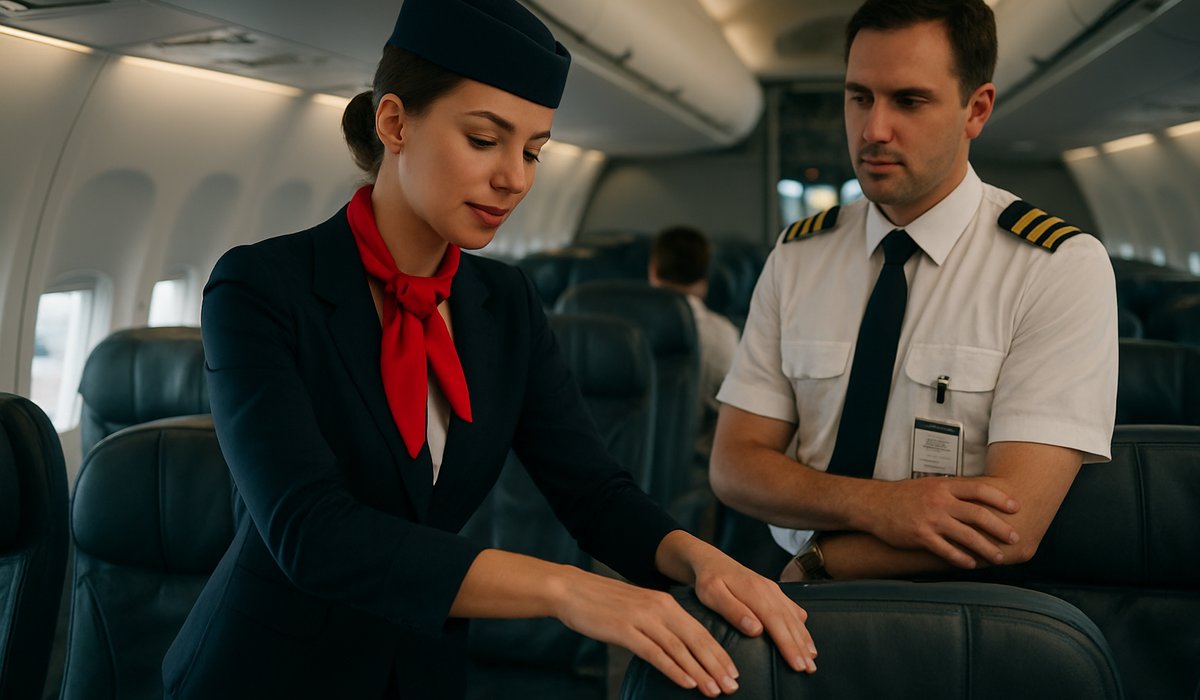
Image generated by AI
The Hidden Safety Feature Flight Attendants Rely On: Why Economy Armrests Retract and What You Need to Know
Discover the critical evacuation protocol that explains a design feature millions of passengers overlook during every flight
The Mechanism Most Travelers Never Notice
A small lever hidden beneath the aisle-facing armrest in economy seating has become the subject of countless travel hacks circulating across social media. Passengers have learned to manipulate this release mechanism to flip the armrest upward, creating additional legroom and facilitating easier access to overhead luggage compartments. However, aviation experts and cabin crew professionals reveal that this seemingly passenger-friendly design feature serves a far more consequential purpose than mere comfort—it exists as a critical safety requirement mandated by international aviation authorities.
Why Airlines Install Retractable Armrests: Safety First
The retractable armrest mechanism isn't an afterthought or a convenience feature engineered to appease frustrated economy travelers. Rather, it represents a deliberate safety specification built into every commercial aircraft operating under Federal Aviation Administration (FAA) regulations and equivalent international standards.
Flight attendants must ensure these armrests return to their locked position before the aircraft pushes back from the gate or begins taxi operations. This requirement stems from emergency evacuation protocols. During an evacuation scenario, passengers must be able to move rapidly through cabin rows without obstruction. The recessed armrest design facilitates unimpeded movement through seating areas—potentially saving critical seconds during time-sensitive emergency procedures where every moment determines passenger survival rates.
The Evacuation Protocol Behind the Design
Commercial aviation safety standards demand that aircraft demonstrate the capability to evacuate all passengers and crew within 90 seconds using only half of available emergency exits. This rigorous requirement applies regardless of aircraft size or passenger capacity. An armrest blocking the aisle—even partially—compromises the efficiency of this evacuation pathway and violates safety compliance standards.
When armrests remain locked in their standard position, they create physical barriers that slow passenger movement during emergencies. By engineering these armrests to retract completely, manufacturers and airlines ensure that evacuation routes remain maximally clear and that movement through cabin rows proceeds without delay.
What Passengers Should Understand
While this design feature genuinely does enhance economy passenger comfort and convenience during normal flight operations, it fundamentally exists to protect lives during potential emergencies. Flight attendants' insistence on restoring armrests to their locked position represents compliance with safety protocols, not arbitrary rule enforcement.
FAQ: Economy Seating Safety and Comfort Questions
Why do flight attendants ask passengers to lower armrests before takeoff? Armrests must remain locked during taxi and flight operations to comply with emergency evacuation requirements. Retracted armrests obstruct evacuation pathways and violate FAA safety standards.
Can I keep the armrest up during the flight? No. Crew members will request that armrests be lowered before the aircraft begins moving, as this is a mandatory safety requirement, not a discretionary preference.
Does the armrest retraction feature work on all airline seats? This mechanism is standard on most aisle seats in economy cabins across major carriers, though specific designs vary by aircraft manufacturer and airline configuration.
What happens if a passenger refuses to lower the armrest? Crew members must ensure compliance before departure. Continued refusal could result in the passenger being denied boarding or removed from the flight under safety regulations.
Are business and first-class armrests different? Yes. Premium cabin seats feature fixed armrests that don't retract, as these seating configurations already provide adequate evacuation spacing and don't require the same design modifications.
Related Travel Guides
-
Copa Airlines Commits $13.5 Billion to Massive Boeing 737 MAX Fleet Expansion
-
Sydney Flight Paths July 2026: Major Airspace Restructure Confirmed
External Resources
Disclaimer
This article is for informational and educational purposes only. It does not constitute legal, financial, or professional advice. While we strive to provide accurate and up-to-date information, travel policies, regulations, and conditions change rapidly. Always verify information with official sources before making travel decisions. Nomad Lawyer makes no representations about the accuracy, reliability, completeness, or suitability of the information provided. Readers should consult qualified professionals for advice specific to their circumstances. The views expressed in this article are those of the author and do not necessarily reflect the views of Nomad Lawyer.
Kunal K Choudhary
Co-Founder & Contributor
A passionate traveller and tech enthusiast. Kunal contributes to the vision and growth of Nomad Lawyer, bringing fresh perspectives and driving the community forward.
Learn more about our team →