
Thailand Unleashes 4 Billion Baht Tourism Stimulus as Foreign Arrivals Slide and Domestic Travel Becomes Economic Lifeline
Thailand Unleashes 4 Billion Baht Tourism Stimulus as Foreign Arrivals Slide and Domestic Travel Becomes Economic Lifeline

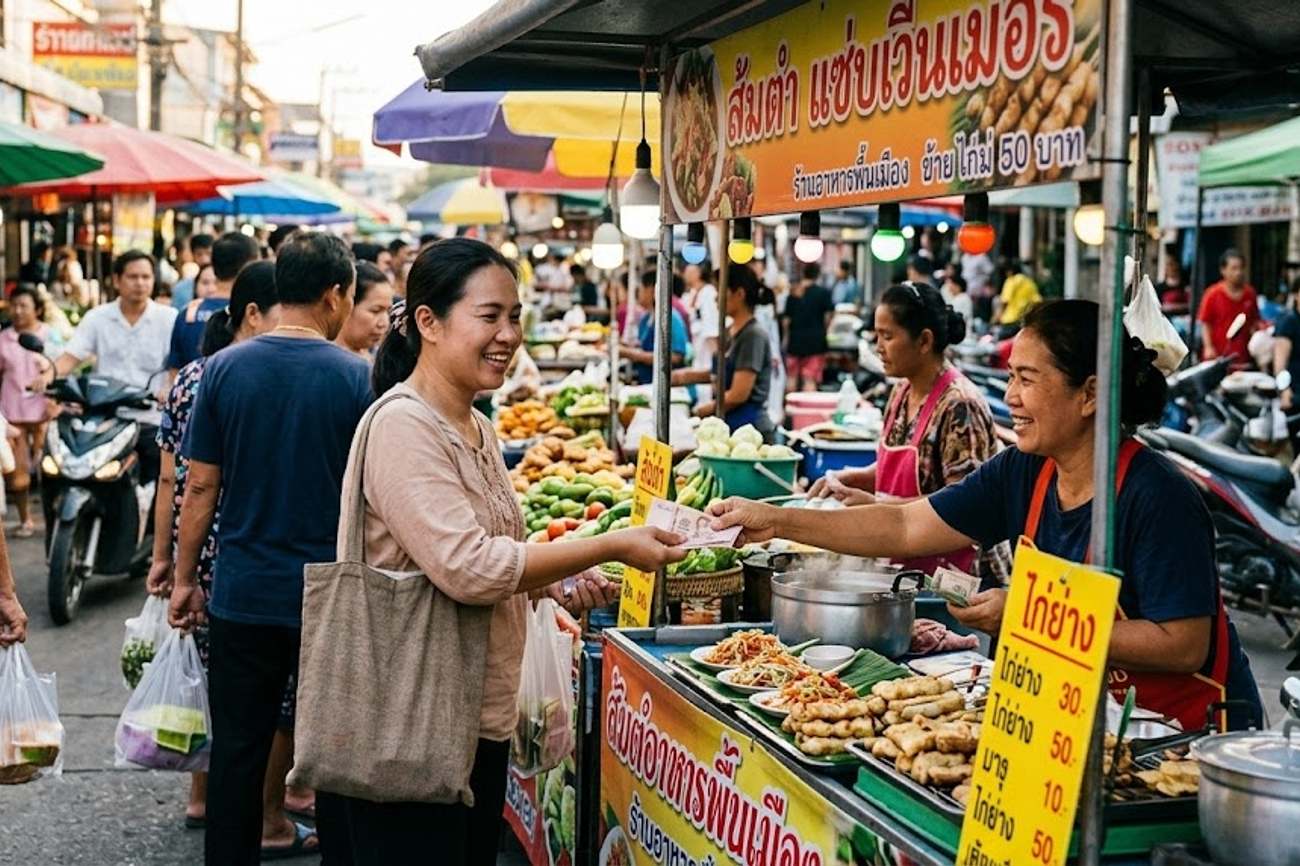
Image generated by AI
A 4 billion baht government stimulus package is the latest attempt by Thailand to insulate its economy from a volatile international travel market, with the state aiming to trigger over 20 billion baht in secondary spending. This aggressive pivot toward domestic consumption comes as foreign arrivals through September 12 fell 3.4 per cent to 21.7 million, a decline that underscores the fragility of the country's traditional reliance on overseas visitors. While the Tourism Authority of Thailand continues to market the kingdom globally, the internal data reveals a stark divergence: domestic trips rose 2 per cent to 142 million, with local spending climbing 1.9 per cent to 824.6 billion baht.
The Strategic Pivot to Internal Demand
The Thai government is repositioning the domestic traveler as a primary economic stabilizer. By shifting focus inward, the administration seeks to mitigate the impact of a 1.9 per cent drop in international visitor spending, which totaled 1.06 trillion baht through mid-September. This shift is not merely about filling hotel rooms; it is a defensive maneuver against rising operational overheads. Tourism businesses are currently grappling with spiked energy costs driven by elevated global oil prices, creating a margin squeeze that threatens the viability of smaller operators.
The proposed stimulus, slated for Cabinet submission on September 22, targets one million entitlements. The government's logic is based on a multiplier effect: by subsidizing the initial cost of travel, they expect to catalyze a five-fold return in total economic activity. This strategy acknowledges that the tourism ecosystem—spanning from high-end resorts to street-side vendors—is a critical engine for foreign exchange and national employment.
Breakdown of Stimulus Mechanics and Timing
The financial architecture of the program is designed to incentivize both the act of traveling and the act of spending once the destination is reached. The government is not simply offering a flat discount but is utilizing a co-payment model to ensure private capital accompanies public funds.
| Benefit Category | Maximum Value per Entitlement | Eligible Expenses |
|---|---|---|
| Accommodation Subsidy | 2,000 baht | Hotel rooms, resorts, guesthouses |
| Co-payment Vouchers | 2,000 baht | Restaurants, spas, shops, local activities |
| Secondary Destination Bonus | Enhanced Benefits | Travel to less-visited provinces |
| Total Potential per Person | Up to 20,000 baht | Limit of 5 entitlements per traveler |
The rollout schedule is intentionally fragmented to avoid overlapping with the highest organic demand periods. The first phase runs from November 1 through December 15. Following a strategic pause during the New Year peak, the program resumes on January 16, 2027, and concludes at the end of February.
Expert Analysis: The Efficiency Gap and Capacity Crisis
For travelers and operators, the timing of this stimulus is the most contentious point of the policy. By launching on November 1, the government is injecting subsidies into the start of the traditional high season. From a journalistic and economic perspective, this creates a "deadweight loss" scenario. As Thienprasit Chaiyapatranun, president of the Thai Hotels Association, suggests, there is a high probability that the state is subsidizing trips that would have occurred regardless of the incentive.
The direct consequence for the traveler is a temporary artificial inflation of demand during an already busy period, which may actually drive up room rates, offsetting the value of the 2,000 baht subsidy. Had the government deployed these funds during the low season of 2027, the stimulus would have created "new" demand rather than simply subsidizing existing behavior.
Beyond the timing, there is a deeper structural issue: excess hotel capacity. During the post-pandemic recovery, developers aggressively expanded room inventory based on optimistic projections. However, with foreign arrivals for 2026 forecasted by industry veteran Prakit Chinamourphong to reach only 30 million to 31 million—well below the "normal" benchmark of 35 million—Thailand is facing an oversupply of beds.
The pricing pressure this creates is immense. When supply outstrips demand, hotels are forced into a "race to the bottom" on pricing to maintain occupancy. While the 4 billion baht stimulus provides a short-term liquidity injection, it does not solve the fundamental imbalance of too many rooms and too few high-spending international tourists. For the nomad or long-term traveler, this means luxury accommodations may remain surprisingly affordable, but the quality of service may dip as hotels struggle with thin margins and high energy costs.
Key Takeaways
- Domestic Resilience: Local travel is outperforming international arrivals, with 142 million trips and 824.6 billion baht in spending, serving as the economy's primary safety net.
- Stimulus Structure: One million entitlements will offer up to 2,000 baht for lodging and 2,000 baht for activities, with a cap of five entitlements per person.
- Calendar of Incentives: The program operates in two windows: November 1 to December 15 and January 16, 2027, to the end of February.
- Supply-Demand Mismatch: A forecasted shortfall of 4-5 million foreign visitors against the 35 million benchmark is exacerbating a crisis of excess hotel capacity.
- Economic Sentiment: While the Kasikorn Research Centre suggests the GDP impact will be limited due to the small scale of the fund, the primary goal is boosting business confidence.
FAQ: Thailand Tourism Stimulus 2026-2027
Who is eligible for the 4 billion baht tourism stimulus? The program is specifically designed for Thai residents. It aims to encourage domestic travelers to visit various provinces, with extra incentives provided for those traveling to secondary, less-crowded destinations.
How much can a single traveler save under this scheme? Each person can utilize up to five entitlements. With a maximum of 2,000 baht for accommodation and 2,000 baht for co-payment vouchers per entitlement, the total potential subsidy per person is 20,000 baht.
Why is the program paused during the New Year period? The government is pausing the stimulus during the peak holiday window because demand is already at its maximum. This prevents the government from paying for travel that is guaranteed to happen organically.
Will this stimulus lower hotel prices for international tourists? Not directly. The subsidies are for domestic residents. However, the overall excess hotel capacity mentioned by industry experts means international travelers may still find competitive pricing due to high room supply.
A gamble on the local traveler to bridge the gap left by a missing five million foreigners.
Tags: Thailand Tourism Stimulus 2026, Thai Hotels Association, Bangkok Tourism Policy, Southeast Asia Travel Economics, Thailand Domestic Travel 2027
Related Travel Guides
Disclaimer
This article is for informational and educational purposes only. It does not constitute legal, financial, or professional advice. While we strive to provide accurate and up-to-date information, travel policies, regulations, and conditions change rapidly. Always verify information with official sources before making travel decisions. Nomad Lawyer makes no representations about the accuracy, reliability, completeness, or suitability of the information provided. Readers should consult qualified professionals for advice specific to their circumstances. The views expressed in this article are those of the author and do not necessarily reflect the views of Nomad Lawyer.
Preeti Gunjan
Contributor & Community Manager
A passionate traveller and community builder. Preeti helps grow the Nomad Lawyer community, fostering engagement and bringing the reader experience to life.
Learn more about our team →