
South Africa saw 6.5 Million Visitors Soared in Q3 with Connecting Countries Zimbabwe, Mozambique and More Travel Boom
South Africa saw 6.5 Million Visitors Soared in Q3 with Connecting Countries Zimbabwe, Mozambique and More Travel Boom

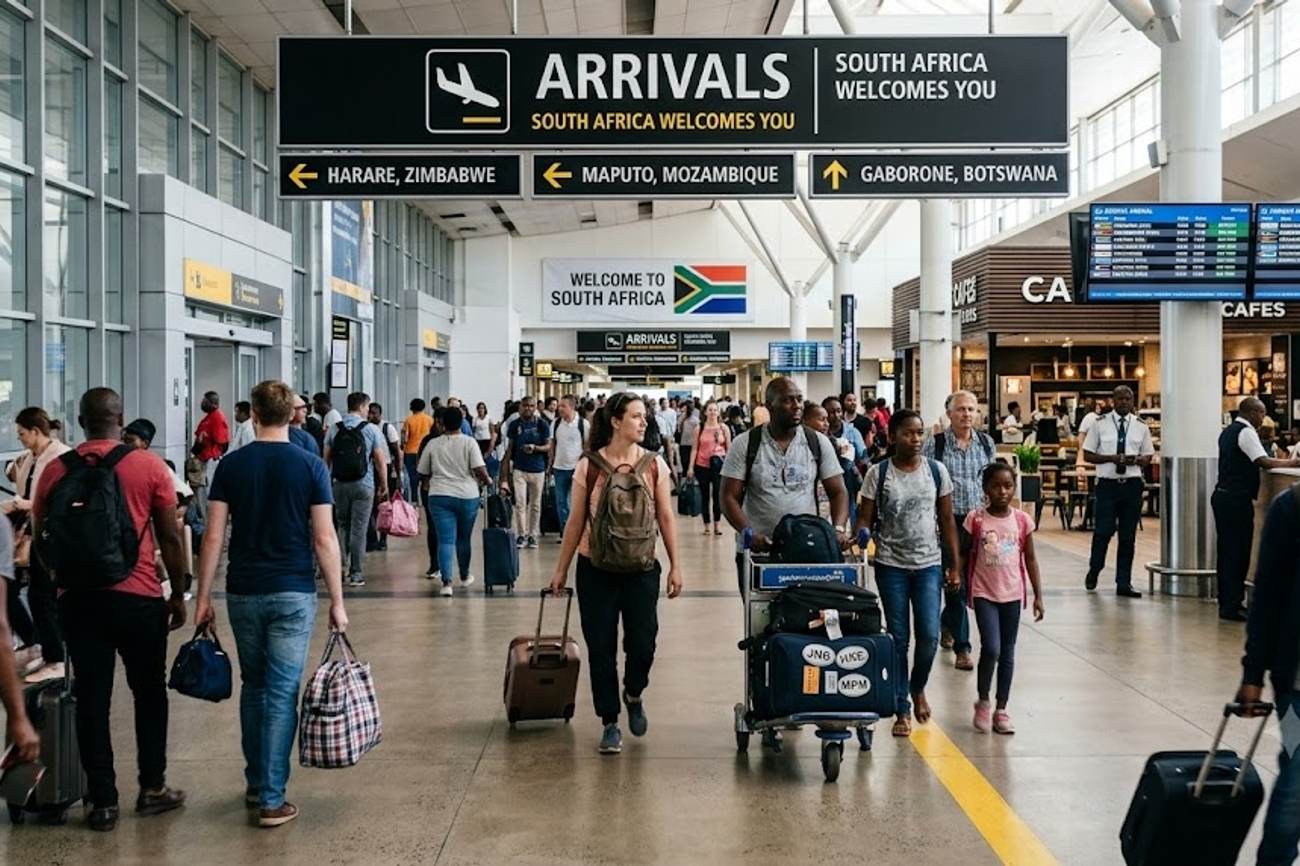
Image generated by AI
title: South Africa International Tourism Surge Q3 2026 date: 2026-10-15 category: Aviation and Travel tags: [StatsSA, ORT, CPT, AfCFTA, SouthAfricaTourism2026, Intra-AfricanTravel]
[Johannesburg, October 2026] — South Africa has recorded nearly 6.5 million international arrivals through the third quarter of 2026, marking a 12.4% increase over the same period in 2025. This surge signals a definitive structural shift in the nation's tourism economy, moving beyond simple pandemic recovery into a phase of aggressive expansion.
The growth is driven primarily by a massive spike in intra-continental movement, with travel between African nations now expanding at more than double the rate of traditional long-haul markets. Data provided by Statistics South Africa (Stats SA) and the national Ministry of Tourism indicates that the travel sector has reclaimed its position as a primary pillar of the national economy, supported by enhanced regional air connectivity and stabilized employment across the hospitality sector.
The Catalyst for Record Growth
The current trajectory is the result of a three-year strategic realignment that began with a focus on domestic tourism and transitioned to foreign arrivals by 2024. The Department of Tourism South Africa has coordinated with regional diplomatic bodies to lower administrative barriers and expand commercial ties across the continent.
This institutional effort has eliminated the traditional "growth plateau" often seen after a recovery phase. Instead, South Africa has leveraged the implementation of the African Continental Free Trade Area (AfCFTA) to convert trade integration into passenger volume. By diversifying origin markets and scaling regional corridors, the government has reduced the economy's reliance on volatile overseas holiday cycles.
Market Impact and Passenger Volumetrics
The 2026 data reveals a consistent upward trend across all quarters, with a notable stabilization of off-peak travel. Historically, the Southern Hemisphere winter (May through July) created significant troughs in arrival numbers. However, the 2026 figures show that regional African travelers—whose patterns differ from European and North American tourists—are filling these gaps, ensuring year-round hotel occupancy.
International Arrival Performance (2025 vs. 2026)
| Timeframe | 2025 Baseline | 2026 Recorded | YoY % Change |
|---|---|---|---|
| Q1 (Jan - Mar) | ~2.58 Million | 2.91 Million | +12.5% |
| Q2 Cumulative (to June) | ~4.97 Million | 5.58 Million | +12.3% |
| Q3 Trajectory (to Sept) | ~5.82 Million | >6.50 Million | +12.4% |
Monthly Breakdown for 2026:
- January: 1,133,533 arrivals (+12.4% YoY)
- February: 864,534 arrivals (+13.1% YoY)
- March: 911,962 arrivals (+12.5% YoY)
- June: 823,365 arrivals (+9.8% YoY)
The disparity between regional and global growth is stark. Intra-African arrivals grew by 14.3% in the first half of 2026, while overseas long-haul markets grew by only 5.6%. This means continental travel is expanding at 2.5 times the pace of international long-haul travel. Currently, regional African travel accounts for more than 75% of all international inbound arrivals.
What This Means for Travelers
For passengers booking travel to or through South Africa, this surge in volume translates to several immediate operational changes:
1. Increased Aviation Capacity To handle the record-breaking 10.5 million arrivals seen in 2025 and the current 2026 growth, hubs like O.R. Tambo International Airport (JNB) and Cape Town International Airport (CPT) have seen rehabilitated aviation capacity. Travelers can expect more frequent regional flight options and improved connectivity between African capitals.
2. Shift in Pricing and Availability The "smoothing" of the seasonality curve means that the traditional "off-peak" discounts in May, June, and July are diminishing. Because regional demand remains high during these months, hotel rates and flight prices are becoming more stable year-round rather than fluctuating wildly by season.
3. Streamlined Entry Processes The focus on diversifying origin markets and lowering administrative barriers means that travelers from within the African continent are experiencing faster entry and reduced bureaucracy, a direct result of the AfCFTA-driven policy shifts.
The Path Toward 2027
The South African travel ecosystem is no longer in a state of recovery; it is in a state of scaling. The jump from 8.92 million inbound travelers in 2024 to 10.5 million in 2025 provided the baseline for the current Q3 2026 performance.
Moving forward, the focus is shifting toward infrastructure sustainability. With intra-African travel now the primary engine of growth, the government and private partners are prioritizing the expansion of regional low-cost carrier (LCC) networks. This strategy aims to maintain the 14.3% growth velocity by making cross-border commercial travel more affordable for the growing African middle class.
The stability of employment within municipal economies is also a key metric for the coming year. By mitigating the instability of seasonal hospitality labor, South Africa is creating a more professionalized, permanent workforce capable of handling the projected increase in arrivals for the 2027 calendar year.
FAQ: South Africa Travel 2026
Is it more expensive to visit South Africa during the winter months now? Yes, potentially. Because regional African travel has stabilized demand during the May-July window, the deep discounts previously found during the Southern Hemisphere winter are less common as hotel occupancy remains high year-round.
Which airports are seeing the most growth? O.R. Tambo International Airport in Johannesburg and Cape Town International Airport remain the primary hubs. Both have undergone capacity rehabilitations to handle the record-breaking influx of over 10.5 million annual visitors.
Why is travel from other African countries increasing so fast? Growth is driven by the African Continental Free Trade Area (AfCFTA), which has increased business travel and commercial delegations, combined with the expansion of regional low-cost aviation corridors.
Are visa requirements changing for international visitors? The South African government is actively lowering administrative entry barriers to diversify origin markets, particularly for travelers coming from within the African continent to support regional integration.
South Africa's pivot to a continental-first tourism strategy has effectively decoupled its economic success from the volatility of Western travel markets.
Related Travel Guides
Disclaimer
This article is for informational and educational purposes only. It does not constitute legal, financial, or professional advice. While we strive to provide accurate and up-to-date information, travel policies, regulations, and conditions change rapidly. Always verify information with official sources before making travel decisions. Nomad Lawyer makes no representations about the accuracy, reliability, completeness, or suitability of the information provided. Readers should consult qualified professionals for advice specific to their circumstances. The views expressed in this article are those of the author and do not necessarily reflect the views of Nomad Lawyer.
Kunal K Choudhary
Co-Founder & Contributor
A passionate traveller and tech enthusiast. Kunal contributes to the vision and growth of Nomad Lawyer, bringing fresh perspectives and driving the community forward.
Learn more about our team →