
Tourism Authority of Thailand and SRT Launch 30-Kilometer Eco-Rail Circuit Connecting Ancient Hariphunchai Monuments in Lamphun
TAT and SRT promote 30 km Chiang Mai–Lamphun rail circuit, cutting CO2 emissions by 68% and unlocking 7th-century Mon-Dvaravati Hariphunchai heritage.

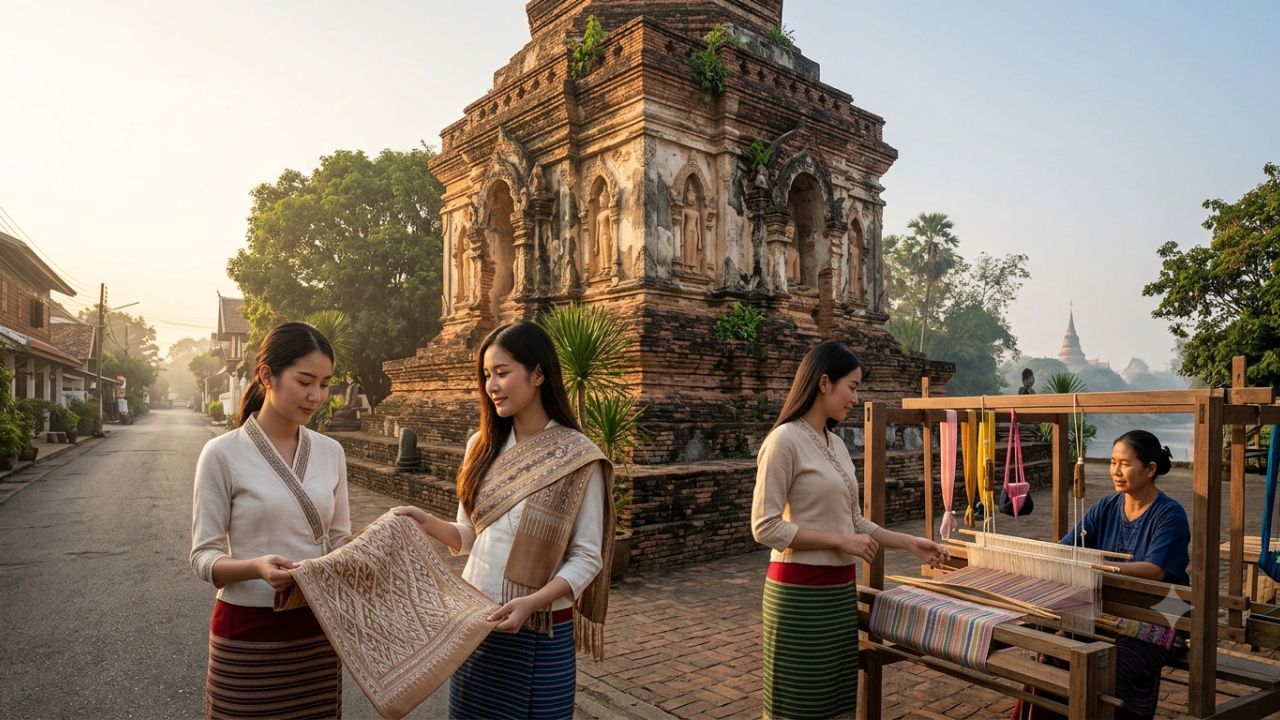
Image generated by AI
Official destination planning metrics released by the Tourism Authority of Thailand (TAT) recommend resequencing Northern Thailand travel routes by establishing 7th-century Hariphunchai (modern Lamphun) as the primary arrival hub before entering Chiang Mai. Leveraging a 30-kilometer passenger rail link operated by the State Railway of Thailand (SRT) that cuts transit carbon emissions by 68%, regional authorities are directing international visitors away from congested urban grids to preserve ancient Mon-Dvaravati architectural monuments.
Located thirty kilometers south of central Chiang Mai, Lamphun provides historical context that predates the 13th-century Lanna Kingdom by five centuries, offering a low-density alternative for heritage travelers.
NORTHERN THAILAND RE-SEQUENCED HERITAGE & RAIL CIRCUIT
| [ Chiang Mai International Airport (CNX) / Chiang Mai Railway Station ] |
|---|
| +---> SRT Northern Line Rail Transfer: 30 km Corridor to Lamphun (25 Mins) |
| +---> 1st Stage: 7th-Century Hariphunchai (Wat Chammathewi & Mae Kuang) |
| +---> 2nd Stage: 13th-Century Lanna Kingdom Heritage in Chiang Mai |
| v |
Overcoming Urban Congestion and Carrying-Capacity Bottlenecks in Chiang Mai
High-density visitor concentration inside central Chiang Mai has pushed the historical urban core toward its physical carrying capacity limit. Tourism impact evaluations reveal that roughly 82% of international travelers remain strictly confined within the narrow four-square-kilometer Old City grid.
During peak holiday cycles spanning November through February, municipal traffic delay indices rise by 340%, reducing average transit speeds along the historical moat corridor to below eight kilometers per hour. Fleet vehicles spend up to two additional hours idling in gridlock per tour itinerary, inflating operational fuel expenditures by 25% to 30%. Concurrently, average daily spending among high-net-worth travelers declines 18% as severe overcrowding forces visitors toward commoditized mass-market alternatives.
CHIANG MAI CONGESTION vs LAMPHUN ECO-DISPERSAL METRICS
| Column 1 |
|---|
| Chiang Mai Old City Grid Confinement: 82% of International Travelers |
| Peak Season Moat Traffic Delay Index Surge: +340% (Speeds Drop Below 8 km/h) |
| Fleet Idling Fuel Expenditure Inflation: +25% to +30% |
| High-Net-Worth Daily Spend Drop in Overcrowded Zones: -18% |
| Municipal Tourism Tax Surge in Lamphun (15% Visitor Dispersal): +40% Collection |
Pre-Lanna Foundations: 7th-Century Hariphunchai and 1292 CE Annexation
Establishing Lamphun as the starting point for Northern Thailand travel provides essential historical chronology. Established during the 7th century or 8th century under Queen Chamadevi, ancient Hariphunchai flourished as a sophisticated Mon-Dvaravati Buddhist kingdom five full centuries before King Mangrai founded Chiang Mai.
When King Mangrai annexed Hariphunchai in 1292 CE, he deliberately integrated its monastic rules, agricultural management systems, and architectural forms into the newly established Lanna Kingdom.
Key architectural monuments preserved in Lamphun include:
- Wat Chammathewi (Wat Ku Kut): Features the central Mahapol Chedi, a rare surviving example of 5-tiered Mon-Dvaravati stepped pyramid brick architecture housing 60 standing Buddha relief sculptures set in clay niches displaying the Abhaya mudra stance.
- Ratana Chedi: An octagonal brick chedi illustrating late Dvaravati sculptural influences.
- Wat Phra That Hariphunchai: A major monastic complex featuring a 46-meter golden chedi representing over a thousand years of continuous Buddhist devotion.
Living Heritage: Tai Yong Pha Yok Dok Handloom Weaving along the Mae Kuang River
Routing itineraries through rural settlements along the Mae Kuang River connects travelers directly with living artisan traditions. The local Tai Yong community is internationally renowned for producing pha yok dok—an intricate supplementary-weft silk textile that requires up to three months of manual loom labor to craft a single master cloth.
Integrating community-managed weaving workshops into early travel stages provides measurable economic benefits:
- Artisan Revenue Retention: Local weaving cooperatives retain approximately 78% of the final retail purchase price when textiles are sold directly to visitors at village workshops, compared to less than 15% when sold through urban souvenir shops in Chiang Mai.
- Artisan Retention Rate: Direct sales yield a 92% artisan retention rate among younger community members, preserving ancient handloom methods while generating a 3.5x higher financial margin than mass-produced goods.
- Regional GDP Contribution: In a province where traditional agriculture historically generates over 60% of regional gross domestic product, high-yield craft tourism provides vital economic diversification.
Comparative Fiscal, Environmental, and Historical Metrics Breakdown
The tables below contrast Chiang Mai urban traffic bottlenecks with Lamphun's eco-rail metrics and historical assets:
Table 1: Northern Thailand Transit & Congestion Parameters
| Operational Metric | Central Chiang Mai Grid | Chiang Mai–Lamphun Rail Corridor | Strategic Advantage |
|---|---|---|---|
| Visitor Spatial Confinement | 82% in 4 sq km Old City | Dispersed across 30 km corridor | Relieves central carrying capacity |
| Peak Season Delay Index | +340% Traffic Surge | Zero rail traffic congestion | Guaranteed transit timing |
| Moat Transit Speed | < 8 km/h in Peak Season | 25-30 Minute Rail Transit | Saves 2 hours of idling per tour |
| Fleet Fuel Overhead | +25% to +30% Inflation | -68% Carbon Emissions/Pax | Fulfills ESG corporate standards |
| Online Tour Price Comparison | 45% Price-Comparison Rate | Proprietary Non-Indexed Package | Maintains >35% Gross Operating Margins |
Table 2: Historical Chronology: Hariphunchai vs Lanna Kingdom
| Historical Era | Century / Timeline | Key Historical Ruler | Defining Architectural Asset |
|---|---|---|---|
| Hariphunchai Kingdom | 7th – 8th Century CE | Queen Chamadevi | Mahapol Chedi (Wat Chammathewi / Wat Ku Kut) |
| Mon-Dvaravati Peak | 9th – 12th Century CE | Mon Dynasty Lineage | 60 Buddha Relief Sculptures (Abhaya Mudra) |
| Lanna Annexation | 1292 CE | King Mangrai | Integration of Mon Monastic & Legal Codes |
| Lanna Golden Era | 13th – 16th Century CE | Lanna Dynasty | Wat Phra That Hariphunchai Golden Chedi |
Table 3: Artisan & Heritage Economics in Lamphun Province
| Economic / Preservation Indicator | Measured Value | Local Economic Impact | Policy Mechanism |
|---|---|---|---|
| Direct Workshop Sales Retention | 78% of Retail Price | Replaces <15% urban shop margins | Community loom visits on Mae Kuang River |
| Artisan Youth Retention Rate | 92% Retention Rate | Preserves 3-month pha yok dok weaving | High-margin direct craft sales (3.5x) |
| Lamphun Municipal Tax Surge | +40% Tax Collection | Reinvested in brickwork restoration | 15% visitor dispersal from Chiang Mai |
| Community Fund Allocation | 15% of Tour Revenue | Funds rural schools & water filtration | Community-based tour operator agreements |
| Agriculture Share of GDP | >60% Regional GDP | Diversifies rural farm economy | Integrated heritage-craft circuits |
Low-Emission Rail Implementation along the Chiang Mai–Lamphun Corridor
Transitioning initial traveler transfers from highway motor vehicles to regional rail links delivers measurable environmental advantages. The 30-kilometer rail line operated by the State Railway of Thailand (SRT) connects Chiang Mai Railway Station directly with historic Lamphun Station, bypassing heavy traffic jams along Highway 106 while reducing carbon emissions per passenger by 68%.
Integrating low-emission rail transit into early itinerary stages fulfills corporate Environmental, Social, and Governance (ESG) criteria, appealing directly to the 74% of premium travelers seeking eco-conscious journeys while eliminating fleet maintenance overheads linked to urban traffic gridlock.
SRT LOW-EMISSION RAIL TRANSIT ARCHITECTURE
| Column 1 |
|---|
| [ Chiang Mai Railway Station (CNX Hub) ] |
| +---> SRT Northern Line Passenger Train (30 km Corridor to Lamphun) |
| +---> Bypasses 340% Peak Season Highway Traffic & Moat Congestion |
| v |
| [ Lamphun Railway Station: Direct Access to Wat Ku Kut & Mae Kuang Weavers ] |
Traveler Logistics Guide: Chiang Mai to Lamphun Rail & Heritage Transit
Independent travelers and tour operators designing Northern Thailand circuits can optimize health, sustainability, and cultural comprehension using the following logistics guidelines:
LAMPHUN HERITAGE & RAIL TRANSIT LOGISTICS GUIDE
| [ Arrival Gateway: Chiang Mai International Airport (CNX) ] |
|---|
| +---> Step 1: 10-Minute Transfer to Chiang Mai Railway Station |
| +---> Step 2: Board SRT Northern Line Train to Lamphun Station (30 km) |
| +---> Step 3: Staging in Lamphun (1-2 Days): Wat Ku Kut & Mae Kuang Weavers |
| +---> Step 4: Proceed North to 13th-Century Lanna Sites in Chiang Mai |
Rail Ticket Booking & Station Transit
- SRT Rail Transfer: Board local passenger or Express trains on the SRT Northern Line at Chiang Mai Railway Station. The 30-kilometer journey to Lamphun Station takes 25 to 30 minutes. Tickets can be purchased at station windows or via the SRT D-Ticket online portal.
- Airport Connection: Chiang Mai International Airport (CNX) is located 10 minutes by taxi from Chiang Mai Railway Station, enabling fast transfers from domestic or international flights onto regional trains.
Recommended Chronological Itinerary Staging
To maximize historical understanding, structure itineraries chronologically:
- Stage 1 (Lamphun Staging - Days 1–2): Land at CNX Airport, transfer to the train, and spend 1 to 2 days in quiet Lamphun. Explore 7th-century Mon-Dvaravati architecture at Wat Chammathewi (Wat Ku Kut), visit the golden chedi at Wat Phra That Hariphunchai, and tour Tai Yong handloom weaving workshops along the Mae Kuang River.
- Stage 2 (Chiang Mai Lanna Exploration - Days 3–5): Travel north into Chiang Mai to explore 13th-century Lanna temples (Wat Chedi Luang, Wat Phra Singh) with an understanding of the Mon-Dvaravati architectural codes absorbed by King Mangrai in 1292 CE.
Heritage Site Etiquette & Group Size Controls
To preserve fragile Mon-Dvaravati lime-and-sand mortar joints at Wat Chammathewi, group sizes should be capped at 15 visitors per guide. Respect sacred monastic zones, remove footwear before entering chedi platforms, and purchase textiles directly from village workshops to support local community development funds.
Infrastructure Impact and Regional Revenue Redistribution in Northern Thailand
Redirecting just 15% of Chiang Mai's overnight international arrivals south into Lamphun boosts local municipal tourism tax collection by upwards of 40%. These funds allow regional governance boards to finance ancient brickwork restoration, protect sacred sites, and improve civic infrastructure without relying solely on fluctuating agricultural commodity prices.
By combining low-emission rail transit (-68% CO2) with 78% direct artisan revenue retention, Northern Thailand establishes a sustainable travel model that protects fragile cultural heritage while expanding rural economic opportunities.
Official destination updates and cultural guidelines are published by the Tourism Authority of Thailand.
FAQ: Thailand Lamphun Hariphunchai Rail Circuit 2026
How far is Lamphun from Chiang Mai and how can travelers get there by train?
Lamphun is located 30 kilometers south of Chiang Mai. Travelers can take a 25-to-30-minute train ride on the State Railway of Thailand (SRT) Northern Line from Chiang Mai Railway Station to Lamphun Station.
Why is Lamphun historically important to Northern Thailand?
Founded in the 7th century under Queen Chamadevi, ancient Hariphunchai (Lamphun) predates the Lanna Kingdom by 500 years. King Mangrai annexed Hariphunchai in 1292 CE, absorbing its Mon-Dvaravati laws, religion, and architecture into Lanna culture.
What is unique about Wat Chammathewi (Wat Ku Kut)?
Wat Chammathewi features the Mahapol Chedi, a rare 5-tiered Mon-Dvaravati stepped pyramid brick structure housing 60 standing Buddha relief sculptures set in clay niches displaying the Abhaya mudra stance.
How does visiting Tai Yong weaving workshops benefit local communities in Lamphun?
Buying pha yok dok silk textiles directly at community loom workshops along the Mae Kuang River returns 78% of the retail price to local artisans (vs <15% in city shops), supporting a 92% youth artisan retention rate.
Related Travel Guides
Disclaimer
This article is for informational and educational purposes only. It does not constitute legal, financial, or professional advice. While we strive to provide accurate and up-to-date information, travel policies, regulations, and conditions change rapidly. Always verify information with official sources before making travel decisions. Nomad Lawyer makes no representations about the accuracy, reliability, completeness, or suitability of the information provided. Readers should consult qualified professionals for advice specific to their circumstances. The views expressed in this article are those of the author and do not necessarily reflect the views of Nomad Lawyer.
Kunal K Choudhary
Co-Founder & Contributor
A passionate traveller and tech enthusiast. Kunal contributes to the vision and growth of Nomad Lawyer, bringing fresh perspectives and driving the community forward.
Learn more about our team →