
National Geographic and G Adventures Unveil 30 Immersive Journeys for 2027: Peru, Thailand, Galápagos, and Europe Lead Experiential Travel Expansion

Expanding their decade-long joint venture into high-impact experiential tourism, National Geographic Expeditions and G Adventures have unveiled a collection of 30 newly created or reimagined itineraries across Peru, Thailand, the Galápagos Islands, France, Central Europe, and Southeast Asia. Scheduled to launch for departures from 2027 through 2028—with select family departures debuting in late 2026—the rollout introduces 24 new adult small-group National Geographic Journeys capped at 16 travelers, alongside six upgraded National Geographic Family Journeys featuring dual expedition leadership for multi-generational explorers.
The comprehensive expansion reflects an accelerating transformation in global leisure travel, where conscious travelers are turning away from passive sightseeing in favor of community-led discovery and environmental learning. Built upon a 10-year partnership renewal confirmed in 2025, the program integrates National Geographic’s historical legacy of scientific inquiry and conservation journalism with G Adventures’ community-first tourism model. By placing local scholars, indigenous elders, wildlife conservationists, and family-owned artisan workshops at the center of each itinerary, the initiative establishes a blueprint for sustainable exploration in vulnerable biospheres and culturally sensitive heritage zones.
Operating alongside the premium National Geographic Signature collection, this expanded program addresses structural pressures confronting global tourism. Destinations such as the Sacred Valley in the Peruvian Andes, the pristine marine biospheres of the Galápagos archipelago, and historic European river valleys face mounting calls for managed, low-density tourism. By restricting standard departures to 16 guests and family groups to 22 travelers, the collection creates personalized, high-value access while preventing the environmental strain and cultural dilution often associated with conventional mass tour operations.
The Local Trend Revealed: Redefining Exploration Through Hands-On Engagement
Modern international travelers increasingly demand itineraries that offer cultural connection, conservation education, and direct economic equity for host communities. Rather than relying on superficial checklist itineraries, the 30 new and reimagined journeys connect travelers with Buddhist monks, independent biodynamic winemakers, certified wildlife naturalists, architectural preservationists, and rural artisans.
| Collection Tier | Departures & Group Size | Core Operational Focus | Featured Signature Itineraries |
|---|---|---|---|
| National Geographic Journeys | 24 New / Reimagined Routes Max 16 Travelers |
Expert-led cultural immersion, scientific storytelling, and biodiversity | • Galápagos Islands (8 Days) • Northern Thailand (8 Days) • Loire & Bordeaux (8 Days) • Christmas Markets (8 Days) |
| National Geographic Family Journeys | 6 Upgraded Itineraries Max 22 Travelers (Ages 7+) |
Multi-generational learning, Dual Expedition Leaders, hands-on workshops | • Peru: Amazon & Machu Picchu (9 Days) • Southeast Asia: Halong & Angkor (12 Days) |
The small-group format unlocks access to intimate historic sites and rural communities inaccessible to standard coach tours. In fragile ecological reserves, smaller contingents leave lighter physical footprints and adhere strictly to regional conservation guidelines. In historic villages and market towns, small groups can dine at neighborhood family establishments and engage directly with local craft masters without overwhelming delicate community infrastructures.
Highlighted Journeys: Galápagos, Northern Thailand, France, and Central Europe
Several premier destinations anchor the newly announced adult National Geographic Journeys collection, each demonstrating how curated travel can spotlight fragile heritage and biodiversity:
- Wildlife of the Galápagos Islands (8 Days): Navigating one of the planet's most strictly safeguarded marine biospheres, this itinerary focuses on evolutionary biology, ecological fragility, and active conservation. Travelers explore volcanic islets accompanied by certified Galápagos National Park naturalists, observing marine iguanas, giant tortoises, and blue-footed boobies while learning about invasive species control and marine reserve monitoring.
- Best of Northern Thailand (8 Days): Moving beyond conventional Bangkok sightseeing, this expedition anchors travelers in the spiritual and culinary heritage of Chiang Mai and the northern mountains. Highlights include joining Buddhist monks for introspective evening chanting at the mountain sanctuary of Wat Phra That Doi Suthep, as well as participating in an authentic northern Thai Khantoke dinner hosted by a local family in their home compound.
- Highlights of the Loire Valley & Bordeaux (8 Days): Focusing on French architectural preservation and heritage viticulture, this journey unlocks exclusive after-hours access to the Renaissance landmark Château de Chenonceau. In the UNESCO-listed village of Saint-Émilion, travelers descend into centuries-old underground limestone catacombs alongside regional wine historians to understand terroir geology and sustainable viticultural techniques.
- Iconic Christmas Markets (8 Days): Immersing travelers in the winter traditions of Central Europe, this route weaves through Prague, Vienna, and historic Bohemian towns. Beyond holiday craft markets, guests participate in an intimate culinary workshop in Prague, where a Czech home chef teaches ancestral holiday baking recipes passed down through generations.
Upgraded Family Journeys: Dual Expedition Leadership and Generational Discovery
A major operational innovation within the announcement is the structural overhaul of the National Geographic Family Journeys collection. Specifically engineered for multi-generational families traveling with children aged seven and older, the six redesigned itineraries address the distinct needs of younger explorers while providing intellectual depth for adults.
To resolve the traditional compromise of family travel—where children grow restless during adult lectures or adults feel confined to amusement parks—the collection introduces the Dual Expedition Leaders model.
Under this operational framework, two full-time guides manage each departure:
- Expedition Leader One: Coordinates transport logistics, destination context, and adult traveler guidance.
- Expedition Leader Two: Directs child-focused interactive learning, environmental games, and educational workshops tailored to curious young minds.
This split leadership structure enables families to explore core archaeological and natural sites together while allowing young explorers to engage in hands-on science activities. The experience is enhanced by "Junior Explorers Night," an evening where kids participate in supervised team challenges and social dinners with peers, allowing parents to enjoy an uninterrupted evening exploring local culinary establishments.
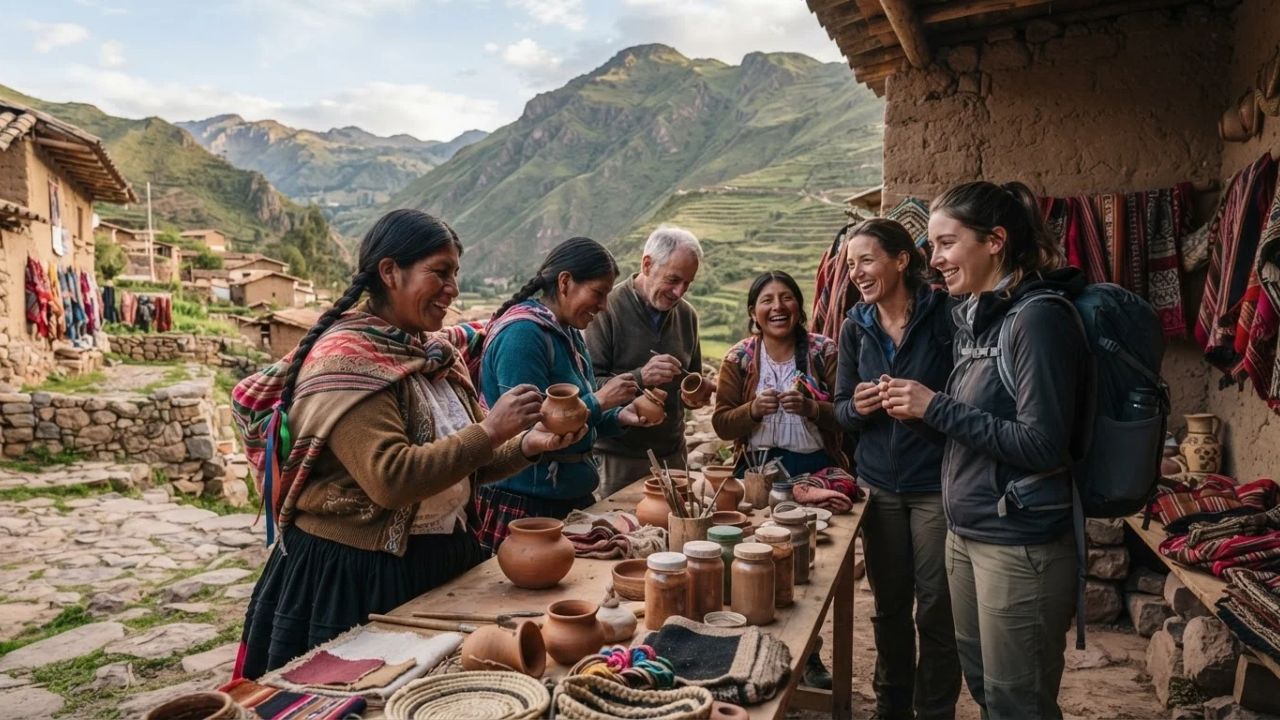
Complementing this structure are "Made Together Moments"—collaborative family workshops where parents and children sit side by side with local community craftspeople. Whether shaping clay alongside indigenous potters in the Peruvian Andes or weaving traditional bamboo lanterns in Southeast Asia, these shared sessions bridge generational divides through tactile cultural learning.
Two flagship family routes illustrate this educational architecture:
- Peru Family Journey: The Amazon & Machu Picchu (9 Days): Combining the biodiversity of the Peruvian rainforest with Incan archaeological heritage, this journey features nocturnal rainforest walks guided by Amazon naturalists to spot frogs, night monkeys, and bioluminescent insects. In the Sacred Valley, families visit the rural community of Cuyo Chico, participating in an interactive ceramic workshop that directly supports indigenous artisan families.
- Southeast Asia Family Journey: Halong Bay and Angkor Wat (12 Days): Spanning Vietnam and Cambodia, this 12-day route brings families into the living history of the Khmer Empire and the karst waters of the Gulf of Tonkin. Children and adults discover traditional water puppet craftsmanship in Hanoi, sail aboard traditional wooden junks, and participate in community bicycle tours through rural villages surrounding Siem Reap.
Cultural & Environmental Value: Transforming Community Economics Through Tourism
The philosophical foundation uniting National Geographic and G Adventures is the recognition that travel must generate tangible, lasting benefits for host communities. Conventional tourism models often siphon traveler expenditure out of local economies into international hotel chains and global booking aggregators. In contrast, these community-first journeys ensure that expenditures remain directly within local villages, family cooperatives, and conservation districts.
In Peru's Sacred Valley, collaboration with indigenous communities like Cuyo Chico allows traditional Quechua craft techniques to remain commercially viable, empowering village elders to train the next generation of artisans. Rather than relying on seasonal agricultural yields alone, families gain predictable income streams from hosting educational workshops and sharing culinary traditions.
In northern Thailand, community home-hosted Khantoke dinners direct financial benefits to suburban neighborhoods in Chiang Mai, preserving traditional Lanna music, recipes, and woodcraft traditions. By compensating cultural practitioners fairly, tourism acts as a patron of living regional heritage rather than an invasive disruption.
For the visitor, the real impact is the profound transition from spectator to respectful guest. Meeting a Buddhist scholar to understand monastic discipline or walking through old-growth forests with an indigenous tracker yields insights impossible to extract from guidebooks. Travelers experience how traditional communities coexist with their surrounding environments, gaining a deeper appreciation for ancient land-stewardship practices that modern society often overlooks.
Visitor Insider Tips: Navigating Cultural Etiquette and Sensitive Ecosystems
To maximize the benefits of immersive small-group travel and ensure respectful conduct across diverse cultural and ecological settings, travelers should observe these field-tested insider tips:
- Northern Thailand Temple & Monastic Etiquette: When visiting revered northern sanctuaries like Wat Phra That Doi Suthep, dress conservatively with shoulders and knees fully covered. Remove shoes before stepping onto sacred temple ground. When observing evening monk chants, sit lower than the ordained monks, keep feet tucked beneath you pointing away from Buddha images, and maintain complete silence without using disruptive camera flashes.
- Galápagos National Park Regulations: Strictly obey the mandatory two-meter wildlife distance rule established by the Galápagos National Park Directorate (GNPD). Never touch, feed, or corner wildlife, and never use flash photography when documenting animals. Stay strictly on marked, designated volcanic pathways to protect delicate nesting grounds of marine iguanas and blue-footed boobies.
- Sacred Valley & Cusco Altitude Acclimatization: Cusco sits at an elevation of approximately 3,400 meters (11,150 feet), while Urubamba in the Sacred Valley lies significantly lower at 2,870 meters (9,415 feet). When arriving on flights from Lima, travel directly down into the Sacred Valley for your first three nights to allow gradual acclimatization before exploring higher Incan citadels. Sip traditional muña (Andean mint) or coca leaf infusion, maintain light hydration, and avoid heavy dining during your initial 48 hours.
- Community Artisan Etiquette in Cuyo Chico: When participating in traditional ceramic or weaving sessions with Andean communities, ask for permission before taking individual portraits of artisans or their children. Purchase finished pottery, natural alpaca textiles, and jewelry directly from the makers rather than bargaining aggressively, recognizing that your purchase directly supports community schools and heritage preservation.
- French Historic Catacomb & Wine Etiquette: When visiting subterranean limestone caves and catacombs in Saint-Émilion or cellars in the Loire Valley, temperatures remain a steady 12°C to 14°C (53°F to 57°F) with high humidity year-round. Pack a warm wool scarf and light thermal jacket even when visiting during mid-summer. When wine historians present vintage tastings, hold wine glasses by the stem to avoid warming the liquid, and engage thoughtfully regarding regional terroir rather than comparing bottles purely on commercial price points.
- Support Zero-Single-Use-Plastic Policies: Pack reusable, insulated stainless steel water bottles and wide-mouth collapsible containers. In remote locations across the Galápagos and the Amazon basin, municipal recycling facilities are minimal or non-existent; carry all personal non-biodegradable waste (such as battery cells and cosmetic packaging) back to major gateway cities for proper disposal.
Tourism Outlook: The Evolution of Responsible Multi-Generational Travel
The introduction of 30 immersive itineraries for 2027 and 2028 signals a structural maturation of the international adventure and experiential travel sector. As global travelers emerge from years of price volatility and standardized mass tourism, the demand for authenticity, educational enrichment, and environmental integrity continues to outpace conventional sightseeing vacations.
The partnership between National Geographic and G Adventures demonstrates that commercial scale and ethical tourism can reinforce one another. By committing to small-group caps, supporting indigenous craft cooperatives, and deploying innovative family travel mechanisms like Dual Expedition Leaders, the joint venture establishes a benchmark for responsible exploration.
For fragile host destinations—from the volcanic shores of the Galápagos to the living villages of the Peruvian Andes and the heritage streets of Central Europe—this evolution provides a sustainable economic pathway. By valuing cultural preservation and environmental health above sheer visitor volume, the travel industry creates a resilient framework where future generations can discover the world without degrading the very wonders they journey to behold.
Related Travel Guides
- Thailand Overhauls Tourist Visa Policy: 60-Day Entry Ends for 21 Countries as Digital e-Visa Rules Begin September 15, 2026
- Chiang Mai International Airport Welcomes 6.53 Million Passengers as Winter Flight Schedules Expand 2026
- Australia Tourism Encounters Headwinds as Asian Markets Shift: High Airfares and Living Costs Trigger 4.3% Visitor Drop in 2026
Disclaimer
This article is for informational and educational purposes only. It does not constitute legal, financial, or professional advice. While we strive to provide accurate and up-to-date information, travel policies, regulations, and conditions change rapidly. Always verify information with official sources before making travel decisions. Nomad Lawyer makes no representations about the accuracy, reliability, completeness, or suitability of the information provided. Readers should consult qualified professionals for advice specific to their circumstances. The views expressed in this article are those of the author and do not necessarily reflect the views of Nomad Lawyer.
Raushan Kumar
Founder & Lead Developer
Full-stack developer with 11+ years of experience and a passionate traveller. Raushan built Nomad Lawyer from the ground up with a vision to create the best travel and law experience on the web.
Learn more about our team →