
Thailand and Australia Lead Divergent Travel Trends for Gen Z and Millennials in 2026
New data from 4,700 bookings reveals a generational split in global tourism, with Gen Z favoring affordable Southeast Asian hubs like Thailand and Laos, while Millennials pivot toward premium destinations including Australia and Japan.

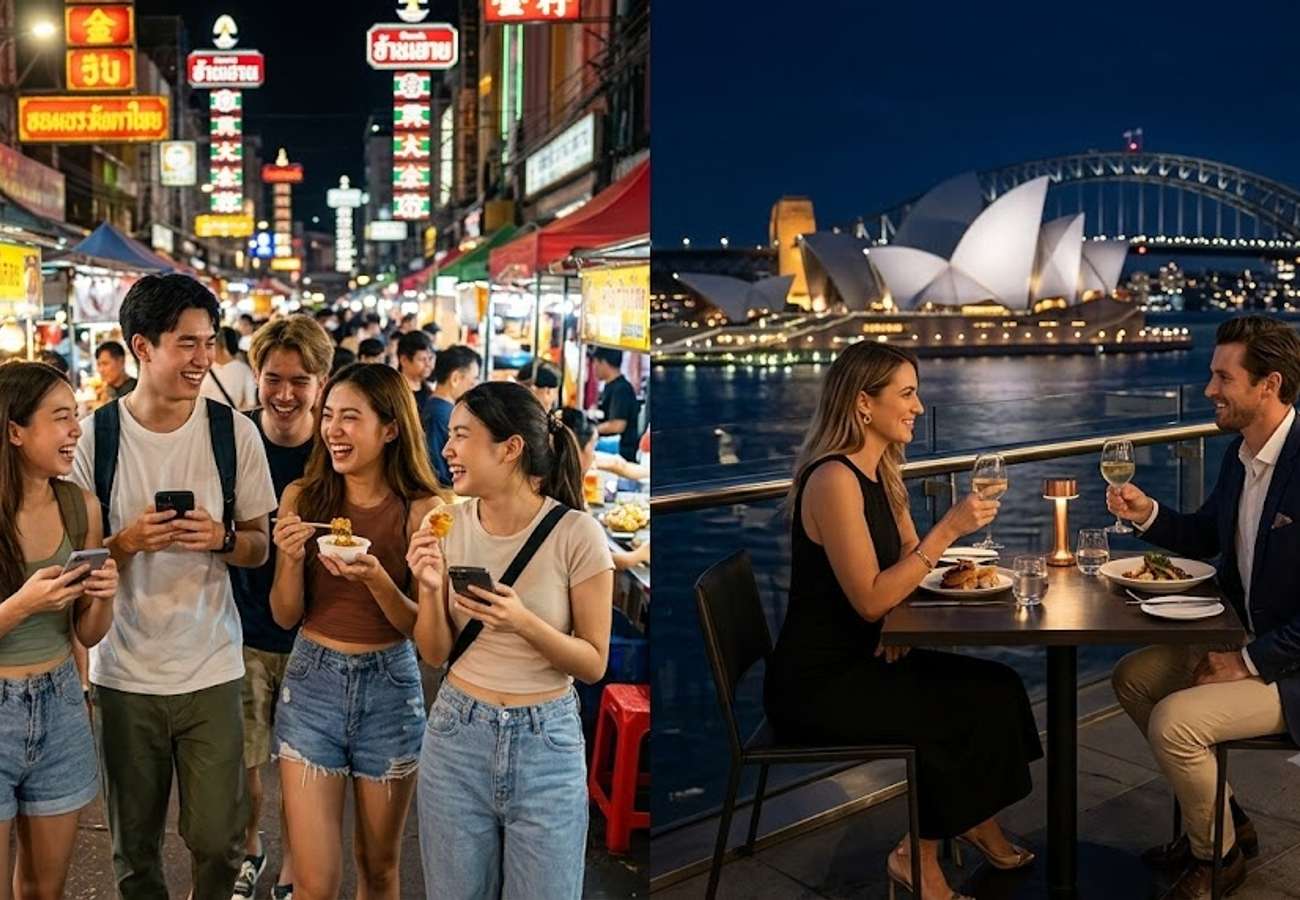
Image generated by AI
Analysis of 4,700 travel bookings reveals a sharp generational divide: Gen Z is dominating affordable hubs like Thailand (29.2% of bookings), while Millennials lead the charge toward premium markets like Australia (17.8% of bookings).
The global tourism map is no longer monolithic. A significant shift in traveler psychology has emerged, fragmenting the market into two distinct identities based on age, budget, and digital influence. While both cohorts crave international exploration, their definitions of a "perfect trip" have diverged, creating a new era of targeted destination demand.
The Generational Split in Destination Choice
Recent data indicates that Gen Z and Millennials are operating on entirely different travel trajectories. For Gen Z, the priority is a blend of high visual impact and low financial barrier. Thailand has emerged as the undisputed leader for this group, appearing in 29.2% of their bookings. This preference is driven by a desire for "shareable" experiences—vibrant street food, neon nightlife, and affordable adventure—that perform well on short-form video platforms.
Millennials, conversely, are shifting toward "premium" travel. Australia has secured the top spot for this demographic, appearing in 17.8% of bookings, followed closely by Thailand at 17.4%. The Millennial preference leans toward destinations that offer a balance of luxury, established infrastructure, and deep cultural immersion.
Comparative Destination Rankings
| Gen Z Top 10 Destinations | Millennial Top 10 Destinations |
|---|---|
| 1. Thailand | 1. Australia |
| 2. Australia | 2. Thailand |
| 3. Indonesia | 3. Philippines |
| 4. Vietnam | 4. Japan |
| 5. Cambodia | 5. Indonesia |
| 6. Laos | 6. Peru |
| 7. Peru | 7. Morocco |
| 8. Philippines | 8. Greece |
| 9. New Zealand | 9. Iceland |
| 10. Morocco | 10. Vietnam |
Digital Influence and the Rise of "Hidden Gems"
The surge in interest for Cambodia and Laos among Gen Z is a direct result of the "TikTok effect." Destinations that were previously secondary stops on a Southeast Asian circuit are now primary targets. Viral content featuring the Kuang Si waterfalls in Laos or the pristine sands of Koh Rong’s Long Beach in Cambodia has transformed these locations into independent travel goals.
For the visitor, the real impact is a move away from traditional tourist traps. Gen Z is actively seeking "authentic" and less crowded alternatives to avoid the over-tourism associated with legacy hotspots. This shift is supporting local economies in rural areas of Laos and Cambodia that previously saw only trickle-down tourism from Thailand.
The Economics of Exploration: Visas and Budgets
Financial accessibility remains the primary divider. High-cost destinations like Iceland, Greece, and Japan are staples for Millennials, who generally possess higher spending power and a preference for structured, comfortable itineraries.
Gen Z's attraction to New Zealand, for example, is less about luxury and more about utility. The country's working holiday visa programs—available to those aged 18 to 35—allow younger travelers to fund their adventures through local employment. As Millennials age out of these visa brackets, their interest in New Zealand has waned, replaced by a desire for the cultural heritage and scenic landscapes of Europe and East Asia.
Cultural & Environmental Value
This shift toward emerging destinations offers a significant opportunity for sustainable tourism. By distributing foot traffic away from saturated hubs and into countries like Laos and Morocco, there is a potential for a more equitable distribution of tourism revenue.
Travelers are increasingly encouraged to support local artisans and eco-lodges rather than international hotel chains. In Thailand, the move toward scuba diving in Koh Tao highlights a growing interest in marine conservation and eco-adventure, provided these activities are managed by regional conservation bodies to prevent reef degradation.
Visitor Insider Tips
For those following these trends, navigating these destinations requires a nuanced approach:
- Southeast Asia Off-Peak: To avoid the Gen Z "viral" crowds in Laos and Cambodia, visit during the shoulder seasons (May or October). You will find lower prices and more authentic interactions.
- Cultural Etiquette: When visiting Angkor Wat in Cambodia or temples in Thailand, remember that modest dress is mandatory. Carrying a lightweight sarong is a local pro-tip for quick transitions.
- Australia's Hidden Coast: While Millennials flock to Sydney and Melbourne, head to the Ningaloo Reef in Western Australia for a more secluded, eco-centric experience.
- Budgeting for Japan: For younger travelers eyeing Japan, utilize the "Business Hotel" model (compact, clean, and affordable) to make the destination more accessible without sacrificing quality.
Tourism Outlook
The future of global travel is fragmented. We are moving toward a "segmented" tourism economy where destinations must market themselves differently to different age groups. Thailand will likely continue its dominance by diversifying its budget offerings, while Australia and Japan will focus on high-yield, premium experiences to attract the Millennial wealth transfer.
The long-term success of these destinations will depend on their ability to balance the influx of digital-first Gen Z travelers with the need for environmental preservation and the maintenance of cultural integrity.
The map is changing; the only constant is the drive to discover.
Related Travel Guides
Disclaimer
This article is for informational and educational purposes only. It does not constitute legal, financial, or professional advice. While we strive to provide accurate and up-to-date information, travel policies, regulations, and conditions change rapidly. Always verify information with official sources before making travel decisions. Nomad Lawyer makes no representations about the accuracy, reliability, completeness, or suitability of the information provided. Readers should consult qualified professionals for advice specific to their circumstances. The views expressed in this article are those of the author and do not necessarily reflect the views of Nomad Lawyer.
Raushan Kumar
Founder & Lead Developer
Full-stack developer with 11+ years of experience and a passionate traveller. Raushan built Nomad Lawyer from the ground up with a vision to create the best travel and law experience on the web.
Learn more about our team →