
Singapore Western Island Plan 2026: Impact on Semakau Nature Tours and Pulau Hantu Diving
Singapore's proposed Western Island merger aims to expand industrial capacity but raises critical questions for nature tourism at Semakau and diving access at Pulau Hantu.

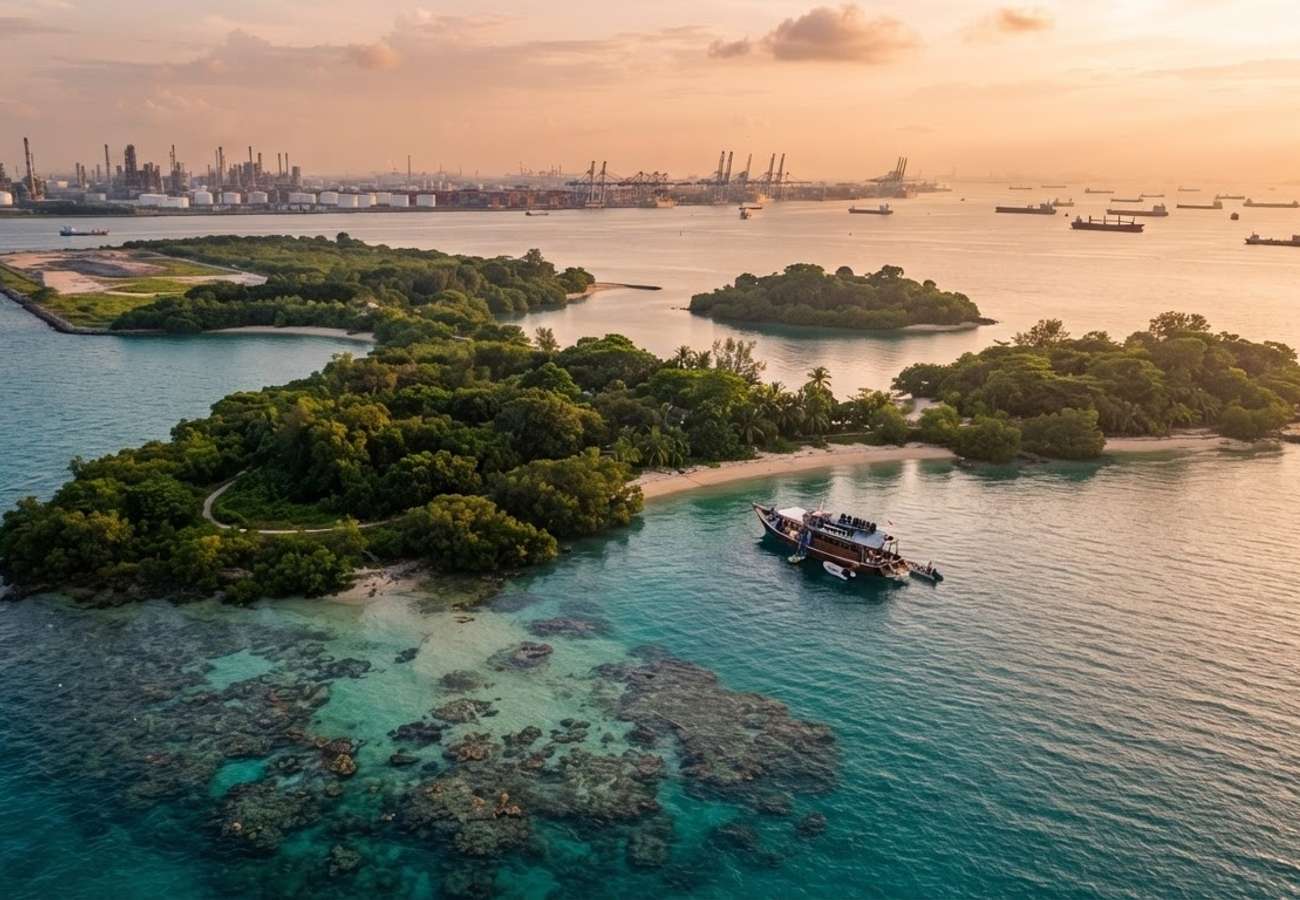
Image generated by AI
The Singapore government announced a proposal on 23rd August 2026 to merge several islands south of Jurong Island into a massive industrial hub. This strategic shift could fundamentally alter access to critical biodiversity hotspots and recreational diving zones.
The Industrial Pivot: The Western Island Proposal
Singapore is preparing for a massive offshore transformation. The proposed Western Island project involves merging several smaller landmasses—specifically Pulau Semakau, Pulau Bukom, Pulau Sudong, and surrounding clusters—into a single, expanded island. This development is designed to secure the nation's future by providing dedicated space for advanced manufacturing, national defence, and next-generation power generation.
While the government has not yet released final reclamation boundaries, construction costs, or a completion date, the National Day Rally 2026 confirmed that a new transport link will eventually connect this reclaimed territory to Jurong Island. For the traveler, this is not a move toward luxury resorts or new marinas; rather, it is a heavy industrial expansion that sits directly adjacent to some of the city-state's most prized marine exploration zones.
Balancing Biodiversity with Infrastructure
The real tension lies in the proximity of this industrial expansion to Semakau and Pulau Hantu. For visitors, the impact is felt in the delicate balance between Singapore's need for land and its commitment to environmental preservation.
The Semakau Ecological Paradox
Pulau Semakau is a global anomaly: a functioning offshore landfill that doubles as a biodiversity sanctuary. Since operations began in 1999, the site—created by joining Pulau Semakau and Pulau Sakeng with a seven-kilometre perimeter bund—has covered approximately 350 hectares.
For the nature-focused visitor, Semakau is an outdoor classroom. The National Environment Agency has recorded nearly 300 species of plants, birds, insects, and fish, including 80 distinct bird species. The island's western shoreline remains a vital spot for guided intertidal walks and birdwatching.
Environmental Safeguards and Precedents
Singapore has a history of mitigating reclamation damage. During Semakau's initial development, 700 coral colonies were relocated and 13.6 hectares of mangroves were replanted. As the Western Island Plan moves forward, these precedents will be the benchmark for how the government protects mudflats and coral habitats from sedimentation and construction runoff.
Semakau Environmental Baseline
| Indicator | Recorded Data |
|---|---|
| Landfill Start Date | 1999 |
| Total Area | ~350 hectares |
| Phase I Capacity | 13.6 million cubic metres |
| Phase II Capacity | 14.5 million cubic metres |
| Mangroves Replanted | 13.6 hectares |
| Coral Colonies Relocated | 700 |
| Recorded Bird Species | 80 |
| Total Recorded Species | Nearly 300 |
The Future of Diving at Pulau Hantu
Pulau Hantu remains one of the few recognized recreational diving areas in Singapore. While the government has not confirmed if the island will be absorbed into the Western Island project, its location in the south-western offshore zone makes it vulnerable to operational disruptions.
The primary concerns for the diving community are not necessarily land loss, but maritime restrictions. Large-scale reclamation typically requires the establishment of marine safety zones and revised vessel routes. For divers, this means potential changes to boat access points and a possible decline in underwater visibility due to sediment displacement during construction.
Climate Resilience and Tourism Growth
This industrial expansion is happening against the backdrop of a climate crisis. In June 2025, the national water authority launched risk assessments for Pulau Bukom, Pulau Hantu, Pulau Pawai, and Pulau Senang. With projections suggesting mean sea levels could rise by 1.15 metres by 2100, the Western Island project must integrate coastal protection to ensure these islands don't simply vanish.
This intersection of industry and ecology is critical because Singapore is leaning heavily into "unconventional" tourism to diversify its economy.
Singapore Tourism Performance & Forecasts
| Tourism Indicator | 2025 Actual | 2026 Forecast |
|---|---|---|
| International Visitors | 16.9 million | 17 million – 18 million |
| Tourism Receipts | S$32.8 billion | S$31 billion – S$32.5 billion |
| Changi Passenger Movements | Nearly 70 million | N/A |
| Cruise Ship Calls | 375 | N/A |
| Cruise Passenger Movements | > 2 million | N/A |
| Long-term Receipt Target (2040) | N/A | S$47 billion – S$50 billion |
Visitor Insider Tips
For those planning to visit these sensitive zones before the Western Island Plan takes full effect, keep these local insights in mind:
- Permit Requirements: Semakau is not a public beach; access is strictly controlled. Always book through approved environmental education providers to ensure your visit supports official conservation efforts.
- Diving Windows: For Pulau Hantu, visit during the northeast monsoon transitions for the best visibility. Always check with local dive operators regarding temporary "no-go" zones established by the Maritime and Port Authority.
- Eco-Etiquette: When visiting intertidal zones, follow the "leave no trace" principle. The coral colonies here are fragile and under stress from both urban runoff and potential construction.
- Off-Peak Exploration: To avoid the crowds and see more wildlife, schedule nature tours for early weekday mornings when boat traffic to the industrial sectors is more predictable.
Tourism Outlook
The long-term impact of the Western Island Plan will likely be a shift toward more highly regulated "managed access" tourism. As industrial zones expand, the remaining pockets of nature—like the Semakau mangroves and Hantu reefs—will become more valuable and more restricted. The success of this transition depends on whether the Singapore Tourism Board and environmental agencies can maintain the "wild" appeal of the southern islands while surrounding them with advanced manufacturing hubs.
The balance between a sovereign industrial powerhouse and a biodiverse sanctuary remains Singapore's most challenging design project.
Related Travel Guides
Disclaimer
This article is for informational and educational purposes only. It does not constitute legal, financial, or professional advice. While we strive to provide accurate and up-to-date information, travel policies, regulations, and conditions change rapidly. Always verify information with official sources before making travel decisions. Nomad Lawyer makes no representations about the accuracy, reliability, completeness, or suitability of the information provided. Readers should consult qualified professionals for advice specific to their circumstances. The views expressed in this article are those of the author and do not necessarily reflect the views of Nomad Lawyer.
Naina Thakur
Contributor & Travel Specialist
Travel enthusiast and legal writer covering visa regulations, responsible tourism, and cultural journeys across global destinations.
Learn more about our team →