
Thailand Along With Singapore and More Asian Countries Transform Luxury Hotels with Brain Health Infrastructure to Accelerate Medical Tourism
Thailand Along With Singapore and More Asian Countries Transform Luxury Hotels with Brain Health Infrastructure to Accelerate Medical Tourism

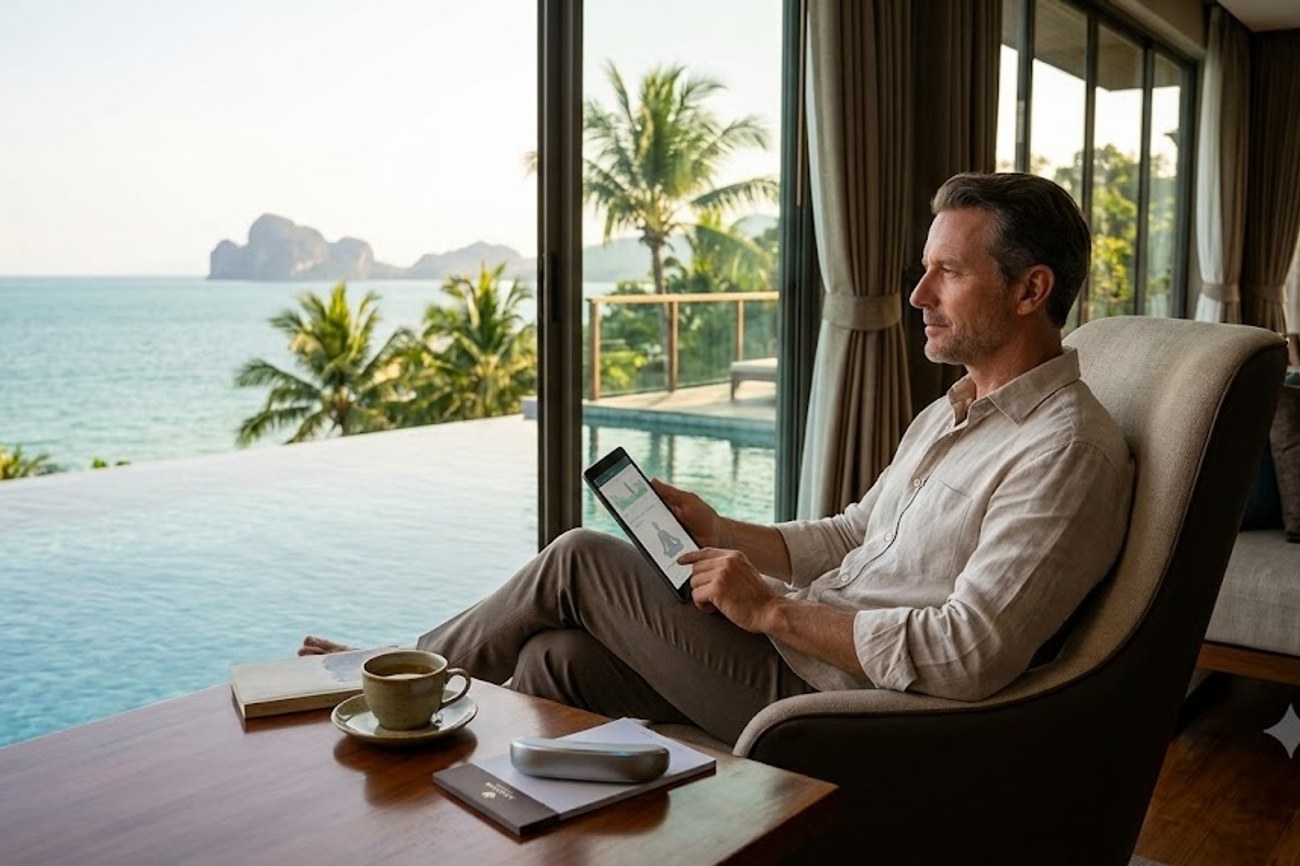
Image generated by AI
The global wellness economy has surged from a $735.8 billion baseline in 2020 to a current valuation between $1.2 trillion and $1.35 trillion, representing a compound annual growth rate of over 9.9%. This trajectory signals a systemic pivot in luxury hospitality, where the traditional "pampering" model is being replaced by clinical, data-driven neuro-recovery infrastructure.
The Neuro-Wellness Pivot in Numbers
The shift toward cognitive wellness is not merely a trend in amenity upgrades but a strategic reallocation of capital expenditure across the Asia-Pacific region. Data indicates that wellness-focused travel, while accounting for only 8% of total international travel volume, generates nearly 18% of total global tourism expenditure. This disproportionate spending power makes the "bio-rehabilitation" guest one of the highest-yield segments for national tourism economies.
Within this framework, the Asia-Pacific region has emerged as the dominant force, controlling 33.2% of the global wellness hotel market share. Furthermore, the regional medical tourism valuation has climbed to exceed $107.7 billion. This financial concentration is driving a transition from passive leisure facilities—such as steam rooms and hydrotherapy pools—to high-tech clinical cognitive centers.
The objective of this new infrastructure is the remediation of "transmeridian travel" degradation. High-net-worth individuals and corporate executives are no longer seeking simple relaxation; they are demanding quantifiable biological outcomes. These include the restoration of neuroplasticity, systemic cortisol reduction, and the optimization of slow-wave non-REM sleep. To facilitate this, developers are integrating specialized equipment such as quantitative EEG suites, polysomnography sleep labs, and hyperbaric chambers into the hotel footprint.
Comparative Market Evolution: Passive vs. Clinical Wellness
The transition from the "Passive Spa" to "Neuro-Wellness Infrastructure" represents a fundamental change in the hospitality business model. Where traditional luxury relied on Average Daily Rate (ADR) driven by room aesthetics, the new model leverages high-margin clinical protocol packages.
The following table outlines the structural shift currently occurring across luxury hubs in Thailand, Singapore, South Korea, Japan, and India.
| Hospitality Market Indicator | Traditional Passive Spa Model | Modern Neuro-Wellness Infrastructure |
|---|---|---|
| Primary Economic Driver | Transient room nights, F&B revenue | Bio-rehabilitation, executive longevity |
| Core Guest Outcome | Temporary physical relaxation | Objective neuro-cognitive recovery |
| Primary Physical Amenities | Saunas, massage suites, jacuzzis | tDCS facilities, EEG suites, sleep labs |
| Yield & Revenue Profile | Standard Luxury ADR | Premium ADR + Clinical Package Margins |
| Institutional Alignment | Local commercial zoning | National health-tourism initiatives, ISO 22525 |
This evolution is supported by a broader global movement toward health tourism. As defined by the UN Tourism organization, the sector is split between wellness and medical tourism, both of which are now being fused into a single "clinical wellness" offering within the luxury hotel sector.
What This Means for Travelers
For the high-frequency business traveler or the luxury nomad, the availability of circadian architecture changes the calculus of international travel. The integration of "zeitgebers" (external cues that regulate the biological clock) into hotel rooms means that the recovery period from jet lag can be scientifically compressed.
Actionable Booking Advice:
- Prioritize "Circadian-Certified" Accommodations: When booking travel across multiple time zones (specifically transmeridian flights), seek properties that explicitly mention "tunable spectrum LED" or "circadian lighting." These systems use blue-enriched illumination (460 nm to 480 nm) in the morning to suppress melatonin and amber spectrums in the evening to trigger it.
- Audit Acoustic Specifications: For those prone to sleep fragmentation, look for hotels utilizing "decoupled wall construction" or "mass-loaded vinyl dampening." These technical specifications ensure an ambient sound floor that prevents the micro-arousals that impair the brain's glymphatic clearance.
- Leverage Specialized Visas: In regions like Thailand and India, where medical tourism is a national priority, travelers may find that clinical wellness stays are now supported by specialized medical visas, potentially extending the duration of restorative stays.
Travelers should monitor data from IATA regarding flight durations and time-zone shifts to determine when a "neuro-wellness" stay is a biological necessity rather than a luxury.
Projections for the Cognitive Hospitality Sector
The trajectory of the Asia-Pacific wellness market suggests that "brain health" will become a standard KPI for luxury hotel performance. We are moving toward a period of "Hyper-Personalized Biological Integration," where a guest's biometric data—captured via wearable tech or pre-arrival screening—will automatically sync with their hotel room's environment.
We expect to see a rise in "Recovery Hubs" located within major airport transit hotels. Instead of standard lounges, these will be equipped with rapid phase-reset protocols, utilizing high-melanopic lux lighting and acoustic isolation to reset the suprachiasmatic nucleus (SCN) before the traveler even reaches their final destination.
Furthermore, the integration of non-invasive neuro-therapies, such as transcranial Direct Current Stimulation (tDCS), will likely move from specialized clinics into the mainstream luxury suite, targeting executive burnout and decision fatigue. As the global wellness economy continues its 9.9% annual growth, the competitive advantage for hotel groups will shift from "how the room looks" to "how the room changes the guest's brain chemistry."
FAQ: Neuro-Wellness Travel 2025
Will these clinical wellness packages increase hotel prices? Yes. The shift from standard ADR to "Premium ADR" includes high-margin clinical protocols. Travelers should expect a significant price premium for suites equipped with EEG tools or circadian lighting compared to standard luxury rooms.
Is this a good time to book neuro-wellness retreats in Asia? Yes, particularly in Thailand and Singapore. These markets currently hold a massive share of the 33.2% global wellness hotel market, offering the most advanced infrastructure for biological clock realignment.
Which technologies are most effective for jet lag? Tunable spectrum LED arrays are the most critical. By targeting the ipRGCs in the eye with specific wavelengths (460-480 nm), these systems can artificially suppress melatonin to force alertness or trigger its production for sleep.
Are these facilities safe for non-medical travelers? Most are designed as "soft wellness" and use non-invasive tools. However, facilities offering tDCS or hyperbaric chambers often require biometric screening and may align with ISO 22525 compliance for safety.
The luxury suite is no longer a place to sleep; it is a laboratory for cognitive restoration.
Tags: Asia-Pacific-Wellness-Growth-2025, Circadian-Lighting-Hospitality, Neuro-Wellness-Market-Share, Medical-Tourism-Valuation-APAC, Executive-Burnout-Recovery-Trends
Related Travel Guides
Disclaimer
This article is for informational and educational purposes only. It does not constitute legal, financial, or professional advice. While we strive to provide accurate and up-to-date information, travel policies, regulations, and conditions change rapidly. Always verify information with official sources before making travel decisions. Nomad Lawyer makes no representations about the accuracy, reliability, completeness, or suitability of the information provided. Readers should consult qualified professionals for advice specific to their circumstances. The views expressed in this article are those of the author and do not necessarily reflect the views of Nomad Lawyer.
Naina Thakur
Contributor & Travel Specialist
Travel enthusiast and legal writer covering visa regulations, responsible tourism, and cultural journeys across global destinations.
Learn more about our team →