Thai Airways Munich-Bangkok Flight Diverts to Delhi: EU261 Passenger Rights, Transit Rules, and Travel Advisory

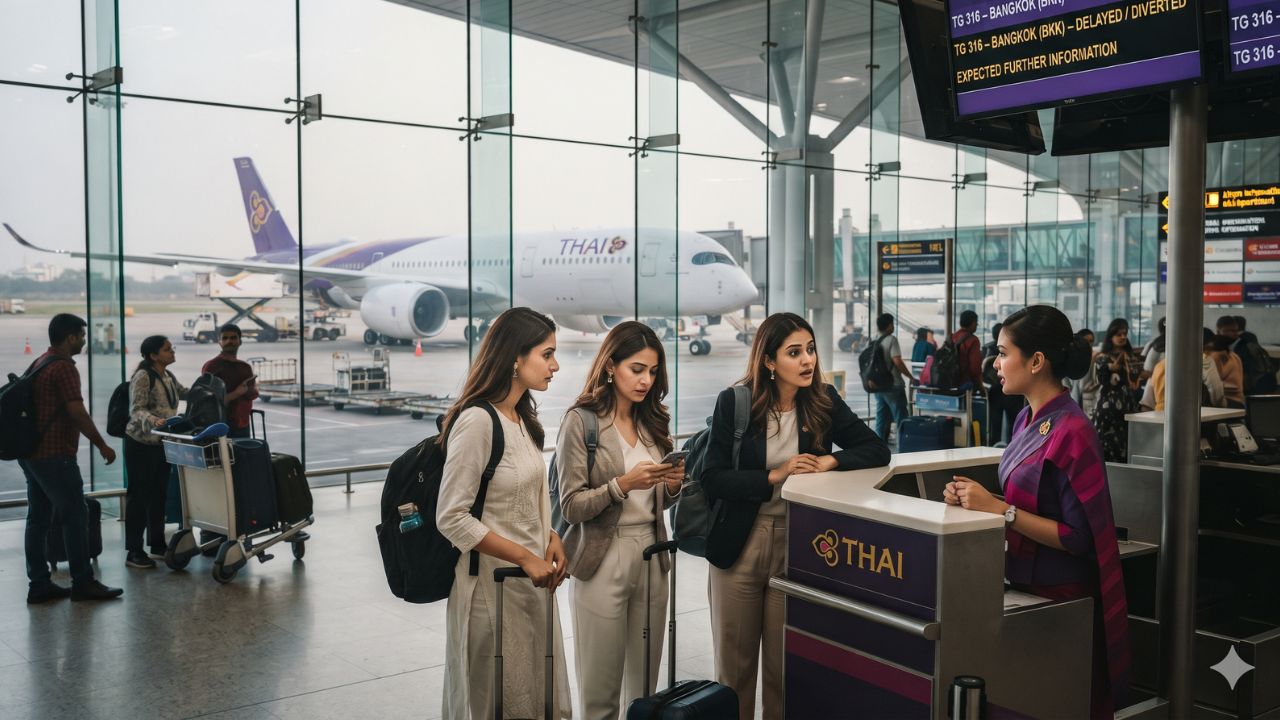
Even when flying aboard a foreign, non-European carrier toward Southeast Asia, departing from an airport within the European Union gives passengers the complete legal protection of EU Regulation 261/2004—including mandatory hotel accommodation and statutory cash compensation of up to €600. Following aviation reports that a Thai Airways service operating from Munich Airport (MUC) to Bangkok Suvarnabhumi Airport (BKK) diverted to Indira Gandhi International Airport (DEL) in Delhi after encountering an unexpected technical problem, long-haul holidaymakers face an intricate combination of European passenger protection laws, strict Indian airside immigration protocols, and package holiday guarantees.
The mid-route interruption along the heavily traveled corridor connecting Bavaria to Thailand tests passenger protections at an international scale. While full technical verification regarding the exact component anomaly and completed recovery flight schedules remains under carrier review as of 17 November 2026, the incident highlights a vital reality of long-distance air travel: knowing your statutory entitlements before departure turns an exhausting diversion into a legally protected, manageable itinerary change.
Long-Haul Diversion Dynamics: The Munich–Bangkok Flight Path Over South Asia
Flights traversing the long-haul corridor between Western Europe and Southeast Asia follow airway corridors that cross southeastern Europe, the Middle East, and the northern plains of the Indian subcontinent before crossing the Bay of Bengal into Thai airspace. When an airborne technical warning requires an unscheduled precautionary landing, major international gateways such as Delhi offer extensive runway lengths, certified widebody maintenance crews, and established ground handling facilities.
Because the journey began on German soil at Munich Airport, European consumer law accompanies the passenger across international borders. European Union Regulation (EC) No 261/2004 establishes clear obligations that apply to all commercial flights departing from an EU member state airport, regardless of whether the operating carrier is registered in Europe, Asia, or the Americas.
Passengers can check operating flight status and customer care advisories directly through Thai Airways.
| Protection Component & Legal Rule | Trigger Benchmark | Mandatory Passenger Entitlement | Governing Framework |
|---|---|---|---|
| EU Departure Scope | Flights departing any EU airport | Covers all carriers, including non-EU airlines | EU Regulation 261/2004 |
| Right to Care (Article 9) | Controllable delay of 2+ hours | Meals, refreshments, 2 phone calls/emails | Article 9, Regulation 261/2004 |
| Overnight Accommodation | Unscheduled stay during diversion | Free hotel room and airport ground transfers | Mandatory Duty of Care |
| Long-Haul Arrival Delay (3 to <4 Hours) | Distance >3,500 km | Statutory compensation of €300 | EU Court of Justice Precedent |
| Long-Haul Arrival Delay (4+ Hours) | Distance >3,500 km | Statutory compensation of €600 | EU Court of Justice Precedent |
| Indian Airside Transit | Direct international transfer | Visa-free if remaining in international transit | Bureau of Immigration India |
| Indian Landside Entry | Transferring to city hotel | Requires valid Indian visa / emergency permit | Government of India Transit Policy |
| Package Holiday Disruption | Disruption of booked package | Tour operator must provide alternative services | EU Package Travel Directive |
What Makes EU Departure Rights Different for Non-EU Airlines
A common misconception among transcontinental travelers is that foreign airlines operating out of Europe are immune to European consumer rules. Under European law, the geographical point of departure governs basic passenger rights:
The Separation of Care and Compensation
Under Article 9 of Regulation 261/2004, the airline’s "duty of care" is unconditional. Even if an aircraft makes a precautionary diversion due to unforeseen circumstances, the carrier must provide:
- Meals and Refreshments: Adequate food and drink relative to the waiting period.
- Overnight Hotel Accommodation: Complimentary hotel rooms whenever an unplanned stay of one or more nights becomes necessary.
- Airport-to-Hotel Transportation: Free shuttle or taxi transit between the terminal and lodging.
- Communication Access: Two complimentary phone calls, faxes, or email transmissions.
Technical Faults vs. Extraordinary Circumstances
Airlines frequently attempt to classify mechanical defects as "extraordinary circumstances" to avoid paying cash compensation. However, under official European Commission interpretative guidelines, ordinary technical malfunctions—including unexpected component failures, hydraulic leaks, or sensor errors—are considered an inherent part of regular aircraft operations.
Unless the carrier can substantiate that the fault was caused by a hidden manufacturing defect affecting fleet-wide airworthiness or direct sabotage, the carrier remains legally liable for statutory delay compensation (€600 for flights exceeding 3,500 kilometers with an arrival delay of four hours or more).
Detailed statutory rights and complaint filing guidelines can be reviewed on the official European Commission Air Passenger Rights portal.
Visitor Insider Tips: Managing an Unplanned Delhi Transit and Bangkok Recovery
Experiencing an unplanned diversion in an intermediate country introduces distinct logistical and bureaucratic obstacles:
- Distinguish Airside Transit from Immigration Clearance: Under Indian immigration guidelines, foreign nationals transiting through Delhi's Indira Gandhi International Airport to an onward international destination can do so without an Indian transit visa, provided they remain within the designated international airside transit lounge and their baggage is checked through. However, if an overnight stay requires leaving the airport for an external hotel, you must clear immigration, which legally mandates a valid Indian visa, an e-Visa, or a special temporary landing permit issued by local border control.
- Never Leave the Transit Area Without Official Escort: If the operating carrier arranges an overnight hotel outside the airport perimeter, ensure airline ground representatives coordinate directly with the airport Foreigners Regional Registration Office (FRRO). Do not attempt to clear passport control independently without documented airline transit sponsorship.
- Retain Every Itemized Expense Receipt: If the airline fails to provide meal vouchers or hotel rooms promptly and instructs passengers to make their own arrangements, keep itemized receipts. European enforcement bodies require expenses to be "necessary, reasonable, and appropriate." Booking a five-star luxury suite when mid-scale options are available may jeopardize full reimbursement.
- Contact Your Bangkok Accommodation Immediately: If you reserved non-refundable beach resorts in Phuket or boutique hotels in Bangkok's Sukhumvit or Riverside districts, contact management immediately with your revised flight details. Most properties will adjust arrival dates without penalty if provided with official proof of airline diversion.
- Coordinate Through Package Holiday Organizers: If your trip was booked as part of a tour package, contact your tour operator immediately. Under European package travel legislation, the tour organizer is legally responsible for rearranging missed internal transfers, readjusting scheduled excursions, and safeguarding the overall vacation itinerary.
Travelers can research regional Thai destination protocols and local transport links through the Tourism Authority of Thailand.
Cultural and Environmental Context: Cross-Continental Corridors and Passenger Care Mandates
Long-haul aviation between Europe and Southeast Asia represents one of the most critical cultural and economic links in modern tourism. Millions of European travelers journey annually to Thailand, seeking the rich heritage of Bangkok’s Grand Palace, sacred Buddhist temples like Wat Pho, and the biodiversity of southern island archipelagos.
When intercontinental flights encounter operational difficulties, coordinating emergency passenger welfare across international borders requires swift cooperation between airline management, civil aviation authorities, and local consular offices. European passenger protection legislation—first enacted in 2004 and updated by ministerial councils in July 2026—serves as a vital safeguard, preventing passengers from being abandoned in foreign transit terminals without basic humanitarian support.
Special care provisions are legally mandated for travelers with reduced mobility, unaccompanied minors, and families traveling with infants. By upholding strict consumer accountability across international carriers, international aviation frameworks ensure that flight safety and compassionate customer care remain paramount.
FAQ: Handling Long-Haul Flight Diversions in 2026
Does EU Regulation 261/2004 apply to Thai Airways flights?
Yes. EU261 applies to all flights departing from an airport within the European Union (such as Munich), regardless of whether the operating carrier is an EU or non-EU airline.
What cash compensation is available for a long-haul flight delay?
For flights exceeding 3,500 kilometers, delays between three and four hours can qualify for €300 in compensation, while arrival delays of four hours or more can warrant €600, provided extraordinary circumstances do not apply.
Do I need a visa if my diverted flight grounds me overnight in Delhi?
If you remain inside the international airside transit terminal, no Indian visa is needed. However, leaving the terminal for an outside hotel requires valid Indian immigration authorization or an emergency transit permit arranged by the airline.
What should I do if the airline fails to provide hotel rooms or meals?
Purchase reasonable meals and accommodation independently, retain all itemized receipts, and submit a formal reimbursement claim directly to the operating airline under Article 9 of EU261.
Related Travel Guides
- International Passenger Rights and Flight Delay Compensation Standards
- Managing Flight Disruptions and Gate Holds Across Asian Gateways
- Boutique Travel and Island Transit Strategies Across Southeast Asia
When an unexpected detour interrupts your long-haul horizon, firm knowledge of your statutory rights keeps your holiday on course.
This article is for informational purposes. Flight routes, passenger regulations, visa rules, and transit advisories are subject to change by airlines and aviation authorities. Readers are advised to verify schedules and travel documentation with relevant carriers and border agencies before departure.
Related Stories
United Airlines Tech Outage Stalls US Departures: Flight Delay Protections, FAA Context, and Passenger Refund Rules
Asia Aviation Gridlock: 4,461 Delays and 365 Flight Cancellations Hit Mumbai, Tokyo, Dubai, and Regional Hubs