
Texas, New York, Florida and California Issue Travel Warnings for Saudi Arabia, Israel, Bahrain and Qatar in 2026
Major US states including Texas, New York, Florida, and California are discouraging travel to Saudi Arabia, Israel, Bahrain, and Qatar as the US-Iran conflict disrupts Middle East airspace and passenger safety.

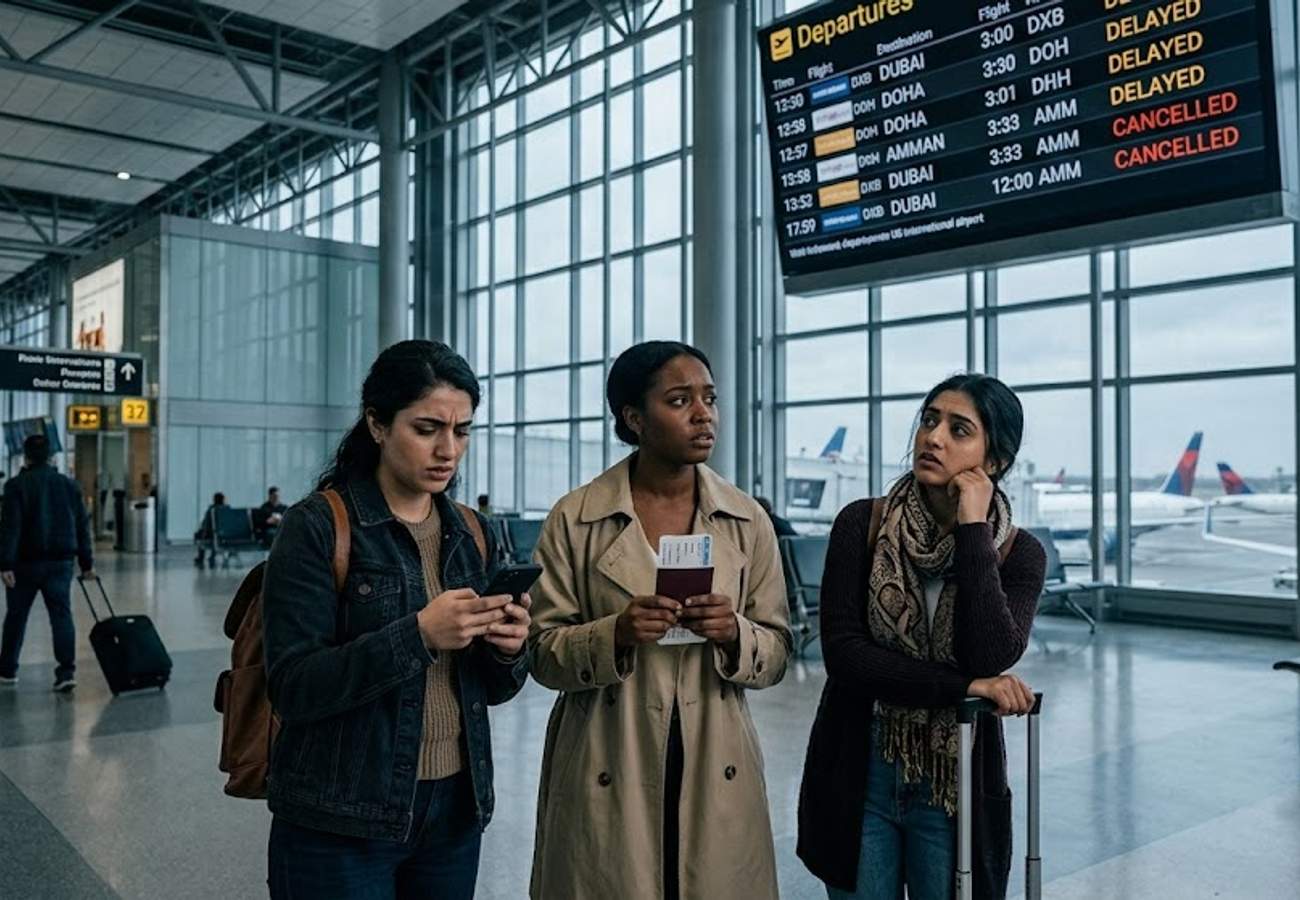
Image generated by AI
Major US hubs are raising travel awareness and discouraging trips to Saudi Arabia, Israel, Bahrain, and Qatar as an escalating US–Iran conflict threatens passenger safety and regional airspace.
Since tensions intensified on 28 February, American travelers have faced significant uncertainty. While not a formal travel ban, authorities in Texas, New York, Florida, and California are urging citizens to remain alert and prioritize security updates before departing for the Middle East.
Regional Security and Airspace Volatility
The current instability is rooted in the escalation of the US–Iran conflict starting 28 February. This geopolitical friction has created a volatile environment for one of the world’s most critical travel corridors, affecting millions of Americans who utilize Gulf countries for business, religious pilgrimage, and transit to Asia and Africa.
Industry observers note that the primary risk for passengers is unpredictability. Flight operations that appear stable one day may be subject to immediate adjustments the next based on real-time security developments.
High-Risk Hubs and State-Level Coordination
Because millions of overseas journeys originate from specific US gateways, these states are leading the awareness campaign:
- Texas: Focus is centered on Dallas/Fort Worth International Airport and Houston George Bush Intercontinental Airport, both critical links to the Middle East.
- New York: Warnings are concentrated around John F. Kennedy International Airport and Newark Liberty International Airport.
- Florida: Miami International Airport and Orlando International Airport are primary points of concern for residents and tourists.
- California: Los Angeles International Airport and San Francisco International Airport are monitoring routes exposed to international disruptions.
Destination-Specific Risks
Saudi Arabia As a hub for luxury and religious tourism (Riyadh, Jeddah, Makkah, and Madinah), the Kingdom is seeing a spike in traveler caution. Passengers are advised to maintain flexible plans and avoid areas linked to security incidents.
Israel Due to its central location in the regional conflict, travel to Jerusalem, Tel Aviv, and the Dead Sea region is under high scrutiny. Travelers face sudden changes in flight schedules and heightened airport security protocols.
Qatar Hamad International Airport in Doha serves as a global connecting point. Regional instability directly impacts international flight routes and connecting passenger confidence, necessitating additional transit time for American travelers.
Bahrain and the Gulf Bahrain, along with Kuwait, Oman, and the UAE, remains under observation. Business and luxury travelers are encouraged to monitor local conditions closely.
Operational Impacts on Aviation
The conflict has placed immense pressure on international carriers. Airlines are forced to constantly recalibrate the following:
- Flight Pathing: Rerouting aircraft to avoid restricted airspace.
- Logistics: Adjusting fuel requirements and crew planning for longer flight durations.
- Costs: Managing higher operating expenses due to diverted routes.
- Schedules: Handling a rise in delayed arrivals and missed connections.
Summary of Travel Disruptions
| Impact Area | Primary Consequences |
|---|---|
| Airport Operations | Increased security checks and screening delays |
| Flight Logistics | Cancellations, rerouting, and longer journey times |
| Passenger Experience | Higher uncertainty and requirement for flexible booking |
| Regional Hubs | Pressure on Hamad International and other Gulf gateways |
Why This Matters
The coordination between state-level authorities (Texas, NY, FL, CA) and aviation networks suggests that the US-Iran conflict is no longer viewed as a localized diplomatic issue, but as a systemic risk to global mobility.
From an industry perspective, the shift toward "de-encouraging" travel—rather than a total ban—indicates a strategy of risk mitigation. By shifting the burden of awareness to the traveler, governments are acknowledging that while airspace remains open, the reliability of that airspace is compromised. For the aviation sector, the long-term implication is a permanent increase in operating costs due to the "avoidance" of traditional Middle Eastern corridors.
Industry Outlook
Expect a continued trend of "dynamic routing," where airlines shift flight paths in real-time based on military developments. Travelers should anticipate a permanent increase in transit times for flights heading to Asia and Africa. Until the conflict that began on 28 February stabilizes, the Middle East will likely remain a high-volatility zone, causing a shift in transit traffic toward alternative global hubs.
Travelers are urged to confirm all flight schedules directly with carriers prior to departure.
Related Travel Guides
Disclaimer
This article is for informational and educational purposes only. It does not constitute legal, financial, or professional advice. While we strive to provide accurate and up-to-date information, travel policies, regulations, and conditions change rapidly. Always verify information with official sources before making travel decisions. Nomad Lawyer makes no representations about the accuracy, reliability, completeness, or suitability of the information provided. Readers should consult qualified professionals for advice specific to their circumstances. The views expressed in this article are those of the author and do not necessarily reflect the views of Nomad Lawyer.
Kunal K Choudhary
Co-Founder & Contributor
A passionate traveller and tech enthusiast. Kunal contributes to the vision and growth of Nomad Lawyer, bringing fresh perspectives and driving the community forward.
Learn more about our team →