Texas Expands Birth Tourism Crackdown: Legal Realities for International Travelers

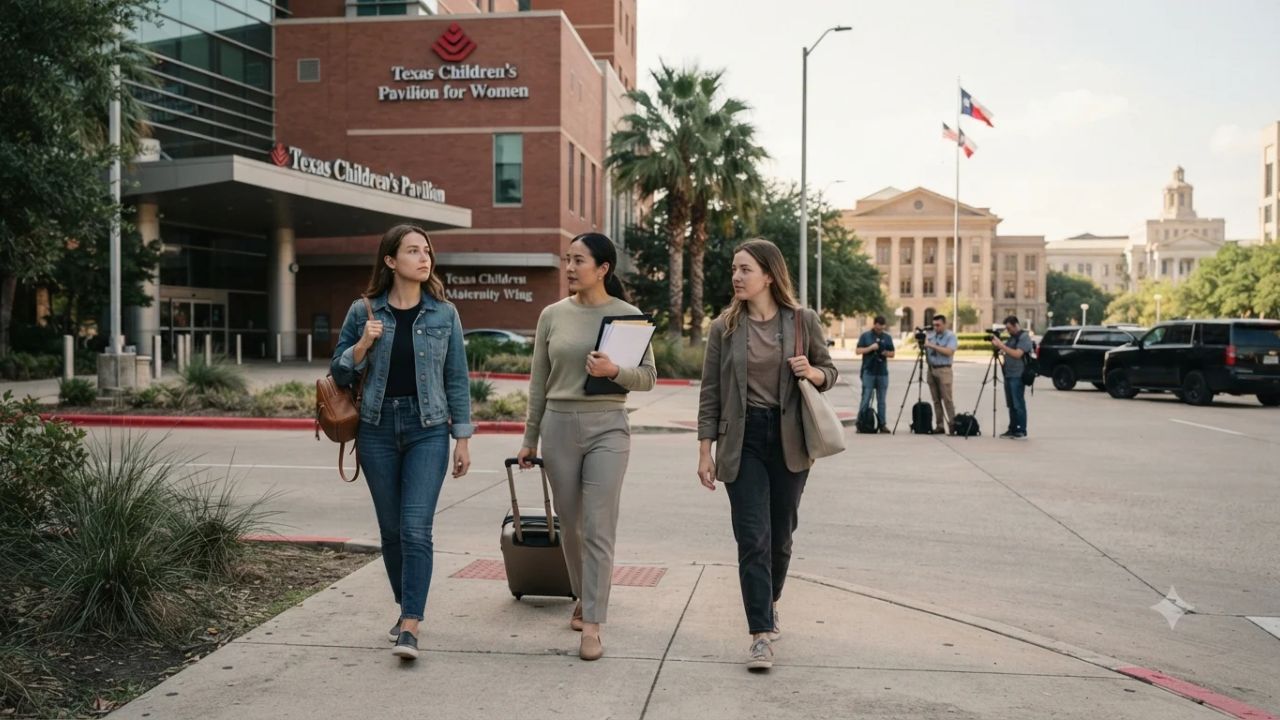
While the Fourteenth Amendment of the United States Constitution explicitly guarantees birthright citizenship to any child born on American soil, travelling to the country through deceptive commercial visa schemes has triggered aggressive criminal investigations across the state of Texas. Following recent Supreme Court affirmations upholding constitutional birthright protections, state authorities have shifted their enforcement focus entirely toward commercial facilitation networks, launching formal inquiries into two hospitals in the Rio Grande Valley and shutting down an unlicensed Houston postpartum center. This intensified scrutiny creates a clear dividing line between lawful international medical tourism and fraudulent visa facilitation.
Under official guidance from the U.S. Department of State, giving birth in the United States as a foreign national is not illegal in itself. However, applying for visitor visas or entering through border ports while misrepresenting travel intentions or concealing medical purposes violates federal immigration law. For legitimate international patients seeking specialized obstetric and neonatal care in Texas medical hubs, navigating these updated regulatory boundaries requires complete financial transparency and verifiable medical documentation.
The Shift from Constitutional Challenges to Facilitator Prosecution
The legal landscape surrounding birth tourism in Texas has transformed following federal court determinations that state statutes cannot override the Fourteenth Amendment's Citizenship Clause. Recognizing that children born on American soil automatically receive standard state birth certificates without parental citizenship indicators, state prosecutors have pivoted their enforcement strategy.
Rather than penalizing individual mothers or newborns, state investigations target commercial entities, hospitality brokers, and healthcare marketers that package overseas childbirth services. In the Rio Grande Valley along the southern border, state officials requested investigations into two hospital systems following allegations of international promotional materials advertising bundled maternity packages to foreign clientele. Although the hospitals promptly removed the promotional literature, the inquiry highlights heightened regulatory oversight of cross-border medical advertising.
| Legal Dimension | Lawful International Medical Travel | Unlawful Commercial Facilitation Scheme |
|---|---|---|
| Visa Classification | B-2 Medical Visitor with verified treatment plan | B-1/B-2 Tourist visa obtained under false pretenses |
| Consular Disclosure | Full disclosure of pregnancy & hospital pre-payment | Concealment of medical purpose during interview |
| Financial Solvency | Documented private funds covering all hospital costs | Reliance on public healthcare or fraudulent write-offs |
| Enforcement Focus | Unrestricted access to contracted private care | Criminal investigation of brokers & unlicensed centers |
| Constitutional Status | Standard Fourteenth Amendment birth certificate | Standard Fourteenth Amendment birth certificate |
Concurrently, a prominent enforcement action in the Houston metropolitan area targeted an unlicensed postpartum care facility. Prosecutors alleged the operation provided commercial accommodation, logistical transport, and fraudulent visa guidance to help foreign clients enter the United States under tourist pretenses, reflecting nationwide crackdowns on organized birth facilitation rings.
Distinguishing Lawful Healthcare from Immigration Fraud
The fundamental legal distinction between legitimate medical travel and unlawful birth tourism centers on truthfulness during the consular application and port-of-entry inspection phases. Foreign nationals are legally permitted to travel to the United States for specialized medical treatments, including high-risk pregnancies, provided they demonstrate independent financial means to cover all medical and hospital expenditures.
When an international traveler arrives at a port of entry, officers from U.S. Customs and Border Protection evaluate whether the visitor possesses sufficient private funds or medical insurance to pay all anticipated charges without relying on public assistance funds like Medicaid. If an applicant conceals pregnancy during visa interviews or falsely claims to visit solely for vacation, the act of misrepresentation constitutes visa fraud, resulting in immediate visa revocation, expedited removal, and long-term entry bans.
Furthermore, Texas lawmakers have expanded legislative discussions into international surrogacy contracts. Because private surrogacy agreements involving foreign intended parents and Texas surrogate mothers operate in complex legal intersections, state committees are examining potential statutory reporting requirements for reproductive clinics handling overseas clientele.
Visitor Insider Tips for Lawful International Medical Travel to Texas
Navigating medical travel to Texas while remaining fully compliant with state and federal regulations requires meticulous administrative preparation.
- Obtain Formal Pre-Treatment Authorization from Texas Medical Centers: If travelling to the Texas Medical Center in Houston or regional specialists in Dallas for obstetric care, obtain an official acceptance letter from the attending physician. The document must detail the specific medical diagnosis, planned treatment protocol, estimated duration of care, and total projected costs.
- Maintain Clear Proof of Advance Payment and Escrow Funds: Carry itemized receipts demonstrating that hospital deposits, surgeon fees, anesthesiology retainers, and neonatal contingency funds have been paid in advance or secured in verifiable escrow accounts. Never accept or apply for subsidized indigent care programs.
- Declare Medical Travel Intentions Openly at CBP Inspection: When presenting your passport and B-2 visa at major Texas international gateways like Houston George Bush Intercontinental (IAH) or Dallas/Fort Worth (DFW), openly state the medical purpose of your visit and present your physician's documentation package immediately.
- Avoid Unregulated Commercial Maternity Hotels and Brokers: Do not contract with third-party agencies offering all-inclusive "citizenship tour" packages, unlicensed postpartum group homes, or concierge services that instruct travelers to withhold information from border authorities. Book licensed hotels, extended-stay executive suites, or private rental accommodations independently.
- Consult Certified Reproductive and Immigration Attorneys for Surrogacy: If entering into legal gestational surrogacy arrangements in Texas, engage independent legal counsel licensed by the State Bar of Texas to draft court-approved pre-birth parentage orders that comply with state family codes and federal consular passport issuance rules.
Healthcare Ethics and Borderland Community Dynamics
The intensification of birth tourism enforcement takes place against the sensitive backdrop of public health delivery in Texas border communities. In regions like McAllen, Brownsville, and Laredo, hospital networks serve bi-national populations with deep cultural and familial ties stretching across the Rio Grande.
Healthcare advocates and public health officials monitored by the Texas Department of State Health Services emphasize that enforcement measures must not inadvertently discourage resident immigrant families from seeking essential prenatal, maternal, and emergency care. Federal law under the Emergency Medical Treatment and Labor Act (EMTALA) mandates that hospitals provide emergency medical screening and stabilizing treatment to all patients regardless of legal status or ability to pay. Balancing strict commercial fraud interdiction with uncompromised clinical ethics remains vital for safeguarding community health outcomes across the state.
FAQ: Texas Medical Travel & Birth Tourism 2026
Is it illegal for a foreign national to give birth in the United States? No. Giving birth in the United States is not illegal. However, concealing pregnancy or lying about the purpose of travel during visa applications or border inspections constitutes criminal visa fraud.
Why are Texas hospitals under state investigation? Authorities are investigating whether specific hospital systems in the Rio Grande Valley violated marketing regulations by actively promoting commercial maternity packages to foreign customers.
Does a child born to foreign parents in Texas receive US citizenship? Yes. Under the Fourteenth Amendment of the U.S. Constitution, all children born on U.S. soil automatically acquire U.S. citizenship, regardless of their parents' nationality or immigration status.
What documentation must foreign medical travelers carry? Travelers must carry physician acceptance letters, itemized cost estimates, and proof of sufficient private funds or paid hospital deposits to cover all medical expenses independently.
By enforcing strict truthfulness in visa applications while upholding constitutional rights, the intersection of law and medicine in Texas establishes a clear standard for global travel integrity.
Related Travel Guides
- LATAM, GOL, and Azul Ground Flights Triggering Widespread Brazil Flight Cancellations and Delays Across São Paulo, Rio de Janeiro, Campinas, and Belo Horizonte: New Travel Alert
- Egypt Issues Urgent Travel Advisory as Cairo International Airport Grapples with Kuwait Airways, Buraq Air, and Air Arabia Cancellations: Latest Travel Alert
- World Health Organization Declares Ebola Outbreak in Congo and Uganda a Public Health Emergency of International Concern: New Ebola Outbreak Travel Advisory
This article is for informational purposes. Flight routes, passenger regulations, visa rules, and transit advisories are subject to change by airlines and aviation authorities. Readers are advised to verify schedules and travel documentation with relevant carriers and border agencies before departure.
Related Stories

Odyssey Residential Cruise Strands 203 Passengers in Sihanoukville Cambodia as Fourfold Fuel Inflation Triggers Vessel Lay-Up

US Embassy Issues Dominican Republic Travel Security Alert Over Dating App Drugging and Robbery Risks