
Tel Aviv Metro Launches 30 Billion Shekel Tenders for GOA4 Driverless Rail Network in 2026
Israel's NTA has initiated massive tenders for a fully automated, driverless metro system in Tel Aviv, utilizing GOA4 technology to reshape urban mobility across the metropolitan area.

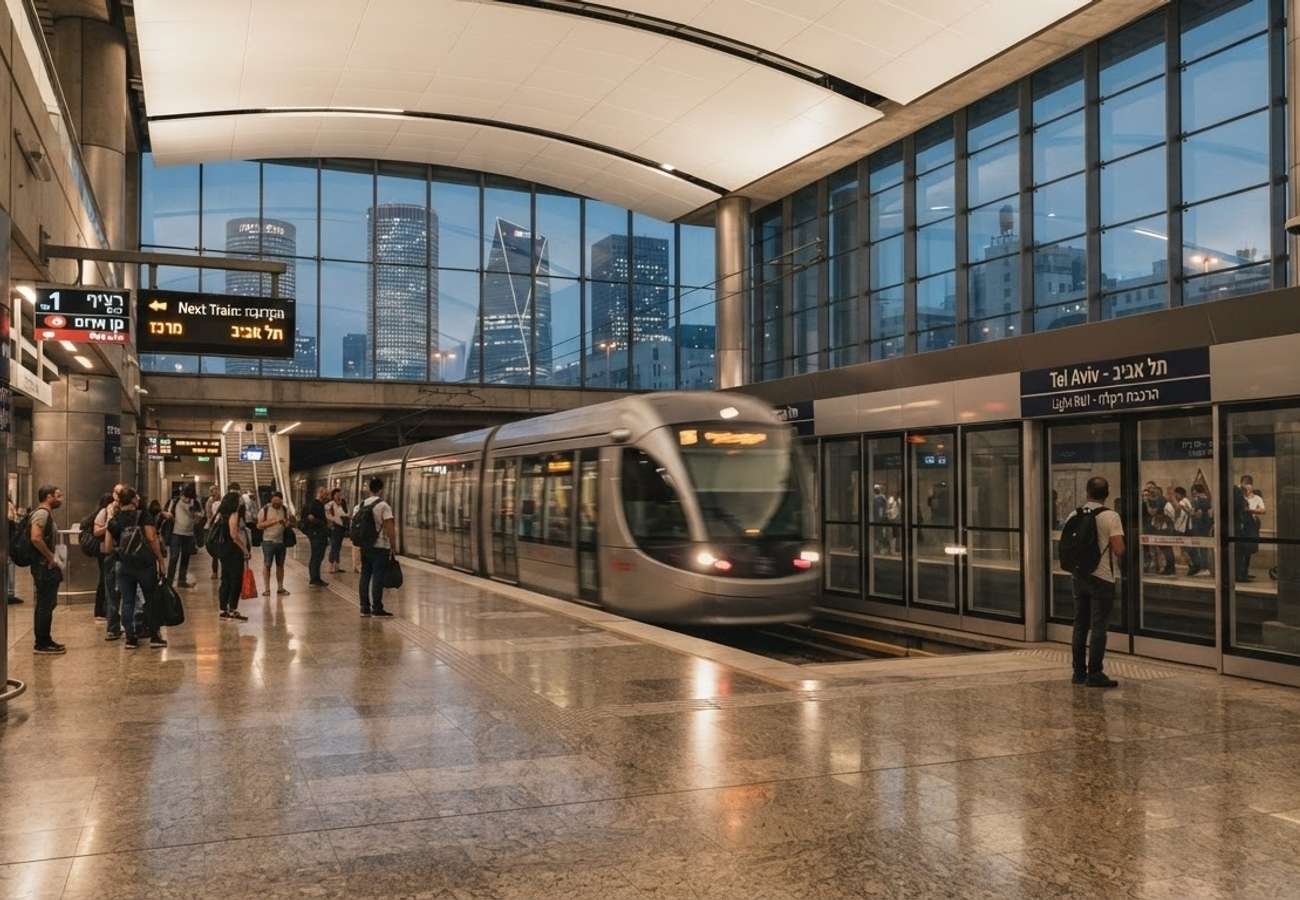
Image generated by AI
Israel’s NTA Metropolitan Mass Transit has officially moved the Tel Aviv Metro from conceptual planning to procurement. In August 2026, the agency launched major tenders to implement a fully driverless, high-frequency rail system designed to serve as the primary transit backbone for the country's largest urban center.
The procurement phase, known as the Infra 2 package, is valued at approximately 30 billion shekels. This stage focuses on rolling stock, integrated systems, and long-term operational frameworks for three distinct underground lines.
The Blueprint for Automation: GOA4 Integration
The core of the Tel Aviv Metro is defined by Grade of Automation 4 (GOA4). This represents the highest level of automation in urban rail, allowing trains to manage starting, stopping, and door operations without on-board staff.
Our analysis of the technical requirements indicates a system relying on continuous, radio-based control. To support this, NTA has specified two critical infrastructure components:
- Full-height platform screen doors: Essential for passenger safety in an unattended environment.
- 1.5 kV DC overhead power system: A rigid power delivery method standard for high-capacity driverless networks.
By utilizing GOA4, the network can theoretically achieve headways as short as 90 seconds, providing a level of frequency that surface-level buses and light rail cannot match.
Route Architecture and Network Scope
The tenders divide the network into specific contractual blocks to manage the scale of the rollout:
- Line M1: A primary north-south artery connecting the Sharon region to Rehovot.
- Line M2: A strategic link between Holon and Petah Tikva.
- Line M3: An orbital line serving major employment hubs, including Herzliya Pituach, western Ramat Hasharon, and key business districts in Tel Aviv and Holon.
Once fully operational, the system will comprise roughly 150 kilometers of mostly underground tracks and more than 100 stations.
Operational and Economic Impact
The shift to a driverless model is not merely a technical preference but a strategic economic decision. Market trends in Israel suggest a tightening labor market for public transport operators.
Key Financial and Labor Metrics:
- Staffing Reduction: The GOA4 system is expected to eliminate the need for approximately 1,000 drivers.
- Operating Savings: Estimated annual savings are in the range of 150 million shekels.
- Security Requirements: Due to the centralized digital nature of the system, all bidding consortia must include an Israeli cyber-security specialist to mitigate operational threats.
Integration with Existing Transit
The metro is designed as the "top layer" of a multi-modal ecosystem. It will integrate with:
- The Red Line: Opened in August 2023, connecting Bat Yam and Petah Tikva.
- Green and Purple Lines: Currently under construction.
- Regional Rail: Integration with Israel Railways and various park-and-ride hubs.
Combined, this network is projected to carry over 600 million passengers annually.
Network Specifications Summary
| Feature | Specification |
|---|---|
| Total Tender Value | 30 Billion Shekels |
| Automation Level | GOA4 (Unattended Train Operation) |
| Planned Track Length | ~150 Kilometers |
| Total Stations | 100+ |
| Minimum Headway | 90 Seconds |
| Power System | 1.5 kV DC Overhead |
| Estimated Annual Ridership | 600 Million+ Passengers |
Why This Matters: Industry Analysis
From a logistical perspective, the move to GOA4 is a direct response to the "last mile" and "high density" failures of car-centric urban planning in Tel Aviv. For the traveler, the real impact is the removal of human-induced scheduling variability. Driverless systems allow for "dynamic scaling"—the ability to inject extra trains into the loop during sudden demand spikes without waiting for crew shifts to align.
Furthermore, the requirement for local cyber-security specialists in the tender process signals a new industry standard. In a region with high geopolitical tension, the "hardening" of transit infrastructure is now as critical as the physical construction of the tunnels. This sets a precedent for future infrastructure projects across the Middle East, where digital resilience is becoming a non-negotiable procurement criterion.
Forward Outlook
While the tenders are active in 2026, the full build-out of Lines M1, M2, and M3 will extend beyond 2030. The immediate next step is the pre-qualification of international consortia. We expect to see a bidding war between established Asian and European rail giants who have previously deployed GOA4 systems in cities like Singapore, Hong Kong, or Copenhagen.
The transition to a rail-centered metropolis marks the end of the private-car era for the Tel Aviv urban core.
Related Travel Guides
Disclaimer
This article is for informational and educational purposes only. It does not constitute legal, financial, or professional advice. While we strive to provide accurate and up-to-date information, travel policies, regulations, and conditions change rapidly. Always verify information with official sources before making travel decisions. Nomad Lawyer makes no representations about the accuracy, reliability, completeness, or suitability of the information provided. Readers should consult qualified professionals for advice specific to their circumstances. The views expressed in this article are those of the author and do not necessarily reflect the views of Nomad Lawyer.
Preeti Gunjan
Contributor & Community Manager
A passionate traveller and community builder. Preeti helps grow the Nomad Lawyer community, fostering engagement and bringing the reader experience to life.
Learn more about our team →