
Tasmania Captures Top National Rankings as Great Eastern Drive and Western Wilds Lead Australia's Nature Road Trips
Tasmania's Great Eastern Drive and Western Wilds have achieved top national rankings in an evaluation of 25 Australian nature touring routes, as visitor spending hits $3.79 billion.

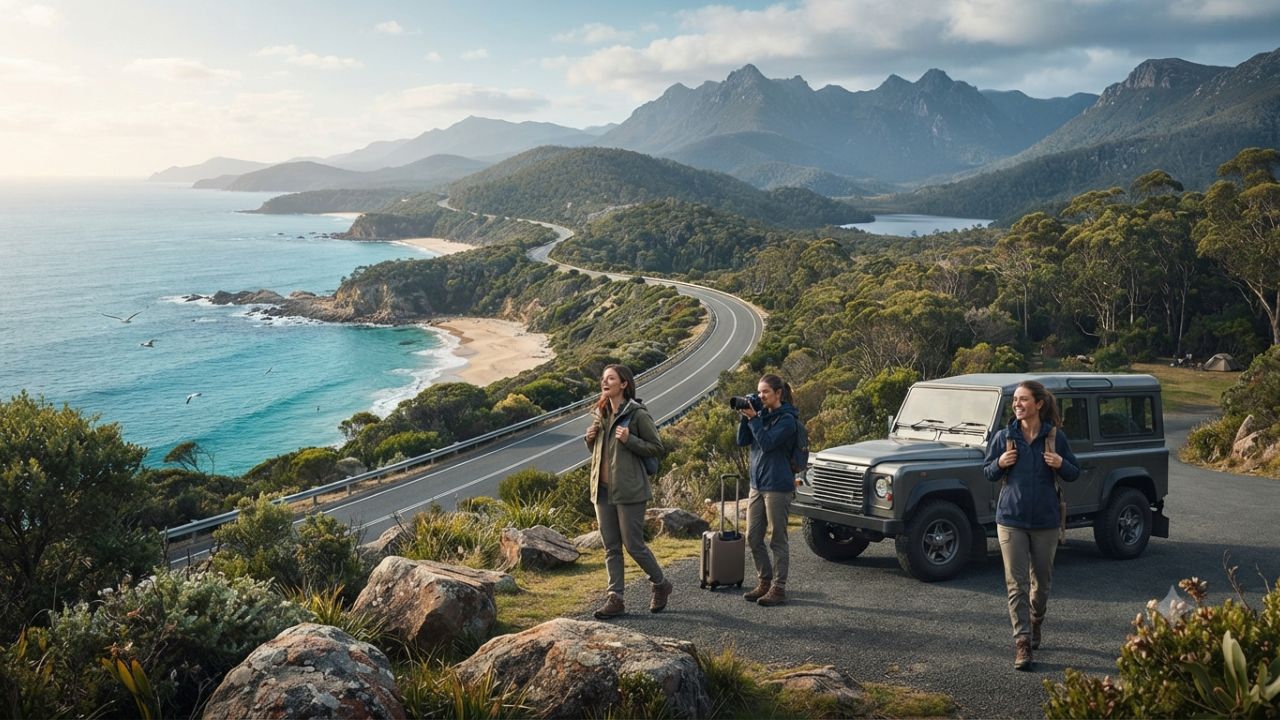
Tasmania's Great Eastern Drive and Western Wilds earned top national scores in a comprehensive 25-route Australian nature tourism index.
Tasmania has reinforced its standing as Australia's premier nature tourism destination after two of its signature self-drive routes captured top national honors. In a comprehensive national evaluation of 25 major touring routes across Australia, Tasmania’s Great Eastern Drive ranked third nationally with a score of 61.66 out of 100, while the Western Wilds secured fourth place with 61.63 points. The national recognition arrives as Tasmania records 1.404 million annual visitors and a record $3.791 billion in tourism expenditure.
[HOBART, Australia] — Australia's island state of Tasmania has outperformed mainland touring corridors in a nationwide assessment of nature-focused road trips. The national benchmark study evaluated 25 promoted driving routes across state and territory tourism boards using 10 nature-centric metrics, including protected land percentage, native vegetation density, terrain diversity, wildlife presence, and campsite accessibility.
Official visitor statistics published by Tourism Tasmania indicate that self-drive road trips serve as the primary vehicle for tourist dispersion across the state. For the 12-month period ending March, Tasmania welcomed 1.404 million visitors—a 4.8 percent year-over-year increase—generating $3.791 billion AUD in visitor spend, up 7.8 percent. Domestic travel from Queensland led regional market growth, contributing 259,600 visitors to the state.
National Assessment Highlights Tasmania's Driving Corridors
The evaluation benchmarked driving routes nationwide, highlighting Tasmania's unique concentration of coastal access, protected wilderness, and high-density campsite infrastructure:
- Great Eastern Drive: Ranked #3 nationally (61.66 / 100) and recognized as Australia's most coastal nature route.
- Western Wilds: Ranked #4 nationally (61.63 / 100) and ranked #1 nationwide for protected corridor percentage and natural water features.
- Southern Edge: Ranked as Tasmania's third highest-performing route (36.08 / 100), noted for mountain elevation and rainforest access.
| Tasmanian Touring Route | National Rank | Index Score (out of 100) | Distance (km) | Key Geographical Feature |
|---|---|---|---|---|
| Great Eastern Drive | #3 Nationally | 61.66 | 199.9 km | 75.7% of route within 5 km of the sea |
| Western Wilds | #4 Nationally | 61.63 | 544.8 km | 41.2% protected land corridor; 34.14 water features/100 km |
| Southern Edge | #21 Nationally | 36.08 | 283.0 km | 739 m elevation range; Mt Field National Park access |
Great Eastern Drive: Australia's Premier Coastal Touring Route
Spanning 199.9 kilometers from Orford to St Helens, the Great Eastern Drive follows Tasmania’s eastern coastline. The route earned distinction as the most maritime-concentrated road trip in Australia, with 75.7 percent of the driving corridor positioned within five kilometers of the sea.
In addition to coastal access, the route ranked high for outdoor hospitality infrastructure, offering 18.01 listed campsites per 100 kilometers—among the highest camping densities in the nation. The corridor also features 21.51 named natural water features per 100 kilometers, connecting travelers with Freycinet National Park, Wineglass Bay, Maria Island, and the granite formations of the Bay of Fires.
| Metric (Great Eastern Drive) | Recorded Value | Industry Benchmark Standing |
|---|---|---|
| Total Route Length | 199.9 km | Orford to St Helens coastal corridor |
| Coastal Proximity | 75.7% within 5 km of sea | #1 most coastal route in Australia |
| Campsite Density | 18.01 sites per 100 km | Top tier nationally for self-drive camping |
| Water Feature Density | 21.51 features per 100 km | High density of bays, rivers, and lagoons |
Western Wilds: World Heritage Wilderness and High Waterway Density
Covering 544.8 kilometers between Hobart and Devonport, the Western Wilds route provides access to Tasmania’s remote interior and western wilderness reserves.
The Western Wilds recorded the highest proportion of protected land of any Australian touring route evaluated, with 41.2 percent of its corridor passing through national parks and nature reserves. Furthermore, 65.6 kilometers of the driving route cuts directly through the UNESCO-listed Tasmanian Wilderness World Heritage Area.
The route also secured the top position nationwide for natural water features, recording 34.14 named rivers, lakes, and waterfalls per 100 kilometers. The itinerary connects travelers with Queenstown's historic mining landscapes, Strahan on Macquarie Harbour, and the alpine peaks of Cradle Mountain-Lake St Clair National Park.
| Metric (Western Wilds) | Recorded Value | Industry Benchmark Standing |
|---|---|---|
| Total Route Length | 544.8 km | Hobart to Devonport via Western Wilderness |
| Protected Land Corridor | 41.2% protected area | #1 nationwide for protected land ratio |
| World Heritage Access | 65.6 km inside World Heritage Area | Direct UNESCO Wilderness Area driving access |
| Water Feature Density | 34.14 features per 100 km | #1 nationwide for rivers, lakes, and waterfalls |
Southern Edge Completes Tasmania's Touring Portfolio
Complementing the eastern and western corridors, the Southern Edge route covers 283 kilometers from Hobart south to Southport.
The route features a dramatic elevation range of 739 meters as it navigates mountain passes around Mt Field National Park, the Huon Valley, and the Far South coastline. The itinerary appeals to travelers interested in temperate rainforest hiking, tall trees, cave networks, and local cool-climate cider and wine producers.
National visitor research published by Tourism Australia indicates that self-drive travelers spend an average of 40 percent more per trip than single-city urban tourists, reinforcing the economic importance of Tasmania's multi-route strategy.
| Economic & Visitor Metric | Annual Performance (Ending March) | Year-over-Year Growth |
|---|---|---|
| Total Tasmanian Visitors | 1.404 million visitors | +4.8% YoY |
| Total Visitor Spend | $3.791 billion AUD | +7.8% YoY |
| Top Origin Market (Domestic) | Queensland (259,600 visitors) | Leading domestic growth market |
Practical Travel Advice for Tasmanian Self-Drive Trips
Travelers planning a self-drive itinerary across Tasmania's top-ranked road trips should follow these practical recommendations:
- Book Vehicles Early: Vehicle rental availability in Hobart and Launceston is constrained during peak summer months (December–February). Reserve rental cars or campervans well in advance.
- Purchase a National Parks Pass: Accessing national parks along the Great Eastern Drive (Freycinet) and Western Wilds (Cradle Mountain, Mt Field) requires a Parks Pass. Purchase an Holiday Parks Pass for multi-park savings.
- Allow Extra Driving Time: Tasmanian roads feature winding terrain, unsealed wilderness sections, and frequent wildlife crossings. Double estimated travel times on western routes.
- Prepare for Variable Weather: Mountain conditions on the Western Wilds and Southern Edge can change rapidly. Carry warm layers, wet-weather gear, and monitor road conditions.
Frequently Asked Questions
Which Tasmanian road trips were ranked among Australia's top nature routes?
The Great Eastern Drive ranked 3rd nationally (score 61.66), and the Western Wilds ranked 4th nationally (score 61.63) out of 25 Australian touring routes evaluated.
What makes the Great Eastern Drive unique in Australia?
The 199.9 km route from Orford to St Helens is Australia's most coastal nature route, with 75.7% of its length running within 5 kilometers of the sea, combined with high campsite density.
What wilderness attractions are featured along the Western Wilds route?
The 544.8 km route passes through Queenstown, Strahan, Cradle Mountain, and features 65.6 km inside the UNESCO-listed Tasmanian Wilderness World Heritage Area.
How much did tourists spend in Tasmania in the latest 12-month period?
Tasmania recorded $3.791 billion AUD in visitor spending, representing a 7.8% year-over-year increase, driven by 1.404 million total visitors.
Related Travel Guides
Disclaimer
This article is for informational and educational purposes only. It does not constitute legal, financial, or professional advice. While we strive to provide accurate and up-to-date information, travel policies, regulations, and conditions change rapidly. Always verify information with official sources before making travel decisions. Nomad Lawyer makes no representations about the accuracy, reliability, completeness, or suitability of the information provided. Readers should consult qualified professionals for advice specific to their circumstances. The views expressed in this article are those of the author and do not necessarily reflect the views of Nomad Lawyer.
Kunal K Choudhary
Co-Founder & Contributor
A passionate traveller and tech enthusiast. Kunal contributes to the vision and growth of Nomad Lawyer, bringing fresh perspectives and driving the community forward.
Learn more about our team →