Taiwan’s Hualien Travel Access Changes as Mandarin Airlines Cuts Flights and Shifts Regional Capacity

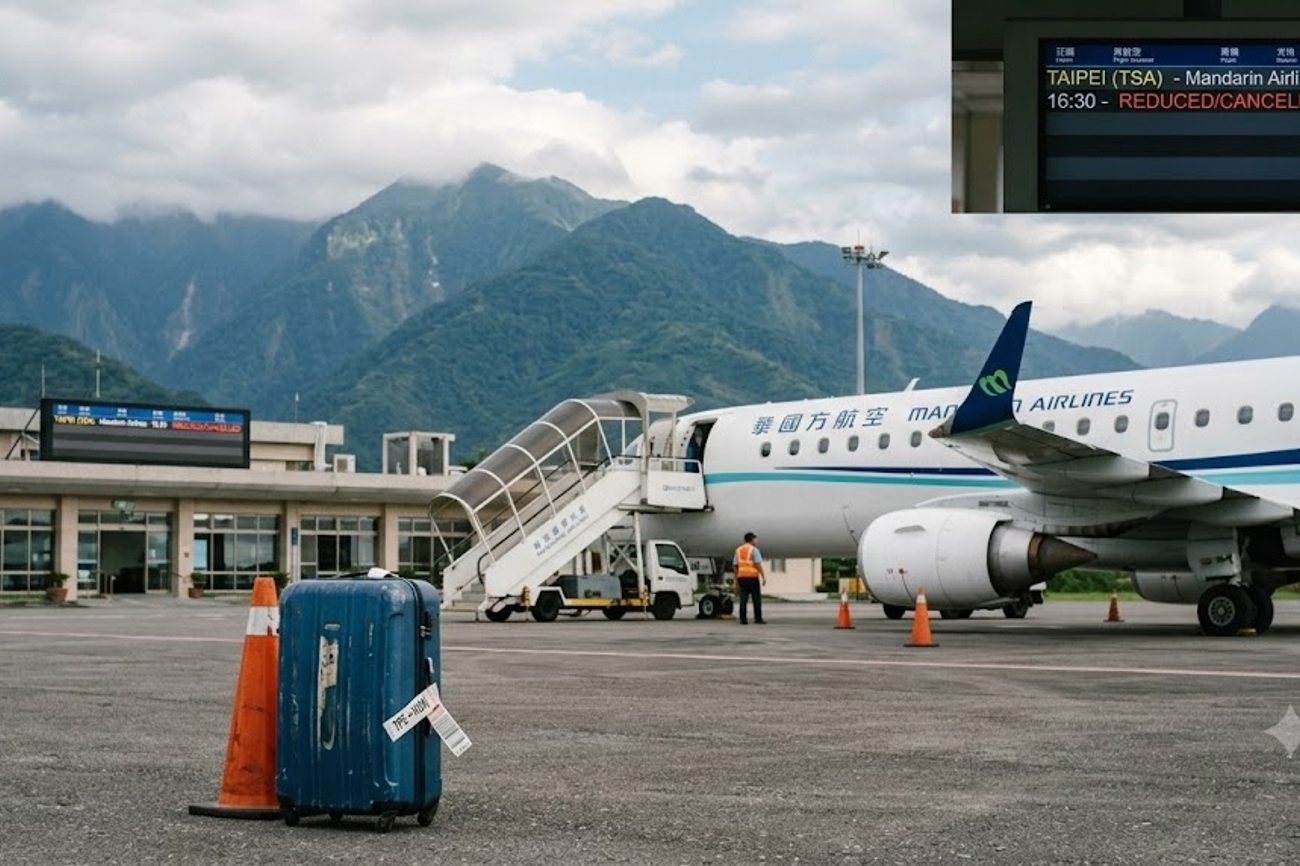
Image generated by AI
NT$70 million in annual losses across just two flights has forced Mandarin Airlines to trigger a strategic retreat from eastern Taiwan. Starting October 1, 2026, the carrier will implement a network restructuring that signals a pivot away from Hualien, citing a lack of sustainable demand for connections between the eastern coast and the island's major urban hubs.
The Economics of Regional Attrition
The decision to scale back operations is not a sudden pivot but a response to severe operational inefficiency. The most jarring metric revealed by the carrier is the existence of a flight that operated with only five passengers over the course of an entire year. For a commercial aircraft, such load factors are catastrophic, turning every takeoff into a significant financial liability.
Mandarin Airlines has secured the necessary regulatory clearance from the Civil Aeronautics Administration (CAA) to reduce these frequencies. The restructuring targets the Kaohsiung-Hualien corridor specifically, where service will be slashed from seven weekly flights to five. Meanwhile, the Taichung-Hualien route will maintain its current cadence of three flights per week, though the airline has explicitly warned that this schedule remains contingent on demand and is subject to further reductions.
This move reflects a broader trend in domestic aviation where "social connectivity" routes—those maintained for the sake of regional access rather than profit—are being purged in favor of commercially viable corridors. In Hualien, the availability of high-capacity rail and road networks has effectively cannibalized the air market, making the short-haul flight a luxury of convenience rather than a necessity of geography.
Capacity Redistribution and Route Data
The airline is not simply removing capacity from the sky; it is migrating assets to destinations where the yield per seat is higher. The aircraft previously assigned to the Hualien routes are being redeployed to Taiwan's offshore islands, where the geographic barrier makes air travel the only viable option for most passengers.
| Route | Previous Frequency | New Schedule (Post-Oct 1, 2026) | Resource Redirection |
|---|---|---|---|
| Kaohsiung $\rightarrow$ Hualien | 7 flights/week | 5 flights/week | Capacity shifted to Penghu |
| Taichung $\rightarrow$ Hualien | 3 flights/week | 3 flights/week (Conditional) | Capacity shifted to Kinmen |
The redistribution of these resources to Penghu and Kinmen indicates that Mandarin Airlines is prioritizing "captive markets"—locations where passengers cannot simply opt for a train or bus—over the competitive domestic market of eastern Taiwan.
Expert Analysis: The "Last Mile" Logistics Gap
For travelers booking routes to eastern Taiwan, the direct consequence of this shift is a reduction in "time-utility." While the flights still exist, the loss of two weekly frequencies on the Kaohsiung route removes the daily reliability that business travelers and short-stay tourists rely on. When a flight schedule moves from daily to intermittent, the "friction" of travel increases; a missed connection or a delayed flight no longer results in a 24-hour wait, but potentially a multi-day disruption.
The pricing pressure created by this consolidation often leads to a paradoxical increase in fares. As seat capacity drops, the remaining flights may see higher load factors, allowing the airline to raise prices on the few remaining slots. This creates a feedback loop where the air route becomes an elite service rather than a regional utility.
Taiwan's Hualien travel access is undergoing changes as Mandarin Airlines cuts flights and shifts regional capacity, affecting passenger logistics and tourism in the region. For the most up-to-date information on flight schedules and availability, passengers can visit the Taiwan Taoyuan International Airport website to plan their trips accordingly. This adjustment may impact travel plans, especially for those relying on Mandarin Airlines for domestic connections.
Furthermore, this restructuring highlights a tension between the Taiwan Tourism Administration goals and commercial aviation reality. Hualien, home to the Taroko National Park, relies on ease of access to sustain its hospitality sector. When air links erode, the burden shifts entirely to the rail network. For the nomad traveler or the high-net-worth tourist, the transition from a 45-minute flight to a multi-hour train journey can alter the perceived accessibility of the region, potentially shifting tourist traffic toward more accessible hubs.
Key Takeaways
- Service Cuts: Effective October 1, 2026, Kaohsiung-Hualien flights drop from 7 to 5 per week.
- Financial Driver: The airline is mitigating a NT$70 million (approx. US$2.2 million) annual loss caused by critically low load factors.
- Asset Migration: Aircraft resources are being redirected to support higher-demand routes to Penghu and Kinmen.
- Alternative Transit: Travelers are encouraged to utilize Taiwan's robust rail and bus networks as primary alternatives to air travel.
- Conditional Stability: The Taichung-Hualien route remains at 3 flights per week but is flagged for potential future cuts.
FAQ: Hualien Air Travel 2026
Will there still be flights to Hualien after October 2026? Yes. Mandarin Airlines is reducing frequency, not eliminating the service. Flights will still operate from Kaohsiung and Taichung, though with fewer weekly departures.
What is the best alternative to flying into Hualien? The rail network is the most reliable alternative. Trains connect Hualien to major cities across the island and are often preferred for their scenery and reliability.
How does this affect international tourists? International visitors should plan domestic transfers earlier. If you are traveling from southern Taiwan to Hualien, you will have fewer flight options and should compare flight times against rail schedules.
Why is the airline moving planes to Penghu and Kinmen? These destinations lack the rail and road alternatives available in Hualien, ensuring a consistent passenger base and higher commercial sustainability for the airline.
The erosion of regional air links is rarely about the destination and almost always about the math of the empty seat.
Tags: Mandarin Airlines, Hualien Airport, Taiwan Civil Aeronautics Administration, Taroko National Park, Taiwan Domestic Aviation 2026
Related Travel Guides
- Switzerland Travel Surges as SWISS Student Fares Unlock Budget Flights and Exclusive Benefits
- United Airlines Brings Premium Boeing 787-9 Dreamliner to Sydney San Francisco Route With New Elevated Cabin Experience
- Turkish Airlines Flight Returns to Istanbul After Moscow Drone Attack Disrupts Air Travel Between Turkey and Russia
This article is for informational purposes. Flight routes, passenger regulations, visa rules, and transit advisories are subject to change by airlines and aviation authorities. Readers are advised to verify schedules and travel documentation with relevant carriers and border agencies before departure.
Related Stories

Jet Airways vs. Boeing NCLAT Battle: Why Manufacturer Litigation Offers No Quick Ticket Refunds for Indian Travel Agents

easyJet Launches Direct Liverpool to Reykjavik Flights: Inside the North West's New Winter Gateway to Iceland