
Syria's Aleppo Citadel Deploys AI and Touristech Systems for Ancient Heritage Preservation 2026
The Aleppo Citadel is integrating AI and 3D laser scanning through the Touristech project to protect its ancient structures while expanding global accessibility.

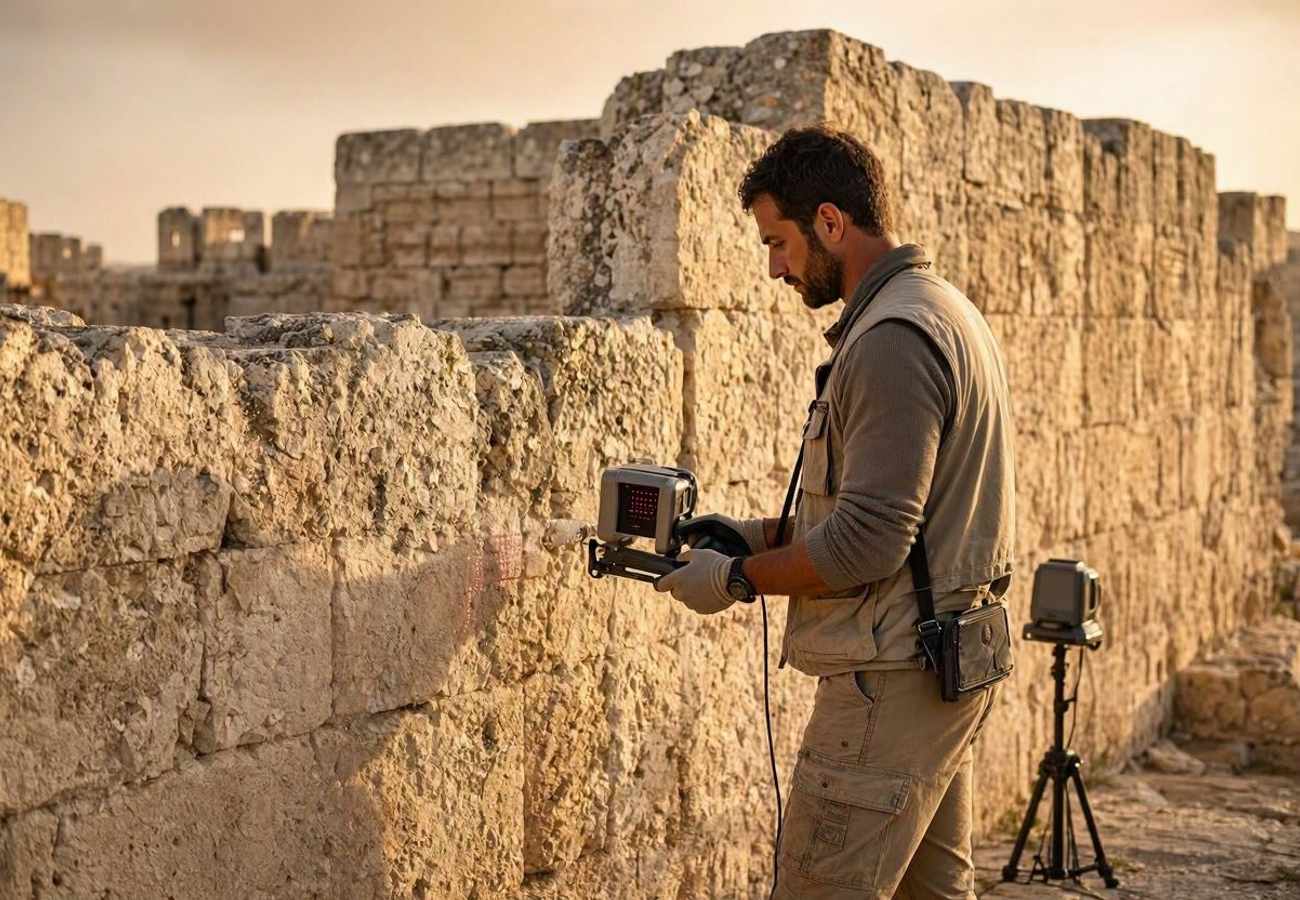
Image generated by AI
Digital twins and 3D laser scanning are now the primary defense mechanisms for one of the world's oldest castles. The Aleppo Citadel is no longer relying solely on mortar and stone to survive; it is being mirrored in a digital realm to ensure that even if physical structures fail, the architectural DNA of this fortress remains intact.
The Rise of Touristech in Aleppo
The Syrian Ministry of Tourism, led by Minister Mohammad Raafat Al-Salhani, has officially launched the "Touristech" project. This is not a simple website update or a digital brochure; it is a fundamental shift in how Syria manages its most fragile assets. After years of conflict and environmental stress, the citadel requires a recovery strategy that moves beyond traditional masonry.
The Touristech framework focuses on creating a high-tech infrastructure that allows for a "non-disruptive" interaction between the visitor and the monument. By shifting the heavy lifting of historical exploration to digital platforms, the ministry can reduce the physical foot traffic on sensitive archaeological layers while still providing an immersive experience for those who cannot travel to the site.
What Makes the Aleppo Citadel Experience Different
The citadel is one of the largest and oldest fortifications globally, and its current transformation leverages technology to reveal what is invisible to the naked eye. Through the use of photogrammetry and high-resolution 3D scanning, the project is creating "digital twins" of the site.
Visitors can now access subterranean water systems and hidden defensive towers that were previously off-limits due to safety concerns or structural instability. This approach allows the UNESCO World Heritage site to be explored in a way that preserves the original stone from the wear and tear of thousands of footsteps.
Digital Integration Overview
| Technology | Application | Primary Benefit |
|---|---|---|
| 3D Laser Scanning | Structural Mapping | Precise archival of architectural dimensions |
| Photogrammetry | Visual Reconstruction | High-fidelity digital twins for remote access |
| Artificial Intelligence | Predictive Analysis | Forecasting environmental wear and structural decay |
| Augmented Reality | Real-time Interpretation | Personalized, AI-driven historical narratives |
Visitor Insider Tips
For those planning a visit to Aleppo or exploring the citadel via its new digital portals, the experience requires a different mindset than a standard museum trip.
- The Digital First Approach: Before arriving, engage with the Touristech digital resources. Understanding the 3D layouts of the subterranean chambers makes the physical walk-through significantly more meaningful.
- Local Guidance: While AI guides are being rolled out, the project includes training for local guides. Hire a local expert who has undergone the Touristech digital literacy program; they can bridge the gap between the AI's data and the living history of the city.
- Timing Your Visit: To avoid the heat and the heaviest crowds, aim for early morning entries. The surrounding historic souks are best explored in the late afternoon when the artisans are most active.
- Tech Readiness: Ensure your devices are updated. The augmented reality (AR) features designed for the site rely on stable hardware to render the complex historical overlays in real-time.
Cultural and Environmental Context
The integration of AI at the Aleppo Citadel is a response to a grim reality: the intersection of war and nature. AI is being deployed not to replace historians, but to analyze structural integrity patterns and predict how environmental factors will impact the limestone walls over the next several decades.
This project also functions as a socio-economic engine. By attracting tech-savvy researchers and international cultural tourists, the Touristech initiative funnels revenue back into the local community. The surrounding souks—the heartbeat of Aleppo's commerce—benefit directly from the increased foot traffic. Moreover, the digital literacy programs provided to local technicians ensure that the economic gains of "Touristech" are not outsourced to foreign firms but are owned by the people of Aleppo.
For more information on travel requirements and official guidelines, visitors should consult the Syrian Ministry of Tourism (or relevant diplomatic portals) to ensure all entry permits are secured.
FAQ: Visiting Aleppo Citadel 2026
Is it safe to visit the Aleppo Citadel in 2026? Safety conditions vary. Travelers should check current travel advisories from their home governments and coordinate with official tour operators who are integrated with the Touristech security frameworks.
How does the AI guide work on-site? The AI-driven guides use augmented reality (AR) via your smartphone or provided devices to interpret historical contexts in real-time, tailoring the story based on your interests and movements.
Can I visit the citadel virtually? Yes. A primary goal of the Touristech project is to provide high-resolution digital twins and 3D scans, allowing global audiences to explore the site remotely.
What is the best way to get to Aleppo? Most international visitors enter via Damascus and travel north. It is highly recommended to arrange transport through a licensed agency familiar with the current regional checkpoints.
The stones of Aleppo may be ancient, but their survival is now written in code.
Related Travel Guides
Disclaimer
This article is for informational and educational purposes only. It does not constitute legal, financial, or professional advice. While we strive to provide accurate and up-to-date information, travel policies, regulations, and conditions change rapidly. Always verify information with official sources before making travel decisions. Nomad Lawyer makes no representations about the accuracy, reliability, completeness, or suitability of the information provided. Readers should consult qualified professionals for advice specific to their circumstances. The views expressed in this article are those of the author and do not necessarily reflect the views of Nomad Lawyer.
Kunal K Choudhary
Co-Founder & Contributor
A passionate traveller and tech enthusiast. Kunal contributes to the vision and growth of Nomad Lawyer, bringing fresh perspectives and driving the community forward.
Learn more about our team →