
Germany's Sylt Island Reshapes Coastal Tourism as Tinnum Mixed-Use Project Blends 15 Residential Apartments with Retail Infrastructure
Sylt Island in Germany tackles regional housing scarcity with Lidl's mixed-use Tinnum project, integrating 15 permanent residences above a 1,600-square-metre store.

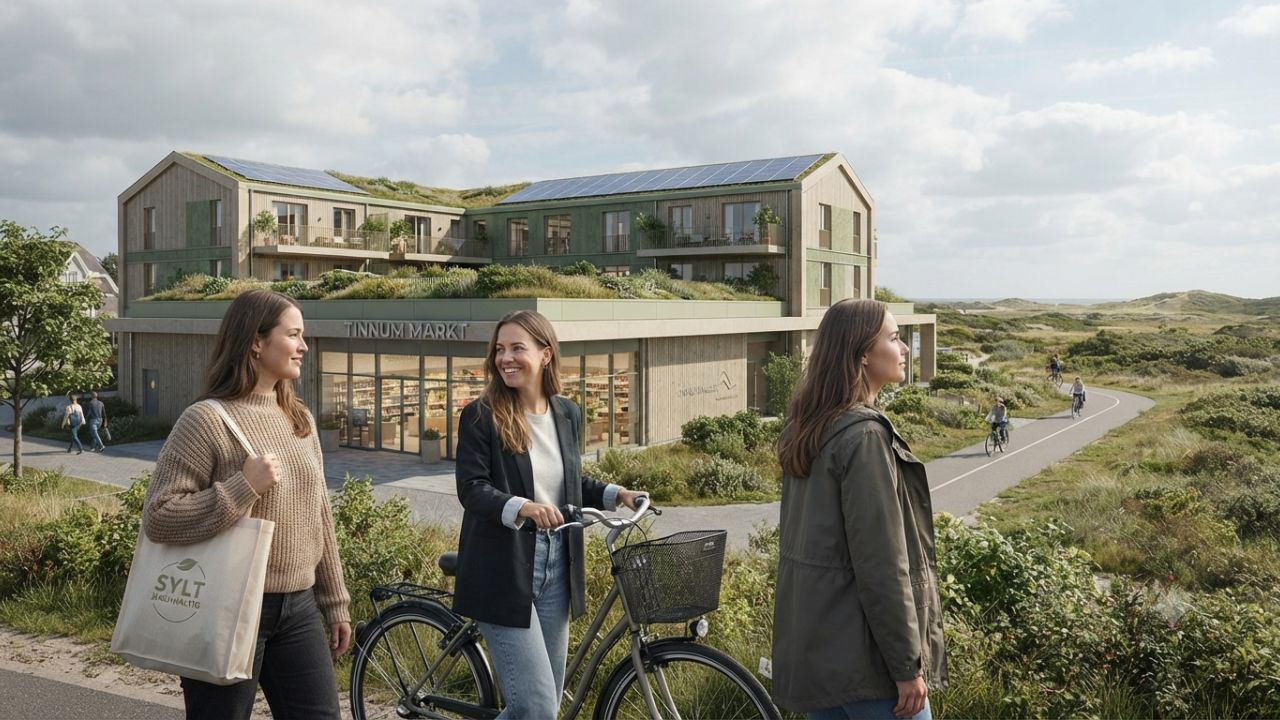
Image generated by AI
Germany’s high-demand North Sea destination of Sylt is pioneering a compact land-use framework in Tinnum, integrating 15 permanent residential apartments directly above a modernized 1,600-square-metre retail facility to alleviate island housing scarcity.
[TINNUM, Germany] — Sustainable destination planning in North Sea coastal resorts has taken a step forward as Germany’s island of Sylt debuts a mixed-use development combining municipal workforce housing with essential commercial infrastructure. Located in the municipality of Tinnum, the project addresses long-standing real estate constraints caused by high tourism demand and limited land supply. By erecting permanent residential units directly above an expanded supermarket, municipal planners and private developers are establishing a hybrid model intended to protect local workforce stability while enhancing everyday services for island visitors.
The island of Sylt has maintained a prominent position within Germany’s maritime tourism sector, renowned for its North Sea beaches, tidal mudflats, and high-end hospitality offerings. However, the popularity of vacation home rentals and boutique accommodations has heightened competition for land. Permanent island residents, hospitality personnel, and municipal service staff face extreme accommodation shortages, prompting regional planners to shift focus toward high-density, multi-functional land development.
Tinnum Mixed-Use Framework Addresses Sylt Residential Pressures
The Tinnum construction initiative reflects a transition toward integrated urban planning in spatial constraint zones. Instead of allocating isolated parcels for commercial retail and residential housing, the project consolidates both functions into a single building footprint. This compact architectural blueprint minimizes ground-level footprint consumption while providing vital services to the surrounding North Frisian region.
Spatial planners note that high visitor numbers frequently inflate land values in coastal destinations, displacing essential personnel who sustain local transport, emergency services, and resort operations. The integration of workforce accommodation alongside retail hubs offers a structured solution to preserve community demographics without encroaching upon protected island nature reserves.
| Tourism Development Factor | Sylt Impact |
|---|---|
| Destination type | North Sea island tourism destination |
| Development approach | Mixed-use retail and housing |
| Main focus | Community support and sustainable land use |
| Location | Tinnum, Sylt, Germany |
| Tourism relevance | Supports long-term destination resilience |
Structural Specifications: 15 Residential Units Above Commercial Retail
The residential component of the Tinnum development introduces 15 purpose-built apartments situated above the retail floor. Designed specifically for long-term residency rather than temporary vacation rentals, these housing units range in size from 44 to 78 square metres. This variation accommodates single service professionals as well as small resident families.
Constructing residential quarters over active commercial space maximizes vertical clearance in zones where horizontal expansion is strictly regulated by environmental protection statutes. The physical proximity of living space to central transit routes and commercial employment hubs reduces daily commuter movements across Sylt’s limited road network.
| Housing Feature | Project Details |
|---|---|
| Residential units | 15 apartments |
| Apartment purpose | Permanent housing |
| Size range | 44–78 square metres |
| Location | Above Lidl retail facility |
| Development strategy | Vertical mixed-use construction |
Environmental Engineering and Recycled Material Parameters
Environmental standards formed a core component of the building’s engineering design. To satisfy local energy regulations and lower the structural carbon footprint, the Tinnum facility incorporates a hybrid timber construction system. Partial green roof installations and living vegetative façade elements assist with storm-water retention and natural thermal insulation, mitigating coastal weather extremes.
The building process prioritized circular economy principles by utilizing recycled materials, including processed concrete, secondary plastics, re-purposed glass, and structural aluminium. On-site power generation relies on a rooftop photovoltaic solar panel array, while space heating and climate control operate through high-efficiency heat pumps paired with waste-heat recovery units connected to commercial refrigeration equipment.
| Sustainability Feature | Development Detail |
|---|---|
| Construction method | Hybrid timber system |
| Renewable energy | Rooftop photovoltaic installation |
| Recycling | Concrete, plastics, glass and aluminium reuse |
| Heating technology | Heat pumps and recovered heat |
| Environmental goal | Lower resource consumption |
Retail Modernization: 1,600-Square-Metre Supermarket and Community Hub
The commercial foundation of the complex modernizes and expands the previous retail footprint into a 1,600-square-metre sales area. The redesign incorporates wide shopping aisles, modernized product distribution layouts, and full barrier-free accessibility to serve elderly residents and travelers. Rather than demolishing pre-existing assets, the engineering design retained and retrofitted key structural elements of the original site.
Beyond grocery logistics, the enlarged complex integrates supplemental community services, including pharmacy operations, health and beauty care retail, and dedicated space for regional small businesses. For seasonal travelers, the expanded facility increases retail capacity during peak summer months when demand for everyday consumer goods strains island supply lines.
| Retail Development Feature | Details |
|---|---|
| Retail area | 1,600 square metres |
| Existing structure | Retained and integrated |
| Additional services | Pharmacy and regional businesses |
| Customer benefit | Modern shopping environment |
| Community role | Everyday service centre |
Traveler Logistics Guide: Navigating Sylt’s Transit and Supply Chains
For travelers visiting Sylt, understanding local transport and service nodes is essential during peak travel periods:
- Island Access via Hindenburgdamm: Sylt is connected to mainland Germany via the Hindenburgdamm causeway. Travelers arriving by vehicle must board the DB AutoZug Sylt Shuttle or Autozug Sylt passenger-car train services from Niebüll to Westerland (Sylt).
- Passenger Ferry Transit: Alternate maritime passenger and vehicle ferries operate between Havneby on the Danish island of Rømø and List on the northern tip of Sylt via the Rømø-Sylt Line.
- Local Logistics in Tinnum: Situated central to Westerland, Keitum, and Archsum, Tinnum functions as a primary commercial distribution node. Travelers staying in self-catering holiday apartments can access the upgraded 1,600-square-metre retail centre via local bus routes 1 and 2 or by bicycle via the island-wide paved cycle network.
- Peak Season Supply Management: During July and August, commercial foot traffic spikes across the island. Visiting travelers are advised to utilize early morning or late evening hours for retail purchases to bypass peak holiday queues.
| Future Tourism Trend | Sylt Example |
|---|---|
| Community-focused tourism | Housing integrated with services |
| Sustainable development | Renewable energy and recycling |
| Efficient land use | Retail and residential combination |
| Visitor infrastructure | Improved shopping facilities |
| Destination resilience | Supporting local communities |
Regional Infrastructure Impact and Coastal Tourism Resilience
The Tinnum project illustrates how popular island destinations are adapting to severe spatial and demographic pressures. As international coastal resorts grapple with housing affordability and infrastructure fatigue, vertical mixed-use planning demonstrates that commercial expansion can directly fund and house the local labor force.
By securing 15 permanent apartment units within an essential retail complex, Sylt strengthens its municipal supply chains and workforce retention. The project serves as an operational benchmark for other European coastal and island destinations balancing eco-friendly building codes, community survival, and high-volume seasonal tourism.
Frequently Asked Questions: Sylt Sustainable Housing Project 2026
What is the primary purpose of the new Lidl development in Tinnum, Sylt?
The project combines a modernized 1,600-square-metre supermarket facility with 15 permanent residential apartments to support local community housing needs and improve island retail infrastructure.
How big are the new residential apartments built above the store?
The 15 permanent residential apartments range in size from 44 to 78 square metres, designed specifically for long-term island residents and local workers.
What sustainable building features are integrated into the Tinnum complex?
The development utilizes hybrid timber construction, partial green roofs, vegetative façades, recycled building materials (concrete, glass, plastics, aluminium), rooftop solar photovoltaics, and heat-recovery pumps connected to refrigeration systems.
Can tourists rent the new apartments in Tinnum for short-term stays?
No, the 15 apartment units are legally designated for permanent local housing to mitigate workforce housing shortages caused by the expansion of vacation rentals across Sylt.
Related Travel Guides
Germany Extends Schengen Border Checks Across 9 Neighboring Countries for 2027
Austria Aligns with Switzerland as Car-Free Alpine Travel Transforms Resort Regions
The 10 Best Car-Free Island Escapes in Europe, According to Travelers
Disclaimer
This article is for informational and educational purposes only. It does not constitute legal, financial, or professional advice. While we strive to provide accurate and up-to-date information, travel policies, regulations, and conditions change rapidly. Always verify information with official sources before making travel decisions. Nomad Lawyer makes no representations about the accuracy, reliability, completeness, or suitability of the information provided. Readers should consult qualified professionals for advice specific to their circumstances. The views expressed in this article are those of the author and do not necessarily reflect the views of Nomad Lawyer.
Kunal K Choudhary
Co-Founder & Contributor
A passionate traveller and tech enthusiast. Kunal contributes to the vision and growth of Nomad Lawyer, bringing fresh perspectives and driving the community forward.
Learn more about our team →