
Austria Aligns With Switzerland and Many Other Nations as Car-Free Austria Transforms Alpine Travel
Austria Aligns With Switzerland and Many Other Nations as Car-Free Austria Transforms Alpine Travel

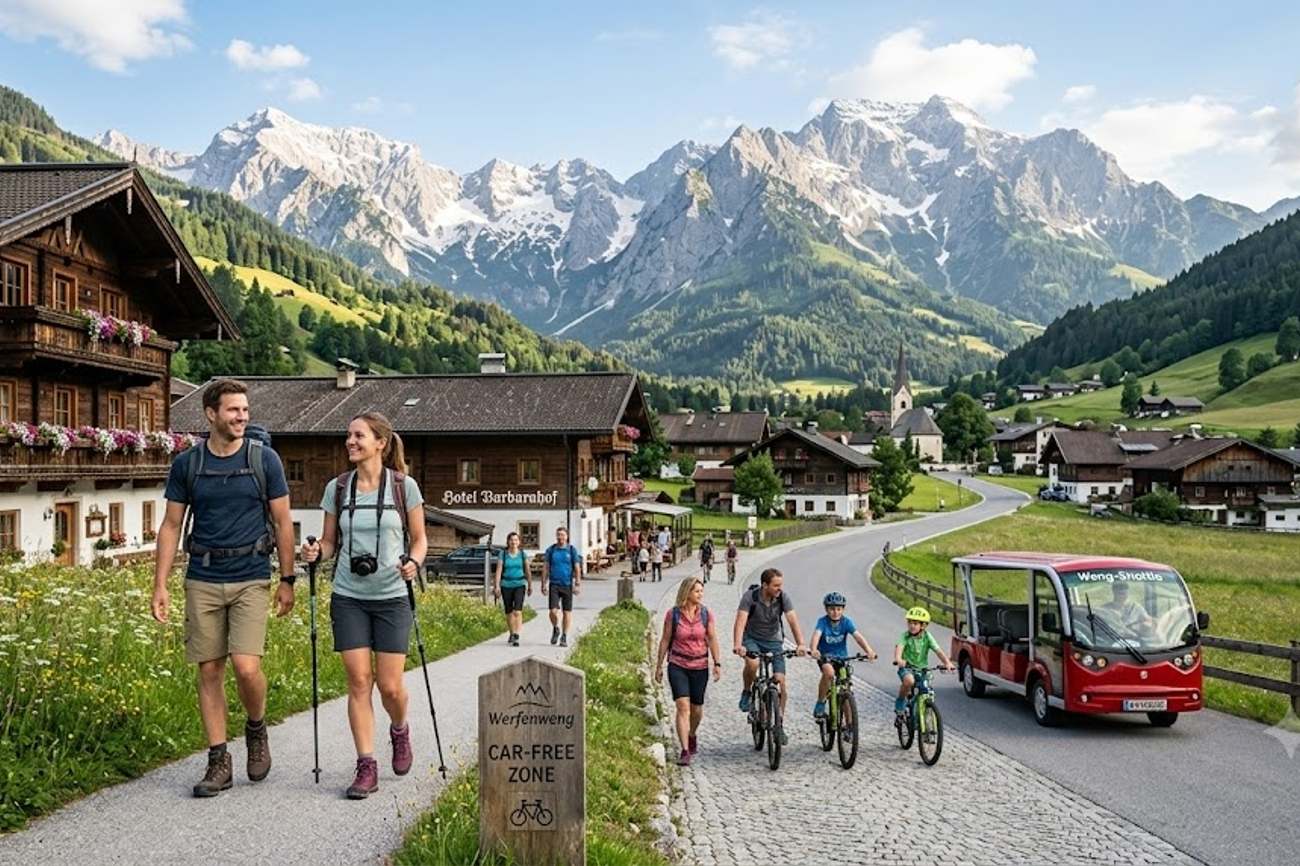
Image generated by AI
The traditional Alpine road trip is becoming a relic of the past as Austria transforms its mountain regions into a massive, car-free laboratory. While most travelers still instinctively reach for rental car keys at the airport, a sophisticated network of 5,000 kilometres of railway, 1,000 stations, and 7,000 daily train runs is quietly rewriting the rules of mountain exploration.
The Shift Toward an Alpine Rail Spine
Austria is currently experiencing an unprecedented surge in tourism, recording 48.17 million arrivals and 157.29 million overnight stays in 2025. This represents an all-time high for the country's accommodation sector, with a 1.9% increase in overnight stays compared to 2024. Interestingly, the way people move through this space is evolving; rail now accounts for 15.2% of holiday journeys for Austrian residents, marking the second-highest share in the nation's history.
The geographical heart of this movement is centered in Tyrol and Salzburg, which together generated 80.92 million overnight stays. The scale of this shift is not merely about environmental optics—it is a commercial restructuring. When visitors abandon the rental car, their economic footprint changes. Instead of driving quickly between distant landmarks, rail-based travelers spend more time within village centers, utilizing local buses, dining near stations, and engaging with smaller communities that were previously bypassed by those on the highway.
For those planning a trip, the strategy has flipped. The old method was to pick a remote mountain lodge and then figure out how to get there. The new, insider approach is to identify a primary rail hub first and build the itinerary around that mobility chain. Destinations like St Anton am Arlberg now offer international Railjet connections, while Kitzbühel and the Gastein valley (via Dorfgastein, Bad Hofgastein, and Bad Gastein) provide IC/EC services that make the mountains accessible without a steering wheel.
What Makes the Austrian Alps Different
The uniqueness of the Austrian model lies in its "last kilometer" philosophy. Many mountain regions globally have trains that stop at the valley floor, leaving travelers stranded miles from their actual destination. Austria has countered this by integrating regional mobility into the guest experience itself.
In the Salzkammergut region, for example, on-demand shuttles bridge the gap to harder-to-reach areas. In Werfenweng, a dedicated low-car mobility system manages the flow of visitors to minimize traffic. This integration means that transport is no longer a logistical hurdle to be solved, but a built-in amenity of the stay.
The Gastein valley serves as the gold standard for this integration. Here, the railway doesn't just drop you at the edge of the region; it penetrates deep into the valley. This allows for a "hub and spoke" holiday style. Rather than hauling luggage between three different hotels in three different villages, a traveler can base themselves in one spot—like Dorfgastein—and use a combination of trains, buses, and mountain lifts to explore.
This infrastructure extends to non-motorized transport. Dorfgastein has integrated cycling routes that link it to Bad Hofgastein and Bad Gastein, supported by e-bike charging stations and servicing hubs located strategically near the Fulseck cable-car station. By linking the ÖBB railway network with local lifts and bike paths, the region has created a seamless loop of movement.
Visitor Insider Tips
To navigate the Alps without a car, you have to think like a local. The biggest mistake visitors make is booking a "secluded" hotel that requires a private taxi for every meal.
The Station-First Strategy: Always select your accommodation based on its proximity to a regional station or a primary bus line. In the Gastein valley, staying near the center of Dorfgastein puts you within walking distance of the station and the local bus network, which is essential for reaching the mountain lifts in winter.
Master the Guest Card: In regions like Zell am See-Kaprun and Gastein, the Guest Mobility Ticket is your most valuable asset. In Zell am See, this ticket provides access to the Pinzgau local railway and Postbus services across the entire Salzburg region, including your arrival and departure days. Note that for 2026, a mobility tax of €0.50 per person per night (for those 15 and older) is implemented to fund this, with a planned increase to €1.10 starting in May 2027.
Timing the Transfers: While the main rail spine is punctual, regional "hiking buses" often operate on seasonal schedules. Always verify the final transfer from the station to your trailhead via the local tourism board or Visit Austria to avoid being stranded at a valley station.
Regional Specialties: When using the rail system, take advantage of the station-side cafes in smaller villages. These are often less touristy than the main village squares and offer authentic regional snacks and coffee.
Cultural and Environmental Context
The push for a car-free Alps is a response to the fragile nature of mountain ecosystems. The sheer volume of tourism—116.81 million international overnight stays in 2025—puts immense pressure on narrow valley roads and air quality. By shifting the burden from private cars to a coordinated rail and bus system, Austria is attempting to preserve the very serenity that attracts visitors in the first place.
This transition also impacts the social fabric of the villages. When tourists arrive by train and bus, they are more likely to interact with local shopkeepers and use regional services. It shifts the tourism model from "transit-oriented" (where the car is a bubble) to "community-oriented."
Furthermore, the integration of these systems supports the preservation of UNESCO World Heritage sites and protected natural areas by limiting the need for massive parking lots in pristine alpine meadows. The challenge remains the "last kilometer," but the investment in e-bike infrastructure and on-demand shuttles shows a commitment to removing the car without sacrificing the ability to explore the wilderness.
FAQ: Visiting Austria 2026
What is the best way to get around the Alps without a car? The most efficient method is using the ÖBB railway network for long distances, combined with regional Guest Mobility Tickets for local buses and trains. Focus your stay in hubs like Zell am See or the Gastein valley for maximum accessibility.
Do I need a visa to visit Austria? Citizens of the US, Canada, and UK generally do not need a visa for short stays (up to 90 days) within the Schengen Area. However, always check current ETIAS requirements before traveling in 2026.
How do I get from Vienna to the Alpine regions? Use the Railjet (RJ) services operated by ÖBB. These high-speed trains connect Vienna directly to major hubs like Salzburg and Innsbruck, from where you can transfer to regional trains or the Pinzgau local railway.
Is it safe for solo travelers to use public transport in the mountains? Yes, Austria's rail and bus networks are among the safest in the world. The systems are well-lit, punctual, and frequently used by locals and tourists alike, making it an ideal choice for solo explorers.
Leave the rental keys behind and let the rhythm of the rails dictate your Alpine ascent.
#AustriaTravel2026 #CarFreeAlps #OBBrail #SalzburgTourism #GasteinValley #AlpineMobility
Related Travel Guides
- Botswana Teams Up With Oman To Drive Tourism Expansion As Africa And Gulf Destinations Build Stronger Travel Ties
- Dubai and Abu Dhabi Tourism Surge as UAE Accelerates New 5-Year Multiple-Entry Visa Access
- Sweden Follows Thailand To Strengthen Tourism And Investment Ties Through Strategic Economic Partnership
Disclaimer
This article is for informational and educational purposes only. It does not constitute legal, financial, or professional advice. While we strive to provide accurate and up-to-date information, travel policies, regulations, and conditions change rapidly. Always verify information with official sources before making travel decisions. Nomad Lawyer makes no representations about the accuracy, reliability, completeness, or suitability of the information provided. Readers should consult qualified professionals for advice specific to their circumstances. The views expressed in this article are those of the author and do not necessarily reflect the views of Nomad Lawyer.
Preeti Gunjan
Contributor & Community Manager
A passionate traveller and community builder. Preeti helps grow the Nomad Lawyer community, fostering engagement and bringing the reader experience to life.
Learn more about our team →