
Germany Extends Schengen Border Checks With 9 Neighboring Countries Until March 2027
Germany has notified the European Commission that temporary land border controls with nine neighboring nations, including France and the Netherlands, will remain active until March 15, 2027, citing security and migration pressures.
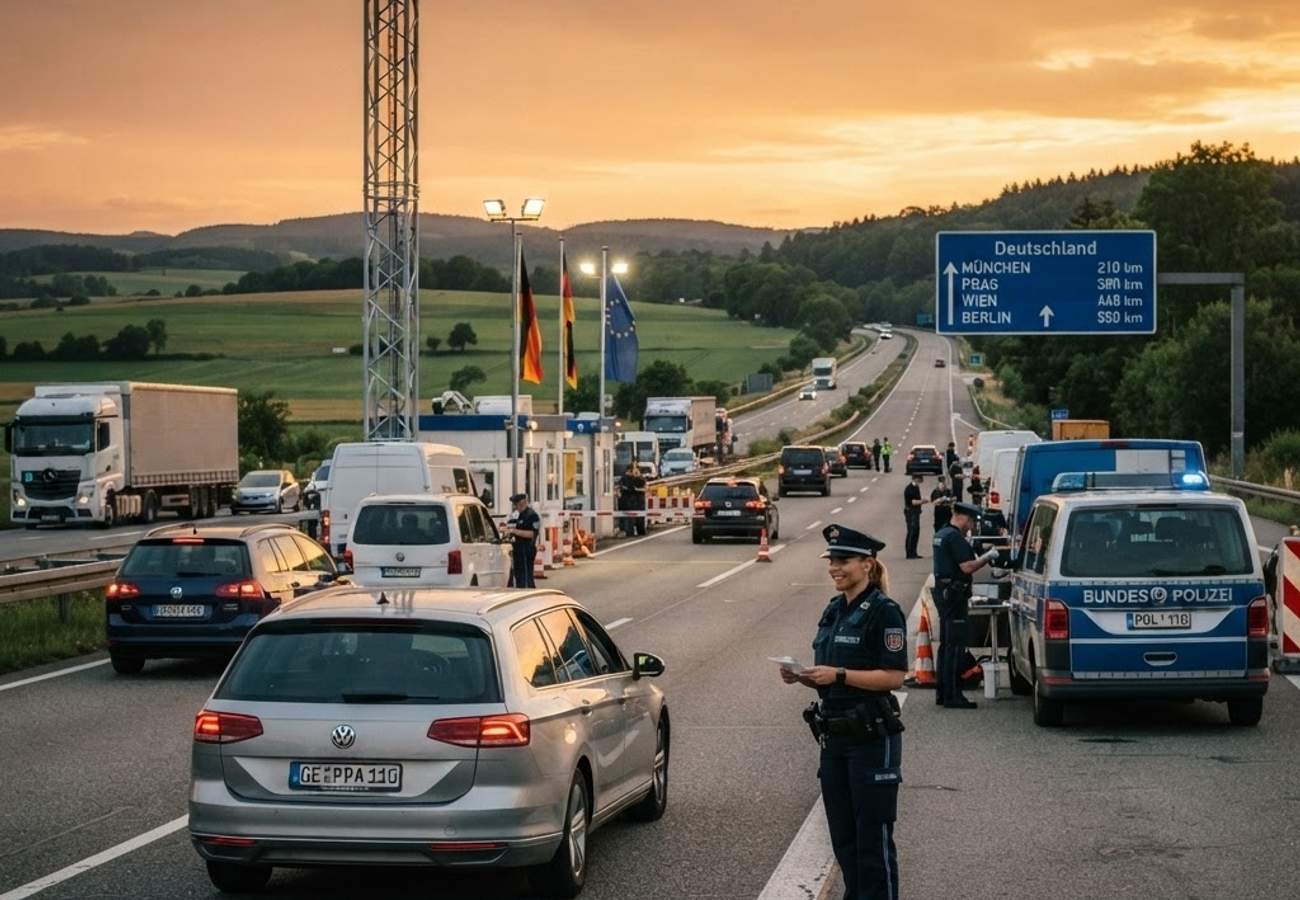
Image generated by AI
Germany is maintaining strict land border controls across nine neighboring frontiers from September 16, 2026, through March 15, 2027. This six-month extension impacts millions of travelers moving through the heart of the Schengen Area.
The German government has formally notified the European Commission that it will continue temporary internal border controls. This decision extends existing measures that have been in place since March 16, 2026, ensuring that surveillance remains active for another half-year.
While the Schengen Agreement typically allows for border-free movement, Germany is utilizing the Schengen Borders Code to restore controls. This is permitted when a member state identifies a serious threat to public order or internal security.
Security and Migration Drivers Behind the Extension
German authorities have cited a combination of internal pressures and global instability as the primary drivers for these measures. The European Commission's register highlights several specific concerns:
- Migration Pressures: High volumes of irregular migration and the continued smuggling of people.
- Systemic Strain: Significant pressure on Germany's asylum reception and processing systems.
- Geopolitical Instability: The ongoing impact of Russia's war against Ukraine and volatile developments in Central Asia and the Middle East.
Despite these security measures, Germany is not closing its borders. Normal travel between Germany and its neighbors continues, though the nature of that travel has shifted from seamless crossing to potential checkpoints.
Impact on European Transit Corridors
Because of its central geographic position, Germany serves as the primary transit hub for road and rail travel across Europe. The extension of these checks affects nine specific land borders, impacting various strategic corridors:
- Western Corridors: Borders with France, Belgium, the Netherlands, and Luxembourg connect Germany to major Benelux markets and Western European hubs.
- Central and Alpine Routes: Controls with Austria, Switzerland, and Czechia affect travel toward the Alps and Central Europe.
- Northern and Eastern Gateways: The border with Denmark serves as the primary land link to Scandinavia, while the Polish border remains a critical east-west artery for rail and road freight.
Detailed Border Control Schedule (Sept 2026 – March 2027)
The following table outlines the specific countries and the duration of the notified controls.
| Country Bordering Germany | Control Period | Border Type |
|---|---|---|
| Belgium | 16 September 2026 – 15 March 2027 | Land |
| France | 16 September 2026 – 15 March 2027 | Land |
| Luxembourg | 16 September 2026 – 15 March 2027 | Land |
| Netherlands | 16 September 2026 – 15 March 2027 | Land |
| Denmark | 16 September 2026 – 15 March 2027 | Land |
| Austria | 16 September 2026 – 15 March 2027 | Land |
| Switzerland | 16 September 2026 – 15 March 2027 | Land |
| Czechia | 16 September 2026 – 15 March 2027 | Land |
| Poland | 16 September 2026 – 15 March 2027 | Land |
Overlapping Controls: The "Double-Check" Effect
Travelers should be aware that Germany is not the only nation implementing these measures. In some corridors, travelers may encounter checks from both entering and exiting countries.
The Netherlands-Germany Corridor The Netherlands currently operates controls on its land borders with Germany and Belgium, as well as internal air borders, from June 9 until September 30, 2026. This is due to high asylum application rates and pressure on reception capacity. Travelers crossing this specific border in September may face checks from both Dutch and German authorities.
The French Influence France also maintains temporary controls from May 1 through October 31, 2026. These cover land, air, and sea borders with Germany, Belgium, Luxembourg, Switzerland, Spain, and Italy, citing terrorist threats and criminal networks.
Practical Advice for Travelers
While these measures are "temporary" and "last-resort" under EU law, they have real-world implications for journey planning.
- Documentation: All passengers, regardless of nationality, should carry valid passports or national ID cards.
- Timing: Those traveling by coach, car, or international train should allow extra time for potential delays at checkpoints.
- Verification: Because different Schengen countries have different expiry dates for their controls, travelers are encouraged to check the specific status of each country on their itinerary.
Border-free travel remains the goal of the Schengen Area, but geopolitical realities are currently dictating a more monitored approach to European transit.
Key Takeaways
- Duration: Land border checks are extended from September 16, 2026, to March 15, 2027.
- Scope: Nine countries are affected: Belgium, France, Luxembourg, Netherlands, Denmark, Austria, Switzerland, Czechia, and Poland.
- Reasoning: Controls are driven by irregular migration, asylum system pressure, and global security threats (Ukraine, Middle East).
- Travel Status: Borders remain open, but routine checks are now possible on roads, rails, and buses.
FAQ
Is the Schengen Area abolished? No. Germany remains a full member of the Schengen Area. These are temporary, time-limited measures permitted under the Schengen Borders Code for security reasons.
Do I need a visa to enter Germany from another Schengen country? Visa requirements have not changed. However, you must carry valid travel documentation (Passport/ID) as you may be asked to present it at a land border checkpoint.
Will these checks affect flights? The current notification specifically targets land borders. However, other countries like France and the Netherlands have implemented air border controls separately.
Related Travel Guides
Disclaimer
This article is for informational and educational purposes only. It does not constitute legal, financial, or professional advice. While we strive to provide accurate and up-to-date information, travel policies, regulations, and conditions change rapidly. Always verify information with official sources before making travel decisions. Nomad Lawyer makes no representations about the accuracy, reliability, completeness, or suitability of the information provided. Readers should consult qualified professionals for advice specific to their circumstances. The views expressed in this article are those of the author and do not necessarily reflect the views of Nomad Lawyer.